Science has a funny relationship with ridicule. Throughout history, some of the greatest minds on Earth were laughed at, dismissed, fired, imprisoned, or simply ignored – not because they were wrong, but because they were right too early. The gap between a brilliant idea and its acceptance can be decades, sometimes centuries. Honestly, that says more about us than it does about the ideas.
What makes these stories so gripping isn’t just the “gotcha” moment when the world finally catches up. It’s the sheer stubbornness of the humans behind them. They kept pushing even when the scientific establishment thought they were fools. So if you’ve ever had an idea that someone told you was crazy, this one’s for you. Let’s dive in.
1. The Earth’s Continents Are Slowly Drifting Apart
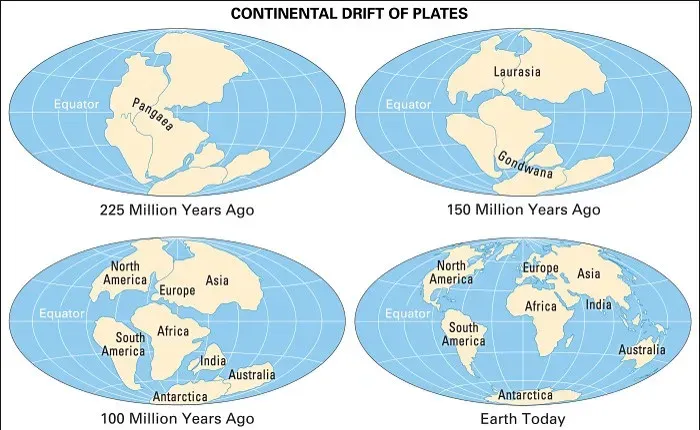
Picture telling a room full of expert geologists, in 1912, that the entire planet’s surface is slowly sliding around like cracked eggshells floating on soup. That was essentially what Alfred Wegener did. On January 6, 1912, 32-year-old German geophysicist and meteorologist Alfred Wegener proposed an extraordinary idea: that Earth’s continents had once been a single landmass that had drifted apart. The reaction? Pure mockery. Geologists couldn’t explain what force could possibly move entire continents, and without a mechanism, the whole idea seemed like fantasy.
He noticed that the continents could be more or less fit together, like a puzzle, and that there were fossil plants and animals that spanned multiple continents. Still, it took decades for the scientific community to come around. Plate tectonics, once ridiculed, is now fundamental to geology. Today the theory is so well accepted that it forms the backbone of earthquake science, volcanology, and our entire understanding of how the planet’s surface behaves. Sometimes being right just isn’t enough – you also need to be alive long enough for everyone else to catch up.
2. The Sun, Not the Earth, Is the Center of Our Solar System
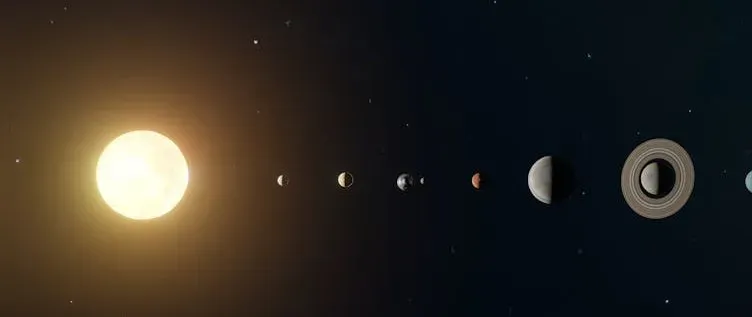
For centuries, humans were absolutely certain that everything in the universe revolved around us. It was intuitive, it was comfortable, and it was backed by the greatest religious and intellectual institutions in the world. Then came Copernicus and Galileo, who had the audacity to suggest otherwise. Copernicus published a theory of planetary motion in 1543 that directly contradicted the accepted notion that the Earth was the center of the universe, and was widely derided at the time. He was so nervous about the reaction that, as history records, he reportedly only received a copy of his published book on the very day he died.
In the early 17th century, Galileo used a telescope to observe the movement of celestial bodies, which both confirmed Copernicus’ suspicion that the Earth orbited the sun, and raised the ire of the Catholic Church and the Inquisition, which led to Galileo being placed under house arrest for the rest of his life, and his book being banned. Here’s the thing – he was right about everything. As further scientific research was conducted, Galileo’s beliefs were vindicated, and his theories of heliocentrism served as an important base for modern astrophysics. The Vatican didn’t officially pardon Galileo until 1992. Yes, 1992. Nearly 360 years after the fact.
3. Tiny Invisible Creatures Are Making Us Sick

Before the germ theory of disease was accepted, people believed illness came from “miasma” – essentially bad-smelling air. Before germ theory, people thought diseases came from bad air or even things like sin and curses. Therefore, doctors would go from autopsy to childbirth without washing their hands. It sounds insane today, but that was standard medical practice. The idea that microscopic invisible organisms were silently invading human bodies and killing people? Completely absurd, they said.
Pioneer Ignaz Semmelweis proved that handwashing drastically reduces deaths during childbirth, but his contemporaries ridiculed him. He eventually died in an asylum, long before his ideas became widely understood. The numbers behind his work were staggering. The results were dramatic: maternal mortality dropped from approximately 16% to below 2% within months after he introduced mandatory handwashing. He had the evidence. He just didn’t have the era. Semmelweis’ contribution was recognized 20 years after his death as the medical world became more receptive and wiser after germ theory of disease by Louis Pasteur and the concept of antisepsis by Joseph Lister.
4. Stomach Ulcers Are Caused by a Bacteria

For most of modern medicine’s history, stomach ulcers were blamed on stress, spicy food, and an overactive mind. It was basically the fault of people being too anxious or eating badly. Then, in the early 1980s, two Australian doctors suggested something that made the medical establishment almost laugh out loud: that ulcers were caused by a bacterium. Marshall and Robin Warren showed that the bacterium Helicobacter pylori plays a major role in causing many peptic ulcers, challenging decades of medical doctrine holding that ulcers were caused primarily by stress, spicy foods, and too much acid.
It has been claimed that the H. pylori theory was ridiculed by established scientists and doctors, who did not believe that any bacteria could live in the acidic environment of the stomach. So what did Marshall do to prove his point? He drank a petri dish of the bacteria himself. Hoping to persuade skeptics, Marshall drank a culture of H. pylori and within a week began suffering stomach pain and other symptoms of acute gastritis. Stomach biopsies confirmed that he had gastritis and showed that the affected areas of his stomach were infected with H. pylori. Marshall subsequently took antibiotics and was cured. The finale? In 2005, the Karolinska Institute in Stockholm awarded the Nobel Prize in Physiology or Medicine to Marshall and Robin Warren for their discovery. From mockery to Nobel Prize. That’s quite the arc.
5. Quantum Entanglement – Particles Linked Across Any Distance

Even Einstein couldn’t stomach this one. The idea that two particles, once connected, could influence each other instantly across any distance in the universe – it violated everything physics held sacred. Quantum entanglement occurs when two particles become interconnected, regardless of the distance between them. Changes to one particle instantly affect its entangled partner, seemingly defying the speed of light. Einstein struggled with this concept, as it appeared to contradict his theory of relativity. He famously called it “spooky action at a distance,” and he meant it as an insult, not a compliment.
The theory says particles can become entangled with one another, turning them into a shared system, even when separated by huge distances. It goes against all the basics of classical mechanics, but it’s real. Not just real on paper either. Quantum entanglement has practical applications, including its potential use in quantum computing and secure communication systems. Think about that for a moment. A phenomenon Einstein personally found ridiculous is now being engineered into the communication networks of the future. The universe has a sense of humor.
6. Time Actually Passes at Different Rates Depending on Where You Are

Einstein’s theory of relativity brought plenty of jaw-dropping ideas, but time dilation might be the most head-spinning of them all. The notion that time itself moves faster or slower depending on your speed and position felt, to most people, like pure science fiction. Clocks ticking differently? Time itself stretching? It sounds like something from a novel, not a physics textbook. Yet here we are.
Depending on where you are and how fast you’re moving, time actually passes at different rates. This phenomenon, known as time dilation, has been proven through precise atomic clocks placed at different altitudes and on fast-moving aircraft. Someone flying in a high-altitude plane ages slightly slower than someone standing at sea level, though the difference is too small to notice in everyday life. It gets even more practical than that. The concept of time dilation and curved spacetime appeared bizarre at first. Today, these principles are crucial for GPS technology and our understanding of the universe. Every time your phone navigates you to a coffee shop, Einstein’s “ridiculous” theory is quietly doing the math in the background.
7. Atoms Are Mostly Empty Space

We sit on chairs, walk on floors, and shake hands – all of this feels solid and real. So telling someone that matter is almost entirely empty space sounds like philosophical nonsense rather than established science. Yet that is precisely what physics tells us. The atoms that make up everything you’ve ever touched are overwhelmingly, almost incomprehensibly, empty. The nucleus is tiny beyond imagination. If an atom were the size of a football pitch, the nucleus would be the size of a pea, with even smaller electrons flying around.
This wasn’t always accepted, of course. Scientists first thought atoms were like a plum pudding – that model was shut down in 1911 when Lord Rutherford discovered the nucleus. The deeper physicists looked, the stranger it got. It’s not truly empty in the classic sense – that’s an oversimplification. It’s filled with fields and forces, but it’s less solid than we previously thought. There’s something almost poetic about the fact that the hardest, most tangible things we know – steel, stone, bone – are built from structures that are almost entirely nothing. Reality, it turns out, is spectacularly weird.
8. Gregor Mendel’s Garden Peas Hold the Secret to How Life Inherits Traits

A monk in a monastery, carefully crossbreeding pea plants in a garden, quietly building the foundations of all modern genetics. It sounds more like a parable than a scientific breakthrough. Yet that is exactly what happened with Gregor Mendel. Living in an Austrian monastery as a monk, Mendel noticed that when he controlled the pollination of pea plants, the resulting peas would often have the same characteristics as the plants they were derived from. When combined with his observations that children often had the same characteristics as their parents, Mendel’s vegetable experiments led him to develop the basic theory on which genetics would be based: Mendel’s Laws of Inheritance.
The response from the scientific community? Almost total silence. The theory that would revolutionize our understanding of how life develops was ignored by his contemporary scientists almost entirely, despite Mendel attempting to contact and convince many of the luminaries of his day. It would take several decades for Mendel’s theories to be taken seriously. Today, Mendel’s laws are taught in every high school biology class on Earth. His work underpins genetic medicine, agriculture, evolutionary biology, and the entire field of genomics. The man was gardening his way to one of the most important scientific discoveries in human history, and virtually nobody cared. I think that’s both tragic and extraordinary in equal measure.
There’s a strange comfort in all of this. Theories that we take for granted today were often met with confusion and hostility when they were introduced, and the people who introduced them were called mad men, idiots, and worse. Every era is convinced it has figured most things out. Every era is wrong. The ideas that seem most laughable today might be the ones our grandchildren consider obvious. So the next time someone calls your thinking ridiculous – maybe that’s not such bad news after all.
Which of these eight surprised you most? Drop your thoughts in the comments – genuinely curious which one hit hardest.