
Some inventions arrive centuries before the world is ready for them. They get shelved, forgotten, or dismantled, only to resurface later when the supporting infrastructure, materials, or cultural acceptance finally catches up. The history of technology isn’t a clean upward line. It doubles back on itself constantly, burying brilliant ideas under the weight of wrong timing.
What makes these stories genuinely remarkable isn’t the genius of their creators. It’s the eerie precision with which these devices or systems anticipated needs that wouldn’t become urgent for decades, sometimes centuries. From analog computers built before the Roman Empire fell to wireless power systems that still haven’t fully materialized, here are twenty technologies that simply arrived too early.
1. The Antikythera Mechanism

The Antikythera mechanism, dated to the late 2nd or early 1st century BCE, is understood as the world’s first analog computer, created to accurately calculate the position of the sun, moon, and planets. It had the first known set of scientific dials or scales, and radiographic imaging revealed that the remaining fragments contained 30 gear wheels. No other geared mechanism of such complexity is known from the ancient world, or indeed until medieval cathedral clocks were built a millennium later.
The device calculated the ecliptic longitudes of the Moon, Sun, and planets; the phase of the Moon; synodic phases of the planets; eclipses; and the Olympiad cycle – an ancient Greek astronomical compendium of staggering ambition. It is the first known device that mechanized the predictions of scientific theories, representing the first steps to the mechanization of mathematics and science. There are strong reasons to believe this object cannot have been the only model of its kind, but bronze was a very valuable metal, and when such an object stopped working, it was likely melted down for its materials.
2. Roman Self-Healing Concrete

Unlike today’s formulations, which tend to degrade under stress and moisture, Roman builders engineered their concrete with an ingenious twist: they included chunks of reactive lime, known as quicklime, in their mix. These seemingly random white inclusions, once considered flaws, are now understood to be the key to the material’s longevity. When a crack forms and water seeps into the concrete, it triggers a chemical reaction with the lime. New mineral growth then seals the fracture from within, restoring the concrete’s strength and preventing further damage.
Ancient Roman structures like the Maison Carrée temple, the Colosseum, and the Pantheon are still standing today, having endured battles, storms, earthquakes, and world wars. Research led by the Massachusetts Institute of Technology has found evidence of this self-healing mechanism, and the discovery could have implications for reducing carbon emissions and creating modern climate-resilient infrastructure. When deliberately cracked and subjected to water, samples created using the hot-mixing method with lime clasts healed completely within two weeks.
3. Greek Fire

When the Muslim fleet of the Umayyad Caliphate attempted to lay siege to the Byzantine city of Constantinople in 674, their ships were doused in flames. At first, the Muslims were not alarmed, as fire was often used in naval warfare. This, however, was no ordinary fire. Once ignited, it could not be extinguished, and after the entire fleet had burned down, even the sea itself was set ablaze. The Umayyad Caliphate met its doom at the hands of a new military invention known as Greek fire.
What makes Greek fire so impressive is not the chemistry of the fire itself but the design of the pressure pump the Byzantines used to launch it. Researchers struggle to recreate a historically accurate pump that could have propelled its content far enough to be of any use during naval battles, where enemy ships may be dozens or even hundreds of meters removed from one another. Nevertheless, no one has ever been able to recreate Greek fire. The secret was tightly guarded for centuries. The closest modern technology has come to creating it is napalm.
4. Zhang Heng’s Seismoscope

Dating back roughly 2,000 years in ancient China, the Houfeng Didong Yi was the first earthquake detection device recorded in history and was very effective. The person who created it was Zhang Heng, dubbed the Leonardo da Vinci of China – an inventor, astronomer, engineer, scientist, scholar, and artist. The device could detect earthquakes hundreds of kilometers away remotely. The jar featured eight tubed projections shaped like dragon heads on the exterior, with eight corresponding toads at the base. Each toad represented a direction in which the seismic wave was traveling, and the device would drop a ball into one of them to indicate the direction of a distant earthquake.
Modern seismology didn’t emerge as a recognized scientific field until the late 19th century. Zhang Heng’s instrument, designed during the Han Dynasty around 132 AD, preceded that by more than 1,700 years. The principles behind detecting ground vibrations and translating them directionally were embedded in this ornate bronze jar long before Western science considered the problem worth solving.
5. The Baghdad Battery
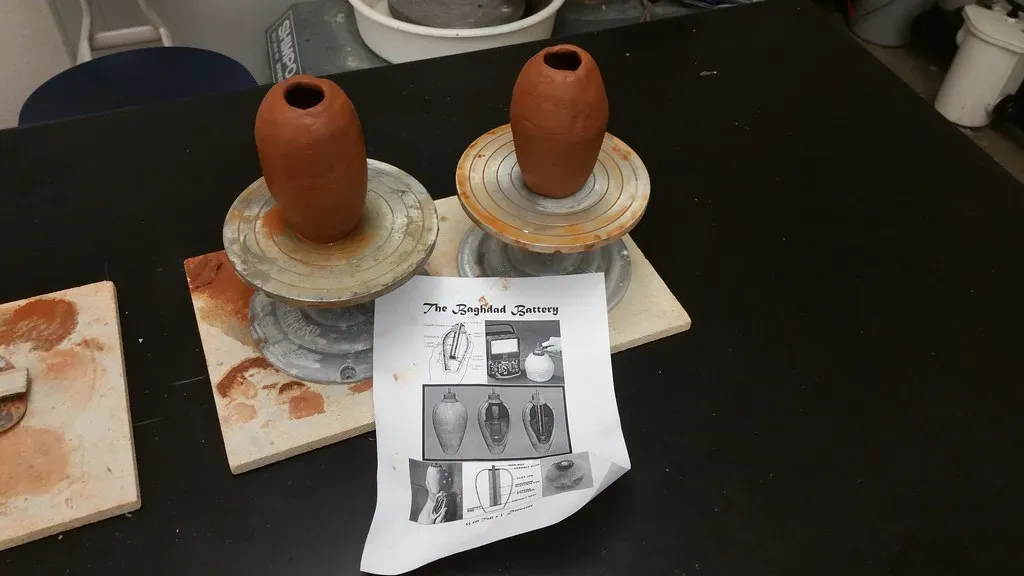
The Baghdad Battery may be the world’s first example of electrical power. Archaeologists discovered the 2,000-year-old object south of Baghdad, in Iraq. The battery consists of a 130mm pot, a tube made from rolled-up copper, and an iron rod that may have been used for electroplating. The ceramic pot could have housed a type of acid to make this process possible. Experiments have shown that the object could work as a battery, although the ancient use of this intriguing device remains uncertain.
The potential applications of the Baghdad Battery include electrotherapy, which might have been used for pain relief and other treatments. This theory gains support from the discovery of bronze and iron needles alongside the batteries in Seleucia, suggesting they could have been used for acupuncture practices. Historical records also indicate that ancient Greeks and Romans may have used electric fish to treat ailments such as headaches and gout, indicating some familiarity with electrical treatments. Alessandro Volta’s voltaic pile, long credited as the first battery, wasn’t invented until 1791 – nearly two millennia later.
6. Damascus Steel

Damascus steel, also called wootz steel, is a metal high in carbon, glass, iron, and charcoal. These elements were placed under high heat. Over the centuries, however, blacksmiths lost the art of making it. The blades produced using this method were legendary for their sharpness, flexibility, and distinctive watered-pattern surface. Weapons made from Damascus steel were documented as early as the 3rd century AD and remained in use for nearly a thousand years.
While Damascus steel was once lost, it has since been studied by present-day researchers. Usually, any difficulty in recreating it stems from the lack of original instruction rather than an inability to comprehend the invention itself. Modern materials scientists have discovered that the original Damascus steel contained carbon nanotubes and nanowires – structures that weren’t formally described by science until the late 20th century. The ancient metalworkers achieved nanoengineering without knowing the term existed.
7. Nikola Tesla’s Wireless Power Transmission
In the early 20th century, Nikola Tesla embarked on the construction of the Wardenclyffe Tower in New York, aiming to provide wireless transmission of electricity and global communication. He envisioned a world where energy could be transmitted without wires, reducing the need for extensive power grids. However, financial difficulties and skepticism from investors, particularly after the withdrawal of support from J.P. Morgan, led to the project’s abandonment in 1906, and the tower was eventually dismantled in 1917.
While Tesla successfully brought alternating current and countless other electrical innovations, his most ambitious dream remained unrealized during his lifetime. Today, as we place smartphones on charging pads and electric vehicles charge through magnetic induction, we’re witnessing the gradual realization of Tesla’s century-old vision. NASA is keenly interested in this technology, and Japan’s space agency JAXA plans to build a space-based solar power station capable of delivering one gigawatt of electricity by 2030.
8. The Transatlantic Telegraph Cable
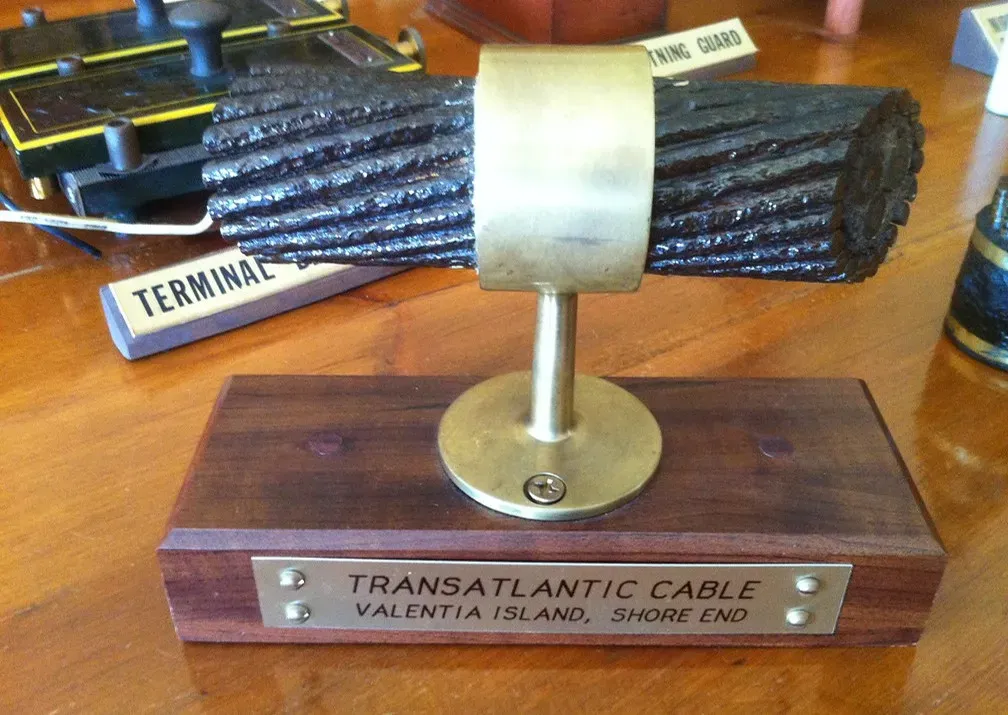
Transatlantic telegraph cables were far ahead of their time. The United States and Great Britain were able to communicate electronically via undersea cable in 1858 – two years before Louis Pasteur proved that germs caused disease. The ability to communicate almost immediately via electronic cables at a time when horseback was the preferred mode of transportation definitely registers as being way ahead of the curve.
The first cable failed after just a few weeks of operation, victim of a decision to push more voltage through it to speed up messages. A more durable replacement wasn’t successfully laid until 1866. Still, the concept itself was electric in a broader sense: the idea that two continents could exchange information instantaneously, in an era without indoor plumbing in most homes, was genuinely staggering. It prefigured the internet by more than a century.
9. Hero of Alexandria’s Steam Engine
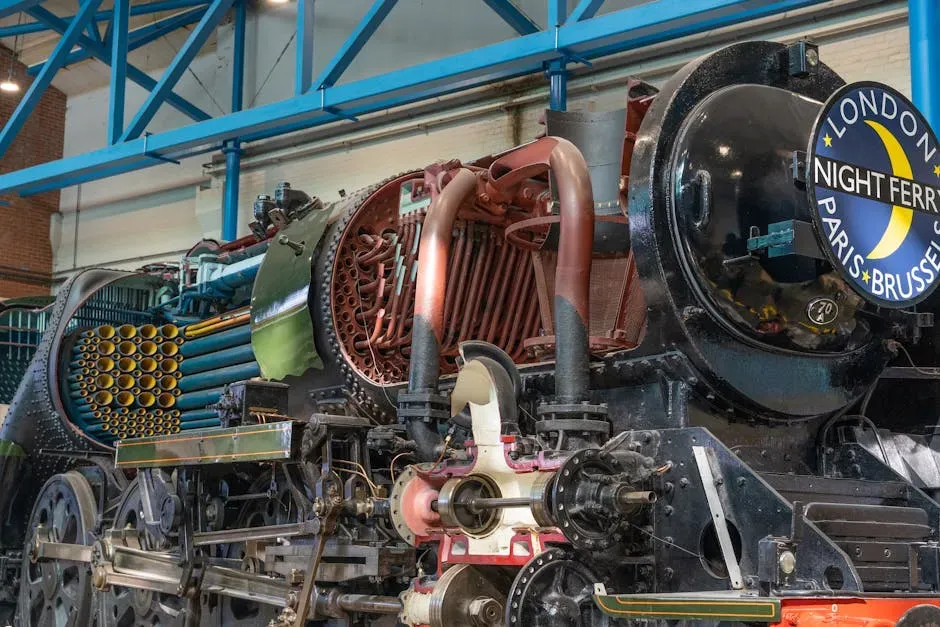
Around 70 AD, the Greek mathematician Hero of Alexandria described a device called the aeolipile, a hollow sphere mounted on a boiler that rotated when steam was expelled through two angled nozzles. It was, in essence, a primitive steam turbine. The ancient Greeks built the Parthenon and the Lighthouse of Alexandria, and they had plumbing and used steam to operate equipment. The aeolipile was known, documented, and promptly treated as a curiosity rather than an engine.
The industrial revolution didn’t begin until roughly 1,700 years later, powered by steam. Had the Roman Empire pursued Hero’s device as a practical machine rather than a philosophical novelty, the implications for history are difficult to overstate. The concept was sound; it simply lacked an economic or social context that would have made it worth scaling up. Cheap slave labor removed the incentive to mechanize, and so the steam engine waited nearly two millennia to matter.
10. Early Electric Vehicles
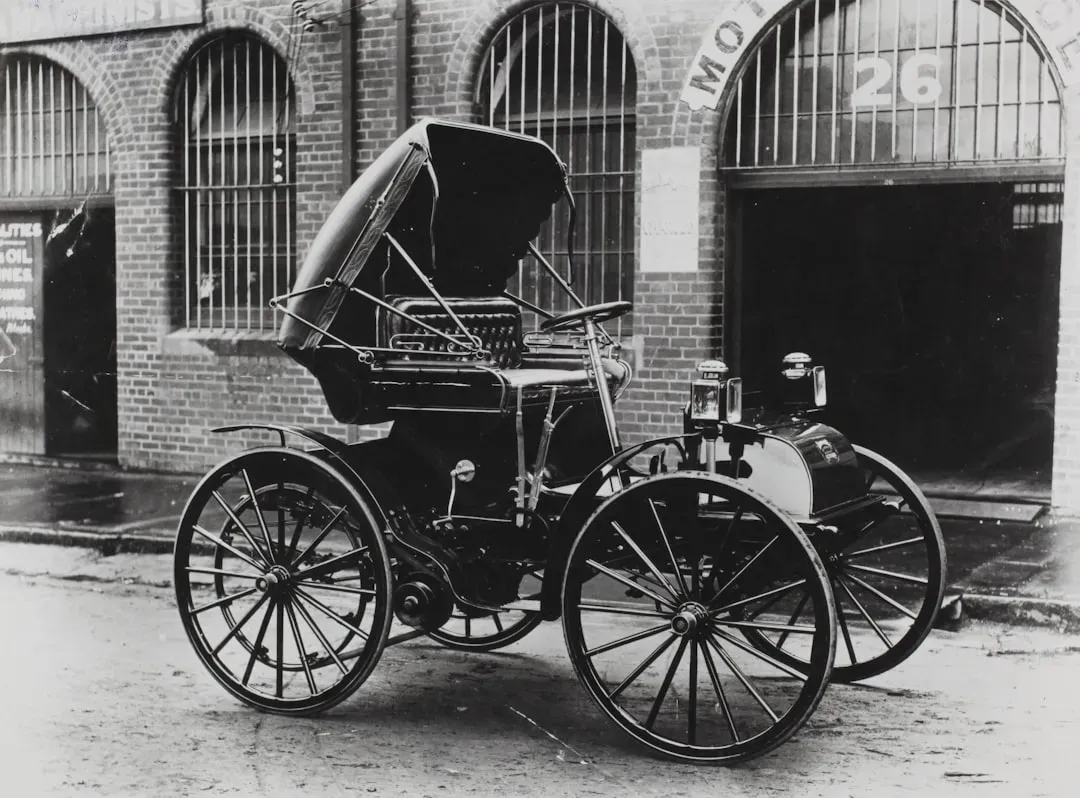
In the years following early automotive experiments, Detroit Electric produced 13,000 electric cars up until 1939. These vehicles were well ahead of their time and humanity was far from ready for such advances. Electric vehicles actually outsold gasoline-powered cars in the United States around 1900, before the introduction of cheap oil and mass-produced internal combustion engines pushed them into obsolescence for nearly a century.
The irony is conspicuous. Battery technology, charging infrastructure, and public appetite for clean transportation all took until the 2010s and 2020s to fully re-emerge. The engineering principles behind electric propulsion were never the problem – they were proven before Henry Ford’s Model T. What was missing was affordable energy storage and the political will to pursue it. History simply took a very long detour.
Partner offer
11. The Sega Dreamcast’s Online Gaming System

The Sega Dreamcast, the first gaming console introduced in 1998, featured internet connectivity for online gaming and internet browsing, making it genuinely ahead of its time, not to mention the convenience of its portable memory sticks at the turn of the 21st century. Even the games alone proved how advanced the Dreamcast was. Most consumers in 1998 were still using dial-up internet connections too slow to make online gaming practical.
Sega essentially built a connected gaming platform before the infrastructure existed to support it well. The console was discontinued in 2001, partly due to competition but also because its online vision required broadband that most homes simply didn’t have. Within a few years, Xbox Live and PlayStation Network launched to audiences with far better connectivity, becoming enormously successful with the same core idea. The Dreamcast got the concept exactly right but launched into the wrong decade.
12. Sega Channel – Streaming Games Before Streaming Existed

Sega teamed up with Time Warner Cable and TCI to deliver games digitally via standard coaxial cable. For a fifteen-dollar monthly fee, gamers could attach an adapter to their console and access roughly 50 games. Games needed to be downloaded to work, and turning the console off would wipe them, but it was an interesting early concept. The technology to support such a system was in its early stages, and simple noise on the line could cause downloads to fail. Despite that, Sega Channel had 250,000 subscribers at its peak before closing in 1998.
In a world where Netflix, Xbox Game Pass, and PlayStation Now generate billions in annual revenue from streaming and subscription game libraries, Sega Channel’s premise looks practically prophetic. The 1994 service was subscription-based, digital, and content-library driven – the exact model that would dominate entertainment thirty years later. Its failure wasn’t conceptual. It was infrastructural. Coaxial cable in the mid-1990s simply wasn’t a reliable delivery mechanism for digital content at scale.
13. The Nintendo Power Glove
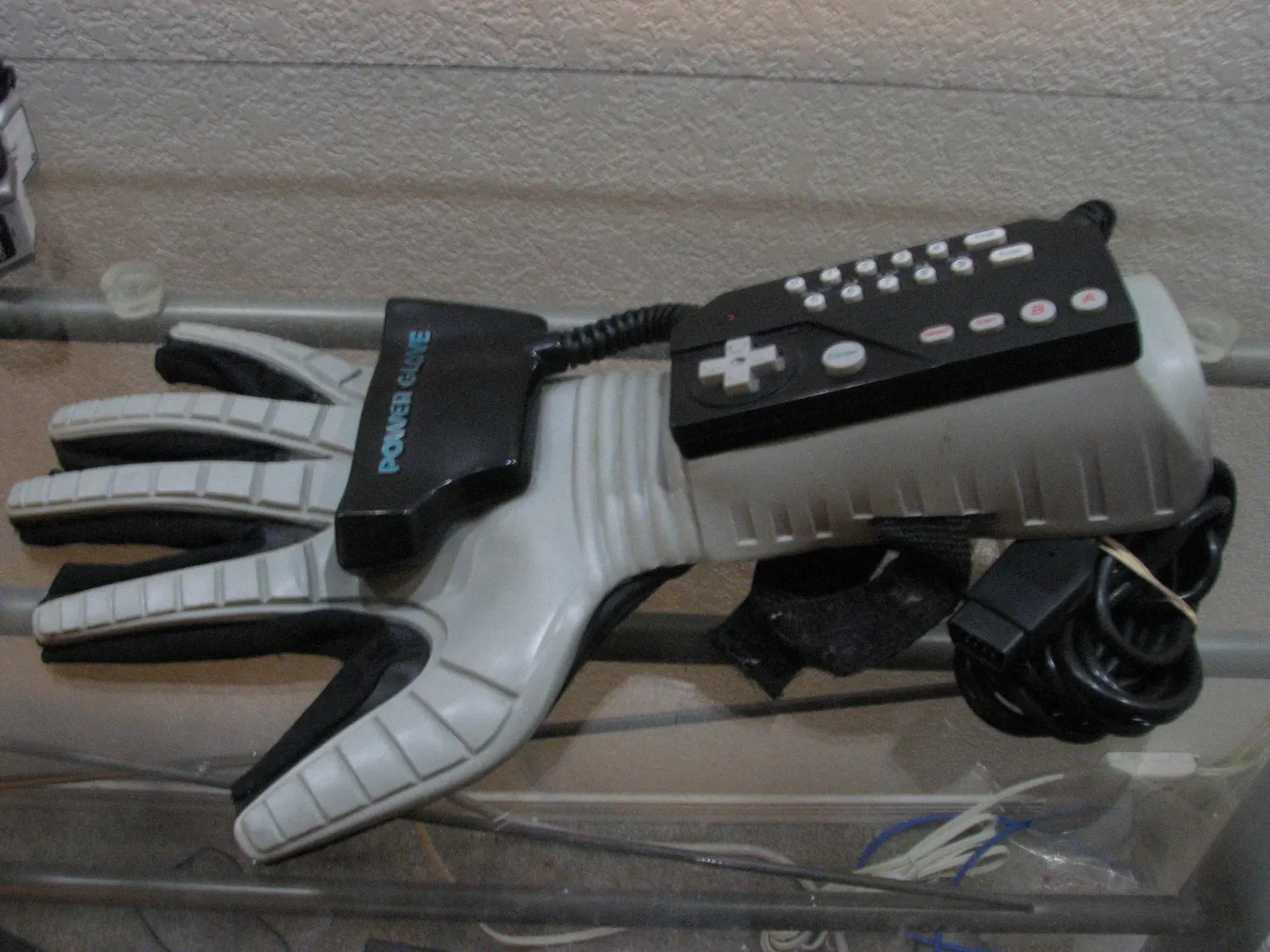
Uploaded by JohnnyMrNinja, CC BY-SA 2.0)
In 1989, the Power Glove appeared on the gaming scene, a motion controller accessory for the original Nintendo Entertainment System. It was made by Mattel and had traditional NES controller buttons on the forearm along with a number of other controls. Players were able to control games through various hand motions. The technology underneath was ambitious: infrared sensors tracked hand position in three-dimensional space, an idea that gesture-based computing wouldn’t take seriously again until the 2000s.
The Power Glove was commercially unsuccessful, largely because the gesture recognition was imprecise and most games weren’t designed around it. Sega and Nintendo were so far ahead of that particular curve that their prescient products were famous flops. The Sega Activator offered motion detection years before the Wii or Kinect, while another product pushed embryonic VR long before Oculus was a glint in anybody’s eye. Part of the problem was that the tech of the day simply wasn’t good enough. Microsoft’s Kinect and Nintendo’s Wii would eventually make motion gaming mainstream – two full decades later.
14. Sony Glasstron – VR Before VR

In the mid-1990s, Sony launched the Glasstron, a head-mounted display with dual LCD screens and earphones. In that decade, the concept was well beyond its time and lacked the technology to properly support it. The standard model came with opaque lenses and an SVGA input. Later models supported an 800×600 resolution and worked with games like MechWarrior 2, allowing users to see a vision from within the cockpit. This headset and others like it were essentially precursors to the VR and mixed reality headsets we see more and more of today.
Consumer virtual reality headsets like the Meta Quest 3, PlayStation VR2, and Apple Vision Pro are now commonplace. The Glasstron’s core proposition – wearing a display rather than staring at one – was sound. What it lacked was the processing power, display density, and motion tracking to make the experience convincing. Sony was asking users to adopt behavior that the hardware couldn’t yet justify. The market said no in 1996, then said yes thirty years later to the same idea with better components.
15. Google Glass
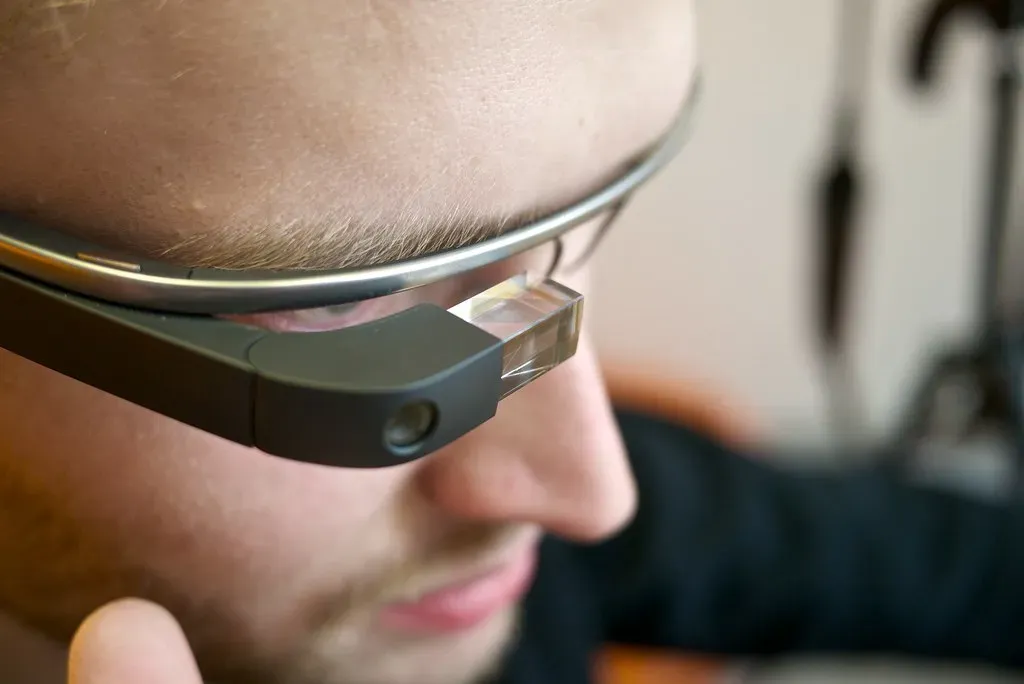
The problem with Google Glass wasn’t the technology. It was privacy. People didn’t like the thought of so-called “glassholes” filming their every move without permission, and the first version of Glass was an expensive and high-profile failure. That doesn’t mean it wasn’t a good idea, though. Google Glass was and is a great idea – Google simply hadn’t considered the privacy implications.
Launched to the public in 2013 and quietly discontinued for consumers by 2015, Google Glass was conceptually ahead of where social norms had arrived. By 2026, smart glasses from companies like Meta and Ray-Ban have quietly become normalized, with far less controversy – partly because they look like ordinary eyewear and partly because the public has gradually recalibrated expectations around cameras in everyday life. Google was right about the product category. It was just early enough to absorb all the societal friction that later entrants avoided.
16. Hugo Gernsback’s Television Eyeglasses

In 1963, inventor Hugo Gernsback was photographed by Life Magazine showing off his “teleyeglasses,” a precursor to modern head-mounted displays. The idea of television eyeglasses came to him in 1936, but it wasn’t until the 1960s that advancements in technology made his vision even partially possible. Gernsback, the pioneering science fiction publisher and inventor, envisioned wearable personal television displays decades before the electronics industry could miniaturize the necessary components.
His concept predated the Sony Walkman, the portable DVD player, the smartphone, and every subsequent head-worn display. The gap between his 1936 idea and working consumer products like the Apple Vision Pro spans roughly nine decades. Few technological concepts have had to wait quite so patiently to become ordinary. Gernsback is largely remembered for founding science fiction magazines, but his hardware instincts were equally forward-looking.
17. Punch Card Computing

Pre-1900s punch cards were far ahead of their time as a basic form of binary computation – they are essentially bits of memory for purely mechanical computers. Punch cards were originally developed in the early 19th century for controlling Jacquard looms in the textile industry. The system encoded patterns using holes in card stock, which guided mechanical needles to produce complex woven designs automatically.
Charles Babbage recognized that the same logic could drive calculation. Ada Lovelace, working with Babbage’s designs in the 1840s, wrote what many historians consider the world’s first computer algorithm – intended for a machine that was never finished. Vinton Cerf and Robert Kahn eventually produced the TCP/IP protocol, describing how data could be broken into packets and transmitted to the right destination – principles that became the basis for how data travels across the internet. The entire lineage traces back to cards with holes in them, a concept so simple that it’s easy to underestimate how radically ahead it was of everything else.
18. The Mechanical Clock and Medieval Precision Timekeeping

Hourglass and water clocks had been around for centuries, but the first mechanical clocks began to appear in Europe toward the end of the 13th century and were used in cathedrals to mark the time when services would be held. While medieval technology has long been depicted as a step backward in the evolution of Western technology, a generation of medievalists stressed the innovative character of many medieval techniques. Genuine medieval contributions include mechanical clocks, spectacles, and vertical windmills.
The mechanical clock wasn’t just a way to tell time. It was the first device to encode a continuous, self-regulating physical process into a mechanical system – the foundational logic behind every automated machine that followed. The escapement mechanism, which converts rotational energy into precise measured intervals, is still used in mechanical watches today. In that sense, the 13th-century clockmaker invented a logic that has never been improved upon in eight centuries, only miniaturized.
19. The Transatlantic Electric Car Boom of the Early 1900s
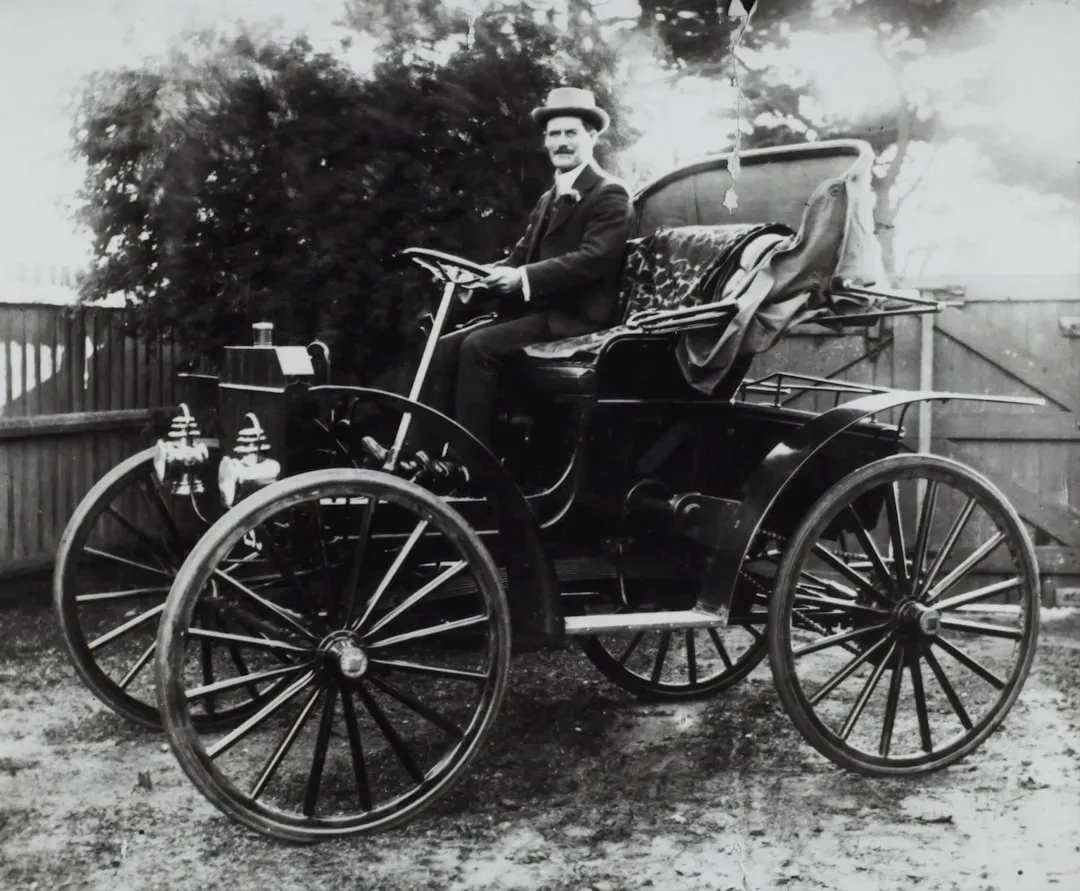
Before gasoline became dominant, electric vehicles were a genuine commercial reality. In New York City around 1900, roughly a third of all vehicles on the road were electric. Charging stations existed on major streets. The vehicles were quieter, cleaner, and easier to operate than their gasoline counterparts, requiring no hand-cranking to start. In the years that followed, Detroit Electric produced 13,000 electric cars up until 1939.
The collapse of the early electric vehicle market came from multiple directions: cheap oil discovered in Texas in 1901, Henry Ford’s mass production driving gasoline car prices down dramatically, and the absence of long-range battery technology that would have made rural travel practical. The infrastructure had started to develop, but it was overwhelmed by economic forces. The world spent the next century burning gasoline before returning, urgently, to an idea it had already tried and abandoned.
20. The Aeolipile and the Missed Industrial Revolution
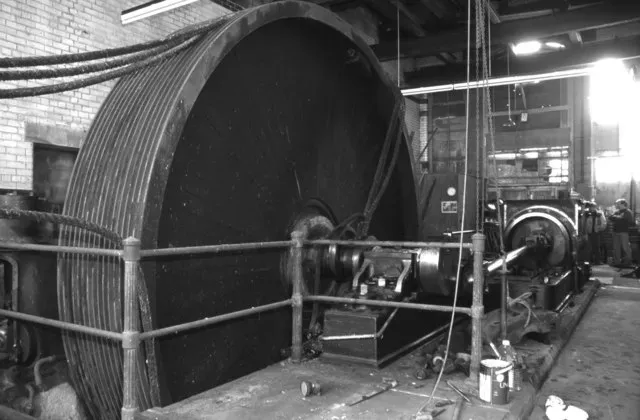
Returning to Hero of Alexandria, his contributions went well beyond the steam sphere. He described automatic doors for a temple, a vending machine that dispensed holy water when a coin was inserted, and a programmable cart powered by a falling weight that could be directed along a preset path – effectively a primitive robot. Archaeological excavations throughout the world reveal that, once in a while, ancient civilizations developed inventions that were decades if not centuries ahead of their time.
Equally erroneous is the notion that ancient civilizations stumbled upon these technologies by accident, or that they were designed by idiosyncratic geniuses who were not representative of their day and age. Although many inventors mentioned throughout history were indeed considered geniuses, they cannot and should not be separated from their surroundings. Hero’s vending machine concept waited nearly 1,800 years to become a commercial product. His programmable cart predated robotics as a field by roughly two millennia. The ideas were there. The manufacturing precision, the energy sources, and the economic structures to exploit them were not.
What unites all twenty of these technologies is a simple and slightly unsettling truth: the ideas themselves were often correct. The timing was the variable. History tends to celebrate the inventors who got both right, but the record is full of people who got the idea exactly right and the moment exactly wrong. Their work wasn’t wasted – it surfaced again, eventually, once the world caught up. That lag between concept and realization is where the most interesting stories in the history of technology tend to live.
Partner offer
Planning a trip to Vegas?
Compare hotel rates and show tickets on VEGAS.com.