There’s a version of music history that gets told in a straight line: talent discovered, records made, fame won. The real version is messier and far more interesting. Some of the most distinctive sounds ever committed to tape came not from ideal conditions, but from physical loss, from the body being forced to find another way.
These nine musicians didn’t just survive their circumstances. They built something out of them that nobody else could have built – precisely because nobody else had lost what they lost.
1. Django Reinhardt – The Fire That Rewrote Jazz Guitar
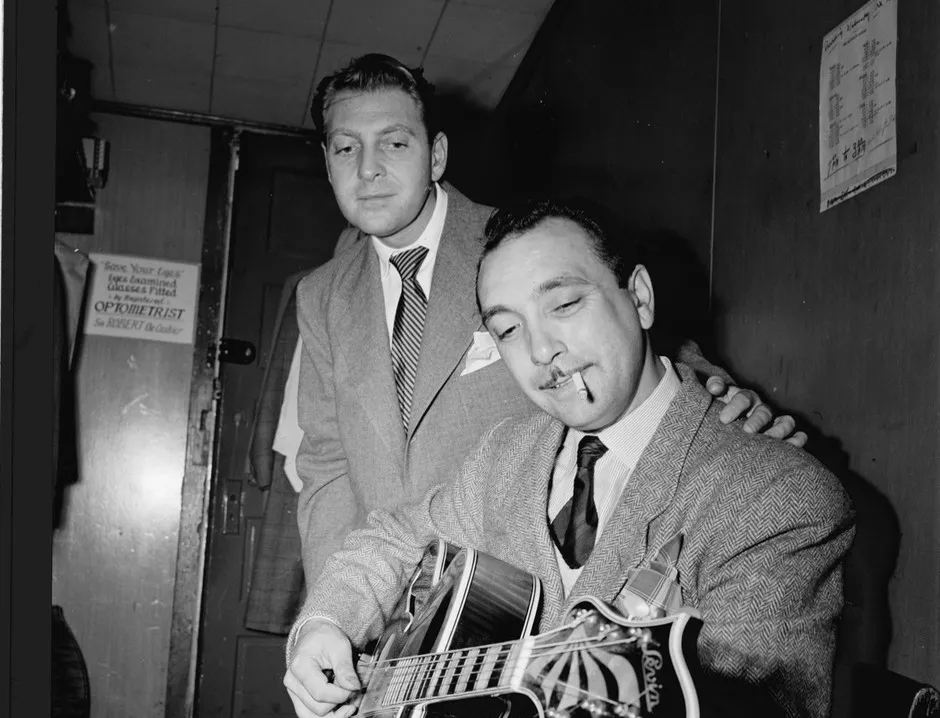
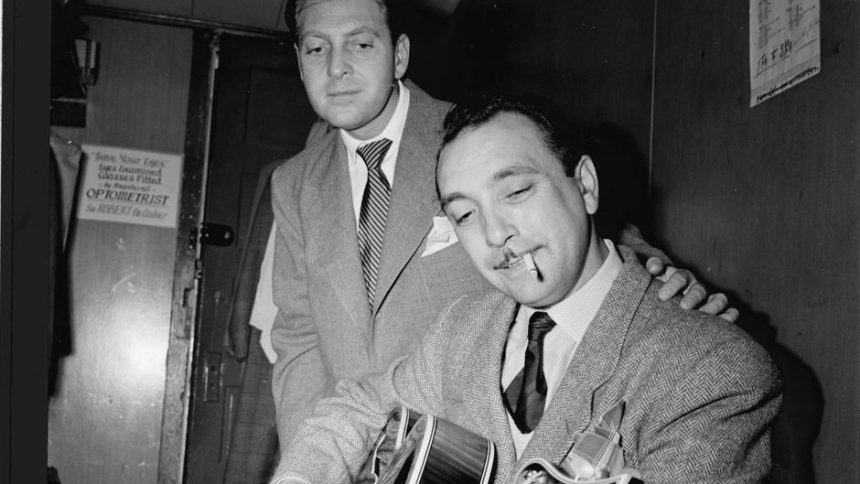
On the second night of November 1928, Django Reinhardt was an 18-year-old Romani guitarist who had recently made his first recordings, when the wagon he shared with his wife went up in flames after a candle was knocked over by accident. More important for his music, Reinhardt’s left-hand ring and pinky fingers had been badly burned, and he was told he would never play guitar again. Through perseverance and meticulous practice, he developed a unique technique focused on his left index and middle fingers, using the two injured fingers only for playing chords, and achieved a level of technical and musical mastery that remains awe-inspiring to this day.
Django created a style of playing – a whole genre now known as Gypsy Jazz – using only the first two fingers of his left hand. His creation, “Gypsy Jazz” or “Jazz Manouche,” fuses the vibrant melodies of Romani music with the sophisticated harmonies and bouncy rhythms of swing jazz, producing a sound that is both infectious and exotic. Jerry Garcia and Tony Iommi, both of whom lost fingers in accidents, were later inspired by Reinhardt’s example.
2. Tony Iommi – The Fingertips That Invented Heavy Metal

At age 17, Iommi lost the tips of the middle and ring fingers of his right hand in an industrial accident on his last day of work in a sheet metal factory. He was planning to quit his job that day, but his mother persuaded him to go in for the final day, when the cutter incident occurred. After the injury, Iommi’s factory foreman played him a recording of Django Reinhardt, which encouraged him to continue as a musician.
He down-tuned his guitar and used more power chords, partly to make playing easier, and made much use of the tritone, resulting in a heavier and darker sound that became a hallmark of heavy metal. In reality, those limitations were instrumental in shaping Black Sabbath’s signature sound. The greater emphasis on chord shapes, combined with Iommi’s heavy touch, resulted in the riff-heavy ethos of Sabbath’s early albums that put them on the musical map. Sabbath were among the first bands to detune, and the technique became a mainstay of heavy metal music.
3. Rick Allen – The One-Armed Thunder God of Def Leppard

The story of Def Leppard drummer Rick Allen is one of the most publicized cases of a musician losing a limb. On New Year’s Eve 1984, Allen was driving with his girlfriend in a Corvette Stingray at high speed when he lost control and ran into a brick wall. His seatbelt came off, and he was thrown through the sunroof, losing his left arm in the process. Initially Allen felt “defeated” but, buoyed by family, friends and hundreds of thousands of letters from all over the planet, he decided to continue playing drums and adopted a specially designed electronic drum kit.
He uses four electronic pedals for his left foot to play the pieces he used to play with his left arm, which from left to right trigger sounds of a closing hi-hat, bass drum, snare drum, and a tom drum. He was able to return to the studio to record Def Leppard’s album “Hysteria,” which was a huge success and included hit songs such as “Pour Some Sugar on Me” and “Love Bites.” His innovative drumming style, combining traditional techniques with electronic triggers, became a signature sound of the band. Hysteria went on to sell over 20 million copies worldwide.
4. Jerry Garcia – Nine Fingers and a Guitar That Spoke to Millions
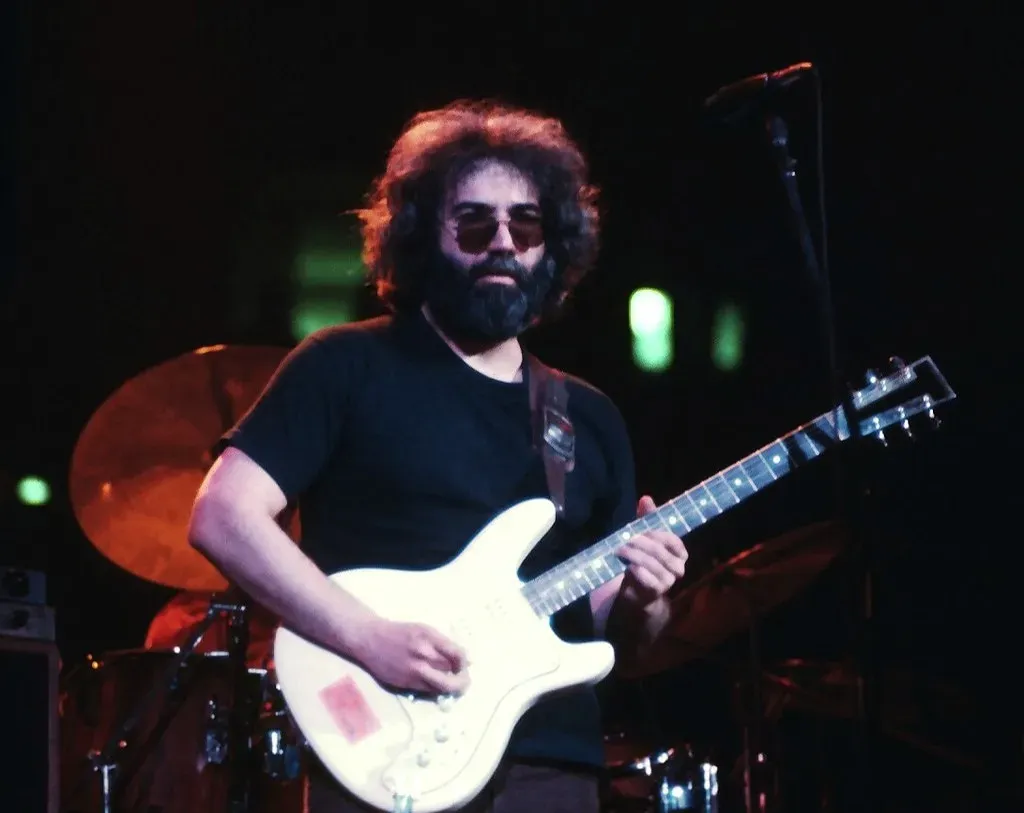
The Grateful Dead’s Jerry Garcia went on a long strange trip, most of it without one of his fingers. While playing with his older brother at his grandparent’s cabin, 4-year-old Jerry was holding a piece of wood that his older brother hit with an ax. His grandparents were in such a hurry to get him to the hospital, they left the amputated finger behind, and it was never found.
Garcia became the merry leader of the Grateful Dead, the original jam band and source of near-worship by its army of Deadheads. Guitar teachers and players have long noted that Garcia’s nine-fingered approach contributed to a distinctly lateral, melody-forward style that was immediately recognizable – less flash, more feeling. Garcia lost a finger during a wood chopping accident when he was four years old and did not let the injury stop him from becoming one of the most famous guitar players of all time.
5. Joni Mitchell – Polio, a Weak Hand, and the Birth of Open Tuning

Mitchell contracted polio at age nine and was hospitalized for weeks. Polio had weakened her left hand, so she devised alternative tunings to compensate; she later used these tunings to create nonstandard approaches to harmony and structure in her songwriting. What began as physical necessity became the core of her artistic identity.
At first she played in standard folk tunings. However, childhood polio had left her with a weak left hand and she began to compensate by experimenting with open tunings copied from old blues records, initially in G and D. As one expert put it, the reason she was interested in alternate tunings was because she had polio, and particularly her left hand could be really limited. She wanted to “paint” with sound, so she started to look at these tunings and experiment with them, moving the strings further apart from each other. Over the course of her career, Mitchell used well over fifty distinct alternate tunings, making her guitar sound like no guitar anyone had heard before.
6. Dr. John – A Bullet, a Broken Hand, and the Keys to New Orleans

The late Dr. John, born Malcolm John Rebennack, took the unique sound of New Orleans, put a pop-rock spin on it, and brought it to the mainstream in the 1960s and 1970s. With a blend of blues, jazz, and funk, the raspy-voiced icon is most remembered for his 1973 Top 10 hit “Right Place Wrong Time,” notable for his blazing keyboard work. He came relatively late to key-based instruments, after he’d established a career as a live and session guitarist. In a 1960 show in Jackson, Mississippi, Dr. John was playing guitar when a fight broke out, somebody pulled out a gun, and the bullet struck his ring finger on his left hand.
The damage to his fretting hand made returning to guitar as a lead instrument difficult, and Dr. John gradually shifted to the keyboard as his primary voice. That pivot turned out to be perfect: the piano and organ became his calling card, the instruments through which the entire spirit of the Crescent City flowed. It’s one of those rare cases where a forced reinvention led to a more fully realized sound than what came before.
7. Paul Stanley – Born Half-Deaf and Turned It into Spectacle

Paul Stanley of KISS kept a secret hidden from anyone but his closest friends: he was born with a rare congenital ear deformity called Grade 3 Microtia. His external ear was underdeveloped, and he was mostly deaf in one ear. Long before he was selling out arenas, Stanley lived with microtia, which left him self-conscious as a child and made it difficult to hear music in stereo. Despite these obstacles, he pursued his passion relentlessly, developing a vocal style and stage presence that would define KISS’s image.
Throughout his childhood, Stanley was bullied by classmates and lived in constant fear and alienation, instinctively avoiding social situations. He grew his hair long to hide the deformity, and later, after some success with KISS, worked out his insecurities with help from a therapist. There’s a certain logic to it in hindsight. Someone who spent years feeling invisible found the loudest, most visually overwhelming band on the planet to play in. The hearing loss didn’t stop him. It may have shaped how desperately he needed to be heard.
8. Hound Dog Taylor – The Extra Finger He Removed Himself

Hound Dog Taylor was a lauded figure and astonishing guitarist in Chicago’s electric blues scene in the 1950s and 1960s. He received significant national attention in 1971 when he and his HouseRockers released a self-titled album on Alligator Records, a label founded just for the musician. Taylor’s physical story runs in the opposite direction from most on this list: he was born with six fingers on each hand, and in one account he reportedly removed the extra finger on his right hand himself with a razor blade. What remained was a raw, defiantly rough slide style that no one else could convincingly copy.
Taylor never recorded for a major label and never chased polish. His playing was all nerve endings and slide, the kind of blues that felt like it was being discovered in the room rather than performed. His unusual hand anatomy contributed directly to the idiosyncratic grip and attack that made his slide guitar so immediately recognizable. Even among the giants of Chicago blues, his tone was its own category entirely.
9. Jim Byrnes – Both Legs Gone, Blues Voice Intact

In 1972, while pushing his broken-down truck during a rainstorm in Vancouver, Byrnes was struck by an out-of-control car. When he awoke in the hospital, a doctor delivered the grim news: both of his legs had been amputated. The sudden loss could have ended his performing career before it had truly begun, but Byrnes refused to let tragedy define him.
By 1977, he was back on stage performing in local clubs, his soulful voice and guitar work earning admiration across Canada. He then started taking acting work, which peaked with his role as Lifeguard on the CBS crime drama “Wiseguy,” and has also released ten solo albums under his own name. Playing guitar from a seated position for the rest of his career, Byrnes developed a stillness and concentration in his phrasing that became a signature of his style. Sometimes what the body takes away, the music quietly absorbs.
Physical limitation and artistic identity aren’t supposed to be related. These nine musicians proved otherwise. Loss forced each of them into uncharted territory, and what they found there – new techniques, new sounds, entire new genres – shaped music in ways that a fully intact body might never have reached. The constraints were real. So was everything they built inside them.