Handing the narration of a novel to an animal sounds like a gimmick. In practice, it’s one of literature’s oldest and most flexible tools. It lets writers look at human behavior from a skewed angle, or invite readers into a different kind of mind altogether.
The nine books below span roughly a century and a half, from Victorian England to the present day. Some are children’s classics, others are sharp political satire or quiet literary fiction. Each one uses its animal voice for a different purpose.
Black Beauty by Anna Sewell
Published in 1877, this novel is told by a horse who recalls his life in the first person. He begins in a pleasant English meadow and then passes through a series of owners, some kind and some careless or cruel. The subtitle describes it as the autobiography of a horse.
Sewell wrote it to encourage humane treatment of horses, and it’s often credited as an influential animal welfare novel. Beauty’s plain, observant voice makes the argument without lecturing. It remains in print nearly 150 years later.
Animal Farm by George Orwell
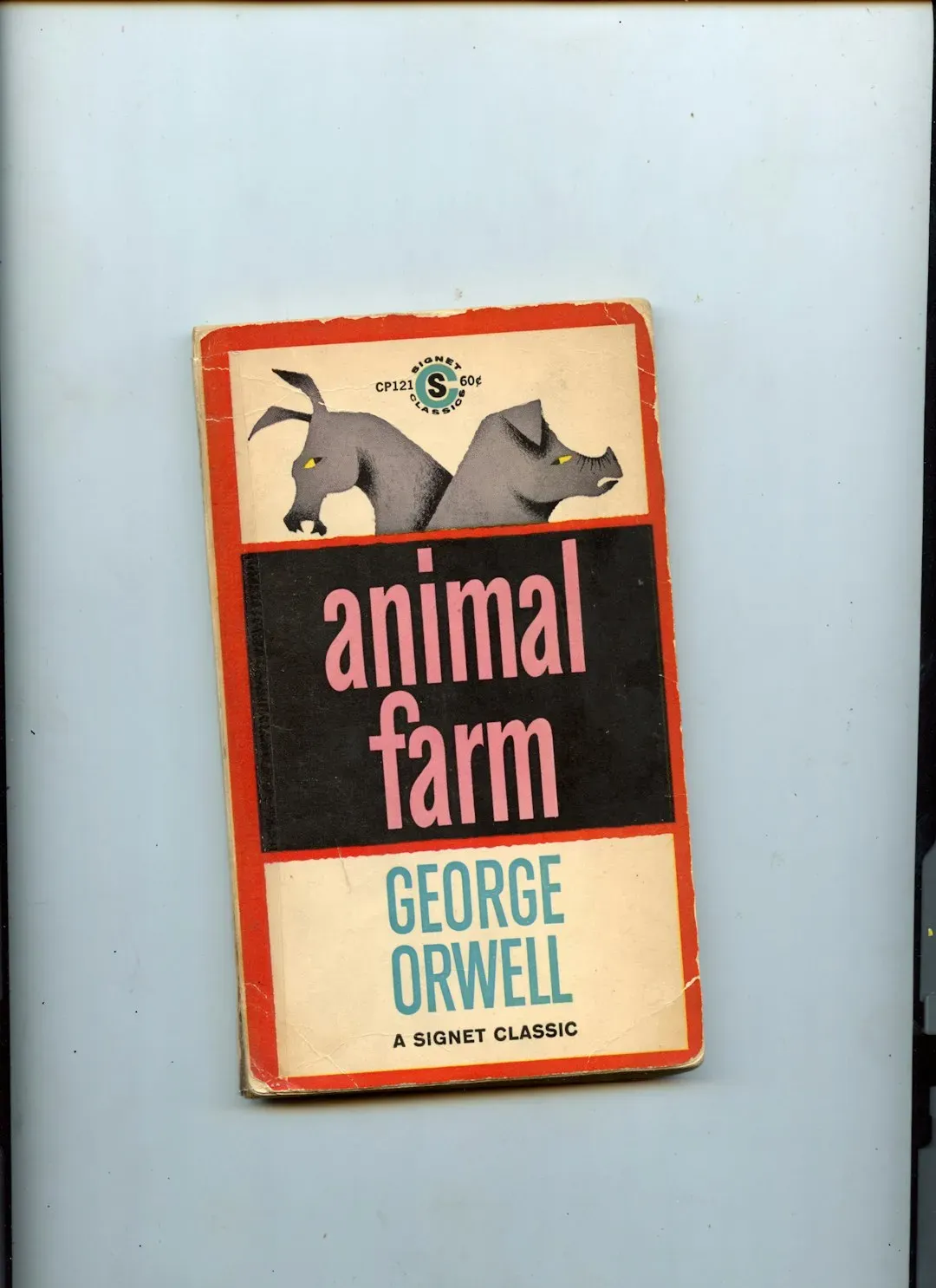
Orwell’s 1945 fable follows the of Manor Farm after they overthrow their human farmer. The story is told in a third person voice that stays close to the ‘ point of view, with pigs gradually taking control. It’s an allegory of the Russian Revolution and the rise of Stalinism.
Its narration is calm and almost deadpan, which makes the betrayals land harder. The book is short enough to read in an afternoon. That brevity is part of why it’s still taught in schools.
The Call of the Wild by Jack London

London’s 1903 novel follows Buck, a domesticated dog taken from a California home and sold into the Yukon gold rush as a sled dog. The narration is third person, but it stays tightly inside Buck’s perceptions and instincts. We watch him shed his comforts and respond to something older in himself.
London wrote it with deep sympathy for the animal, though he’s shaping the dog’s thoughts through a human lens. The book was a major success and helped establish his reputation. Its companion piece, White Fang, reverses the arc by taking a wild wolfdog toward domestication.
The Art of Racing in the Rain by Garth Stein
Stein’s 2008 novel is narrated by Enzo, an aging Labrador and terrier mix who loves racing and has absorbed a lot of wisdom from watching television. He tells the story of his owner, Denny, a race car driver, and the family’s struggles. Enzo’s voice is wry, earnest and a little philosophical.
The novel became a bestseller and was adapted into a 2019 film. Its central conceit is that Enzo believes dogs can be reborn as humans, which gives the book its emotional shape. It’s a gentle entry point for readers who want an animal narrator with a lot of heart.
Partner offer
Watership Down by Richard Adams
Adams published this epic in 1972, and it follows a band of rabbits fleeing the destruction of their warren. The narration is third person, but the book builds a full rabbit culture, with its own folklore, language and mythology. Hazel, Fiver and Bigwig make the journey to find a new home.
Adams reportedly began the story as a tale told to his daughters on a car trip. The rabbits feel like , not humans in fur, which is much of the book’s strength. It won the Carnegie Medal and the Guardian Children’s Fiction Prize.
The Hundred and One Dalmatians by Dodie Smith

Smith’s 1956 novel tells the story of two Dalmatians, Pongo and Missis, whose puppies are stolen by the villainous Cruella de Vil. The narration is third person and moves between the dogs and their humans. The dogs communicate across London and the countryside through a network called the Twilight Barking.
It’s brisk, funny and full of period detail. Disney adapted it as an animated film in 1961, which eclipsed the book in popular memory. The original is well worth reading for its dry wit.
The Tale of Despereaux by Kate DiCamillo
This 2003 novel follows a small mouse who loves music, stories and a human princess. The narrator, an openly intrusive storyteller, speaks directly to the reader throughout. That voice gives the book a fairy tale warmth, with a few darker turns.
DiCamillo won the Newbery Medal for it in 2004. A 2008 animated film followed. The book is aimed at younger readers, though adults often appreciate its structure and tone.
Flush by Virginia Woolf
Woolf’s 1933 novel is a fictional biography of the cocker spaniel owned by the poet Elizabeth Barrett Browning. The narration stays close to the dog’s senses, especially smell, as he moves from a sheltered life in London to Italy. It’s a playful book with a serious interest in perception.
Woolf used the dog to look at Victorian society from a lower vantage point. It’s one of her lighter works, but it’s still formally inventive. It makes a good pairing with her better known novels.
Mr. Fox and other voices in Fantastic Mr Fox by Roald Dahl
Dahl’s 1970 children’s novel follows a clever fox who raids three nasty farmers to feed his family. The narration is third person and playful, with the ‘ perspective at the center. The farmers, Boggis, Bunce and Bean, make fine foils.
It’s short, quick and a good read aloud. Wes Anderson adapted it as a stop motion film in 2009. The book’s appeal rests on its cheerful cunning and its sense of family loyalty.
Partner offer
Planning a trip to Vegas?
Compare hotel rates and show tickets on VEGAS.com.