Most people know who sang “Good Vibrations,” “Bridge Over Troubled Water,” or “My Girl.” Far fewer know who actually played the instruments on those tracks. Behind some of the biggest pop songs in history sits a small and remarkably consistent cast of studio professionals, moving from session to session, studio to studio, picking up their instruments and delivering magic on demand – then disappearing from the credits entirely.
The arrangement suited everyone at the time. Record labels preferred the illusion that famous artists played their own parts. Record labels wanted to keep it that way, maintaining the illusion that famous bands, such as The Monkees, always played their own instrumental parts. These nine musicians are the real architects of an era’s sound – and most people couldn’t pick their names out of a lineup.
1. Hal Blaine – The Drummer Behind an Impossible Number of Number Ones
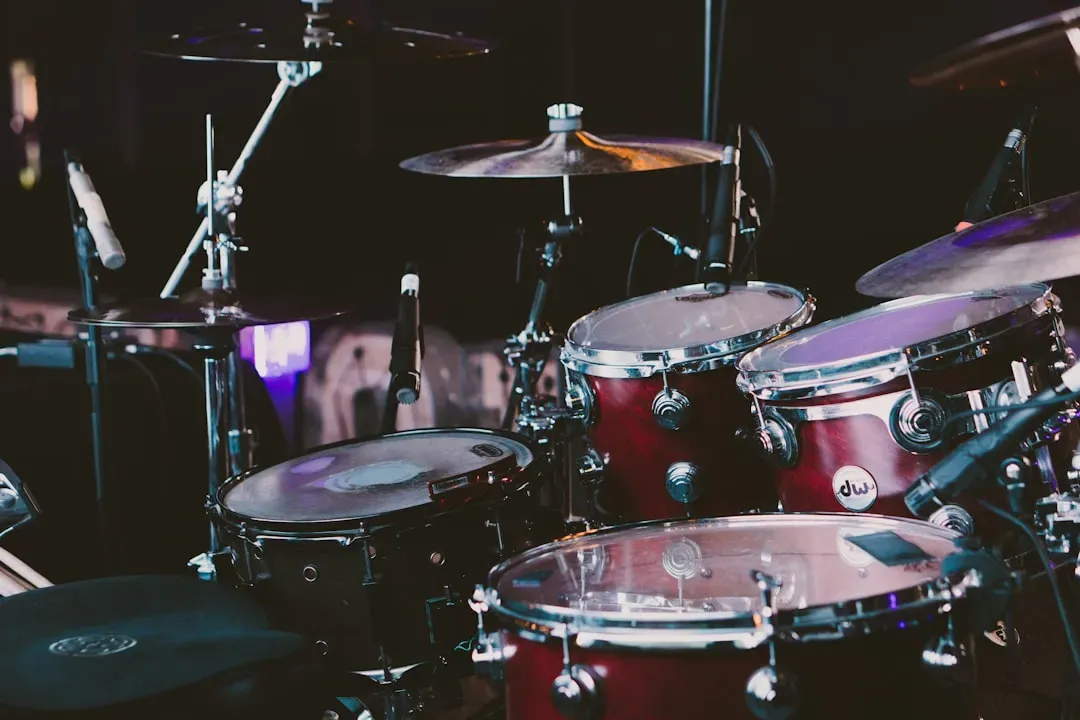
Hal Blaine has featured on thousands of songs and is often listed as one of the most recorded musicians in history. He’s played on more number one hit songs than any living musician, and more than Michael Jackson and The Beatles combined. That’s a statistic that still doesn’t quite compute, even when you see it written out. Blaine is estimated to be among the most recorded studio drummers in history, claiming over 35,000 sessions and 6,000 singles, with his drumming featured on 150 US top 10 hits, 40 of which went to number one.
Some of the records Blaine played on include the Ronettes’ single “Be My Baby” (1963), which contained a drum beat that became widely imitated, as well as works by popular artists such as Frank Sinatra, Elvis Presley, the Beach Boys, Simon and Garfunkel, Neil Diamond, and the Byrds. He was also, by most accounts, the informal ringleader of the Wrecking Crew, the loose collective of Los Angeles session players who quietly dominated American pop. Blaine was among the inaugural “sidemen” inductees to the Rock and Roll Hall of Fame in 2000, and the Wrecking Crew was entirely inducted into the Musicians Hall of Fame and Museum in 2007.
2. Carol Kaye – The Most Recorded Bassist in History
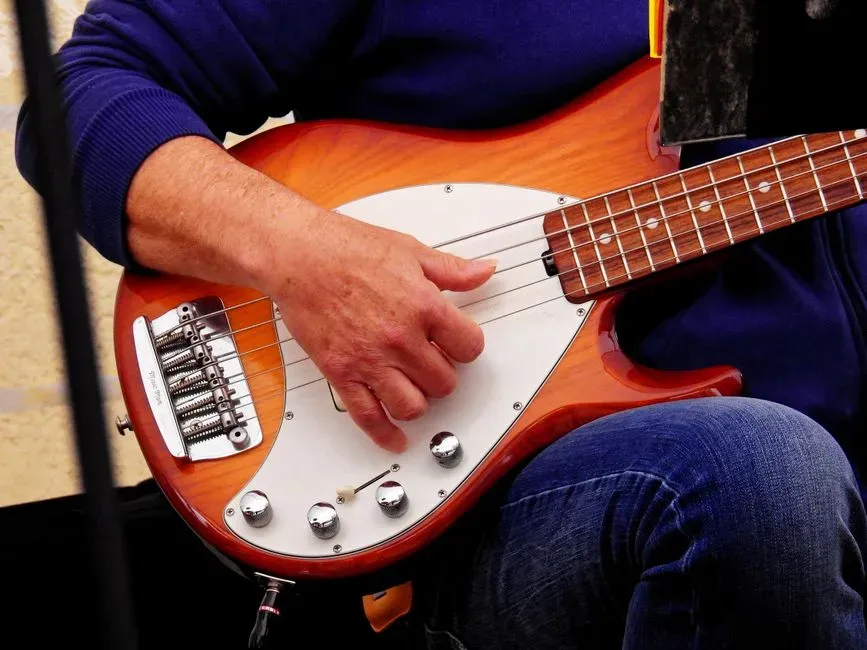
Carol Kaye is one of the most prolific recorded bass guitarists in rock and pop music, playing on an estimated 10,000 recordings in a career lasting over 65 years. She came into session work almost by accident. After a bassist failed to turn up to a session in 1963, she switched to that instrument, quickly making a name for herself as one of the most in-demand session players of the 1960s, playing on numerous hits.
Her session work powered iconic hits across genres, including the Beach Boys’ “Good Vibrations” and “Help Me Rhonda,” Sonny and Cher’s “The Beat Goes On,” Glen Campbell’s “Wichita Lineman,” Nancy Sinatra’s “These Boots Are Made for Walkin’,” and the Grass Roots’ “Midnight Confessions,” as well as television themes like Mission: Impossible and the Batman series. Paul McCartney has acknowledged that his bass playing on the Beatles’ Sgt. Pepper’s Lonely Hearts Club Band was inspired by her work on Pet Sounds. In 2020, Rolling Stone ranked her number five on its list of the 50 greatest bassists of all time.
3. James Jamerson – The Heartbeat of Motown
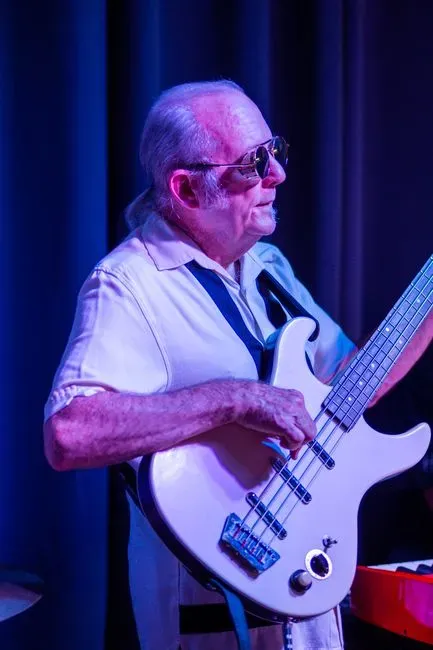
From 1959 until 1972, the Funk Brothers provided the studio backup sound for nearly every act on the legendary Motown record label in Detroit. Bassist James Jamerson was the soul of that group. Jamerson, who began his career playing upright bass, adopted the Fender Precision Bass, an electric instrument, in 1962, and played both acoustic and electric bass on some Motown recordings. His bass lines on classics like Marvin Gaye’s “I Heard It Through the Grapevine” and The Four Tops’ “Reach Out I’ll Be There” are so inventively melodic that many listeners mistake them for lead parts.
Unlike the Wrecking Crew in L.A. and Booker T. and the M.G.’s in Memphis, the Funk Brothers were rarely credited for their work, and few outside of the industry knew about them until the release of the 2002 documentary Standing in the Shadows of Motown. James Jamerson passed away in 1983, and only received wider recognition posthumously; he was finally inducted into the Rock and Roll Hall of Fame in 2000 in the sideman category. Generations of bass players have called him the greatest to ever do it.
4. Nicky Hopkins – The Pianist Who Shaped Both Sides of the Atlantic
The haunting intro on the Rolling Stones’ “Monkey Man,” the galloping keyboard solo on the Beatles’ “Revolution,” the piano that anchors the Who’s “The Song Is Over,” and countless other indelible classic-rock moments were all the work of one man: session keyboardist Nicky Hopkins. Hopkins was formally trained, having won a scholarship to the Royal Academy of Music in London, and his classical grounding gave his rock piano a distinctive authority that producers simply couldn’t replicate. His poor health and repeated surgery later made it difficult for him to tour, and he worked mainly as a session musician for most of his career.
A classically trained player from Middlesex, England, Hopkins performed on nearly every Stones album from 1967 to 1981, was a founding member of the Jeff Beck Group, and played on solo albums by all four Beatles, among many other accomplishments. On the Stones’ Exile on Main St., Hopkins plays on 14 of the album’s 18 tracks, giving him a greater presence than full time Rolling Stone Bill Wyman, who only contributed to nine of the songs. He died in 1994, at just fifty years old, still largely unknown to the general public.
5. Earl Palmer – The Man Who Invented the Rock Drum Beat
Before moving to Los Angeles, Earl Palmer worked studio gigs in his hometown of New Orleans, where rhythm and blues artists like Fats Domino and Little Richard were laying the foundations for what would become rock and roll. Palmer’s stomping backbeat on “The Fat Man,” recorded way back in 1949, is often cited as the first recorded use of a standard rock and roll drum pattern. That’s not a small claim. It means that nearly every rock drummer who came after him was, in some way, following the template Palmer built.
Partner offer
After moving to Los Angeles in 1957, in the 1960s Palmer played on hit records by artists such as Ike and Tina Turner, Glen Campbell, Jan and Dean, the Righteous Brothers, the Beach Boys, the Ronettes, the Everly Brothers, and Sonny and Cher. Though his work slowed down in the 70s and 80s, Palmer could still be heard on records by Randy Newman, Tom Waits, Bonnie Raitt, and Elvis Costello. Two cities, four decades, and an outsized influence on how popular music sounds to this day.
6. Tommy Tedesco – The Guitar Player Television Couldn’t Live Without
Thomas Joseph Tedesco was an American guitarist and studio musician in Los Angeles and Hollywood. He was part of the loose collective of the area’s leading session musicians later popularly known as the Wrecking Crew, who played on thousands of studio recordings in the 1960s and 1970s, including several hundred Top 40 hits. His name rarely appeared on an album sleeve, but his guitar was practically omnipresent. Tommy Tedesco was one of the core members of the Wrecking Crew and his guitar introductions were essential to many of the famous television theme tunes of the era, including The Twilight Zone, Green Acres, Bonanza, M*A*S*H, Batman, Mission: Impossible, and Hawaii Five-O, along with film scores such as Born Free.
The scope of Tedesco’s output is almost hard to take in. He reportedly played on over 5,000 recordings across film, television, and pop music during his active years. He died of lung cancer in 1997, at the age of 67. His son Denny directed the 2008 documentary film The Wrecking Crew, which features interviews with Tommy Tedesco and many of his fellow session musicians. That documentary, long delayed by music rights disputes, became one of the most important tributes to the session musician world ever put on screen.
7. The Funk Brothers – Detroit’s Uncredited Engine
The Funk Brothers provided the backbone and backbeats for a slew of hits by artists like The Contours, Marvin Gaye, The Supremes, and The Four Tops. As a collective, they operated out of Hitsville U.S.A. in Detroit for over a decade, recording multiple tracks per day with virtually no public acknowledgment. The group, which featured a core team of 13 musicians, can be heard on countless hits from The Temptations’ “My Girl” to Stevie Wonder’s “Signed, Sealed, Delivered I’m Yours,” and they were known to experiment with unconventional instruments – on some songs, they even used tire irons and snow chains as percussion equipment.
The Funk Brothers were dismissed in 1972, when Berry Gordy moved the entire Motown label to Los Angeles – a development some of the musicians discovered only from a notice on the studio door. The abruptness of that ending, after years of helping create some of the most beloved music of the 20th century, says everything about how the industry valued their contributions. In February 2004, surviving members of the Funk Brothers were presented the Grammy Legend Award at the 46th Annual Grammy Awards.
8. Booker T. and the M.G.’s – The Stax House Band That Defined Southern Soul
As part of the house band for Stax in the 60s, Booker T. Jones on organ and piano, Steve Cropper on guitar, Lewie Steinberg on bass, and Al Jackson Jr. on drums provided the backing tracks for artists like Otis Redding, Wilson Pickett, Sam and Dave, and Bill Withers. While they were more visible than most session collectives – they also put out their own instrumental recordings – their role as the invisible architecture behind Memphis soul was just as foundational. They were perhaps unique for a major group of session musicians in that they put out their own instrumental albums in addition to session work.
Their sound, built around interlocking grooves and Steve Cropper’s uniquely economical guitar playing, defined the Stax catalog. Also known as “The Swampers,” the Rhythm Section were responsible for creating the famed “Muscle Shoals Sound,” which can be heard on numerous songs including soul hits like The Staple Singers’ “I’ll Take You There” and rock classics like The Rolling Stones’ “Wild Horses.” The line between house band and legend became, for Booker T. and the M.G.’s, surprisingly thin.
9. Jeff Porcaro – The Studio Drummer Who Defined Precision
Jeff Porcaro is one of the most recorded session musicians in history, working on hundreds of albums and thousands of sessions. While already an established studio player in the 1970s, he came to prominence in the United States as the drummer on the Steely Dan album Katy Lied. From there, his career expanded into virtually every corner of popular music. He co-founded Toto, but his session resumé ran far deeper than any single band. In a career that spanned more than 20 years, Porcaro worked with artists across genres and was best known for his work with Toto and his extraordinary session output.
Porcaro’s playing was defined by a kind of effortless authority – the kind of drumming that doesn’t announce itself but makes every song feel locked in and inevitable. His half-time shuffle on Toto’s “Rosanna” became so studied in drumming circles that it earned its own name: the “Rosanna Shuffle.” He passed away in 1992 at 38. Jeff Porcaro changed how people think about drumming in the studio with his incredibly precise grooves for Toto and Steely Dan. His influence quietly lives on in any producer who values feel over flash.
What’s striking about all nine of these musicians isn’t just the sheer number of hit records they touched. It’s the consistency of the invisibility. They were, by design and by industry custom, kept out of the spotlight while the music they created became some of the most recognizable on earth. The credits went elsewhere. The royalties went elsewhere. The fame certainly went elsewhere. What remained – what still remains – is the sound itself, and it turns out that’s the most lasting thing of all.
Partner offer
Planning a trip to Vegas?
Compare hotel rates and show tickets on VEGAS.com.