Every so often, a song shows up that feels less like a hit and more like a message from the future. Long before streaming algorithms, AI vocals, or genre-blending playlists became the norm, a handful of tracks quietly laid the groundwork for exactly where pop, hip-hop, and electronic music would end up decades later. Looking back at these songs now, in 2026, the strange part isn’t just that they were ahead of their time. It’s how precisely they mapped out the sound of the future while nobody was really paying attention.
1. Kraftwerk – “Trans-Europe Express” (1977)
When Kraftwerk released this stark, mechanical ode to European rail travel, it read as art-rock oddity to most American listeners. Yet its rhythmic, almost robotic pulse became the literal blueprint for hip-hop’s birth just five years later. The song’s synthesiser riff proved hugely influential on early hip-hop artists such as Afrika Bambaataa, who sampled the track on his groundbreaking 1982 electro-rap hit Planet Rock.
What makes this prediction so uncanny is how directly the influence traveled. Bambaataa and his crew melded the dramatic string melody of “Trans-Europe Express” with a drum groove played on a Roland TR-808, creating a rich musical hybrid whose influence still reverberates today. A German band singing about train travel ended up authoring the DNA of electro, techno, and eventually most of modern hip-hop production.
2. Grandmaster Flash and the Furious Five – “The Message” (1982)

Before “The Message,” hip-hop was mostly party music built for dancing, not social commentary. This track flipped that script entirely, using rap as a vehicle for describing urban decay, poverty, and frustration in plain, unflinching language. It essentially predicted that hip-hop would become one of the most important vehicles for political and social storytelling in American music.
Decades later, that prediction feels almost obvious, since conscious rap, protest hip-hop, and socially aware lyricism now sit at the center of the genre’s mainstream identity. Artists from Kendrick Lamar to J. Cole owe a structural debt to a song that dared to make hip-hop serious. It wasn’t guaranteed that rap would go this direction back in 1982, but “The Message” pointed the way and the culture followed.
3. Gil Scott-Heron – “The Revolution Will Not Be Televised” (1970)
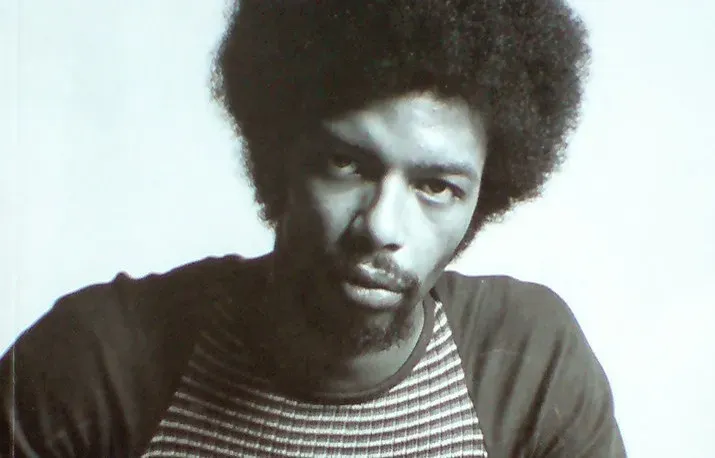
Gil Scott-Heron’s spoken-word piece was less a song than a warning about how media, consumerism, and passive entertainment would swallow genuine political engagement. Its rhythmic delivery over percussion is now widely cited as one of the direct forerunners of rap as a vocal style. The track predicted a media landscape saturated with distraction, which feels eerily specific to a world now defined by endless scrolling and algorithmic feeds. Its influence on hip-hop’s spoken cadence is hard to overstate, since generations of MCs have cited Scott-Heron’s rhythmic wordplay as foundational. What started as a critique of 1970s television culture reads today like an early sketch of the attention economy. That’s a strange kind of accuracy for a song made half a century before smartphones existed.
4. Cher – “Believe” (1998)
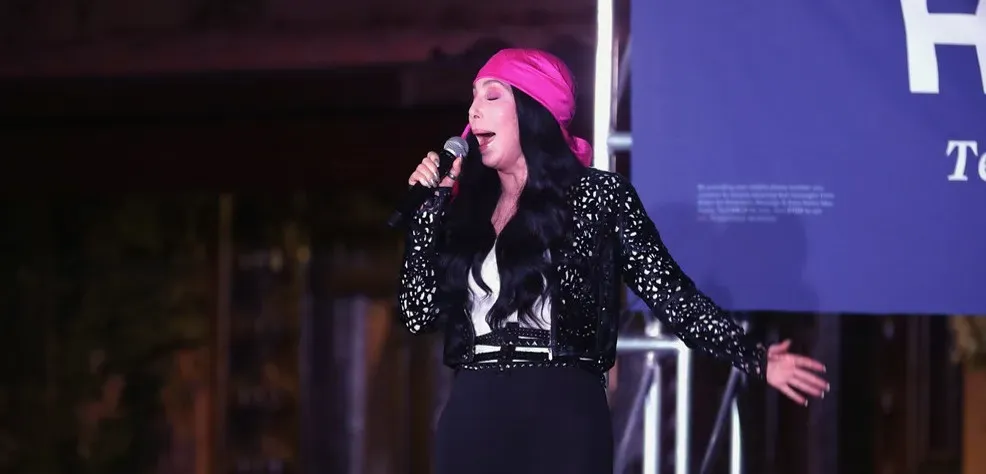
Cher’s “Believe,” released in December 1998, was the first commercial recording to feature the audible side-effects of Antares Auto-Tune software used as a deliberate creative effect. The software’s inventor had originally intended it to be used discreetly, but Cher’s team pushed it to create highly obvious, distorted vocals, which shocked listeners at the time. Nobody quite knew what they were hearing, but that robotic warble would go on to define an entire era of pop production.
Auto-Tune became a very prominent tool in a lot of pop, R&B and hip-hop production in the years following, moving far beyond correction into full aesthetic territory. Music critic Simon Reynolds later observed that Auto-Tune had revolutionized popular music, calling its use for effects the fad that just would not fade, noting its use is now more entrenched than ever. A dance-pop single from the late nineties essentially predicted the vocal texture of hip-hop, trap, and pop for the next twenty-five years.
5. T-Pain – “Buy U a Drank (Shawty Snappin’)” (2005)
If Cher introduced Auto-Tune as a shock effect, T-Pain normalized it as a permanent fixture of hip-hop and R&B vocal delivery. His mid-2000s run of hits made the pitch-shifted, melodic-rap hybrid sound not just acceptable but desirable, paving the way for an entire generation of artists who blur the line between singing and rapping. What seemed like a novelty at the time became the default vocal texture for much of trap and melodic rap by the following decade.
Artists like Future, Travis Scott, and countless SoundCloud-era rappers built entire careers on the vocal approach T-Pain popularized. The prediction here wasn’t subtle, it was structural: hip-hop’s future vocal identity would be processed, melodic, and unapologetically synthetic. Looking at charts through the 2010s and into the 2020s, that bet paid off completely.
Partner offer
6. Radiohead – “Idioteque” (2000)
Built around a sample pulled from obscure 1970s computer music and skittering, glitchy beats, “Idioteque” sounded like almost nothing else on rock radio in 2000. It anticipated the anxious, fragmented, digitally warped textures that would later define IDM’s crossover into mainstream pop and indie music. The lyrics themselves, filled with vague dread about collapse and climate, feel unsettlingly current for listeners revisiting the track today.
Its production techniques quietly influenced a generation of electronic-leaning pop and indie acts who blended organic instrumentation with glitchy, computer-generated textures. That fusion is now standard across genres, from hyperpop to alternative R&B. A rock band experimenting with obscure electronic music theory ended up forecasting how mainstream pop would sound once digital production tools became universally accessible.
7. Björk – “All Is Full of Love” (1997)
Björk’s ethereal ballad, paired with its iconic music video depicting two robots in an intimate embrace, explored themes of technology, artificial intelligence, and human-machine connection years before those ideas became cultural mainstays. The song’s minimalist, almost mechanical arrangement mirrored its subject matter with unusual precision. It suggested a future where the boundary between organic emotion and synthetic creation would blur, a theme that feels remarkably relevant now that AI-generated vocals and virtual artists are an active part of the music industry conversation.
Nearly three decades later, debates about AI voice cloning, virtual pop stars, and machine-assisted composition dominate industry discussions in ways Björk’s song seemed to anticipate. The track didn’t just use futuristic imagery for aesthetic flair, it treated the emotional stakes of human-machine intimacy with genuine seriousness. That’s a difficult tone to strike, and it’s part of why the song still feels ahead of its time.
8. M.I.A. – “Paper Planes” (2007)

Built from a sample of The Clash’s “Straight to Hell” and layered with gunshot sound effects and cash register sounds, “Paper Planes” fused global influences, punk history, and hip-hop swagger into something that fit no single genre category. It became a surprise crossover hit that foreshadowed the genre-blending, internationally minded pop landscape that would define much of the 2010s and 2020s. The song’s success suggested that audiences were ready for music that refused easy categorization.
That prediction proved accurate as global pop increasingly rewarded artists who mixed regional sounds, languages, and production styles without apology. Reggaeton, Afrobeats, and K-pop crossovers into English-language markets all reflect the same borderless instinct “Paper Planes” tapped into nearly two decades ago. M.I.A.’s track wasn’t just catchy, it was a working demonstration of where mainstream pop’s appetite was heading.
9. SOPHIE – “Bipp” (2013)
SOPHIE’s debut single arrived sounding almost aggressively synthetic, all rubbery bass, hyper-glossy synths, and pitched-up vocals that felt closer to a video game than a pop song. At the time, it read as niche electronic experimentation confined to underground clubs and PC Music circles. In hindsight, it was an early, precise sketch of hyperpop, the maximalist, digitally exaggerated genre that would explode in popularity through the late 2010s and early 2020s.
Artists like Charli XCX, 100 gecs, and a wave of younger producers openly credit SOPHIE’s production style as foundational to their sound. What started as an outlier aesthetic became a defining texture of internet-native pop music within a decade. Few tracks have predicted a genre’s arrival this specifically, right down to the exaggerated pitch and plastic sheen that hyperpop would later make its signature.
Taken together, these nine songs share something beyond good timing. Each one treated a piece of studio technology, a lyrical idea, or a genre fusion as something worth pushing to its extreme, long before the rest of the industry caught up. That willingness to sound strange first and normal later is, in hindsight, the clearest signal of where music was actually headed.Partner offer
Planning a trip to Vegas?
Compare hotel rates and show tickets on VEGAS.com.