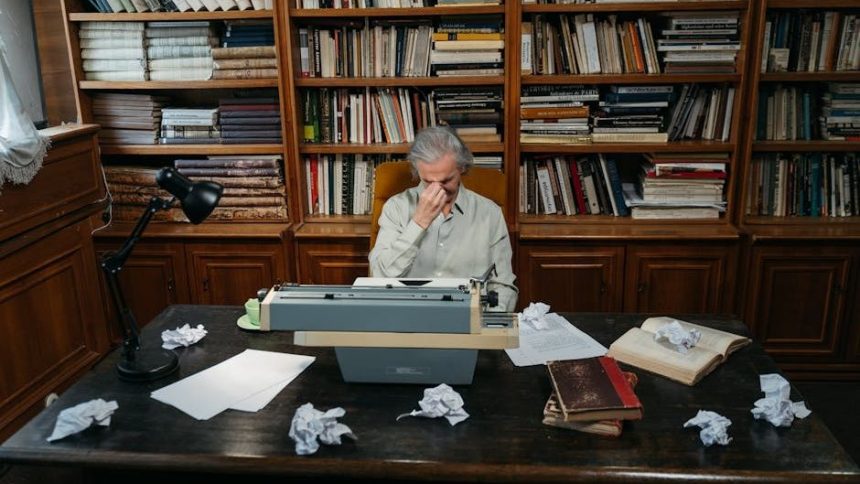
Finishing a book is supposed to feel like a triumph. Months or years of work, finally done. Yet for many writers, the moment of completion brings something unexpected: a creeping, unsettling certainty that what they’ve written is not good. Not just imperfect, but genuinely bad. Maybe even unworthy of existing.
This experience is far more common than the publishing world tends to let on. Almost every writer hates their own book at some point, usually somewhere deep in the revision process when there’s no end in sight and they’re questioning everything, from the main character to the font. What happens next is where things get interesting.
The Emotional Crash After “The End”

There are times when writers pour so much time and effort into something, they get tired of it and, no matter what they do, they find themselves unhappy with the finished product. That fatigue can feel indistinguishable from genuine creative failure. After living inside a story for so long, it’s genuinely hard to tell the difference between burnout and bad writing.
Much of this emotional difficulty comes from the gap that exists between the vision an author had for the story and the reality staring back at them on the page. The larger that gap is, the more frustrated they’re bound to feel. If they haven’t finished the story yet, those feelings can be even worse. Finishing, paradoxically, can make the gap feel even more visible and permanent.
The Role of Imposter Syndrome in Author Self-Hatred

Imposter syndrome is a behavioral health phenomenon described as self-doubt of intellect, skills, or accomplishments among high-achieving individuals. These individuals cannot internalize their success and subsequently experience pervasive feelings of self-doubt, anxiety, depression, and apprehension of being exposed as a fraud in their work, despite verifiable and objective evidence of their successfulness.
Imposter syndrome is rife in the author community, hidden by a veil of keeping up appearances. If you meet an author who seems a little distant or stand-offish, chances are they feel like someone is about to discover that they are just a bag of jangled nerves. They are waiting to be found out and cast back into the darkness. The completion of a book doesn’t resolve this feeling. Often, it sharpens it.
When Authors Trash Their Own Manuscripts: The Case of Stephen King
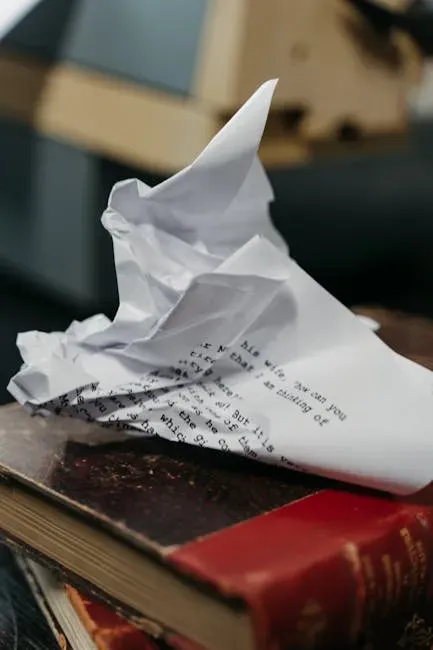
Few stories illustrate the gap between authorial self-judgment and actual quality better than the origin of Carrie. Though King initially gave up on Carrie due to discomfort and apathy, and felt it would never be successful, his wife Tabitha persuaded him to continue writing and rescued the first three pages of the story from the trash. He followed her advice and expanded it into a novel.
King wrote the first three pages, which is the shower scene, but he tossed them in the trash as he “hated it,” explaining he couldn’t relate to Carrie’s problems and it “didn’t move him emotionally.” Carrie was then rejected by publishers a whopping 30 times before it finally found a home. The paperback rights eventually sold for $400,000, launching one of the most successful careers in literary history.
Famous Authors Who Finished Books They Couldn’t Stand
Some authors grow to dislike, disown, resent, or regret their books after publication, whether because of an unexpected critical or popular response, changes in their own views, or simply aging. The history of literature is quietly full of these cases. Anthony Burgess hated the work he is best known for. A Clockwork Orange, which he claimed had been written in just three weeks, frustrated him because he was known only for that novel, and not for the many other works he had written.
Throughout his personal diary and different correspondences, Franz Kafka pointedly expressed his distaste for his own work, including The Metamorphosis. He hated some of his writing so much that upon his deathbed, he asked his best friend Max Brod to burn all of his unpublished works, including his telling journals. Luckily for generations of readers, Kafka’s last wishes were ignored and his work and diaries were published.
When Regret Comes After Publication, Not Before
Sometimes the distaste for a book doesn’t arrive until after it’s out in the world and has taken on a life of its own. Peter Benchley’s debut novel sold 20 million copies and became the basis for Steven Spielberg’s hugely successful film. But Benchley deeply regretted the shark-paranoia that he spawned with his work. After the book was published, he became a shark conservationist and sought to educate people about the animals and their very slim threat to humans.
Partner offer
Today, The Great Gatsby is considered one of the greatest American novels ever written. During his lifetime, F. Scott Fitzgerald didn’t think much of it. When the novel was published in 1925, it received mixed reviews and sold poorly, leading Fitzgerald to view it as a failure. He was disappointed by its initial reception and felt the novel hadn’t lived up to his own expectations. It wasn’t until after his death that The Great Gatsby gained the recognition it has today. Fitzgerald never lived to see its lasting impact, believing instead that it was one of his lesser works.
The Contractual and Commercial Reality
For most published authors, finishing a book they hate doesn’t automatically give them the option to walk away. Publishers hold contracts. Deadlines bind. Agatha Christie absolutely detested her iconic detective Hercule Poirot. She found him to be a “detestable, bombastic, tiresome, egocentric little creep.” This was even more damaging for her because her publisher wouldn’t allow her to stop writing about him due to his popularity. In all, she wrote 33 novels and 56 short stories featuring the pompous investigator.
In some cases, even after authors turn against their own books, they don’t have the ability to take the book out of print, because the copyright is owned by the book’s publishers. This is a frustrating but common reality. The author’s creative relationship with the work ends at a certain point, while the book’s commercial life continues independently, sometimes long past the point the writer wished it would stop.
The Psychology of Hating Work You Made
In nearly all cases where authors reject their own books, it’s because those books did not meet the author’s own expectations. Writers are their own harshest critics. This isn’t a flaw or a quirk. It’s built into how creative people relate to their work, because they carry the original vision in their heads and compare it constantly to the finished thing.
A lack of objective standards for the quality of one’s writing can spawn self-doubt. Inhabiting other characters cuts at writers’ own identity, contributing to imposter syndrome. Fiction writers in particular are caught in a strange loop: they must simultaneously believe deeply in what they’re creating and maintain enough critical distance to shape it. When those two modes of thinking clash at the end of a project, self-loathing is often the result.
What Happens When the Public Loves What the Author Hates

The disconnect between an author’s judgment and a reader’s experience can be genuinely disorienting. In his essay collection Palm Sunday, Kurt Vonnegut graded each of his previously published works. Though nothing got an F, Vonnegut gave a D to Slapstick, an apocalyptic sci-fi novel about the King of Manhattan and last president of the United States. He didn’t completely hate it, but Vonnegut definitely didn’t love Slapstick or his other novel Happy Birthday Wanda June, which he also gave a D to.
Readers, meanwhile, kept buying them. As readers, people often put authors on a pedestal, imagining them as confident masters of their craft, churning out beloved novels without a hint of doubt. The truth is that many famous authors have a complicated relationship with their work. From iconic novels to celebrated characters, some of these creators have publicly admitted they aren’t the biggest fans of their own creations. The gap between the author’s self-assessment and the public’s reception can span decades and millions of copies.
The Rare Option: Suppression and Disowning
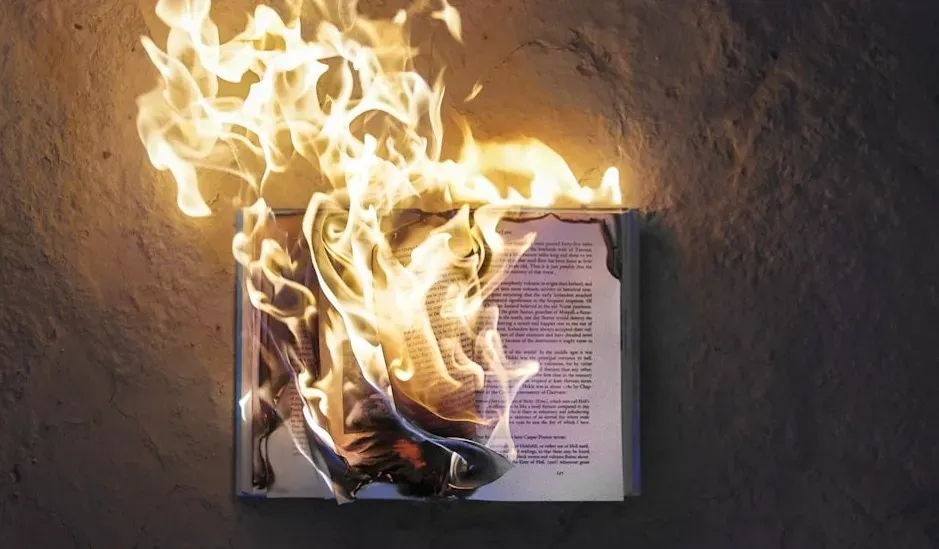
Some authors go further than grumbling privately. A few have actively tried to erase the books they hate from their own history. Octavia Butler considered her third novel, Survivor, too clichéd and too much like the “really offensive garbage” science fiction that was popular when she was young. Though you can’t buy it today unless you want to spend close to $150 on the secondary market, Survivor is still cherished among hardcore science fiction fans.
Nathaniel Hawthorne’s first novel was a slim campus novel, self-published anonymously, spending $100. He soon soured on it too. As his sister Elizabeth explained, there were a few copies sold and he gave her one, but afterwards he took possession of it and no doubt burned it. They were told to keep the authorship a profound secret. Hawthorne’s instinct was total erasure, the kind of response that only becomes possible before the internet makes everything permanent.
What This Tells Us About Craft and Creative Honesty

There’s something quietly valuable in knowing that an author’s personal verdict on their own work is often unreliable as a measure of its actual worth. In nearly all cases, books that authors rejected didn’t meet the author’s own expectations. Writers are their own harshest critics. That harshness, while painful, is also partly what drives writers to push toward something better with each project.
It seems that wherever writers are on their journey, self-doubt will come along for the ride. Embracing self-doubt as part of the creative process, and being encouraged by the fact that virtually all other creatives, including writing heroes, feel it too with every book they write, can reframe the experience entirely. The finished book, however imperfect it feels in the author’s hands, often has a life and a meaning that belongs entirely to the reader. That gap between creation and reception is not a failure of the work. It may be the most honest thing about it.
Partner offer
Planning a trip to Vegas?
Compare hotel rates and show tickets on VEGAS.com.