
Most people have knocked on wood without thinking twice about it, tossed salt over a shoulder out of pure reflex, or felt a small twinge of unease when a black cat crossed their path. These aren’t just quirky habits. They’re the living remnants of beliefs that once made complete sense to the people who held them, rooted in plagues, ancient gods, expensive commodities, and genuine fear of the unknown.
What’s remarkable is how durable these ideas have proved. Despite the dominance of science in today’s world, superstitious beliefs remain surprisingly popular, and some of the most enduring trace their beginnings all the way back to ancient Babylonia. The stories behind them tend to be far more grounded, and far more human, than most people expect.
Breaking a Mirror Brings Seven Years of Bad Luck
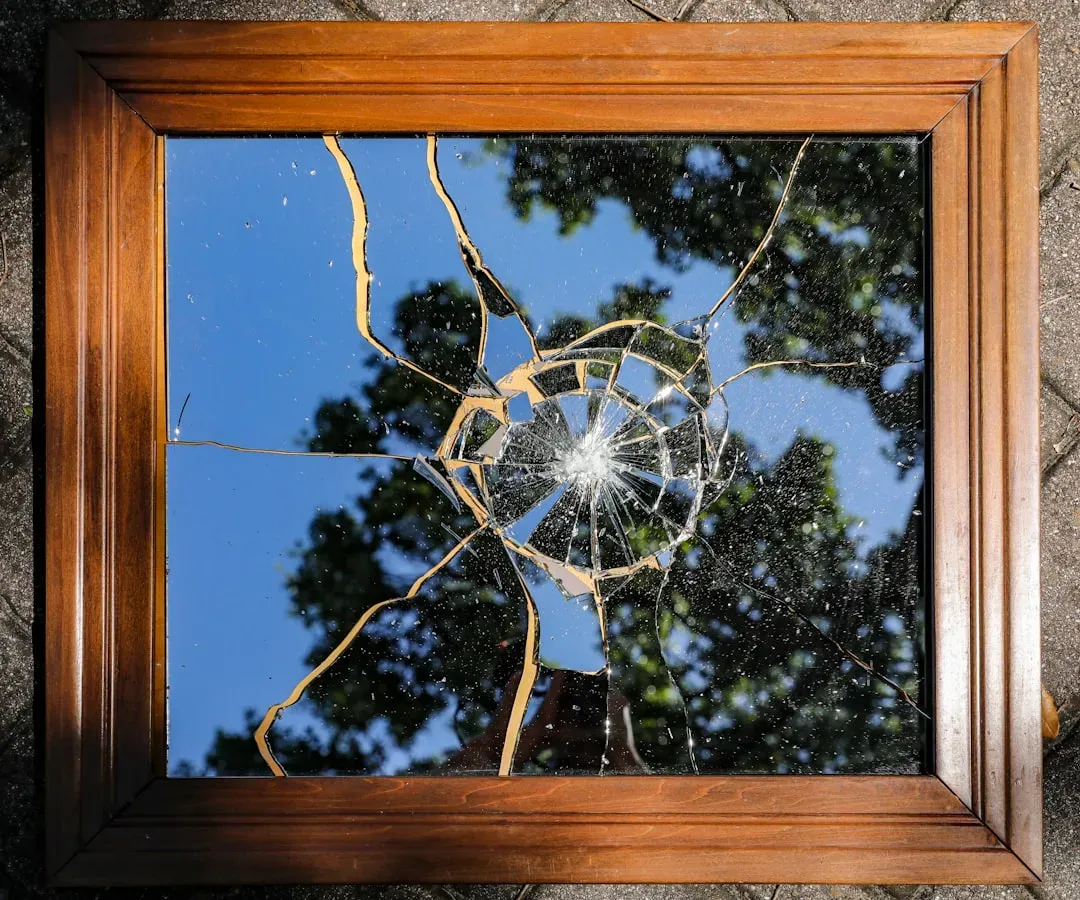
This superstition is between 2,000 and 2,700 years old. Its roots lie in the ancient belief that a mirror was not simply a reflective surface but a window into the soul. The Greeks believed that one’s reflection revealed one’s soul, and it was Roman artisans who learned to manufacture mirrors from polished metal surfaces, believing their gods observed souls through these devices. To damage a mirror was considered so disrespectful that it was thought to compel the gods to rain bad luck on anyone so careless.
It was the Romans who attached the specific penalty of seven years of bad luck to a broken mirror. The length of the prescribed misfortune came from the ancient Roman belief that it took seven years for life to renew itself. When the first real glass-backed mirrors were produced in fifteenth-century Italy, they were highly expensive and very fragile, and servants who had to clean them were warned that breaking one would bring seven years of bad luck, partly to ensure they handled these precious objects with care.
Knocking on Wood
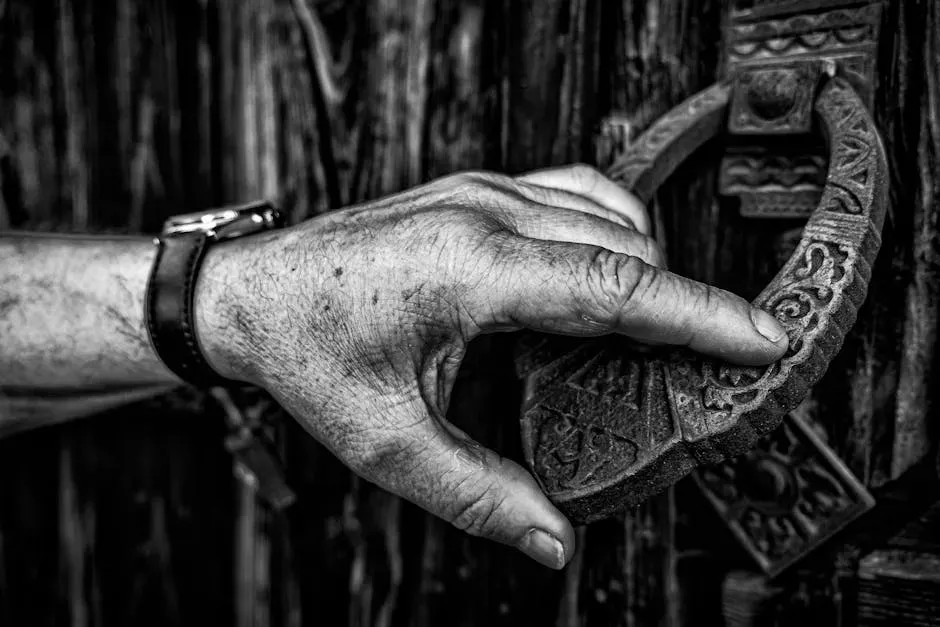
This common and persistent habit originated with ancient pagan cultures that believed spirits and gods resided in trees, and knocking on a tree could summon protection. The Celts, in particular, treated trees as sacred dwellings. People knocked on wood to request good luck or to thank the spirits for their favor.
Most likely among the different theories, historians have attributed the superstition to a nineteenth-century British children’s game called “Tiggy Touchwood,” in which young players claimed immunity from being tagged by touching the nearest piece of wood. Adults picked up on the habit and the phrase, and the rest is history. Cultural variations abound: Italians touch steel rather than wood, Poles and Russians touch unpainted wood, and Turks knock twice.
The Number 13 and Friday the 13th

Fear of the number 13 is perhaps one of the most well-known superstitions, and triskaidekaphobia, as it is formally called, affects at least roughly one in ten Americans. The bad reputation of thirteen has layered origins. One of the earliest myths surrounding unlucky 13 was linked to a clerical omission in one of the world’s oldest legal documents, the Code of Hammurabi. Then there is Judas Iscariot, the thirteenth guest at the Last Supper, and a parallel occurrence in Norse mythology when the mischievous god Loki became the thirteenth member of a dinner party in Valhalla.
The negative connotations of the number remain so deep-seated that it is still common for planners to avoid it when numbering buildings or floors, and many people retain a belief that starting projects on the thirteenth day of the month is unwise. History added its own chapter: on Friday the 13th of October 1307, King Philip IV of France arrested and put to death hundreds of the Knights Templar.
Spilling Salt Is Bad Luck
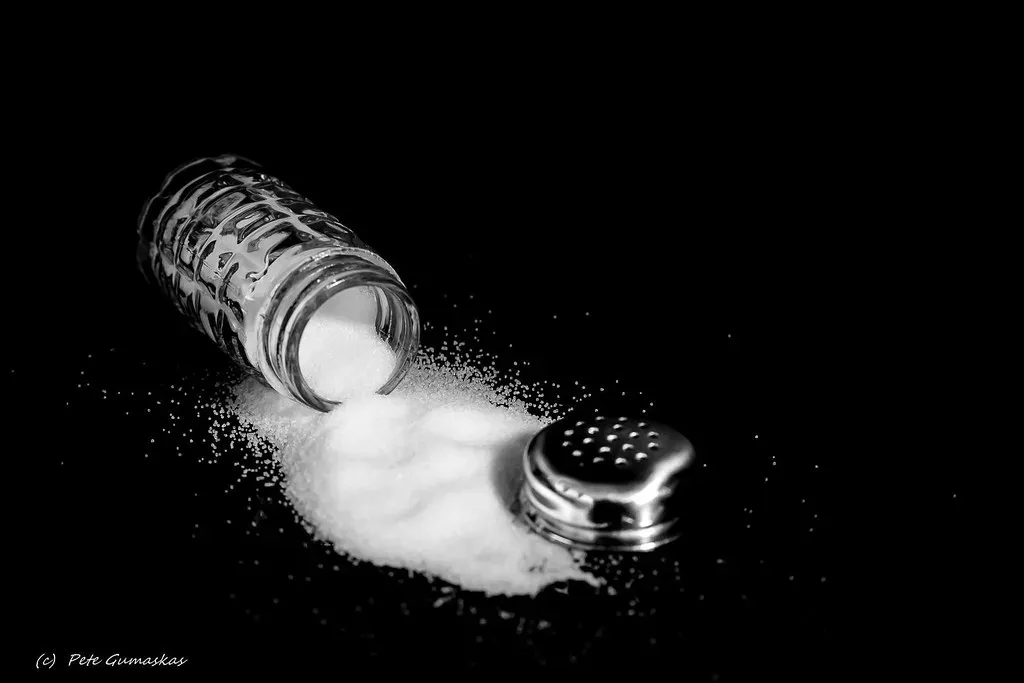
Spilling salt has been considered unlucky for thousands of years. Around 3,500 B.C., the ancient Sumerians first took to nullifying the bad luck of spilled salt by throwing a pinch of it over their left shoulders, a ritual that spread to the Egyptians, the Assyrians, and later the Greeks. The logic was practical before it was mystical. Dating from eras in which salt was tough to get and very expensive, spilling it was considered terribly unlucky, signaling relationship troubles, a bad omen, or an invitation for the devil to wreak havoc.
Leonardo da Vinci’s painting of the Last Supper marks this superstition by depicting a spilled shaker at Judas Iscariot’s elbow. The remedy, of course, was to toss some salt over the left shoulder. That is where the devil waits, and the thrown salt gets into his eyes and blinds him from seeing the mess. A practical concern about a scarce resource had become a full theological drama.
Black Cats and Bad Luck

The history of black cats is filled with myths and spooky superstitions, with many of the negative associations dating as far back as the thirteenth century, starting with a document from the Catholic Church which linked black cats to Satan. From this spiraled many fears, including one of the most popular and oldest: that a black cat crossing your path will bring bad luck. The association of black cats with witches may stem from Western demonology, in which they were depicted as familiars of witches, believed to be low-ranking demons given to witches by the devil.
Partner offer
The reality of black cats throughout history is far more layered. Defining black cats as strictly symbols of bad luck is an outdated, mostly Eurocentric viewpoint. In fact, in Egypt, Scotland, and Japan, they are actually revered and known for prosperity. Tragically, the lingering stigma has real consequences: according to the National Library of Medicine, black cats have the highest rate of euthanasia in shelters among all cat colors, and the lowest rate of adoption.
Walking Under a Ladder

This superstition genuinely originates roughly 5,000 years ago in ancient Egypt. A ladder leaning against a wall forms a triangle, and Egyptians regarded this shape as sacred, as exhibited by their pyramids. To walk through that triangle was to disrespect the divine geometry it represented. Centuries later, followers of Jesus Christ reinterpreted the superstition. Because a ladder had rested against the crucifix, it became a symbol of wickedness, betrayal, and death, and walking under one was said to court misfortune.
In England in the 1600s, criminals were forced to walk under a ladder on their way to the gallows. That association with death and punishment reinforced the belief powerfully. Even without believing in superstition, walking under a ladder is an accident waiting to happen, and many parents have spread such warnings simply to protect their children from genuinely dangerous behavior.
Saying “God Bless You” After a Sneeze

In most English-speaking countries, it is polite to respond to another person’s sneeze by saying “God bless you.” Although incantations of good luck have accompanied sneezes across disparate cultures for thousands of years, our particular custom began in the sixth century A.D. by explicit order of Pope Gregory the Great, during a terrible pestilence spreading through Italy. The first symptom was severe, chronic sneezing, and it was often quickly followed by death.
Some people believed that a sneeze causes the soul to escape the body through the nose, and saying “bless you” would stop the devil from claiming the person’s freed soul. Others believed the opposite: that evil spirits use the sneeze as an opportunity to enter a person’s body. The exchangeable term “gesundheit” comes from Germany, literally meaning “health,” and entered the English language in the early twentieth century, brought by German-speaking immigrants.
Opening an Umbrella Indoors

Though some historians tentatively trace this belief back to ancient Egyptian times, most historians think the warning against unfurling umbrellas indoors originated much more recently, in Victorian England. The mundane explanation is more convincing than the mystical one. In eighteenth-century London, when metal-spoked waterproof umbrellas became common, their stiff and clumsy spring mechanism made them genuine hazards indoors. A rigidly spoked umbrella opening suddenly in a small room could seriously injure a person or shatter objects. Even a minor accident could provoke a quarrel, and so the superstition arose as a practical deterrent.
There is an older Egyptian thread to the story, however: umbrellas were used for protection against the sun, and opening one indoors was seen as an insult to the sun god, Ra. Whether the Egyptian or the Victorian explanation came first, the two layers of meaning reinforced each other over time, and the belief stuck around long after metal spring mechanisms were made safer.
The Horseshoe as a Lucky Charm
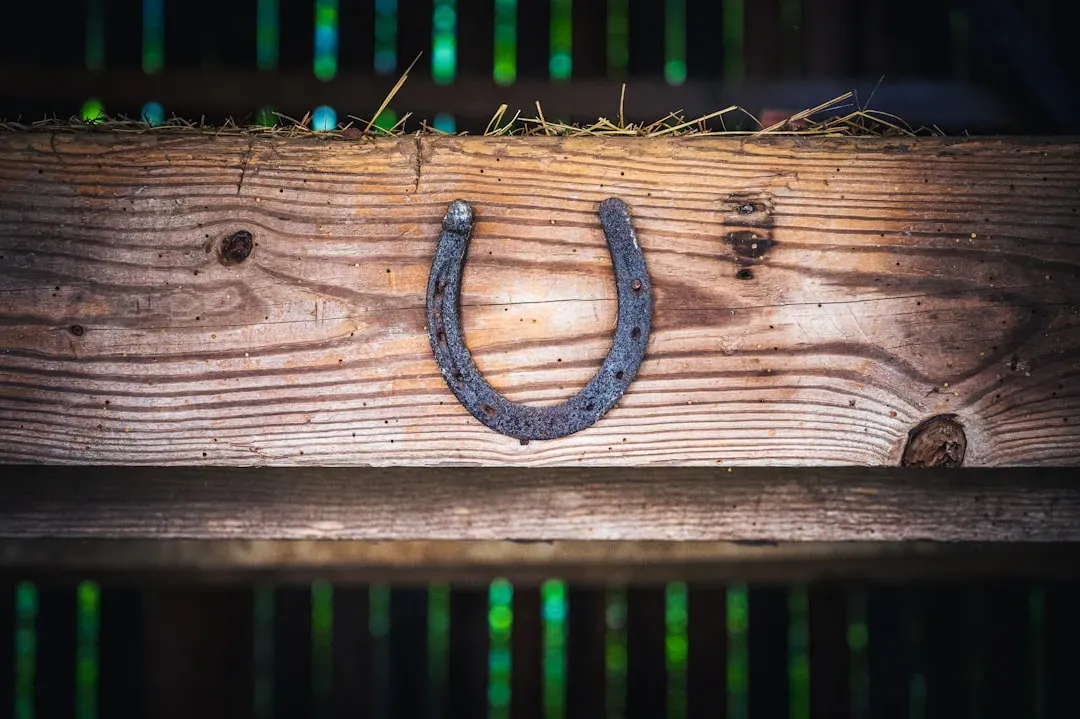
The horseshoe is considered a good luck charm across a wide range of cultures. Belief in its magical powers traces back to the Greeks, who thought that iron had the ability to ward off evil. Not only were horseshoes wrought of iron, they also took the shape of the crescent moon in fourth-century Greece, a symbol of fertility and good fortune. The crescent shape connected horseshoes to lunar power, which many ancient cultures considered deeply protective.
The most famous story of a horseshoe bringing good luck refers to Saint Dunstan, who worked as a blacksmith prior to attaining sainthood. The story goes that the Devil rode into his shop requesting new shoes for his horse. Dunstan, recognizing the Devil, nailed one of the shoes to the Devil’s foot instead, and in agony the Devil agreed never to enter a house with a horseshoe nailed above the door, so long as Dunstan would remove the shoe. The tale merged the iron’s protective power with a satisfying piece of Christian folklore.
Wishing on a Shooting Star

This superstition originated during the second century when Greek astronomer Ptolemy suggested that shooting stars were actually stars that escaped whenever a god tore open space and was listening to wishes. The idea that a momentary gap in the heavens created a direct line to divine attention gave wishing on a shooting star a certain theological logic. The fact that luck isn’t tangible, making it harder to disprove, partly explains why this superstition became so widespread.
People have been making wishes on poultry bones since around 700 B.C., which offers a useful comparison: the Etruscans believed that birds could tell the future, and stroking the dried bone could grant the power of foresight and make wishes come true. When Romans adopted this practice, they began cracking the bones in half to spread the luck, which is where the modern tradition of breaking the wishbone originates. The impulse to catch a moment of good fortune, whether in a fleeting streak of light or a snapped bone at the dinner table, is as old as recorded history itself.
Partner offer
Planning a trip to Vegas?
Compare hotel rates and show tickets on VEGAS.com.