Somewhere between a laugh and a lifetime, certain moments stop being funny and start being mandatory. Nobody sat down and decided these things should matter. They just did, gradually, until skipping them felt wrong in a way that was hard to explain. The joke became the rule. The prank became the prayer.
History is full of these quiet transformations. What starts as spontaneous mischief, a deflection, or a chaotic accident can calcify into something that communities defend with surprising ferocity. These are thirteen of the most fascinating cases where laughter quietly became legacy.
1. La Tomatina: The Food Fight That Became a Festival of International Importance
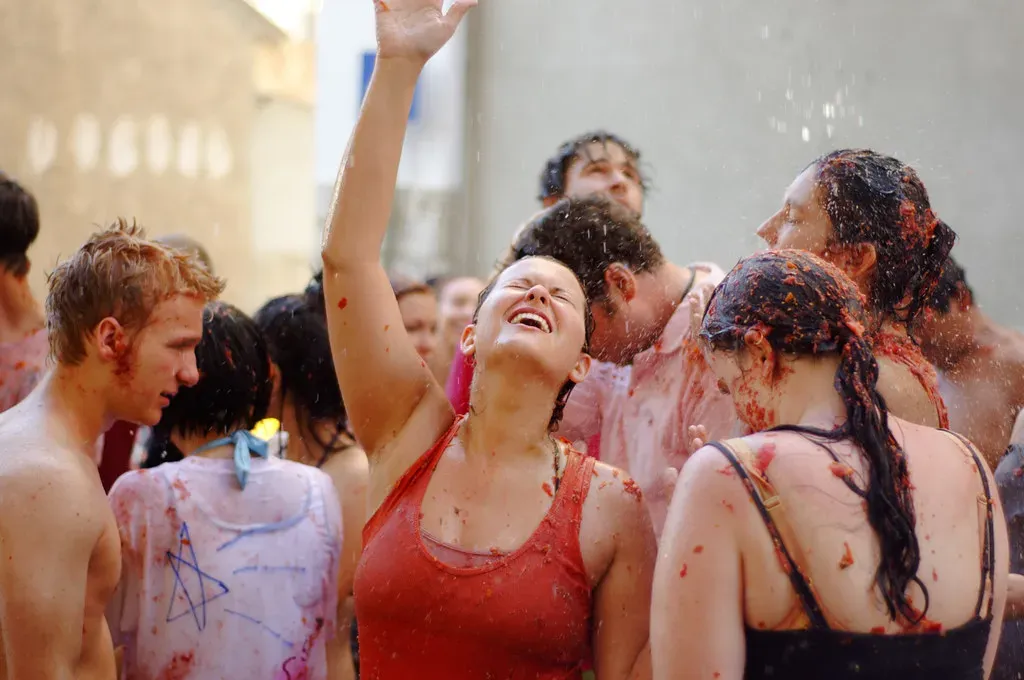
While the exact origins of La Tomatina remain unconfirmed, most accounts trace the now-legendary tomato fight back to August 1945. At the time, it was just a raucous scuffle among local boys – so impromptu and unruly that few imagined it would one day become a global spectacle. According to oral history, one youth may have shoved one of the towering papier-mâché figures in protest during a parade, prompting another to snatch a tomato from a nearby market stall and hurl it. The ensuing food fight lasted until police intervened.
The following year, some young people engaged in a pre-planned quarrel and brought their own tomatoes from home. Although local forces broke it up, this began the yearly tradition. In the following years, the boys’ example was followed by thousands of people. In 2002, the Spanish secretary of the department of tourism named it an official Festivity of International Tourist Interest, cementing its place as one of the country’s most iconic celebrations.
2. The Presidential Turkey Pardon: Born From a Political Deflection

At the 1987 White House ceremony, President Reagan faced intense media scrutiny and persistent questions about whether he intended to pardon key figures involved in the Iran-Contra affair. To deflect those politically charged questions, Reagan turned to the turkey beside him and joked that if he were to pardon anyone, it would be the turkey. This was the first time a president publicly used the word “pardon” in that ceremony context. The remark was not a statement on animal welfare or new holiday policy – it was political theater, a clever quip to evade serious questions. A powerful, legally resonant word became inadvertently attached to a lighthearted tradition.
Reagan did not make any pardon references in the 1988 presentation, but his successor, George H.W. Bush, instituted the turkey pardon as a permanent part of the presentation beginning his first year in office, in 1989. The phrase “presidential pardon” in that ceremony was apparently inserted by a speechwriter; Bush was initially indifferent to the terminology, saying “Reprieve, keep him going, or pardon: it’s all the same for the turkey, as long as he doesn’t end up on the president’s holiday table.” Every president since has carried it out with complete seriousness.
3. The Wristwatch: A Vaudeville Joke That Became a Status Symbol

Wristwatches first became popular among vaudeville stars as “more or less of a joke” or a “funmaker.” But they really took off in the United States because of something not funny at all – World War I. It was the first war to feature sophisticated aerial attacks, where soldiers on the ground needed to move as a unit. Timing was essential. When dodging gunfire and bombs, the delay from retrieving one’s watch from a pocket was an actual matter of life and death. To shave off extra seconds, soldiers wrapped their pocket watches to leather straps on their wrists.
Following the war, soldiers brought this practice home with them. Companies like Cartier began modeling their products from these military designs. No longer a joke, they became an iconic status symbol. The object that made audiences snicker in music halls became the defining accessory of the twentieth century. Few people clasping on a luxury watch today have any idea it once got laughs.
4. April Fools’ Day: The Prank That Became a Global Calendar Fixture

The exact origins of April Fools’ Day remain mysterious, with several competing theories. In medieval Europe, New Year was celebrated around the spring equinox. When Pope Gregory XIII introduced the Gregorian calendar in 1582, moving New Year to January 1st, those who continued celebrating in April were mocked as “April fools.” In France, these people were called “poisson d’avril” – April fish – symbolizing a young, easily caught fish and a gullible person.
The day became widely celebrated throughout Britain in the 18th century. The tradition became a two-day event in Scotland that started with the “gowk hunt,” where people were sent on phony errands. While often dismissed as frivolous, this day has deep roots in ancient trickster traditions, calendar changes, and the sacred role of the fool in human culture. April Fools’ embodies the principles of chaos, humor, and the wisdom of not taking ourselves too seriously. It now spans continents, cultures, and corporate press releases.
5. Trick-or-Treating: From Vandalism Control to Halloween’s Central Ritual
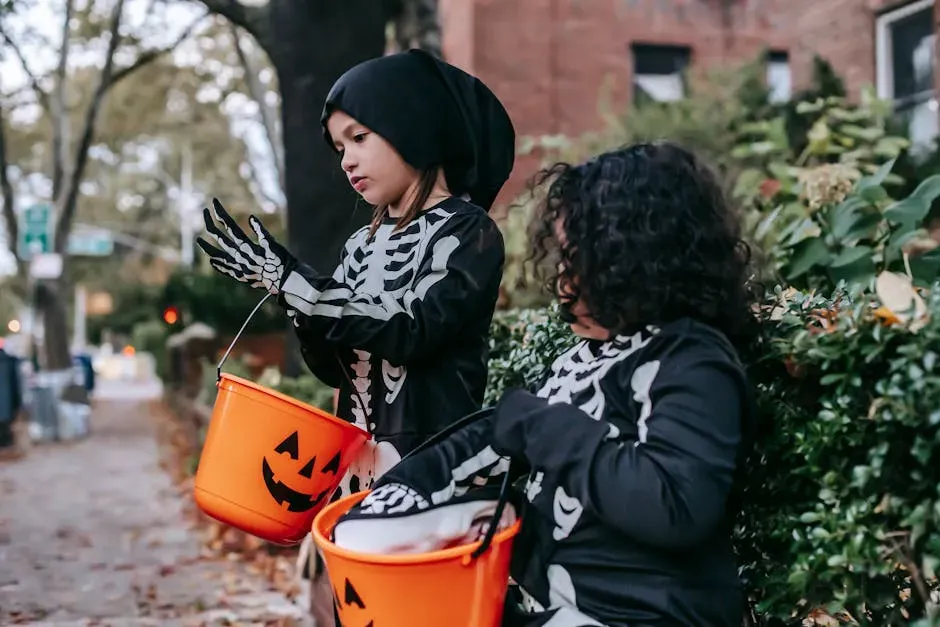
When Irish and Scottish immigrants brought their Halloween traditions to America in the 19th century, the mischief aspect came along too. Early American Halloween celebrations included practical jokes and pranks that were considered appropriate only on that special night. By the early 20th century, Halloween mischief had become somewhat problematic in urban areas. Young people took advantage of the one night when pranks were somewhat socially acceptable, and in the 1930s and 1940s, Halloween vandalism became so widespread that some cities considered banning Halloween celebrations altogether.
To combat increasing vandalism, communities began organizing alternatives like supervised Halloween parties and neighborhood trick-or-treating in the 1950s. The phrase “trick-or-treat” actually acknowledges the tradition of mischief – give me a treat, or face a trick. What began as civic damage control became the most beloved children’s ritual in the American calendar, complete with elaborate costumes, neighborhood routes, and candy inspections.
6. The Knock-Knock Joke: Prohibition’s Accidental Legacy

During Prohibition in the 1930s, if you wanted to get into a speakeasy, you would knock on the door, someone would ask “Who’s there?” and you’d have to say a password. According to joke historian Charlie Orr, drunken patrons often had fun with the password custom as the night wore on – and that’s how the knock-knock joke was born. Orr claimed that the very first knock-knock joke was told in the restroom of a Philadelphia hotel.
What started as a boozy parody of a security ritual became one of the most universally recognized joke formats on the planet. Classic jokes are essentially oral traditions that get passed from person to person for decades until someone decides to write them down. The knock-knock format is now one of the first joke structures children learn, taught in classrooms, printed on popsicle sticks, and considered a wholesome rite of childhood – far from the smoke-filled room where it was born.
7. The High-Five: A Spontaneous Celebration That Became Sport’s Universal Language

It’s likely that high-fives originated in baseball, and the tradition is seen in virtually every sport today. The low-five grew out of African-American cultural tradition and was firmly established by at least World War II. When exactly the low-five went high is up for some debate. Most likely, it was invented by Cincinnati Reds manager Dusty Baker upon reaching home plate at Dodger Stadium after hitting his 30th home run of the season on October 2, 1977.
What happened in that moment was largely spontaneous – an unrehearsed gesture between two people caught up in a game. Nobody formalized it. Nobody wrote it into a rulebook. Yet within a decade it had become the instinctive gesture of triumph across every sport, culture, and context imaginable. Today it seals business deals, greets children after school, and closes out surgical procedures. Few gestures have traveled further from their origins while feeling more completely natural.
8. Holi: Sacred Festival With a Deeply Playful Heart
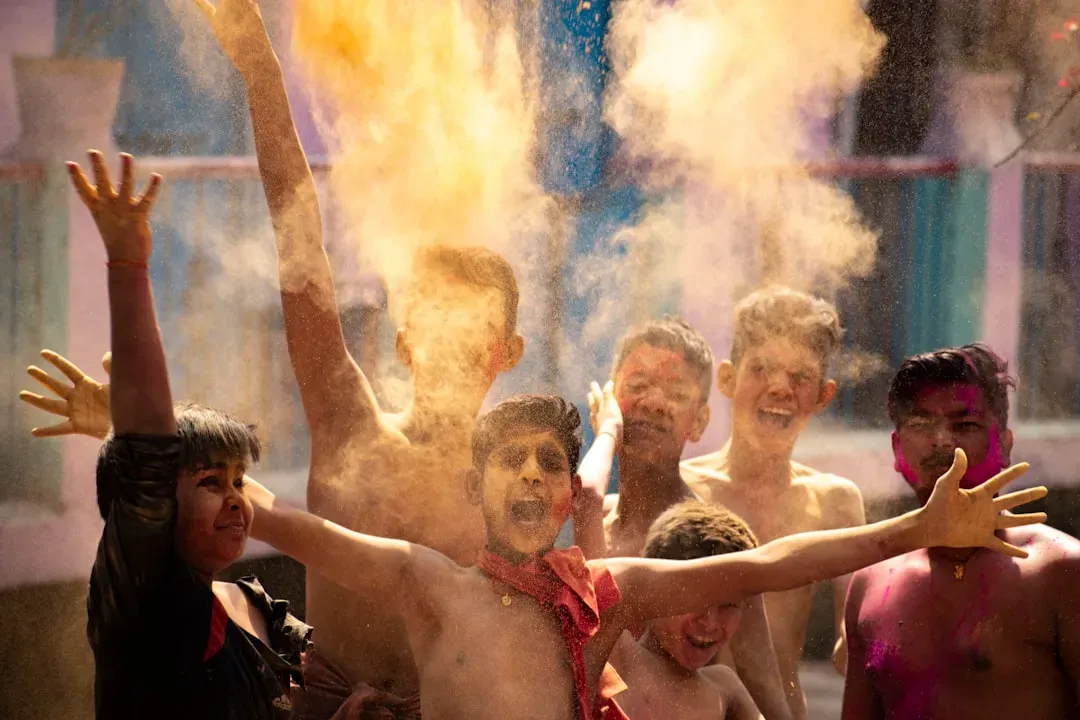
Holi is a sacred ancient tradition of Hindus, celebrated as a holiday in India and Nepal. To many Hindus and some non-Hindus, it is a playful cultural event and an excuse to throw coloured water at friends or strangers in jest. The festival draws on mythology surrounding the burning of the demoness Holika and the arrival of spring, but over centuries the act of joyful, chaotic color-throwing absorbed those meanings and became inseparable from them. What looks from the outside like a gleeful prank – strangers dousing one another in vivid pigment – carries enormous religious and seasonal weight.
The transformation from symbolic ritual to ecstatic color fight happened gradually across generations, driven largely by popular participation rather than clerical decree. Today the festival has spread well beyond South Asia, with Holi celebrations taking place in North America, Europe, and Australia. Many of these customs are alive and evolving. Some remain private and sacred, while others are adapted for public festivals or tourism. Holi is perhaps the clearest example of seriousness and silliness existing not in opposition but in complete harmony.
9. The Danish Cinnamon Tradition: Spice-Throwing as Social Commentary
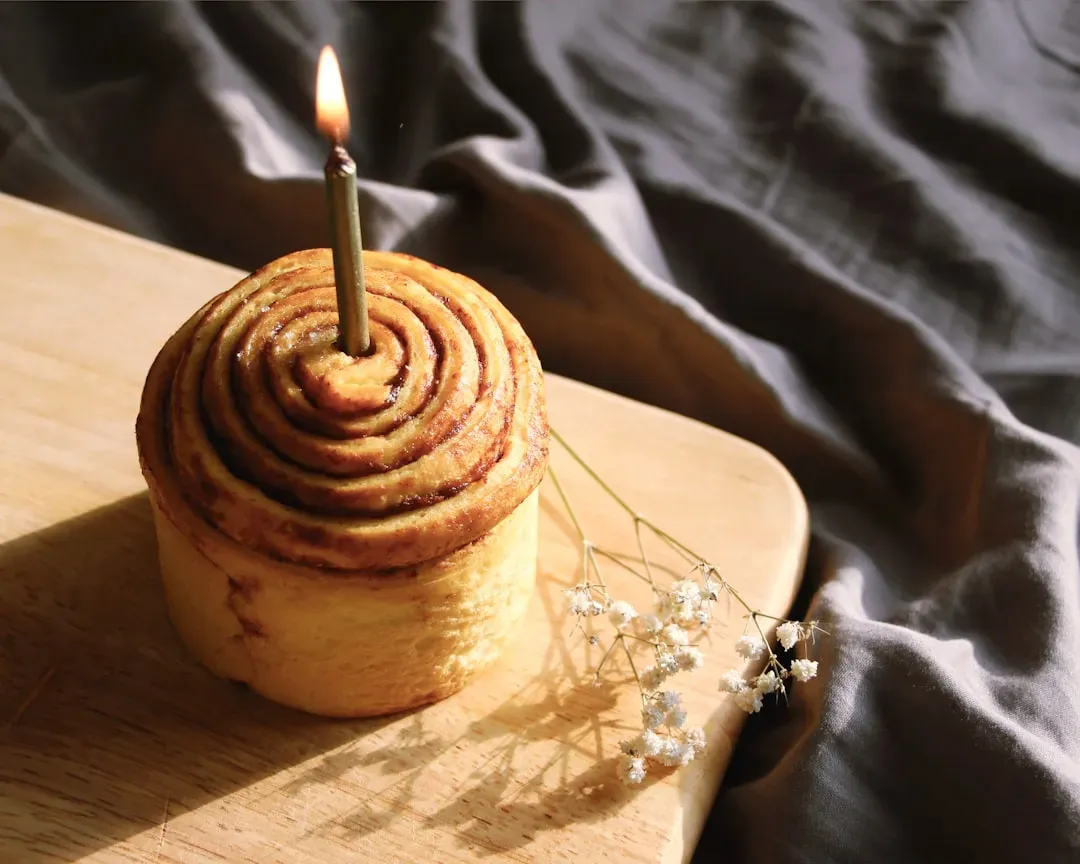
This unusual tradition is said to have emerged hundreds of years ago when Danish spice merchants spent so much time travelling that they didn’t have time to get married. Today, the joke is played in good fun – but be warned: if you’re still single at 30, the spice that gets thrown at you changes from cinnamon to black pepper. The ritual is not a form of punishment but more just an excuse to be silly with friends and family. The birthday person gets splashed with water and then gets covered from head to toe in cinnamon. When people turn 30 and are still single, the cinnamon gets replaced with pepper, and sometimes has egg in the mix to help the mixture stick.
What began as gentle mockery of unmarried tradesmen has evolved into a genuine cultural institution with recognizable rules, escalating consequences based on age, and a warmth that makes those being covered in spice genuinely love the experience. The tradition persists precisely because it walks the line between teasing and celebration so cleanly. Being doused in cinnamon by your friends is, in Denmark, a sign that they noticed your birthday and wanted to make it memorable.
10. The Feast of Fools and the Medieval Tradition of Sacred Mockery
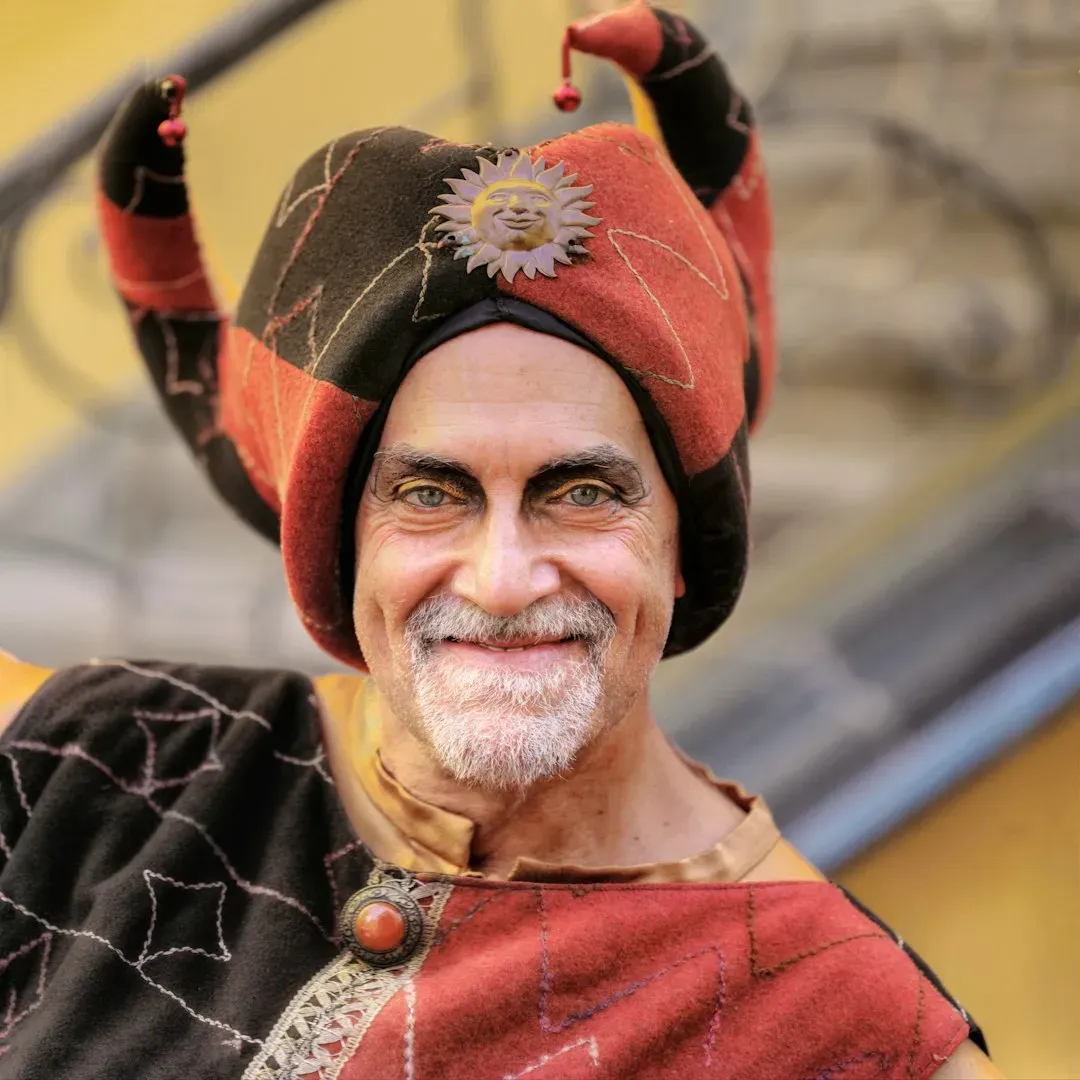
The Feast of Fools was a medieval Christian festival held between December 28th and January 1st, where clergy and laity reversed roles and mocked church hierarchy. Though eventually banned, it influenced April Fools’ traditions. During its peak practice, lower clergy would occupy the bishop’s seat, wear vestments backward, and parody the Mass with deliberate absurdity. What sounds like heresy was, for a time, officially tolerated – even welcomed – as a pressure valve for rigid hierarchical life.
Court jesters in the medieval period had unique permission to mock kings and speak uncomfortable truths through humor. They were “licensed fools” whose foolishness contained wisdom. The jester and the Feast of Fools operated on the same principle: that designated spaces for laughter and inversion made the rest of the year’s order more sustainable, not less. This idea – that ritual mockery reinforces rather than undermines authority – became foundational to how many Western cultures approach satire, carnival, and comedy to this day.
11. The Tomato Funeral and the Power of Absurdist Protest
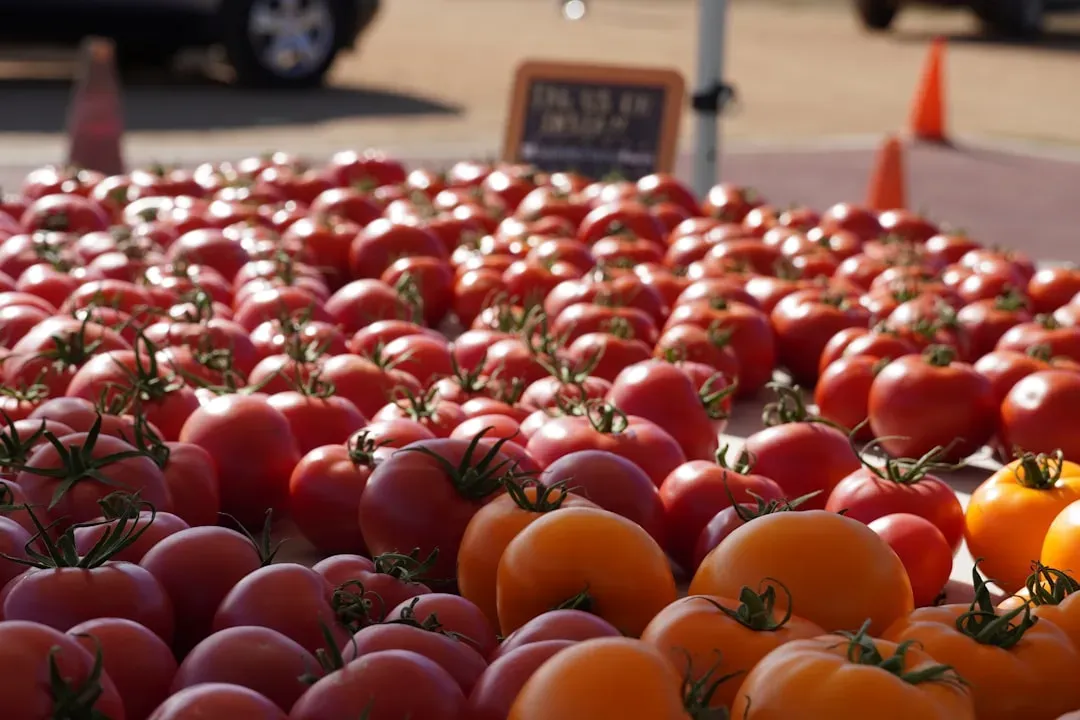
La Tomatina was banned in the early 1950s by Francisco Franco due to the festival’s lack of religious significance. The people protested against the prohibition. The festivity was again canceled until 1957 when, as a sign of defiance, a tomato funeral was held: a demonstration in which residents carried a coffin with a large tomato inside. The parade was accompanied by a music band that played funeral marches. The protest was successful, and La Tomatina Festival was finally permitted and became an official festival.
Few moments in the history of civil protest are as charming. Citizens of a small Spanish town used absurdist pageantry to win back their right to throw tomatoes at one another, and they succeeded. In 2002, Spain’s Ministry of Tourism declared the festival a “Fiesta of International Tourist Interest,” and ten years later the festival attracted roughly 40,000 attendees, earning it the Guinness World Records title of “largest annual food fight.” The joke outlasted the dictatorship.
12. Halloween Costumes: From Spirit Disguise to Cultural Phenomenon
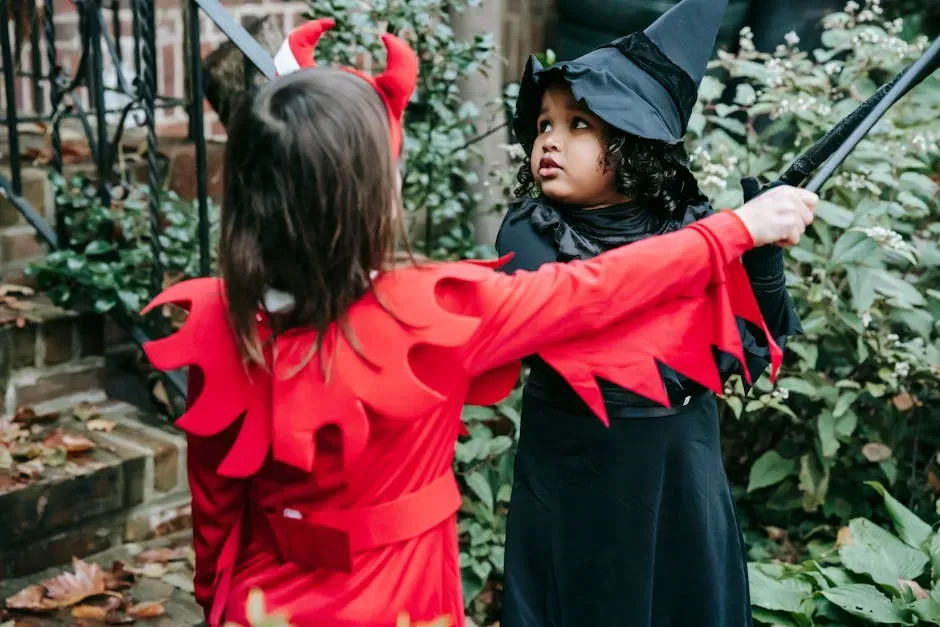
During Samhain, people would dress in costumes to confuse wandering spirits and avoid being recognized by them. Some would play tricks on their neighbors and blame these supernatural visitors. The disguise was originally protective, not recreational. Over centuries of migration and cultural blending, the fearful practicality of the costume dissolved, leaving only the playful shell. Halloween originated in the ancient Celtic festival of the dead, Samhain, and later Christian celebrations of martyrs and saints. These festivals involved commemoration of the dead and celebration of the final harvest of the year.
By the early twentieth century in America, costumes had shifted entirely from supernatural protection to communal theater. Wearing costumes and going door-to-door did not become popular again until later in the century – children and adults in 1917 Washington, D.C., wore costumes and masks, with fake moustaches being especially popular. What was once a genuine act of fear-driven concealment from supernatural forces became, over centuries, the most elaborate and commercially significant costuming event in the world. The spirits were forgotten. The costume survived.
13. The California Raisins: An Accidental Cultural Dynasty

The incredibly unfunny joke is that raisins come from grapes. Despite the simplicity of the punch line, the commercial became a cultural phenomenon. People could not get enough of the idea of dried fruit performing Marvin Gaye. The California Raisins released toys, a Saturday morning cartoon, a line of video games, and albums. This inexplicable success was good news for Priority Records, a small independent LA label that hadn’t had a hit in years. All of a sudden, they were making millions off this silly fad. Flush with this extra revenue, they could hire more interesting acts.
The next artist signed by Priority was N.W.A., the opposite of the California Raisins in a lot of ways. Priority became a rap powerhouse off the success of Straight Outta Compton. The album and Priority exploded gangsta rap into the public, changing music forever. The chain of causation is almost impossible to believe: a throwaway prank about dried fruit, built on a pun so weak it barely qualifies as a joke, ultimately helped launch one of the most consequential musical movements of the twentieth century. The laugh led somewhere nobody expected it to go.
There is something quietly reassuring about all of this. Traditions don’t always begin with wisdom or intention. Sometimes they begin with a tomato thrown in anger, a political dodge, a comedian’s prop, or a vaudeville gag. What turns a joke into a ritual is simply this: enough people found it meaningful enough to repeat. And once something gets repeated for long enough, it stops needing a reason.