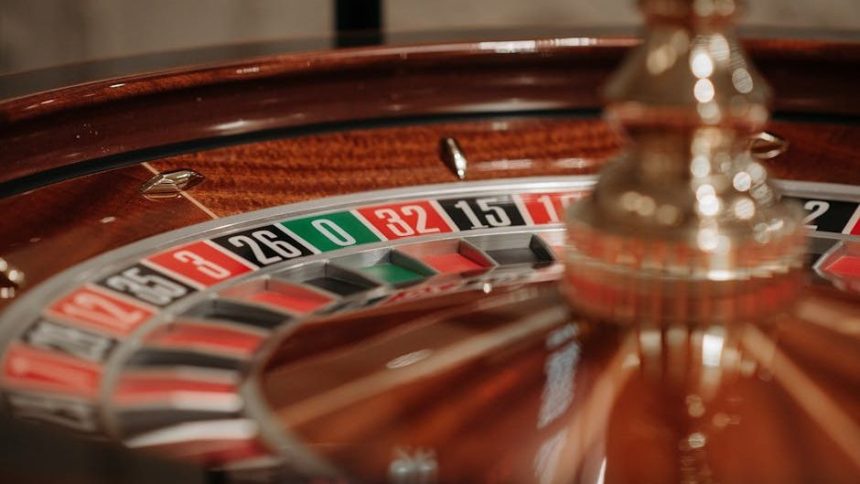
Most people who’ve ever placed a bet have felt it at some point. The roulette wheel lands on red five times in a row, and suddenly a little voice says, “Black must be due.” It feels logical. It feels almost mathematical. The problem is, it’s completely wrong, and that feeling costs people enormous amounts of money every single year.
What the Gambler’s Fallacy Actually Is
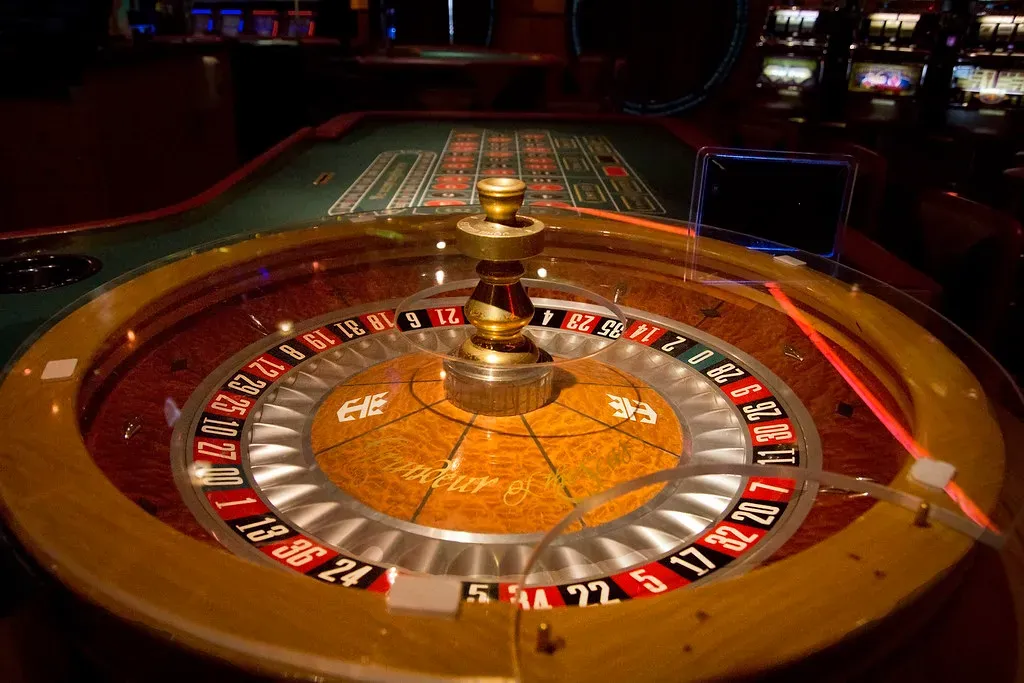
The gambler’s fallacy, also known as the Monte Carlo fallacy or the fallacy of the maturity of chances, is the belief that if an event whose occurrences are independent has happened less frequently than expected, it becomes more likely to happen again in the future, or vice versa. In plain terms, it’s the mistaken idea that past random events can somehow influence future ones.
The gambler’s fallacy is a prevalent cognitive bias in betting behaviors, characterized by the mistaken belief that an independent random process exhibits negative serial correlation. This misconception often arises when individuals observe a series of realized outcomes from the process. In other words, the more times something happens in a row, the more convinced people become that the opposite outcome is “overdue.” That conviction, however, has no basis in probability.
The gambler’s fallacy is the belief that the probability of an event is lowered when that event has recently occurred, even though the probability of the event is objectively known to be independent. This is the core of the trap: people know the odds intellectually, yet they still act as if those odds can be influenced by history.
The Monte Carlo Incident That Named the Fallacy
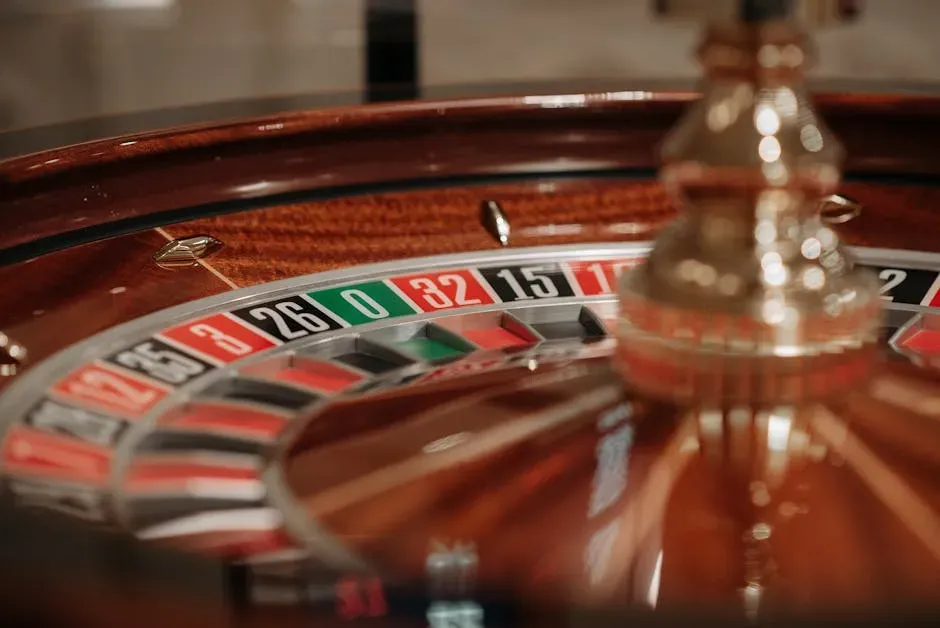
The term “Monte Carlo fallacy” originates from a striking example of the phenomenon, in which the roulette wheel spun black 26 times in succession at the Monte Carlo Casino in 1913. Players lost millions betting against the streak, convinced at each spin that red was now all but certain. It wasn’t. Each spin was, as it always is, an independent event with the same probability as the one before.
This incident became one of the most famous illustrations of a cognitive trap that had already been quietly draining wealth from gamblers for generations. The casino didn’t engineer the streak. Randomness did. Yet the human brain, wired to detect patterns, simply couldn’t accept that 26 consecutive blacks was just chance playing out normally over a long enough sequence.
A $643 Billion Market Built Partly on This Mistake
According to market data, total gambling revenue reached over $643 billion in 2025 and is projected to grow to more than $655 billion by the end of 2026. That’s a staggering figure. Cognitive biases like the gambler’s fallacy don’t explain all of it, but they contribute in very real and measurable ways to how much money stays on the table instead of going home with the player.
Online gambling revenue alone reached $121 billion in 2025. Statistics about gambling addiction show that harm remains concentrated among a smaller group, with 2.5 million US adults experiencing severe gambling problems in 2024. For many of those individuals, the inability to accurately assess random outcomes is a core part of why losses keep compounding.
In the US alone, up to three to four percent of the population may experience gambling-related harm annually, with a national social cost of $14 billion. These numbers aren’t just financial statistics. They represent real people who bet more than they should, stayed longer than they planned, and chased losses that probability said would never be recovered.
Why the Brain Gets Randomness Wrong

The gambler’s fallacy appears to arise from an imbalance between cognitive and emotional decision making mechanisms in the brain. It’s not simply ignorance. Even people who understand probability on paper can fall into this trap when emotions, stress, or the excitement of live gambling enter the picture.
Experiments on gambling-related cognitive distortions implicate reward-related circuitry, as well as the interactions with regions responsible for top-down cognitive control. Specifically, the gambler’s fallacy appears to arise from an imbalance between cognitive and emotional decision making mechanisms in the brain. The emotional system and the logical system are effectively fighting each other, and under the pressures of gambling, the emotional system often wins.
Classic studies from experimental psychology show that people are poor at generating and recognizing random sequences. Subjects prefer sequences without long runs of the same outcome, and with balanced overall frequencies. This may arise because subjects fail to appreciate the independence of turns, and expect small samples to be representative of the populations from which they are drawn. The brain simply doesn’t accept that a fair coin can land heads ten times in a row even though, given enough flips, it certainly can and will.
Loss Streaks, Bet Escalation, and the Chasing Trap
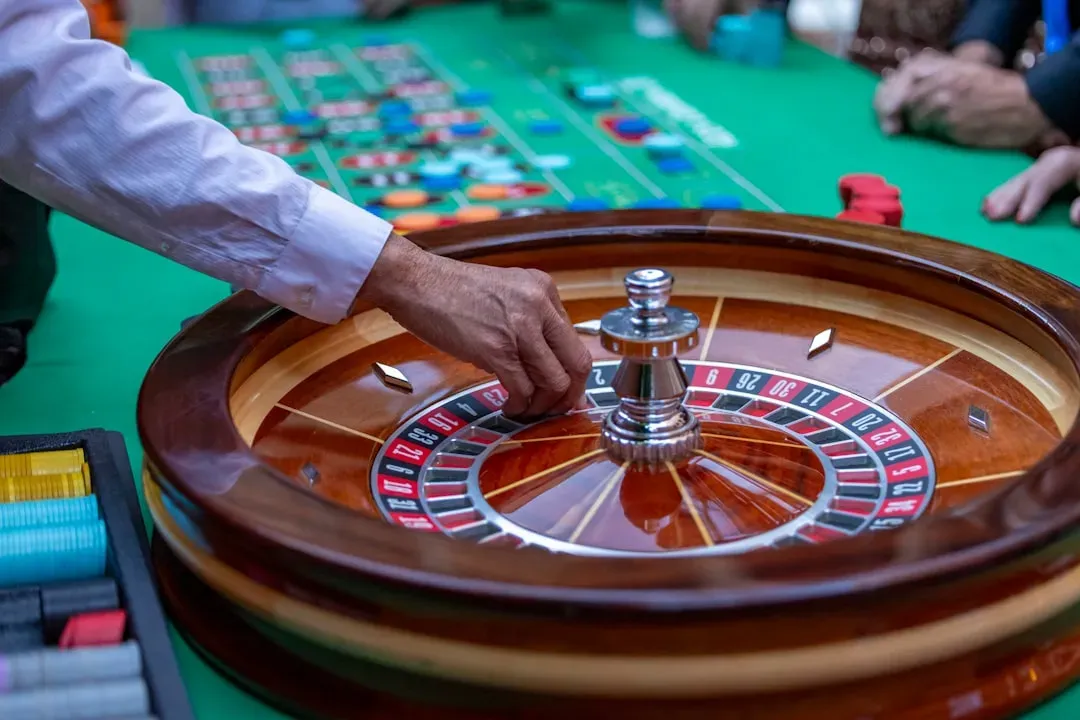
Field experiments have observed that casino roulette wheel gamblers bet in accordance with the gambler’s fallacy. For example, if black had not come up in a while on the roulette wheel, bettors would think that black was due to come up and would bet more on black. This is the fallacy in action, playing out in real casinos with real money, completely predictably.
Impaired processing of randomness gives rise to the gambler’s fallacy, where the gambler believes that a win is “due” after a series of losses. This belief directly encourages larger bets during losing streaks, which is precisely the opposite of rational betting strategy. Players don’t just stay at the table longer; they bet bigger, compounding the damage.
The pattern is almost mechanical. A player loses three rounds in a row. Rather than walking away or keeping bets steady, they increase their stake. The fallacy whispers that a win is statistically overdue. The house edge, however, doesn’t listen to that logic. Each spin resets to the same unfavorable odds, and the escalating bets simply accelerate the losses.
Casinos Know About the Fallacy, and They’re Not Sorry

Casino floor design is not accidental. Display boards showing previous roulette outcomes, slot machines with near-miss symbols landing just above or below the payline, poker tables where previous hands are visible: these are not features added for transparency. They’re nudges that feed the pattern-seeking brain exactly the kind of misleading data it craves.
Near-misses occur when an unsuccessful outcome is proximal to the designated win, such as when a chosen horse finishes second or when two cherries appear on the slot machine payline. Their significance to the gambler has long been recognized, to the extent that the misappropriation of slot machine near-misses has been the focus of legal cases. Casinos understand that almost-winning feels different to the brain than losing cleanly, and they exploit that difference effectively.
As a consequence of near-misses, the gambler may feel that they are “not constantly losing but constantly nearly winning.” That feeling keeps players seated and spending. It’s a manufactured illusion of proximity to success, and it works because of the same cognitive machinery that drives the gambler’s fallacy in the first place.
The Hot Streak Cousin: The Hot Hand Fallacy
The gambler’s fallacy has a close relative that works in the opposite direction. Research has uncovered compelling evidence of the gambler’s fallacy and its counterpart, the hot-outcome fallacy, associated respectively with the frequency and duration of consecutive outcomes within an observed sample. Where the gambler’s fallacy says a losing streak means a win is coming, the hot hand fallacy says a winning streak means more wins are on the way.
In repeated gambles, empirical results have found evidence of both positive recency and negative recency. The positive recency, also known as the hot hand fallacy, occurs more often when there is a perceived human performance element. Negative recency, also known as the gambler’s fallacy, occurs more often in random processes in which human performance is comparatively less present. Both are errors. Both cost money. Together, they form a complete system of cognitive misfiring that keeps players believing the game is more predictable than it truly is.
The Fallacy Moves Into the Stock Market

The phenomenon occurs across many situations, including casino gambling, but also stock investment. This is where the stakes can become even higher and the losses far less visible than chips disappearing across a felt table. Investors misread market trends, predict reversals that aren’t coming, and hold losing positions because they expect the stock to “bounce back.”
Research examining short-selling activity after consecutive days of positive stock returns found that short-selling activity is abnormally high after three or five consecutive days of positive returns. The findings suggest that while short sellers are generally considered informed and sophisticated traders, those that engage in short selling may still fall victim to the fallacy. If even experienced financial professionals can fall into this trap, casual retail investors have very little protection against it.
The gambler’s fallacy can have a significant impact on finance, leading to poor investment decisions based on false beliefs. Investors may also engage in risky behavior, such as doubling down on a losing investment, in the hopes that it will eventually turn a profit. This can lead to significant financial losses, as the odds of a positive outcome do not change based on past performance. The market, like the roulette wheel, has no memory of what it did yesterday.
Awareness Helps, But It Doesn’t Always Save You
Knowing about the gambler’s fallacy offers some protection, but understanding a bias intellectually and escaping it under emotional pressure are two very different things. Research discovered that the gambler’s fallacy tends to be more evident following longer streaks of decisions in the same direction and when the previous cases have similar characteristics and occur closer in time. It is less evident among more experienced decision-makers. Experience genuinely helps, though it doesn’t eliminate the bias entirely.
In a larger sample of college students, the use of the gambler’s fallacy was positively correlated with general intelligence and executive function, but was negatively correlated with affective decision making. The gambler’s fallacy seems to be associated with weak function in the affective decision making system and strong function in the cognitive control system. Put simply, smarter people can be more prone to this particular error because their analytical minds build more elaborate, convincing justifications for what is still an irrational belief.
Despite rising awareness, many people don’t seek help, with data showing that fewer than one in five people with gambling problems receive formal treatment. Awareness of a cognitive trap and actually stepping out of it are separated by a significant gap, especially when gambling’s emotional rewards are reinforcing the very beliefs that cause harm.
Practical Ways to Guard Against It

The most effective defense is a concrete, practical rule: treat every bet, every spin, and every investment decision as if nothing came before it. To avoid falling into the trap of the gambler’s fallacy, it is important to understand the concept of independent events. Each event in a random process, whether a spin of the roulette wheel or a stock market investment, is independent and has no impact on future events. By understanding this, investors and gamblers can make more informed decisions based on actual probabilities rather than false beliefs.
Setting a loss limit before playing, not after a losing streak begins, removes the emotional decision-making that the fallacy thrives on. Writing down the actual odds of a game before playing it is another grounding technique. The physical act of seeing “the odds don’t change based on past results” on paper forces the logical brain to stay engaged rather than handing control over to the pattern-seeking emotional system.
As a general principle, when formulating decisions, keeping the gambler’s fallacy in mind helps avoid predicting a trend reversal too quickly. Both the hot hand fallacy and the gambler’s fallacy belong to a group of biases that economists classify as representative heuristics. Naming the trap, understanding its category, and building habitual responses to it are the closest thing to a reliable antidote available.
The Bigger Picture: A Bias That Outlasts the Casino
The gambler’s fallacy doesn’t clock out when the casino closes. It shows up in how people evaluate job interview decisions, judge crime statistics, assess medical risks, and make hiring choices. A bias against deciding the same way in successive situations can affect whether a foreigner is deported, a business gets a loan, or a batter strikes out. The same cognitive error that drains wallets at a roulette table can quietly distort judgment across many areas of life.
The global gambling market will keep growing. The market will grow from $574.55 billion in 2025 to $600.98 billion in 2026. More platforms, more accessibility, more ways for the bias to express itself in high-stakes moments. None of that changes the underlying mathematics, but it does expand the arena where the fallacy can do damage.
The roulette ball still doesn’t remember where it landed last time. The slot machine has no idea how long you’ve been sitting there. The stock has no obligation to reverse course because it’s fallen for three straight days. These truths are simple. Accepting them, truly accepting them in the heat of the moment, is where most people quietly struggle. That gap between knowing and believing is where millions of dollars disappear every year.