
Every film you’ve ever watched is, in some sense, a compromise. Scripts get rewritten, scenes get cut, and sometimes the entire ending of a major motion picture gets thrown out weeks before release. What feels like an inevitable conclusion on screen is often the product of panicked reshoots, heated studio arguments, or a single disastrous test screening in a suburban multiplex.
The stories behind these changes can be just as gripping as the films themselves. Sometimes a darker ending gets softened. Sometimes a happy one gets scrapped entirely. Occasionally the right call is made, and occasionally it isn’t. Here are seven films where the final frame you saw was not the one originally intended.
Fatal Attraction (1987): From Bleak Tragedy to Bathroom Showdown
In director Adrian Lyne’s initial version, Alex takes her own life and frames Douglas for the murder, resulting in him being carted off by the police. It was, in many ways, the more sophisticated ending: morally ambiguous, grounded in psychological realism, and focused entirely on Close’s character. Test audiences hated the original ending where Alex commits suicide and frames Dan for murder. The room reportedly went cold.
The studio demanded a new conclusion where Alex is shot by Dan’s wife to provide a more cathartic resolution. Glenn Close initially opposed the change but eventually agreed to reshoot the violent finale. The change paid off commercially: “Fatal Attraction” dominated the box office, grossing over $320 million worldwide, and its new ending became one of the most talked-about moments in the 1980s.
Blade Runner (1982): The Studio Tacks On a Happy Ending
The theatrical cut of Blade Runner originally ended with Deckard and Rachel escaping the city and driving off into scenic mountains, which feels wildly out of place in a movie that otherwise feels like existential noir. That’s because it was added by the studio. The studio disliked the ambiguity and opted to add a Deckard voiceover narration to help tie up loose ends. The voiceover also kindly informs the audience that Rachel will not self-terminate.
There are currently seven versions of the film in circulation, all deriving from changes requested by studio executives. Ridley Scott wanted the darker, ambiguous ending used in the later cuts of the film, which leave the story unresolved and quietly imply that Deckard himself might be a replicant. The version Scott actually wanted didn’t reach wide audiences until the 1992 Director’s Cut, and the debate over which is “definitive” has continued ever since.
Little Shop of Horrors (1986): A Monster Ending That Got Eaten by Test Scores

After two previews and many livid comment cards, director Frank Oz and screenwriter Howard Ashman decided to scrap the original 23-minute ending, in which the plant eats everyone and takes over the world, in favor of giving Seymour and Audrey their happily-ever-after. They scrapped the incredible model effects work by Richard Conway that cost $5 million and took over a year to create. The numbers that came back from the test screenings were staggering: typically, recommendation scores falling below 55% are cause for serious concern; “Little Shop of Horrors” scored a dismal 13% on the first test screening and a 16% on the second.
Oz later recounted: “I learned a lesson: in a stage play, you kill the leads and they come out for a bow – in a movie, they don’t come out for a bow, they’re dead. They’re gone, and so the audience lost the people they loved, as opposed to the theater audience where they knew the two people who played Audrey and Seymour were still alive. They loved those people, and they hated us for it.” For years only available as black-and-white workprint footage, the original ending was fully restored in 2012 by Warner Home Video and a director’s cut was released.
Pretty Woman (1990): A Dark Drama Becomes a Fairy Tale
Few know that the beloved romantic comedy “Pretty Woman” started as a gritty drama with a much darker core. The original script, titled “3000,” ended with Vivian being dumped by Edward, left alone and back on the streets after a transactional relationship. The Hollywood ending we know – Edward scaling the fire escape – was nowhere to be found. When the original company that purchased “3000” went bankrupt, the film went to Disney, where rewrites to the film occurred, giving it its lighter tone.
When Disney acquired the project through its Touchstone label, executives insisted on a more uplifting twist. The rewrite turned Vivian into a modern Cinderella and Edward into her Prince Charming, transforming the film into a box office powerhouse. The new ending helped “Pretty Woman” rake in over $460 million globally and cemented Julia Roberts as America’s sweetheart. It’s a reminder that sometimes the most commercially successful outcome bears almost no resemblance to what a writer originally put on the page.
World War Z (2013): An Entire Third Act Gets Thrown Out
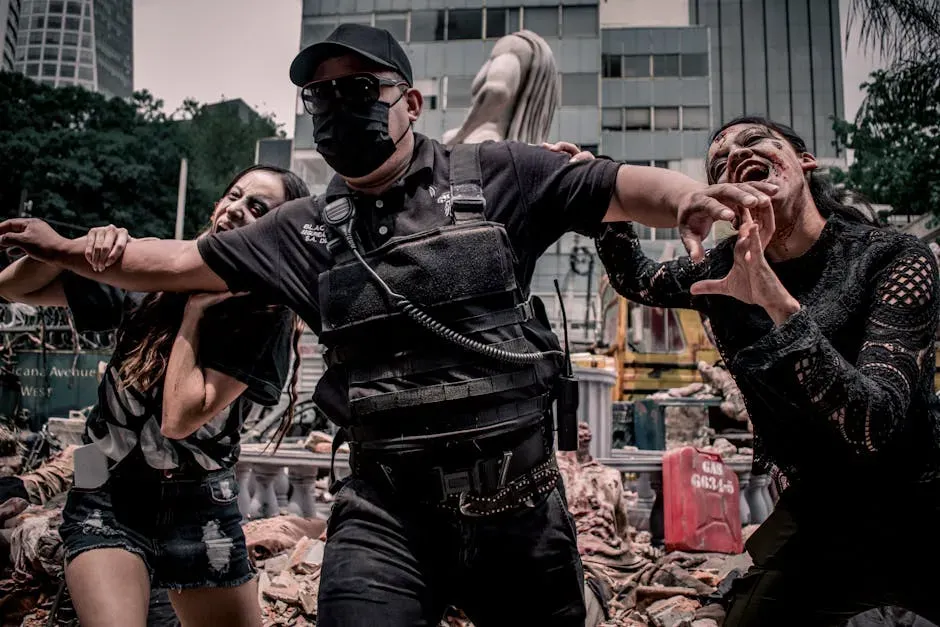
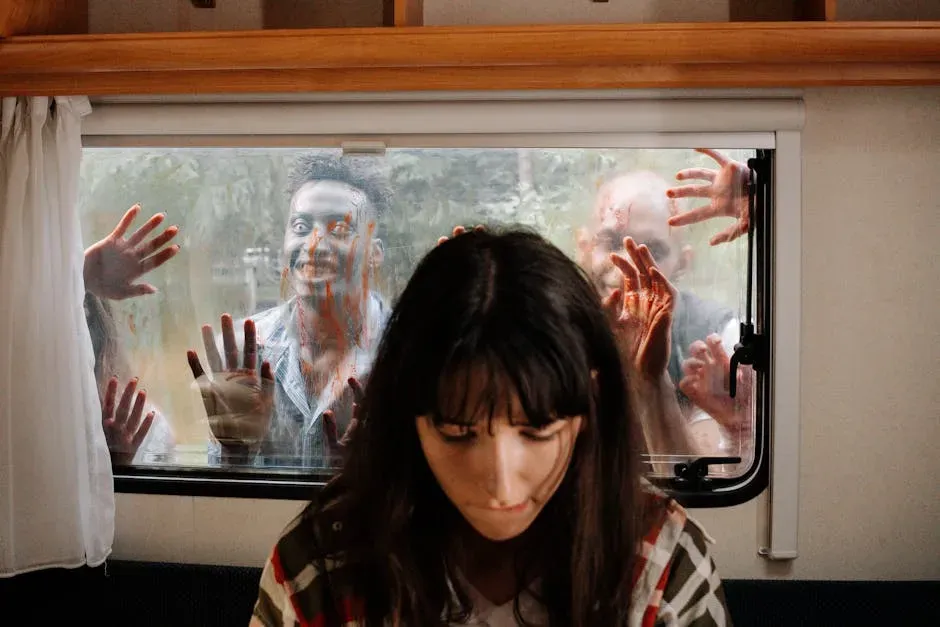
The original third act of “World War Z” was a massive, action-packed showdown in Moscow, with Brad Pitt’s character forced into brutal hand-to-hand combat with zombies. Early test screenings found this ending disjointed and unsatisfying. The original third act featured a massive battle in Russia that felt disjointed from the rest of the film. Damon Lindelof and Drew Goddard were hired to write a completely new ending focused on suspense rather than action, and reshoots took place to create the tense laboratory sequence that grounded the story personally.
The filmmakers scrapped almost 40 minutes of footage, instead crafting a quieter, suspenseful finale set in a World Health Organization lab. This new ending shifted the focus from global destruction to personal survival and tension, earning praise for its intensity and freshness. The movie’s box office haul – over $540 million – shows how a last-minute change can turn a potential flop into a hit.
Get Out (2017): A Sobering Reality Gets Swapped for Relief
In the original ending, Chris kills Rose and is arrested by the police; Rod then visits him in jail, where Chris insists the threat has been stopped. Get Out’s alternate ending was intended by Jordan Peele to reflect a realistic outcome to Chris’s scenario and drive home how racially biased the American justice system often is. However, after the film underwent test screenings, Peele changed his mind and decided that both Chris and audiences deserved a happier ending.
Producer McKittrick recalled: “We tested the movie with the original ‘sad truth’ ending where, when the cop shows up, it’s an actual cop and Chris goes to jail. The audience was absolutely loving it, and then it was like we punched everybody in the gut. You could feel the air being sucked out of the room.” The film achieved widespread acclaim upon release, grossing over $255 million against a $4.5 million budget. It also received multiple Academy Award nominations, with Peele winning the Oscar for Best Original Screenplay, making him the first Black person to win such an award.
First Blood (1982): Rambo Lives to Fight Another Day

Once test screenings went to audiences, one more change was required: the ending. In the original cut, John Rambo commits suicide, the same as in the novel. In the new conclusion, he gets to live. The original cut ended with John Rambo forcing Colonel Trautman to kill him. Sylvester Stallone felt this message was too depressing for a character who had already suffered so much. He convinced the director to shoot a new ending where Rambo survives and is taken into custody.
Another ending, where Rambo commits suicide as in the novel, was filmed, but test audiences found that conclusion to be too depressing, so the script called for Rambo to live, hence the sequels. This alteration allowed the character to return for sequels and become an action icon. The survival of the protagonist changed the entire trajectory of the franchise. What was originally a bleak, one-film character study became one of Hollywood’s most enduring action franchises – all because a test audience wasn’t ready to say goodbye.
These seven films share a common thread: the version audiences saw was shaped as much by fear, commercial pressure, and a room full of strangers with comment cards as it was by any director’s original vision. Some changes were unambiguously improvements. Others remain genuinely debated. What they collectively reveal is that cinematic endings are rarely inevitable. They’re negotiated, tested, and sometimes completely reinvented at the last possible moment before the credits roll.