Most novels take you somewhere. A great ending line makes you feel you were never quite ready to arrive. There’s a particular kind of reader experience that happens in the final seconds of a book: you finish the last sentence, close the cover, and then just sit there, staring at nothing. Not because you’re confused. Because the closing words have landed somewhere deep, doing work that hundreds of preceding pages only gestured toward. We follow writers across hundreds of thousands of words, but the final line can make or break a book. It determines if parting is such sweet sorrow or a thudding disappointment. The four lines gathered here each accomplish something rare. They don’t just conclude a story. They reframe everything that came before.
The Great Gatsby by F. Scott Fitzgerald (1925): “So we beat on, boats against the current, borne back ceaselessly into the past.”

The final words of F. Scott Fitzgerald’s classic novel, published one hundred years ago, are among the most known and appreciated in American literature. The sentence seems almost too compressed for what it contains: an entire philosophy of time, failure, and human desire packed into a single nautical image.
The last line of The Great Gatsby works on two levels. For the characters in the novel, it means they can’t escape, erase, or reclaim their past. Its broader meaning is a critique of the American Dream: no matter how hard we work or how much we achieve, the dream is out of reach and the current always pushes back. What makes it sting is the word “we.” Fitzgerald’s use of “we” in the final line turns the reader’s focus on the rest of the characters as well.
There are three ways to interpret how Fitzgerald wants us to take this idea that we are constantly stuck in a loop of pushing forward toward our future and being pulled back by our anchoring past. If we go with the “heavy burden” meaning of the word “borne,” then this last line means that our past is an anchor and a weight on us no matter how hard we try to go forward in life. The genius of the line is that it doesn’t resolve this. It simply holds all three interpretations at once, which is exactly what makes it feel true.
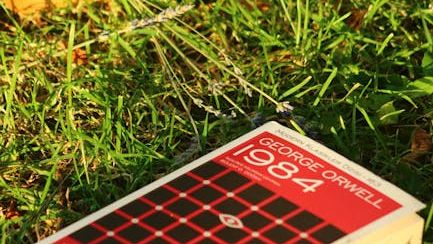
Nineteen Eighty-Four by George Orwell (1949): “He loved Big Brother.”
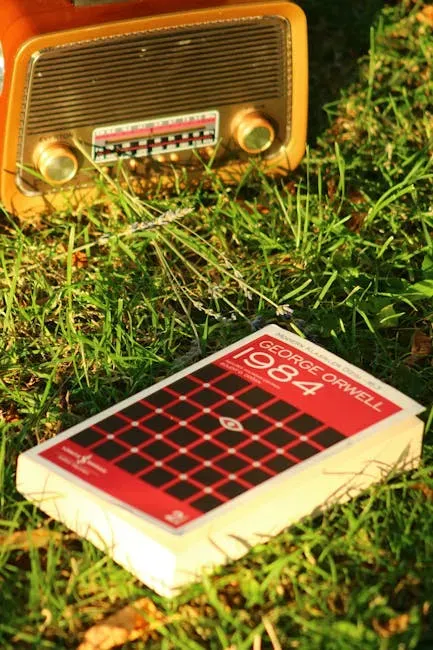
Orwell could have ended his novel with Winston begging his enemies from a torture chamber to hurt his love in order to save himself, and it would have been a devastating final act. Instead, the author went one step further by describing Winston’s life after his release from the Ministry of Love. That decision makes all the difference. The torture scenes are harrowing, but they pass. What doesn’t pass is the final image of Winston genuinely, contentedly loving the thing he once despised.
After enduring extensive torture and brainwashing, Winston’s individuality and resistance have been obliterated, leaving him to genuinely accept and love Big Brother. This “victory” is deeply ironic, as it reflects the Party’s triumph over Winston’s spirit, showcasing the terrifying power of totalitarian control over individual thought and freedom.
The story of 1984 is a dystopian novel, so the decidedly unhappy ending doesn’t come as much of a surprise. What does feel shocking, however, is the way Orwell sets readers up to believe, if only for a moment, there is any other possibility. Over roughly three hundred pages, we watch Winston slowly start to believe in an alternative to his life in Oceania. The final line wipes all of that away in four words. This brief, powerful final sentence establishes the inevitability of Winston’s life. He fought and loved and became truly free, but in the end it was all for nothing. His memories are not his own, his personality is stripped from him.
Anna Karenina by Leo Tolstoy (1878): Levin’s Final Confession
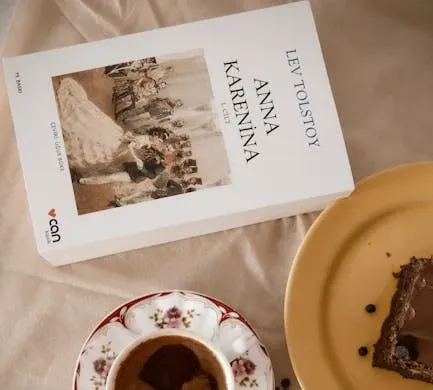
Most readers come to Anna Karenina expecting a tragedy about a woman and a doomed love affair. What Tolstoy delivers in the final pages is something stranger and more unsettling: a novel that ends not with its title character, but with a man’s quiet philosophical breakthrough on a summer evening. Tolstoy’s decision to end the novel with Levin’s religious regeneration, rather than with Anna’s demise, perplexes many readers who expect the novel to be first and foremost about Anna and her tragedy. The ending shows us yet again that Anna Karenina is a novel of ideas, rather than merely a tragic love story.
Though brought to very different ends, Tolstoy allows both of his protagonists, through their similar suffering, to come to the same recognition: that the only thing that can truly drive back their existential pain is the light of faith. While Anna is ultimately crushed by such darkness, Levin has the chance to get out from under its thumb: “My whole life,” he realizes in the book’s final line, “is not only not meaningless… but has the unquestionable meaning of the good which it is in my power to put into it.”
The closing is so personal, so imperfect, and so ordinary that it somehow lands harder than Anna’s death. Fyodor replied that the generous landowner “lives for his soul” and “does not forget God,” leading Levin to realize the miracle that he’d been looking for the whole time: goodness. Levin reasons that it’s rational for a person to live for basic needs like food and shelter, but not for goodness. The fact that this enormous conclusion comes from a peasant’s offhand remark, not from a library or a sermon, is part of Tolstoy’s whole point.
James Joyce’s “The Dead” from Dubliners (1914): Snow Falling on the Living and the Dead
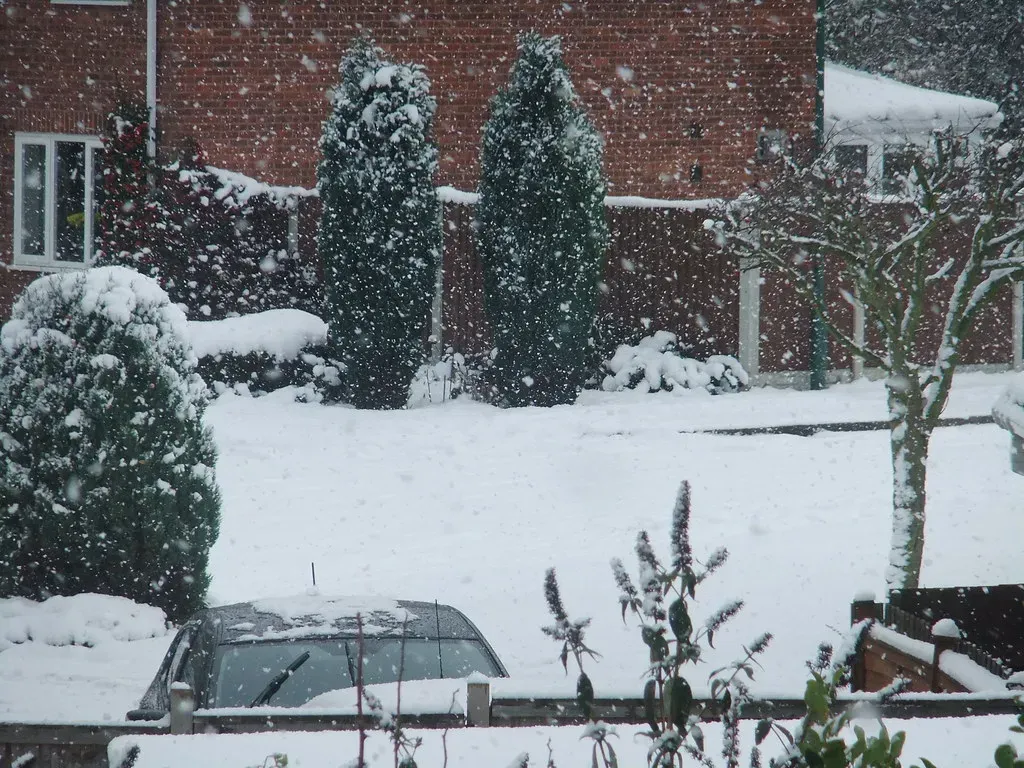
“The Dead” is technically a short story, but it carries the emotional weight of a novel. A vague last line casts a shadow over the entire novel, whereas a powerful and poignant one will keep you wondering for weeks to come. Joyce’s final line is neither vague nor neat. His soul swooned slowly as he heard the snow falling faintly through the universe and faintly falling, like the descent of their last end, upon all the living and the dead.
What’s remarkable about this sentence is how it performs the feeling it describes. The slow rhythm, the repetition of “falling faintly” and “faintly falling,” creates a kind of verbal drift, a swooning on the page. Gabriel Conroy has just realized that his wife carries within her a grief, and a capacity for love, that he has never truly known. The snow doesn’t resolve that recognition. It absorbs it.
The line reaches beyond Gabriel entirely. A successful final line doesn’t mean the end of the book. It just means the end of your physical reading experience. Some of the greatest denouements leave you cursing the author for not giving you firm resolve and neatly wrapped up lives, while encouraging you to hatch a fugitive state of plotting your own, myriad conclusions for what could, will, won’t or shouldn’t happen next. That’s precisely what Joyce achieves. The snow falls on everyone, indifferently, beautifully, and the reader is left inside a feeling with no name for it.
These four sentences share something beyond craft. They each ask the reader to carry something forward, an unresolved tension, a quiet revelation, an irony too sharp to shake. Plot events fade. Sentences like these stay.