Hollywood has a polished way of explaining things. The official statements tend to land somewhere between “creative differences” and “scheduling conflicts,” which, in industry terms, can mean almost anything. What they rarely do is tell the whole story. The gap between the press release and what actually happened on set is often where the most interesting filmmaking history lives.
Some of the most beloved performances in cinema only exist because someone else was quietly shown the door first. Recasting happens more often than most people realize. Sometimes it’s before filming starts, other times it happens mid-shoot, and scenes get reshot while fans are left wondering why a character suddenly seems different. These are seven of the most striking cases, and the real stories behind them.
1. Stuart Townsend as Aragorn in The Lord of the Rings (2001)

When the massive production of Lord of the Rings got off the ground, it was 27-year-old newcomer Stuart Townsend playing Aragorn, the future king of Gondor. Townsend went through months of training but only managed to film a couple of days before Jackson quickly decided he was far too young for the role. Townsend later recalled being there, rehearsing and training for two months, then being fired the day before filming began – and subsequently being told he would not be paid because he had not worked long enough to fulfill his contract.
The precise reasons for this sudden decision remain somewhat muddled, with two main theories emerging over the years. One suggests that Townsend was perceived as difficult to work with and lacked the dedication required for such a demanding role. The story told among fans is that Townsend clashed with the cast and crew over sword-fighting rehearsals, with things reportedly becoming tense enough that Gandalf actor Ian McKellen asked him directly whether he really wanted to be there, before Peter Jackson eventually sought permission to let him go. Mortensen, who was 41 at the time of his casting, was not even Jackson’s first alternative – the filmmaker reportedly approached Russell Crowe and Daniel Day-Lewis, both of whom turned the opportunity down, before Mortensen was eventually persuaded to say yes by his Middle-earth-loving son.
2. Eric Stoltz as Marty McFly in Back to the Future (1985)

Production began on Back to the Future with Eric Stoltz in the lead role. However, the top people working on the movie – among them director Robert Zemeckis and producer Steven Spielberg – realized weeks into production that Stoltz was not getting many laughs in rough cuts of the film, leading them to come up with a plan to fire him and bring in their original choice. Stoltz was fired from Back to the Future after six weeks of filming, and much of the footage had to be reshot with Michael J. Fox as Marty.
Eric Stoltz was fired from Back to the Future because of his dramatic approach to Marty McFly’s role. He insisted the movie was a tragedy, not a comedy, and so played Marty as serious instead of giving him a lighter, more comedic personality. After reviewing footage from the first few weeks of shooting, director Robert Zemeckis concluded that Stoltz’s portrayal of Marty was ruining the film’s humor. The 2015 book “We Don’t Need Roads: The Making of the Back to the Future Trilogy” details Stoltz’s exit from the project, shedding light on some of his uncomfortable on-set behavior, including demanding that everyone on set refer to him only as “Marty.”
3. James Remar as Corporal Hicks in Aliens (1986)

James Remar originally played Corporal Hicks in Aliens, with Michael Biehn replacing him a few days after principal photography began. The official reason given for his removal was “artistic differences” between him and director James Cameron, but Remar later admitted on a podcast that he was fired because he was busted for possession of drugs during a period when he had developed a serious drug problem. Producer Gale Anne Hurd added that Remar was arrested for buying a controlled substance from an undercover police officer, and that legal efforts succeeded at least in getting him deported from the UK, sparing him from a potential prison sentence of eight to ten years.
The cast and crew remained tight-lipped about Remar’s involvement and departure for decades, with the matter rarely given weight in behind-the-scenes documentaries and usually brushed off as “creative differences” when mentioned at all. Remar still appears briefly in the finished film during the alien nest sequence, but his face is never seen – the production was unable to reshoot a complex effects shot already completed with him, and instead used editing to cut away once he turned his head.
4. Kel O’Neill as Eli Sunday in There Will Be Blood (2007)

Actor Kel O’Neill was the original actor hired to play Eli Sunday, the nemesis of Daniel Day-Lewis’s Daniel Plainview in There Will Be Blood, but according to The New York Times Magazine, he had to be replaced about halfway through the film’s 60-day shoot. There were reports that O’Neill “suffered from intimidation,” presumably from Day-Lewis’s intense Method approach to acting. Both Day-Lewis and director Paul Thomas Anderson have since denied this, with Anderson telling the Times it simply “wasn’t the right fit.”
Partner offer
The role was then given to Paul Dano, who was already on set playing the role of Eli’s brother, and the script was simply adjusted to make the two characters identical twins. Dano ultimately earned a BAFTA nomination for his work in the role. The real dynamics between O’Neill and the production have never been fully explained publicly, which is arguably why the story has continued to circulate. It’s one of those situations where everyone involved has chosen restraint, and the silence itself says something.
5. Harvey Keitel as Captain Willard in Apocalypse Now (1979)

Francis Ford Coppola had cast Harvey Keitel as the film’s lead after seeing him in Martin Scorsese’s Mean Streets. Within three days of shooting, however, Keitel was on a plane back to Los Angeles, with Coppola stating that the actor “found it difficult to play a passive onlooker.” Martin Sheen replaced him. The role of Willard demands a quiet, internal quality – someone absorbing the madness around him rather than driving it. By Coppola’s own account, that kind of stillness was not what Keitel was bringing.
What makes this case particularly striking is how little Keitel has said about the experience publicly over the decades. Sheen’s performance in Apocalypse Now turned out to be one of the most iconic in film history. The replacement happened so early in the shoot that almost no Keitel footage made it anywhere near the final cut, and the production’s eventual chaos – including Sheen’s own heart attack during filming – somewhat overshadowed the initial casting drama. It remains one of the fastest mid-shoot exits ever recorded on a major Hollywood production.
6. Gerard McSorley as Captain Queenan in The Departed (2006)
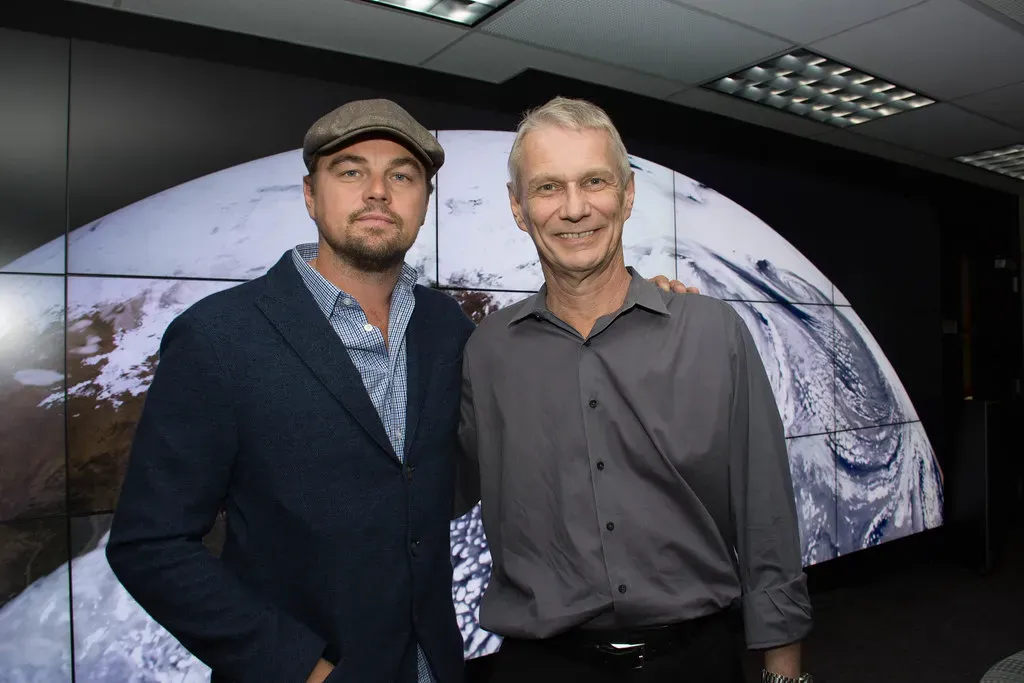
Gerard McSorley is an award-winning Irish actor who, when cast as police officer Captain Queenan in Martin Scorsese’s gangster film The Departed, did extensive research by meeting with Boston police officers and had in-depth conversations with Scorsese and screenwriter William Monahan to develop the character’s backstory. All that preparation wasn’t enough to prevent him from being replaced midway through production by Martin Sheen. Surprisingly, McSorley did not appear to harbor hard feelings about the decision, telling The Irish Times that he had been given exceptional treatment by Scorsese throughout.
No specific reason was ever publicly given for why Sheen ultimately took over the role, though McSorley himself has speculated that his own obsessive promotion for Omagh – a deeply personal project for him – at the time might have interfered with his preparation for The Departed. It’s a rare case of an actor offering the most candid assessment of his own exit. The grace with which McSorley handled the whole episode stands in quiet contrast to how these situations usually play out in the entertainment press.
7. Dennis Hopper as Christof in The Truman Show (1998)

Dennis Hopper filmed several days as Christof, the director character at the center of The Truman Show, before Variety announced he had left the project due to the extremely vague reason of “creative differences.” Producers then scrambled to fill the role, eventually casting Ed Harris, who went on to earn an Oscar nomination for the part. At the time, the phrase “creative differences” was doing a great deal of heavy lifting, as it so often does in Hollywood announcements.
Years later, Hopper revealed that he had actually been fired by producer Scott Rudin, who had never wanted him cast in the first place. The distinction matters. There is a significant difference between an actor choosing to walk away and being removed at the insistence of a producer who opposed the casting from the start. Some of the best-loved performances in film history only happened because someone else stepped aside or was let go – and Harris’s quietly unsettling portrayal of Christof is one of the clearest examples of a replacement that genuinely elevated a film.
What runs through all seven of these stories is the gap between what gets said publicly and what actually happened. Studios reach for bland, non-committal language, and most actors follow the same instinct, at least for a while. Sometimes the truth surfaces years later in a podcast or a memoir. Sometimes it never does. Either way, the films exist, audiences fell in love with them, and the performances that defined them nearly belonged to someone else entirely.
Partner offer
Planning a trip to Vegas?
Compare hotel rates and show tickets on VEGAS.com.