Hollywood has always run on a certain kind of unwritten code. Who defers to whom, who speaks first, who gets the bigger trailer. For decades, that code was written almost entirely by Baby Boomers, and most people simply accepted it. That’s changing now, and the shift is becoming hard to ignore.
As Millennial and Gen Z performers take up more space on sets, in casting rooms, and at industry events, they’re naming things that used to go unnamed. Not all of it is dramatic. Some of it is surprisingly quiet. But the friction is real, and it’s worth understanding where it actually comes from.
1. Dismissing Intimacy Coordinators as Unnecessary

Few issues have drawn a sharper generational line in recent years than the role of intimacy coordinators on set. Older performers who came up in the 1970s, 80s, and 90s often view these professionals with suspicion, arguing they add awkwardness to scenes that would otherwise flow naturally. Michael Douglas, known for erotic thrillers like “Fatal Attraction” and “Basic Instinct,” has publicly stated that he dislikes intimacy coordinators on film sets, suggesting that actors in his era “seemed to take care of ourselves” when someone overstepped.
Younger performers tend to see this attitude very differently. For younger performers, the dynamic can be especially intimidating. They may worry that setting boundaries will damage their reputation or cost them future opportunities, having been told that actors are replaced with someone who is “willing to do the job.” Intimacy coordinators help level this playing field, ensuring that safety and consent are not privileges tied to experience but rights extended to everyone on set.
2. Staying in Character Off Camera and Expecting Everyone Else to Play Along
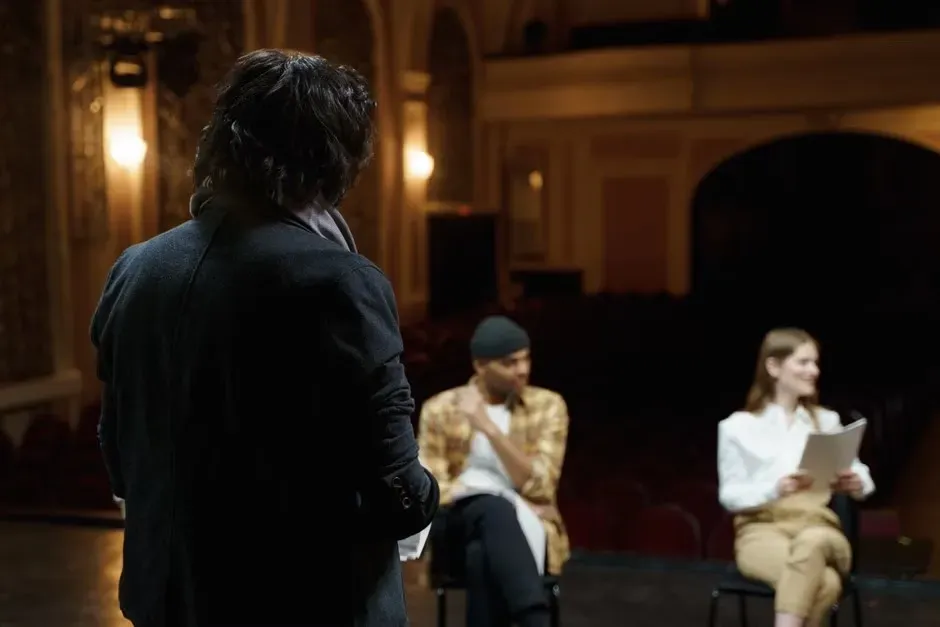
Method acting has a long and genuinely impressive history in Hollywood, but its more extreme expressions have become a flashpoint between generations. It has become increasingly popular for performers to define Method acting as never breaking character on set, which has resulted in a number of on-set altercations and frustrations for the cast and crew around them. When a senior actor commits to staying in character between takes for weeks at a time, the rest of the cast is quietly expected to follow along, whether they signed up for that or not.
Some actors may take their approach to Method acting too far, much to the annoyance of their colleagues and potentially creating a dysfunctional set. As one academic expert put it, “Perhaps some method actors take it too far. This could be due to their deep-seated narcissism,” meaning some method actors see the project as all about them. For younger performers trained in more collaborative, contemporary techniques, being expected to accommodate someone else’s psychological immersion process without discussion feels like an imposition rather than an artistic choice.
3. Giving Unsolicited Career Advice Mid-Scene

There’s a well-worn habit among veteran Boomer actors of pulling younger cast members aside between takes to offer direction that was never asked for. Sometimes this comes from a genuine place of mentorship. Often, though, it blurs into something that feels more like condescension, especially when it happens in front of other cast and crew. The younger performer is left in an uncomfortable position: push back and risk being labeled difficult, or smile and absorb feedback from someone who has no formal authority over them.
Generational differences can sometimes lead to misunderstandings, especially when it comes to habits and behaviors. What’s considered normal or even endearing to one generation may feel outdated or intrusive to another. Boomer performers often grew up in a hierarchical system where senior actors were expected to pass down wisdom, and they’re genuinely surprised when that behavior doesn’t land as warmly as they intended. The friction isn’t always about bad intent. It’s about a mismatch in expectations that nobody pauses to address.
4. Making Pointed Comments About Physical Appearance
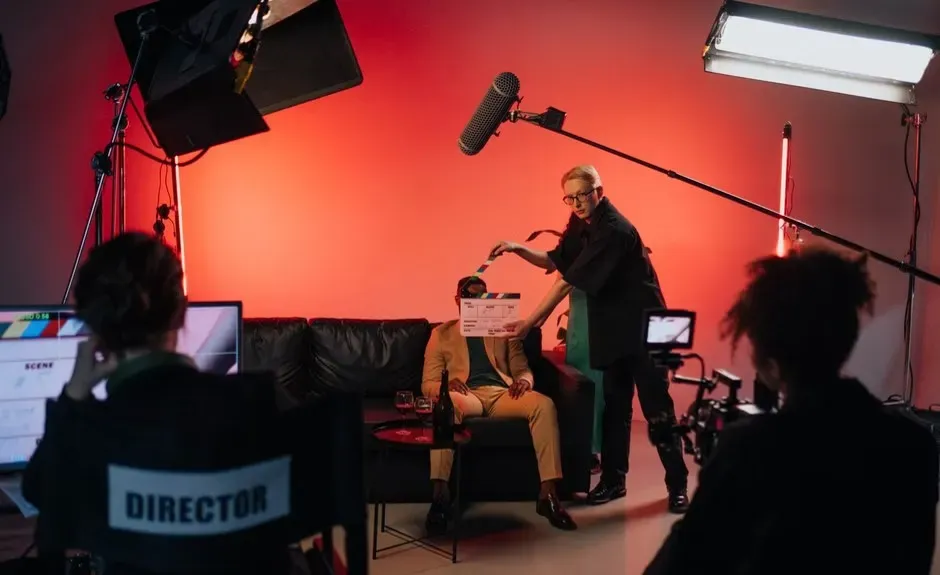
Comments about how someone looks have long been a casual currency on film sets, particularly for actors who came of age in an era when appearance was discussed with remarkable bluntness. Boomers often make comments about appearance without a second thought, whether about someone’s weight, outfit, or energy levels. Remarks like “You look tired” or “That haircut is different” might be said casually, but for younger generations these comments can feel unwelcome or intrusive, as they may place unnecessary focus on appearance.
What’s changed is not sensitivity for its own sake but rather a growing recognition that unsolicited commentary about someone’s body on a professional set crosses a line. Younger actors, many of whom have navigated intense public scrutiny through social media, are acutely aware of how these remarks land. They’re not trying to be thin-skinned. They’re trying to maintain a working environment where their body isn’t the subject of casual editorial review by a colleague.
5. Treating Emotional Boundaries as Professional Weakness

Boomer performers were largely trained in a culture that celebrated pushing through discomfort as a mark of commitment and professionalism. Vulnerability was often seen as something to overcome on the way to a performance, not something to be respected on its own terms. For some, resilience was historically tied to keeping emotions in check, with vulnerability sometimes seen as a sign of weakness. For younger generations, however, emotional intelligence and mental health are priorities.
When a younger actor asks for a moment to decompress after a particularly heavy scene, or requests that certain topics not be brought up casually between takes, Boomer colleagues sometimes interpret that as fragility rather than self-awareness. The reality is that newer training methods actively teach emotional hygiene as part of craft. Being in control of your emotional state is viewed by many young performers as a skill, not a limitation, and having that framing dismissed can sting.
6. Resisting Consent-Check Conversations Before Intimate Scenes

Modern sets increasingly build structured conversations into the rehearsal process for scenes involving physical closeness, even when nothing explicitly sexual is involved. These conversations, sometimes facilitated by an intimacy coordinator and sometimes just led by the director, ask actors to confirm their comfort with specific choreography before the cameras roll. For younger performers, this is simply responsible professional practice. For some Boomer performers, it feels bureaucratic at best and deeply awkward at worst.
Young performers have recalled being never offered assistance regarding consent or what they felt comfortable doing on stage. One performer recalled feeling “thrown into a situation she had no right saying no to” when, at the age of 17, a director asked her during rehearsals on opening night if she could perform a physical moment in front of the entire cast. When senior performers openly resist these check-ins or roll their eyes at the process, it sends a clear signal to less established cast members that voicing discomfort is unwelcome. Historically, resistance was rare because “most actors were keen to please.”
7. Assuming Hierarchy Based on Age and Credits Alone

Film and television sets operate with clear functional hierarchies, but Boomer performers often extend that hierarchy into social and creative territory in ways that younger performers find difficult to navigate. The assumption that more credits automatically mean more authority over how a scene should be played, or more license to speak over others in a table read, is something many younger actors encounter regularly. These generational shifts don’t happen cleanly or without argument, but they do happen, and they help shape not only Hollywood history but also the ever-evolving story the industry tells about itself. In the current moment, an ascendant Gen Z is asserting itself while older generations hold tightly to existing power structures.
The discomfort isn’t really about whether experience matters. Most young performers deeply respect craft and longevity. It’s about whether years of credits grant someone an automatic right to dominate creative conversations regardless of whether their input is relevant to the moment. Boomers grew up when milestones were public scorecards. Younger generations treat personal and professional authority as more opt-in. That shift is slow and sometimes messy, but it’s already well underway.
8. Pushing Through Scenes Without Acknowledging a Co-Star’s Discomfort

There’s a particular kind of momentum that experienced actors can build on set, a focused, tunnel-vision energy that, in many contexts, is genuinely useful. The problem arises when that momentum overrides any awareness of what the person opposite them might be experiencing. Younger performers describe moments where a Boomer co-star was so committed to keeping the scene moving that no space was ever created for the other person to flag something that didn’t feel right.
It should be directors, producers, and other people with institutional power who guarantee the right to an intimacy coordinator and clear communication in all of their productions. It cannot be a question, because that could put people in the uncomfortable position of going against the director’s or co-star’s wishes. When a well-established actor signals, even subtly, that stopping a scene for a check-in is a disruption, less powerful performers are less likely to speak up. That silence is the part that younger generations are pushing back against most directly.
9. Dispensing Unsolicited Technical Criticism During Takes

Few things derail a younger performer’s confidence mid-project quite like having a senior colleague offer technical notes directly, without going through the director. It places the younger actor in an impossible position: taking the note means implicitly accepting that their peer has authority over them, while ignoring it risks being seen as dismissive or arrogant. Some Boomer actors have been candid about judging younger performers’ technical choices publicly, including remarks about vocal delivery, with one prominent veteran stating that “young actors tend to mumble” and suggesting they don’t understand technique the way earlier generations did.
The issue isn’t whether the technical observation might be valid. Sometimes it is. The issue is the assumption that a peer relationship grants one person the right to correct another without invitation or context. Method acting and classical technique, credited to influential figures like Lee Strasberg, prize authenticity and suggest that actors must use their physical, mental, and emotional self in the creation of a character. Younger actors are doing exactly that, just through frameworks that don’t always align with Boomer expectations. Having those choices interrupted and critiqued on the spot is a fast way to make the working relationship feel unequal in a way that’s hard to recover from.
None of this is a simple story of one generation being wrong and another being right. Many Boomer performers are thoughtful, collaborative, and genuinely curious about how the craft is evolving. The habits listed here aren’t universal, and they’re not always conscious. What’s shifted is that younger performers are now naming these dynamics openly, rather than absorbing them quietly. That naming, more than anything else, is what’s making the conversation feel new.