Walk into almost any American high school English classroom and you’ll find shelves stacked with novels that would make a parent do a double take if they actually sat down and read them cover to cover. Rape, addiction, genocide, suicide, and sexual slavery aren’t just themes hinted at in these books, they’re often described in unflinching detail. Yet these titles remain assigned reading or staples on optional lists year after year, defended by teachers and librarians as essential windows into difficult truths.
The debate over which books belong in classrooms has only intensified recently. According to the American Library Association’s 2026 State of America’s Libraries Report, the American Library Association documented 4,235 unique titles challenged, 5,668 books banned, and an additional 920 titles restricted in 2025. Several of the most disturbing, most frequently taught books in America keep landing right in the crosshairs of that fight, which is exactly what makes them worth examining closely.
1. Sold by Patricia McCormick
This slim novel written in verse follows Lakshmi, a thirteen-year-old Nepali girl deceived by her stepfather and sold into a brothel in India. The book doesn’t soften the reality of human trafficking, describing the psychological and physical abuse Lakshmi endures with a spare, poetic style that somehow makes the horror land harder. It’s the kind of book that leaves teenagers uncomfortably silent in class discussions, which is precisely why many educators believe it belongs there.
Despite, or perhaps because of, its unflinching subject matter, Sold has become one of the most contested titles in American schools. The American Library Association has released the 11 Most Challenged Books of 2025, and Sold tops the list, with the Patricia McCormick title having been No. 8 in 2024. It also appeared prominently in PEN America’s tracking of banned titles, described there as the story of Lakshmi, a 13-year-old girl in Nepal who is sold into prostitution.
2. The Perks of Being a Wallflower by Stephen Chbosky
Stephen Chbosky’s epistolary novel about a shy, introspective freshman named Charlie has become a rite of passage for many high schoolers, but it’s far darker than its coming-of-age packaging suggests. The book confronts sexual abuse, drug experimentation, suicide, and mental illness through letters written by a narrator whose own trauma slowly surfaces over the course of the story. Charlie’s voice is gentle and observant, which somehow makes the darker revelations hit even harder when they arrive.
The novel’s popularity in classrooms has made it a perennial target for removal attempts. The American Library Association’s list of the most frequently challenged books of 2025 includes The Perks of Being a Wallflower by Stephen Chbosky, and a library summary of the book notes it centers on Charlie, a freshman in high school who is a wallflower, shy and introspective, and very intelligent, who deals with the usual teen problems, but also with the suicide of his best friend.
3. A Clockwork Orange by Anthony Burgess
Few novels assigned in AP Literature courses are as viscerally violent as Anthony Burgess’s dystopian satire. Told in an invented slang called Nadsat, the book follows a teenage gang leader named Alex through scenes of assault, rape, and state-sanctioned psychological torture disguised as rehabilitation. It’s a deeply uncomfortable read, intentionally so, built to force readers to confront questions about free will and the limits of state control over the individual.
The book’s brutal content has made it the single most banned title in American schools according to recent tracking. The most-banned book in the country in the 2023-24 school year was Anthony Burgess’ 1962 dystopian novel A Clockwork Orange, which publisher W.W. Norton describes, according to PEN America’s summary, as “a frightening fable about good and evil and the meaning of human freedom.” Even in 2025, the top book, A Clockwork Orange by Anthony Burgess, amassed 23 bans in a single school year.
4. The Bluest Eye by Toni Morrison
Toni Morrison’s debut novel tells the story of Pecola Breedlove, a young Black girl in 1940s Ohio who longs for blue eyes as a way to escape the racism and abuse surrounding her. The book depicts incest, child sexual abuse, and internalized racism with a rawness that has unsettled readers and censors alike since it first appeared. Morrison never lets the violence feel gratuitous, it’s woven so tightly into the fabric of poverty and prejudice that removing it would gut the novel’s entire point.
Its literary importance hasn’t shielded it from repeated removal attempts. As one tracking summary notes, Morrison’s first novel, published in 1970, has been challenged repeatedly for decades but saw a sharp increase in challenges after 2021, dealing with racism, sexual abuse, and poverty in a 1940s Ohio community. The same source points out that it is also one of the most assigned books in AP English Literature courses, which makes its removal from school libraries particularly consequential for students.
5. Speak by Laurie Halse Anderson
Laurie Halse Anderson’s novel about a high school freshman who stops speaking after being raped at a summer party has been assigned reading in classrooms for a quarter century now. Melinda’s silence, and the slow, painful process of her finding her voice again, forces readers to sit with the isolation that often follows sexual assault. It’s not graphic in a cinematic sense, but the psychological weight of the story lingers long after the final page.
Despite its clear message about the importance of speaking out, the book remains a lightning rod for censorship efforts. According to one summary, it is a young adult novel about a high school student recovering from rape, originally published in 1999, that has been on challenged book lists for twenty-five years, with challenges citing its subject matter as inappropriate. Yet as the same source notes, many educators argue it is precisely the book students in similar situations need access to.
6. Crank by Ellen Hopkins
Ellen Hopkins built her career writing verse novels that pull no punches when it comes to teen addiction, and Crank remains her most infamous. Loosely based on her own daughter’s struggle with methamphetamine, the book traces a seemingly perfect student’s descent into addiction with brutal honesty about withdrawal, relapse, and the way drugs can hollow out a life. The verse format makes the story move fast, almost breathlessly, mirroring the addiction it describes.
Hopkins has become one of the most frequently banned authors writing for teenagers today. PEN America’s summary of the novel captures its premise starkly: Kristina Snow is the perfect daughter, a gifted high school junior, quiet, never any trouble, until she meets the monster: crank, and what begins as a wild, ecstatic ride turns into a struggle through hell for her mind, her soul, her life. Recent data confirms her prominence on ban lists, with Ellen Hopkins seeing 167 instances of her books being banned in a single school year.
7. Nineteen Minutes by Jodi Picoult
Jodi Picoult’s novel unpacks a school shooting from multiple perspectives, moving between the shooter, his victims, and the community left reeling in the aftermath. It doesn’t shy away from depicting bullying, humiliation, and violence in granular detail, using the tragedy as a lens to examine how ordinary cruelty can curdle into something catastrophic. For students who’ve grown up practicing lockdown drills, the book can feel uncomfortably close to home.
Its unflinching approach to a subject many schools would rather avoid discussing has made it a frequent target for removal. PEN America describes it as a novel by Jodi Picoult, bestselling author of My Sister’s Keeper and Small Great Things, writing about the moments leading up to and the devastating aftermath of a school shooting. The book was named among the 15 most banned books in the 2024-2025 school year, according to the PEN America Index of School Book Bans.
8. Forever by Judy Blume
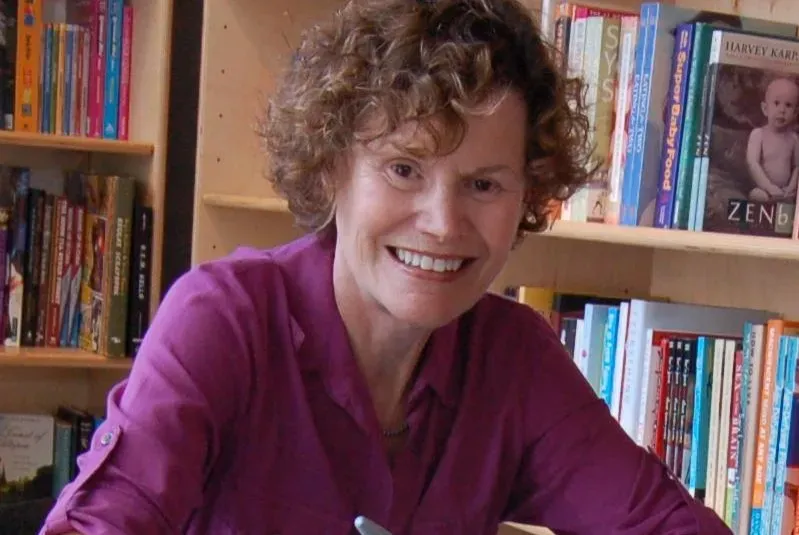
Judy Blume’s 1975 novel about two teenagers navigating first love and first sex has been controversial since the day it was published, and the controversy hasn’t faded with time. The book treats teenage sexuality with a matter-of-fact honesty that was unusual for its era and remains disarming even now, refusing to moralize or punish its characters for their choices. It’s frank without being exploitative, which is exactly what unsettles some of its critics.
Half a century later, the book still shows up on lists of frequently banned titles. As PEN America notes, Judy Blume’s 1975 Young Adult novel has been a target of censorship for 50 years, and Blume herself has said she wrote it because her daughter wanted to read something where kids could have sex “without either of them having to die.”
9. Gender Queer by Maia Kobabe
Maia Kobabe’s graphic memoir chronicles eir own journey toward understanding gender identity and sexuality, using illustrated panels to depict experiences that many readers find both deeply relatable and, for some parents, genuinely shocking in their frankness. The visual format makes certain scenes land with an intensity that prose alone might not achieve, which is part of why it has become such a flashpoint in the culture war over what belongs on library shelves.
Few books have drawn as much sustained controversy in recent years. The American Library Association’s list of the most frequently challenged books of 2025 includes Maia Kobabe’s Gender Queer: A Memoir, placing it firmly among the works that keep drawing formal complaints from parents, administrators, and advocacy groups across the country.
10. Breathless by Jennifer Niven
Jennifer Niven’s coming-of-age novel follows a teenager named Claudine navigating her parents’ divorce, an impending move away from everything familiar, and a summer romance that becomes far more complicated than she expects. The book handles grief, family breakdown, and sexual awakening with an intimacy that pulls no punches, treating its teenage protagonist’s inner life as something worth taking seriously rather than sanitizing.
The novel has become one of the most contested recent additions to school shelves. PEN America summarizes it as a story where Claudine Henry is coping with her parents’ divorce and getting ready for college when she meets a local trail guide with a mysterious past, and it was identified as the third book on the list of the most-banned titles nationwide during the 2023-24 school year.
Why These Books Keep Sparking Debate
What ties all ten of these books together isn’t shock value for its own sake. Each one uses disturbing content, whether it’s trafficking, sexual violence, addiction, or gun violence, to illuminate something true about the human condition that a sanitized version of the story simply couldn’t convey. Teachers who assign them argue that adolescence itself is often disturbing, and that literature which pretends otherwise fails the very students it’s meant to serve.
Still, the numbers show this argument is far from settled. Less than 3 percent of challenges were from individual parents, while the bulk came from organized pressure campaigns, a detail that complicates the usual narrative of concerned families quietly requesting changes. Whatever side of the debate you land on, these books aren’t going anywhere quietly, and the conversation they provoke may be just as valuable as the stories themselves.