
There’s a particular kind of confusion that hits after watching certain European films, the sense that you followed every scene yet somehow missed the point. It’s not about subtitles or unfamiliar accents. It’s about a different set of storytelling assumptions, ones that don’t always translate across the Atlantic. American viewers tend to expect resolution, clear motivation, and a moral takeaway by the credits. Plenty of European directors simply don’t work that way, and the gap between those expectations produces some genuinely puzzling viewing experiences. Here are six films that keep showing up in confused Reddit threads and half-finished Letterboxd reviews years after their release.
1. Melancholia (2011)

Lars von Trier’s disaster film opens by revealing its own ending, a rogue planet colliding with Earth, then spends two hours getting there through the lens of a woman’s crippling depression. American audiences expecting a traditional apocalypse movie often find themselves disoriented by how slow and interior the film actually is. Kirsten Dunst won Best Actress at Cannes for the role, yet the film’s reputation was overshadowed by von Trier’s press conference remarks, which got him declared persona non grata at the festival that year.
The confusion isn’t really about plot, since the ending is given away in the first five minutes. It’s about tone. Von Trier treats the end of the world less as spectacle and more as a strange kind of relief for his depressed protagonist, which unsettles viewers who arrive expecting catharsis or heroism and instead get something closer to a meditation on despair.
2. Toni Erdmann (2016)
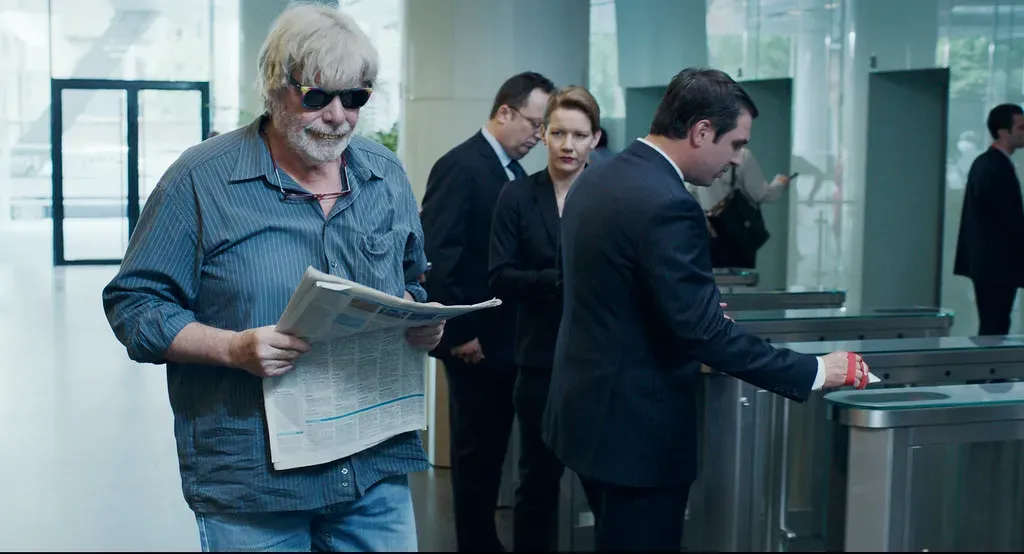
Maren Ade’s German tragicomedy follows a prankster father who insinuates himself into his corporate daughter’s rigid life in Bucharest, wearing fake teeth and calling himself a life coach. The Academy nominated it for the Oscar as Best Foreign Language Feature Film, and it also won five European Film Awards. Despite the acclaim, plenty of American viewers walk away unsure whether they just watched a comedy, a family drama, or something closer to an endurance test.
Part of the disconnect comes from pacing. It’s a German comedy that runs 162 minutes, and much of that runtime is spent in uncomfortable silences and awkward business meetings rather than punchlines. American comedy trains audiences to expect jokes landing on a rhythm; Ade’s film asks you to sit with cringe far longer than feels natural, which is exactly the point but rarely feels like one on a first watch.
3. The Square (2017)

Ruben Östlund’s art-world satire won the Palme d’Or and became one of the more divisive festival darlings of the last decade. The Swedish satirical drama, written and directed by Ostlund, entered the 2017 Cannes Film Festival, where it received positive reviews and won the Palme d’Or. It later earned a nomination for Best Foreign Language Film at the 2018 Academy Awards.
The film follows a museum curator whose stolen phone triggers a chain reaction of moral compromises, but it refuses to tie those threads together neatly. American audiences often expect satire to resolve into a clear target or lesson; Östlund instead layers scene after scene of social discomfort, including one notorious dinner sequence, without ever explaining what any of it is supposed to add up to. The ambiguity is deliberate, but it leaves a lot of viewers checking film forums afterward looking for an explanation that was never meant to exist.
4. Holy Motors (2012)

Leos Carax’s film follows a man named Monsieur Oscar who rides through Paris in a limousine, transforming into a series of unrelated characters for reasons the film never explains. There’s no traditional plot, no clear protagonist arc, and no attempt to ground the surreal premise in any kind of internal logic. It premiered at Cannes to a mix of bewilderment and enthusiasm, and that split reaction has followed the film ever since.
American viewers raised on three-act structure tend to search for a hidden key that unlocks the whole thing, some metaphor about cinema or identity that ties every episode together. Carax has resisted offering one. The film works more like a series of moods and images than a story, which makes it rewarding for viewers willing to let go of narrative logic and frustrating for anyone hoping the final act will explain the first hour.
5. Dogtooth (2009)

Yorgos Lanthimos’s early feature, made before he became a familiar name in American cinema through films like Poor Things, traps three adult siblings inside a walled family compound where the parents have invented their own language and rules. The film never explains why the parents started this experiment or what happens once it inevitably breaks down. It earned international attention and an Oscar nomination in the Best Foreign Language Film category, introducing Lanthimos’s clinical, deadpan style to a wider audience years before he moved into English-language filmmaking.
What throws American viewers most is the tone. The violence and strangeness are presented with the same flat affect as a family dinner scene, and the film offers no voiceover, no flashback, and no outside perspective to orient the audience. Without a clear framing device explaining the family’s psychology, many viewers are left arguing about what the film is even trying to say, whether it’s a parable about control, isolation, or something more specific to Greek society at the time it was made.
6. Persona (1966)
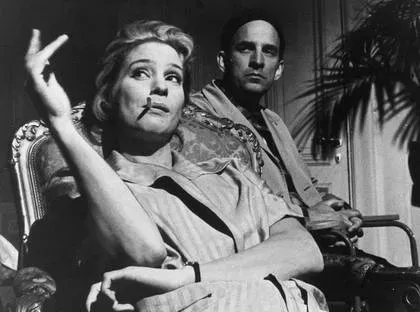
Ingmar Bergman’s film about a mute actress and the nurse assigned to care for her remains one of the most analyzed and least agreed-upon films in European cinema. Roughly an hour into the story, the two women’s identities begin to blur and possibly merge, and the film offers no clean explanation for what is literally happening versus what might be psychological projection. Bergman’s reputation as Sweden’s defining filmmaker gives the film a kind of canonical weight, yet that reputation doesn’t make first-time viewers any less confused by its final act.
Sweden has only won the Best Foreign Language Film Oscar three times in its history, and all three wins belonged to Bergman, a fact that speaks to how central he became to how Americans understand Swedish cinema at all. Persona wasn’t one of those winners, but it’s arguably his most studied work, taught in film schools precisely because it resists a single interpretation. For casual viewers expecting a psychological thriller with an answer at the end, that openness can feel less like art and more like an unfinished thought.
Why the confusion keeps happening
None of these films are difficult because they’re poorly made. If anything, the opposite is true, since each one earned serious critical recognition, festival prizes, or Oscar nominations from voters who understood exactly what the filmmakers were doing. The friction comes from a difference in storytelling philosophy rather than execution.
American mainstream cinema generally treats ambiguity as a problem to be solved by the third act. Many European directors treat ambiguity as the entire point, a way of reflecting how confusing real relationships, grief, or moral choices actually are. That gap explains why these six films keep resurfacing in “I didn’t get it” discussions decades after their release, even among viewers who genuinely liked what they watched.