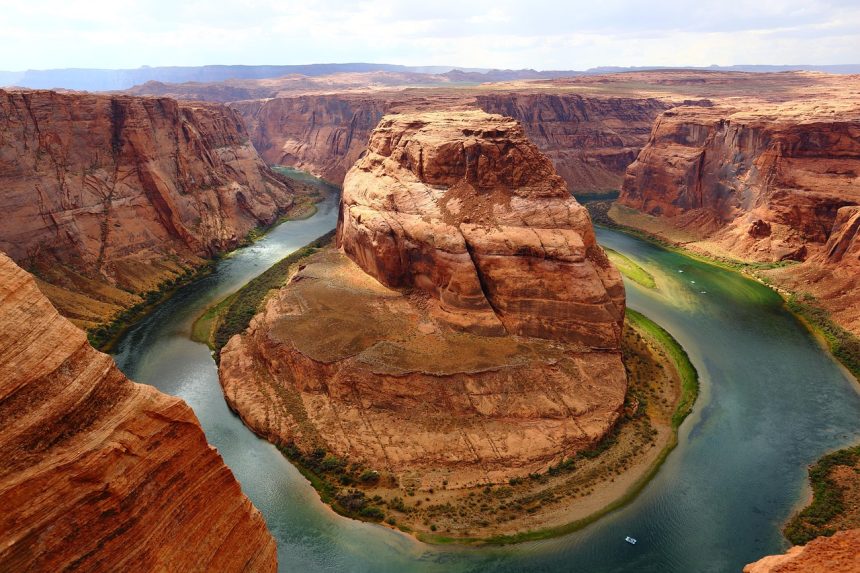
Divisions Run Deep After Years of Talks (Image Credits: Pixabay)
Las Vegas – Seven Western states reliant on the Colorado River missed a key federal deadline in February 2026 to forge a new water-sharing agreement, leaving millions in uncertainty as current guidelines near expiration.[1][2] The Bureau of Reclamation responded by releasing a draft environmental impact statement outlining management options for Lakes Powell and Mead, signaling readiness to proceed without consensus.[3] For Southern Nevada, where Lake Mead supplies nearly all drinking water, the impasse heightens risks to urban growth and economic stability.
Divisions Run Deep After Years of Talks
Negotiations for post-2026 operations collapsed on February 14, 2026, when upper and lower basin states failed to align on conservation mandates.[1] Upper basin representatives from Colorado, Utah, Wyoming, and New Mexico resisted firm cuts, citing underdeveloped infrastructure and protections under the 1922 Colorado River Compact. Lower basin states, including Nevada, Arizona, and California, countered that shared sacrifice remains essential amid persistent drought.
Climate change exacerbated the crisis, with record-low snowpack and shrinking reservoirs prompting urgent action. The river supports 40 million people, agriculture, tribes, and Mexico. Without agreement, federal managers face pressure to impose rules by October 2026.
Nevada’s Conservation Efforts Stand Out
Southern Nevada Water Authority led urban conservation, slashing Colorado River consumption by over 40 percent since 2002 despite an 875,000-person population surge.[4][2] In 2025 alone, the agency returned 245,000 acre-feet to Lake Mead through recycling, exceeding its 198,000 acre-foot consumptive use. These gains, including credits for return flows, positioned Las Vegas as a model for efficiency.
General Manager John Entsminger highlighted the disparity: “Nevada has literally led the world in urban water conservation.”[2] Lower basin states offered compromises, such as Nevada cutting 17 percent of its share, but upper basin partners balked at equivalent pledges.
Federal Options Spark State Backlash
The Bureau of Reclamation unveiled its Draft EIS on January 9, 2026, presenting alternatives for reservoir operations beyond 2026, with public comments closing March 2.[3] States fired back in lengthy letters. Nevada demanded recognition for its sacrifices, rejecting plans that overlook decades of restraint. Arizona warned of threats to national food production, while Colorado decried violations of compact equity.[4][5]
| Basin | Allocation (MAF) | Recent Use Trends |
|---|---|---|
| Lower (AZ, CA, NV) | 7.5 | Down from 7.4 (2015) to 6+ (2024) |
| Upper (CO, NM, UT, WY) | 7.5 | Up from 3.9 (2021) to 4.4 (2024) |
Upper basin leaders argued against cuts to unused portions of their allocation. Lower states pushed for basin-wide reductions to rebuild storage.[1]
Path Forward Hinges on Compromise
Federal officials continue consultations amid the NEPA process, aiming for final guidelines before 2027 water deliveries. Litigation looms if imbalances persist, costing taxpayers dearly. Interior Secretary Doug Burgum urged a fair deal to avert court battles.
Las Vegas residents face potential supply curbs, though banked credits offer a buffer. Tribes and farmers also brace for changes. The standoff underscores the need for unified action against hydrological decline.
Resolving the Colorado River dispute demands bold concessions from all parties, with federal oversight providing a necessary backstop. What steps should Nevada take next? Share your thoughts in the comments.
Key Takeaways