
Some stories are too instructive to stay confined to history books. They find their way into lecture halls, seminar rooms, and high school classrooms not because they’re dramatic, but because they reveal something real and lasting about how people make decisions, how organizations collapse, and how ordinary humans behave in extraordinary situations.
Case-based teaching is an active form of instruction centered on real or realistic stories, and it’s now common across disciplines including law, business, medicine, and public policy, precisely because it simulates real-world situations and asks students to actively engage with complex problems. The six stories below have each earned a permanent place in that tradition.
The Enron Collapse: What Happens When a Culture Stops Asking Questions

The Enron scandal, which broke in October 2001, involved top officials abusing their privileges, manipulating information, and placing personal interests above those of their employees and the public. It remains, in addition to being the largest bankruptcy reorganization in American history at that time, the biggest audit failure on record. The company’s swift unraveling left thousands of employees without jobs and wiped out retirement savings that had taken decades to build.
The scandal demonstrated the urgent need for reforms in accounting and corporate governance, as well as a closer examination of the ethical quality of business culture more broadly. Today, business and finance educators use in-depth case studies of Enron alongside scandals like Tyco and Adelphia, and research shows that studying ethics scandals positively impacts students’ ethical decision-making and their perceptions of the ethics of businesspeople. Enron is no longer just a cautionary tale. It’s a classroom staple.
The Murder of Kitty Genovese: Why Crowds Don’t Always Help

On March 27, 1964, New Yorkers awoke to news of a horrific event. A New York Times headline reported that 38 respectable, law-abiding citizens in Queens had watched a killer stalk and stab a woman in three separate attacks. The victim was Kitty Genovese, a long-time Queens resident who had been making her way home from work. She collapsed bleeding in a doorway and died.
The shocking event inspired researchers to study what became known as the bystander effect, the idea that an individual is less likely to lend a helping hand when in the company of others. Latané and Darley identified three processes contributing to bystander inaction: diffusion of responsibility, evaluation apprehension, and pluralistic ignorance. Psychology students are now diligently taught about this watershed moment, though educators are increasingly careful to note that the full picture is more nuanced, as some onlookers described uncertainty about what they witnessed, and the final attack took place in a stairwell out of view.
The Volkswagen Emissions Scandal: Engineering Ethics and the Price of Deception

In September 2015, Volkswagen admitted to installing defeat switches in their diesel cars to fool environmental regulators. The fraud threatened to cost the company billions in fines and lost revenues, and left many wondering how it could have happened. The case forced students to consider the company’s history, culture, and how regulatory environments in Europe and the United States differed.
Business schools have long used case studies like the Volkswagen affair to illustrate the challenges businesses regularly face. These real-life stories spark classroom discussions about what leaders did right and what they did wrong, and serve as a way to demonstrate the ethical dilemmas business executives may face in future careers. The scandal works especially well in engineering, environmental policy, and corporate governance courses, where the intersection of technical decision-making and moral accountability is hardest to teach through theory alone.
Partner offer
The Cadbury Cocoa Crisis: Supply Chains and Moral Responsibility

A case widely taught at business schools, including Yale, describes revelations that cocoa production in Côte d’Ivoire involved child slave labor. These stories hit Cadbury especially hard, since the company’s culture had been deeply rooted in the religious traditions of its founders, and the organization had historically paid close attention to the welfare of its workers and sourcing practices.
At the time, the U.S. Congress was considering legislation that would allow chocolate grown on certified plantations to be labeled “slave labor free,” painting the rest of the industry in a negative light. Chocolate producers had requested more time to fix the problem, but the extension they negotiated was running out. Students in the classroom exercise are asked whether Cadbury should join the industry in lobbying for more time, and what else the company could do to ensure its supply chain was ethically managed. The case makes abstract concepts like global accountability and supply chain ethics feel immediate and unavoidable.
The Milgram Obedience Experiments: Ordinary People and Extraordinary Compliance

The Stanley Milgram experiment is a famous study in obedience psychology conducted by a psychologist at Yale University. He designed the experiment to focus on the conflict between obedience to authority and personal conscience. Participants in the role of “teachers” were instructed by an authority figure to administer what they believed were increasingly powerful electric shocks to a hidden subject for each wrong answer. Most complied far further than most people predict they would when asked in advance.
Stanley Milgram’s experiments were a turning point for the field of social psychology, reminding researchers that ordinary people, simply doing their jobs and without any particular hostility, can become agents in a terrible destructive process. Although case studies like Milgram’s have been used most extensively in the teaching of medicine, law, and business, they can be an effective teaching tool in any number of disciplines. In ethics courses especially, the experiment is valued because it refuses to let students assume they would have acted differently.
The Malden Mills Fire: Leadership, Loyalty, and the Decision Nobody Expected
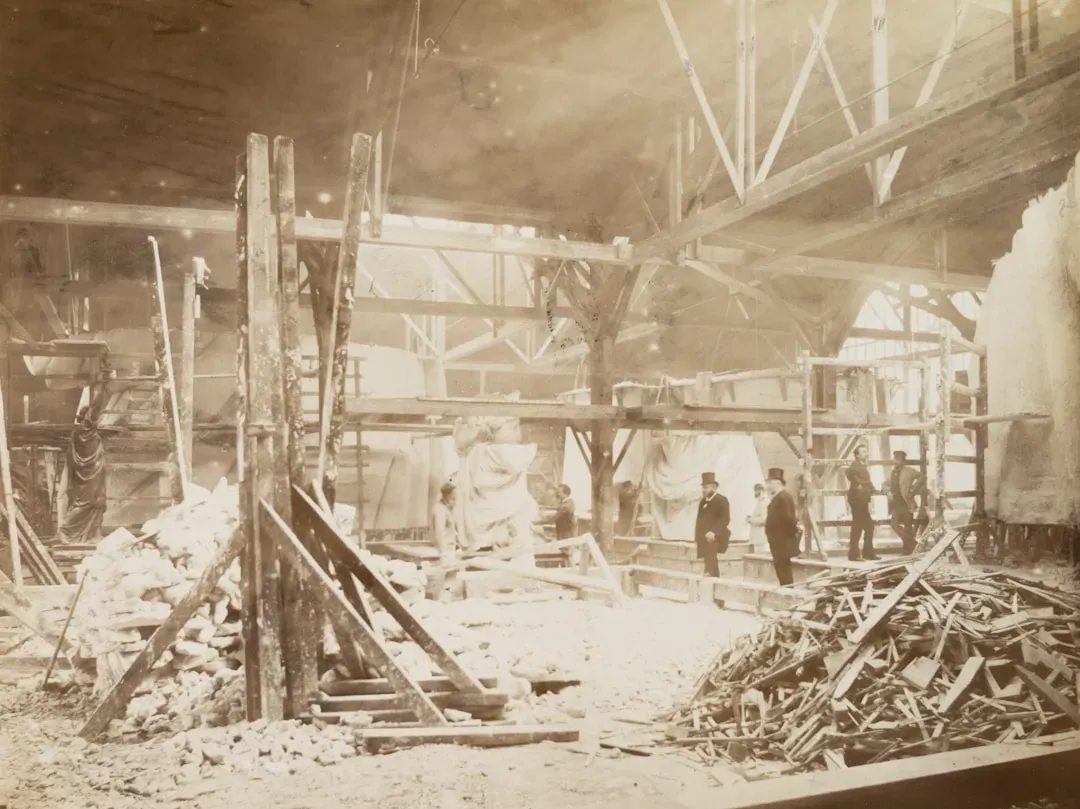
Aaron Feuerstein is a prime example of someone whose actions after fire destroyed almost all of his Malden Mills factory complex kept his workers on the payroll until he could rebuild. In December 1995, when the Massachusetts textile factory burned down, Feuerstein chose to continue paying the salaries and health benefits of nearly 3,000 employees through the reconstruction period rather than close or relocate operations offshore, as many expected him to do.
Cases like Feuerstein’s give students historical examples of people who took the harder path, and they serve as a counterpoint to the many stories of leaders destroyed by not doing the right thing. Against a backdrop of major corporate failures and accounting scandals, stories like Malden Mills provide faculty a unique setting to discuss deeper truths about doing business and living life well. The story resonates not because it’s sentimental, but because it poses a genuinely difficult question: when loyalty and profit pull in opposite directions, which one wins?
What these six stories share is not just their dramatic quality. Case studies can help students gain a more practical perspective on what they’re learning without needing to leave the classroom, and they enable students to develop problem-solving and critical-thinking skills by working through problems they could genuinely encounter in life beyond study. The best of them don’t hand over easy answers. They force students to sit with the complexity, which is exactly where real learning happens.
Partner offer
Planning a trip to Vegas?
Compare hotel rates and show tickets on VEGAS.com.