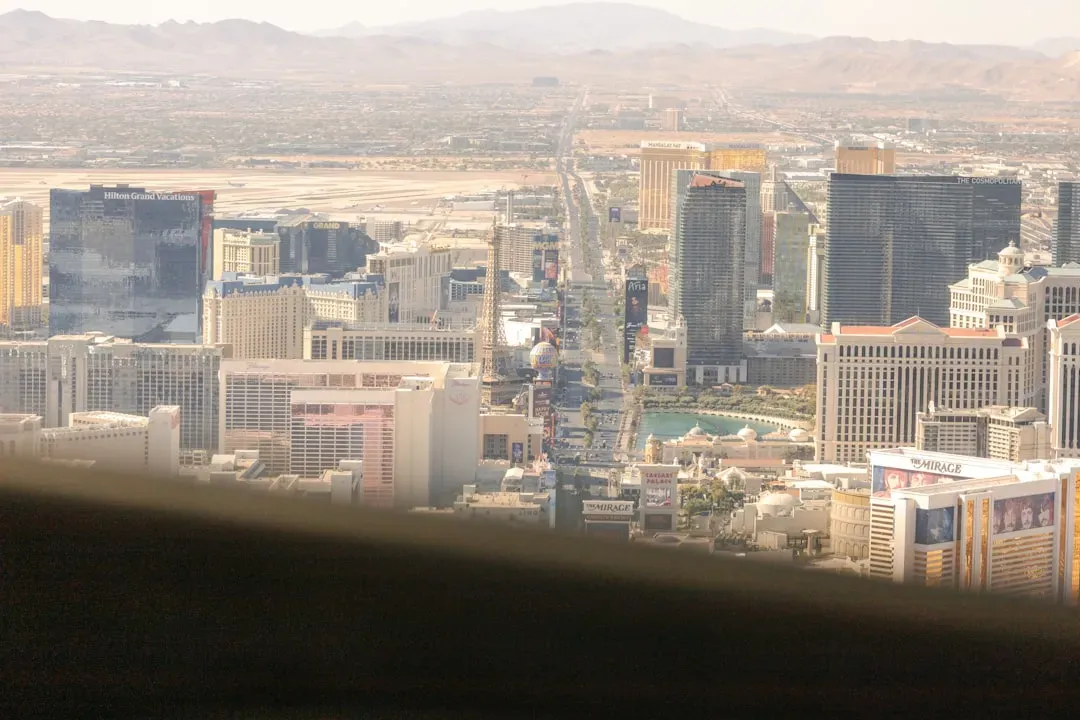
Most people think of Las Vegas as a city defined by neon lights, billion-dollar resorts, and an endless appetite for spectacle. What rarely enters the conversation is the ground beneath it all. The Las Vegas Valley sits in seismically active terrain, surrounded by fault systems that structural engineers take very seriously, even if tourists rarely do.
Across the Strip, the glossy towers rising above the desert floor are products of more than just architectural ambition. They’re also the result of decades of evolving seismic science, tightened building codes, and some genuinely sophisticated engineering choices. Here’s a closer look at how that all actually works.
Nevada Is More Seismically Active Than Most People Realize
Few in the Las Vegas Valley realize that Nevada is the nation’s third-most seismically active state, behind California and Alaska, with active faults statewide capable of producing major earthquakes. That ranking surprises most visitors, who tend to associate serious earthquake risk only with California’s coastline. The reality is more spread out than that.
Nevada sits within the Basin and Range Province, where extensional tectonics create hundreds of normal faults across the region. Recent notable events include the 2008 Wells magnitude 6.0 earthquake and the 2020 Monte Cristo Range magnitude 6.5, the largest in Nevada in 66 years. The state’s seismic history is long, and the risk to urban areas is real.
The Faults Closest to the Strip
The Frenchman Mountain Fault runs approximately 15 kilometers from Las Vegas and is considered the most significant local seismic threat, with a maximum credible magnitude of 6.8. Other nearby faults include the Las Vegas Valley Fault System, situated just five kilometers away, along with the Death Valley Fault Zone and the Pahrump Valley Fault. These aren’t distant geological curiosities. They sit within and immediately around one of the most densely built urban corridors in the American West.
The Pahrump Valley fault zone is active and represents a potential seismic hazard for Las Vegas. Combining as many as six segments over a total length of more than 100 kilometers, it may be capable of producing a magnitude 7 event just 50 kilometers from the metropolitan area. That proximity matters enormously for how engineers think about structural resilience.
What the USGS Actually Says About a 7.0 Scenario
According to the U.S. Geological Survey’s National Seismic Hazard Model, there is approximately a 12 percent probability of a magnitude 6.7 or greater earthquake within 100 kilometers of Las Vegas in the next 30 years, and a 5 percent probability of a magnitude 7.0 or greater event. Those odds are not enormous, but they’re far from negligible, especially given the density and economic value of everything built along the Strip.
The largest credible earthquake predicted for the Las Vegas area is a magnitude 6.8 event on the Frenchman Mountain Fault. Engineers designing major casino towers have to plan around scenarios that may not be likely on any given decade, but are entirely plausible across a building’s full 50 to 100-year lifespan.
The Basin Effect: Why Soft Soil Changes Everything

The Las Vegas Valley is bounded by hard bedrock and filled with softer sediments. Simply put, the valley may shake like a bowl of gelatin, with the bowl being the bedrock and the gelatin being the soft sediments. It is possible for this condition to amplify earthquake waves, a phenomenon referred to as the basin effect. This amplification means that even moderate earthquakes can produce stronger-than-expected ground shaking beneath the Strip.
Many high-rise casinos and hotels are considered vulnerable partly because soft basin soils amplify shaking. Engineers factor this directly into their foundation designs and lateral load calculations, adjusting for how local geology can multiply seismic forces before they even reach a building’s base.
How Clark County’s Building Codes Evolved
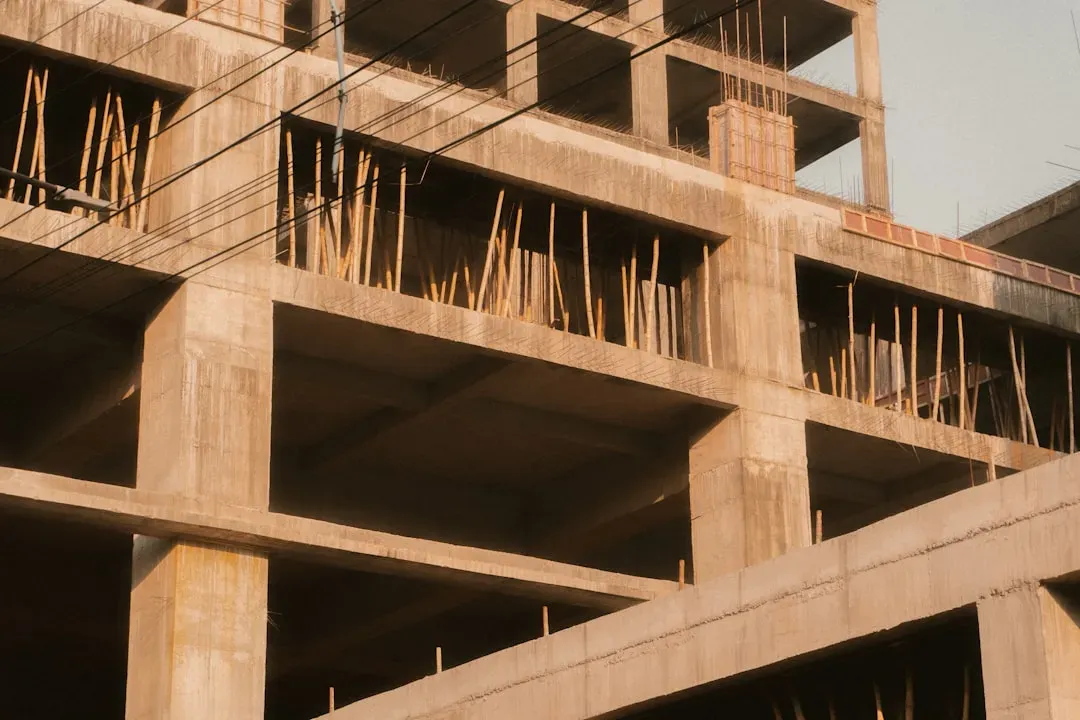
Clark County updated its building codes in the 1990s to prepare for major earthquakes, meaning all newer buildings on the Strip and throughout the city are designed to current seismic standards. That update was a turning point. Much of what visitors see glittering on the Strip today was built after those revisions took effect, which is significant.
In 1996 specifically, seismic resistance codes were heightened to prepare for earthquakes. Since Las Vegas sits near active fault lines, officials prepared for a wide range of possibilities, and most hotels and resorts on the Strip are built over code. Going beyond minimum requirements is also a practical business decision. A casino that shuts down for structural repairs loses revenue in a way that no operator wants to experience.
How Strip Buildings Are Actually Engineered to Flex
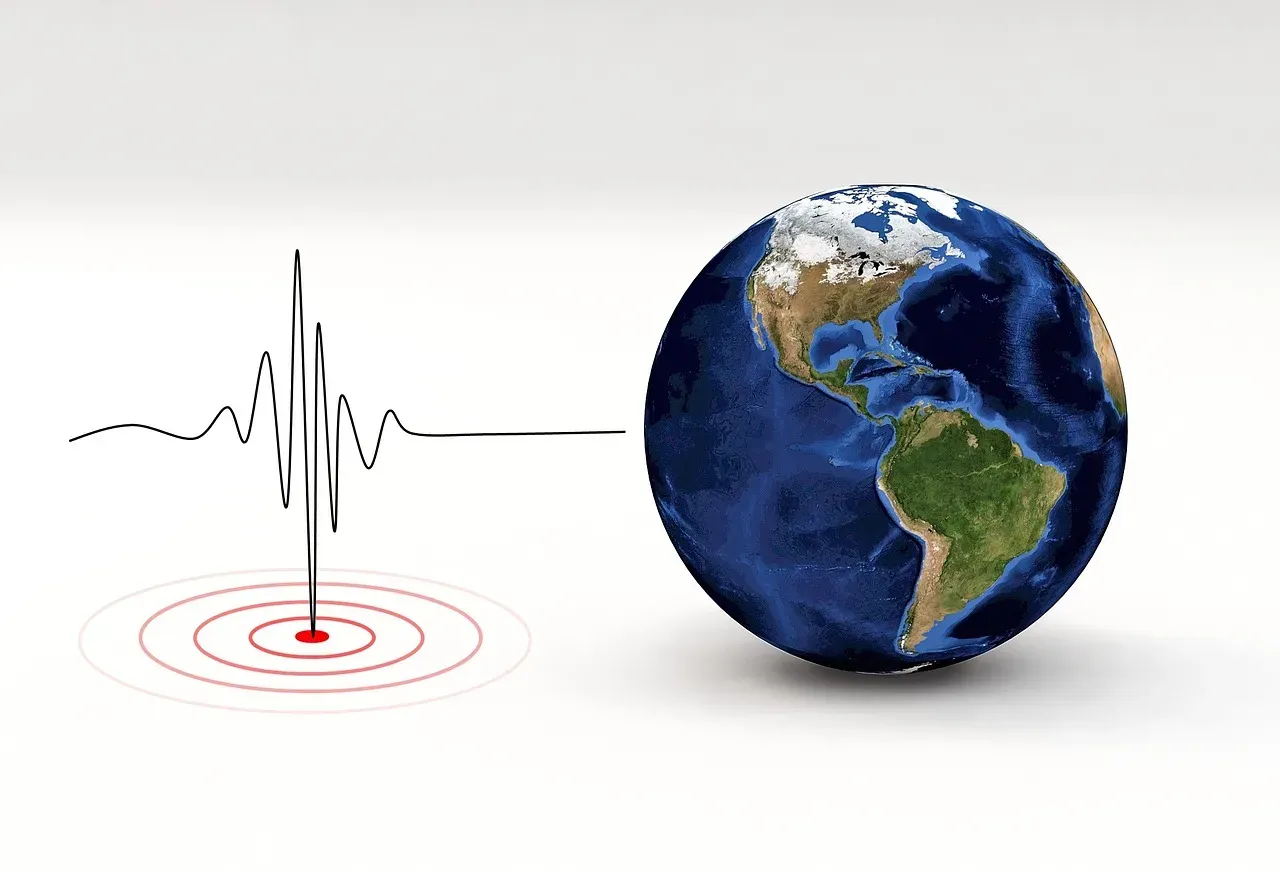
Clark County building engineer Werner Hellmer has explained that building codes put additional requirements on the systems needed to resist sideways forces. Most buildings on the Las Vegas Strip are built with specific columns, beams, and special frames that actually bend to absorb shocks. The building structure flexes, but does not break. That distinction between bending and breaking is the core principle of modern seismic design.
Base isolation systems are one groundbreaking technology in earthquake-resistant construction. These systems separate the building from the ground, allowing it to move independently during an earthquake, which absorbs seismic energy and reduces the stress on the structure. Seismic dampers work in a similar spirit, acting like shock absorbers in a car by absorbing and dissipating seismic energy and reducing the forces transmitted to the building.
The Veer Towers: A Case Study in Seismic Complexity
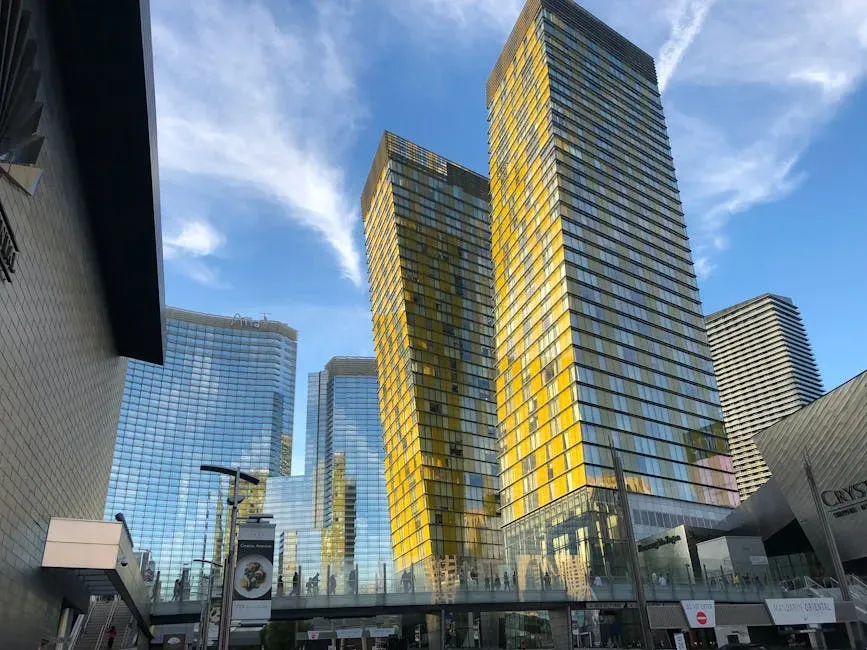
The Veer Towers are a pair of residential high-rises centered in the CityCenter development on the Las Vegas Strip. Each leaning at opposing five-degree angles from vertical, the twin towers house 670 condominium units and rise to 37 stories and approximately 146 meters tall. Their dramatic lean isn’t just an architectural statement. It created a genuinely complicated engineering problem.
The high seismic hazard in Las Vegas, combined with the tall height and weight of the reinforced concrete towers, makes earthquake loading more critical than high winds when it comes to the system for resisting lateral forces. Due to reinforced concrete shear wall stiffness and strength, ordinary ductility reinforced concrete shear walls were employed. When an earthquake’s ground-shaking direction coincides with the direction of one of the tower’s leans, the effect on the lateral load-resisting system becomes critical, with permanent and transient lateral shears and overturning moments becoming additive. Solving that took serious analytical work from the structural team.
When the Code Isn’t Followed: The Harmon Hotel Warning
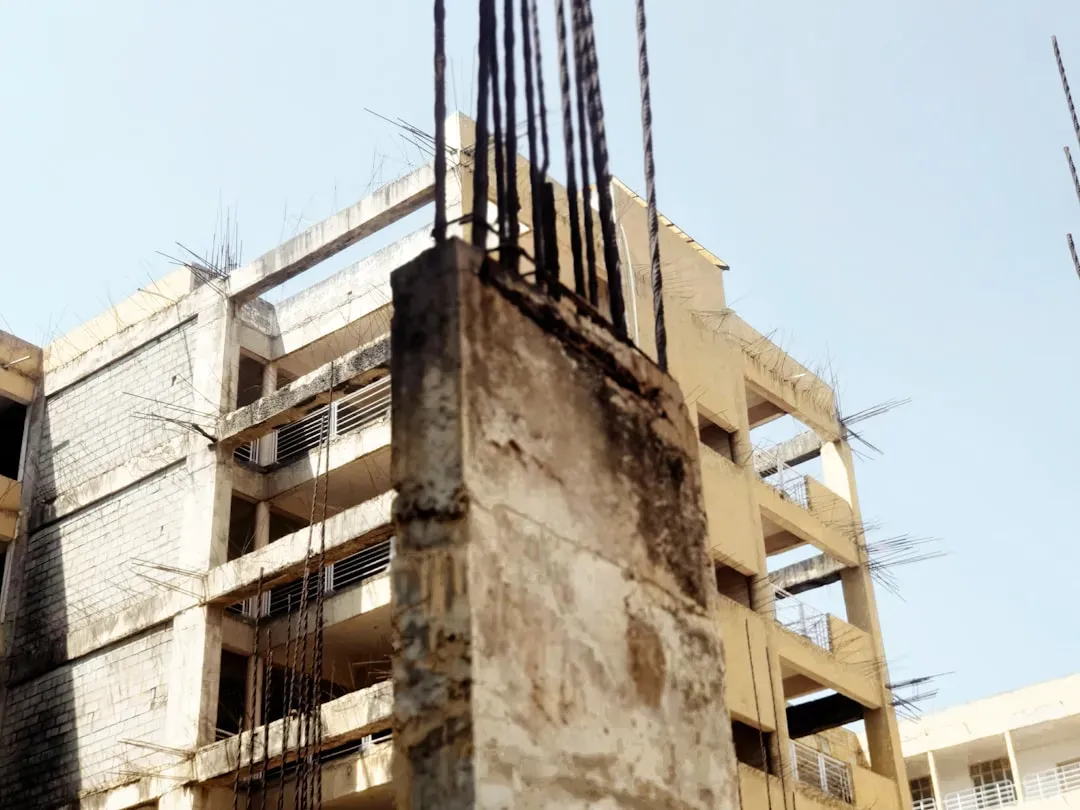
The Harmon Hotel on the Strip had significant construction defects that went unnoticed by inspectors until July 2008, with the discovery of faulty rebar installation handled by a subcontractor. The tower had reached the 22nd floor by that point, with structural errors affecting 15 floors. It became one of the most discussed cautionary cases in American construction history.
Weidlinger Associates, an engineering firm hired by MGM at the county’s request, concluded the building was not salvageable, stating its defects were so pervasive that it was not possible to implement temporary or permanent repairs. The firm determined that a strong earthquake would likely cause a partial or complete collapse of the building. The Harmon was ultimately demolished. It stands as a reminder that code compliance isn’t bureaucratic formality. It’s what separates a building that survives from one that doesn’t.
Nevada’s 2024 Building Code and Ongoing Seismic Research

The State of Nevada’s Public Works Division has adopted the 2024 International Building Code for compliance and enforcement services on state-owned land, a framework that includes updated seismic design requirements. The 2024 IBC reflects the latest understanding of seismic loading, including refined guidance on lateral force-resisting systems for tall structures in moderate-to-high hazard zones.
The Nevada Bureau of Mines and Geology is the lead agency in a comprehensive earthquake source investigation being conducted in Las Vegas Valley. Studying these poorly understood faults in a highly urbanized setting is challenging, and the NBMG has assembled an expert team of scientists from NBMG, UNLV, and the USGS. The research directly informs how future construction projects in the valley approach seismic design categories and foundation engineering.
What a Real 7.0 Would Mean for the Strip Today
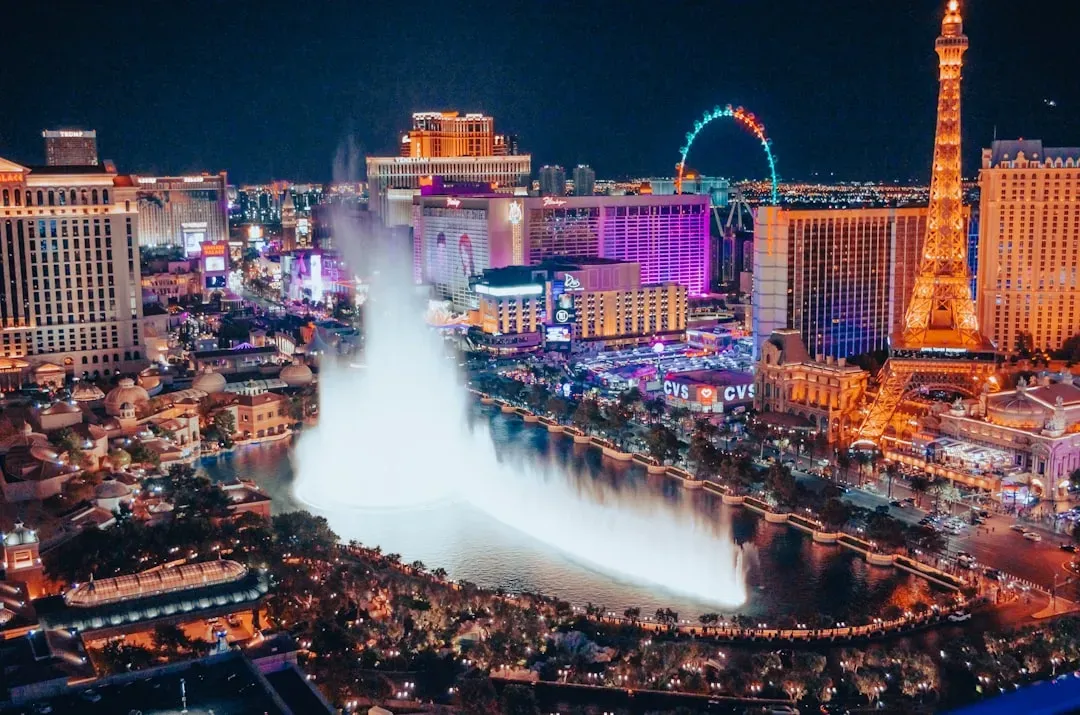
The truth is that high-rise buildings and casinos on the Strip tend to exceed building codes by a considerable margin for a very practical reason: they need to maintain their operations, or they’ll lose millions of tourists and gamblers. That economic incentive quietly drives a higher standard of structural engineering than the minimum code alone would require.
During a 7.1 magnitude earthquake centered in Southern California in 2019, visible shaking was recorded on the Las Vegas Strip, but the quake resulted in no damage in the Las Vegas area. That outcome was partly a matter of distance, but it also validated the structural philosophy behind Strip construction. Still, a direct 7.0 event from the Frenchman Mountain Fault would be a fundamentally different scenario, one that engineers take seriously precisely because it remains possible.
Conclusion

Las Vegas has always been a city built on the idea that the odds can be managed. That philosophy extends, perhaps more earnestly than anywhere else on the property, to the structural engineering holding those towers upright. The seismic risk is real, documented, and taken seriously by the people designing the buildings most visitors never think twice about.
The Strip’s skyline is, among other things, a product of decades of hard-won seismic science. The faults beneath the valley aren’t going anywhere. Neither, if the engineers have done their jobs well, are the buildings above them.