Few legal stories have gripped the American public the way the Alex Murdaugh saga has. What started as a double murder in rural South Carolina grew into a years-long legal drama involving jury tampering, financial crimes, and now, as of May 2026, a unanimous Supreme Court ruling granting a new trial. The ripple effects of that ruling stretch far beyond the Palmetto State. Nevada, with its own active and evolving judicial system, does not operate in isolation. When courts in other states issue landmark rulings tied to fundamental constitutional rights, the legal community in Nevada pays close attention. The Murdaugh case has opened a national conversation about jury integrity, court officer conduct, and how evidence is admitted at trial.
The Murdaugh Verdict Reversal: What Actually Happened
The South Carolina Supreme Court overturned Alex Murdaugh’s murder convictions and ordered a new trial in May 2026, ruling that the trial was marred by the “improper” influence of the county clerk, Becky Hill. In a 5-0 ruling, the court said Hill “placed her fingers on the scales of justice, thereby denying Murdaugh his right to a fair trial by an impartial jury.”
Murdaugh’s appeal focused on allegedly inappropriate comments to jurors from Hill, who worked during Murdaugh’s trial and later wrote a tell-all book about it. In January 2024, retired South Carolina Chief Justice Jean Toal questioned several jurors about what Hill said and its impact on their decision. One juror reported Hill said “watch his actions” and “watch him closely” when Murdaugh took the stand. The juror told the court those comments “made it seem like he was already guilty.”
The Remmer Framework: A Federal Foundation Invoked Nationwide
The court concluded Hill’s actions constituted improper outside influence on the jury and triggered constitutional protections under Remmer v. United States, the landmark federal precedent governing jury tampering and outside influence claims. Under that framework, once improper outside influence is shown to be “more than innocuous,” prejudice against the defendant is presumed unless the state can prove the contact was harmless.
The law against jury tampering is to ensure a person’s Sixth Amendment right to an impartial jury. In Remmer v. United States, the Supreme Court held that jury tampering in criminal cases is presumptively prejudicial, meaning that the party faced with allegations of jury tampering bears the burden to prove that there is no reasonable possibility that the tampering affected the impartiality of the jury. Nevada courts are bound by the same federal constitutional standard, making this precedent directly applicable in any Nevada courtroom where jury misconduct arises.
Nevada’s Existing Jury Impartiality Framework
Nevada jury instructions explicitly state that a verdict may never be influenced by sympathy, prejudice, or public opinion, and that jurors must bring their everyday common sense and judgment as reasonable men and women to the consideration of the evidence. Nevada jury instructions on impartiality of the court further state that if, during trial, anything has seemed to suggest the court favors the claims or position of any party, jurors will not be influenced by any such suggestion.
Nevada law requires that the court reduce to writing the instructions to be given to the jury and shall read those instructions to the jury. The court shall give instructions only as to the law of the case. The Murdaugh ruling highlights how even written instructions may prove insufficient if a court officer steps outside their role and directly influences juror perception.
Court Officers and the Boundaries of Their Role
According to sworn affidavits submitted by jurors, Hill repeatedly inserted herself into discussions about the merits of the case during the trial. The justices compared Hill’s conduct to Parker v. Gladden, a landmark U.S. Supreme Court case involving a bailiff who improperly commented on a defendant’s guilt to jurors during trial.
The justices cited testimony from a colleague of Hill’s who said the clerk repeatedly told her that she wanted to write a book about the Murdaugh trial to pay for a lake house, and that a guilty verdict would help. Hill later pleaded guilty to criminal charges connected to the case. This fact pattern raises a pointed question for Nevada trial courts: what oversight mechanisms exist to prevent court staff from inserting personal interests into high-profile proceedings?
The Role of Pretrial Publicity in High-Profile Nevada Cases
The 2023 trial of Murdaugh for the murders of his wife, Maggie, and their youngest son, Paul, transfixed observers far beyond South Carolina. It inspired documentary series on Netflix and HBO Max and numerous podcasts as the inner workings of a powerful and wealthy family were laid bare. The level of media saturation that surrounded the case is directly relevant to Nevada, particularly its Eighth Judicial District Court in Las Vegas, where high-profile criminal matters regularly attract national media coverage.
In some cases, ongoing trial publicity or threats of juror intimidation or tampering pose a risk to the outcome of the case. The jury manager must have sufficient time both to summon and qualify an adequate number of prospective jurors and plan for jury-related tasks that do not usually occur, such as distributing and compiling case-specific juror questionnaires and arranging juror sequestration, if necessary. The Murdaugh outcome gives Nevada courts a strong incentive to review those safeguards in any case that reaches a national audience.
Evidence Admissibility and the “Character Bias” Problem
In their appeal, Murdaugh’s attorneys argued the motive did not make logical sense and said the prosecution improperly used the financial crimes evidence to malign his character. In its ruling, the South Carolina Supreme Court offered “guidance” to limit this financial crimes evidence. In a unanimous ruling, the South Carolina Supreme Court said the conduct by the court clerk “egregiously attacked Murdaugh’s credibility” by suggesting to jurors his testimony could not be trusted. They also said the trial judge went too far in allowing evidence of Murdaugh’s financial crimes into his murder trial.
Partner offer
Nevada courts already maintain rules governing how prior bad acts may be introduced in criminal trials, and those rules carry similar risk of misuse. The South Carolina high court’s guidance gives Nevada practitioners a concrete, nationally watched example of where the line between relevant motive evidence and improper character assassination can blur in ways that ultimately unravel a conviction.
Nevada’s Appellate Procedure Reforms and Their Timing
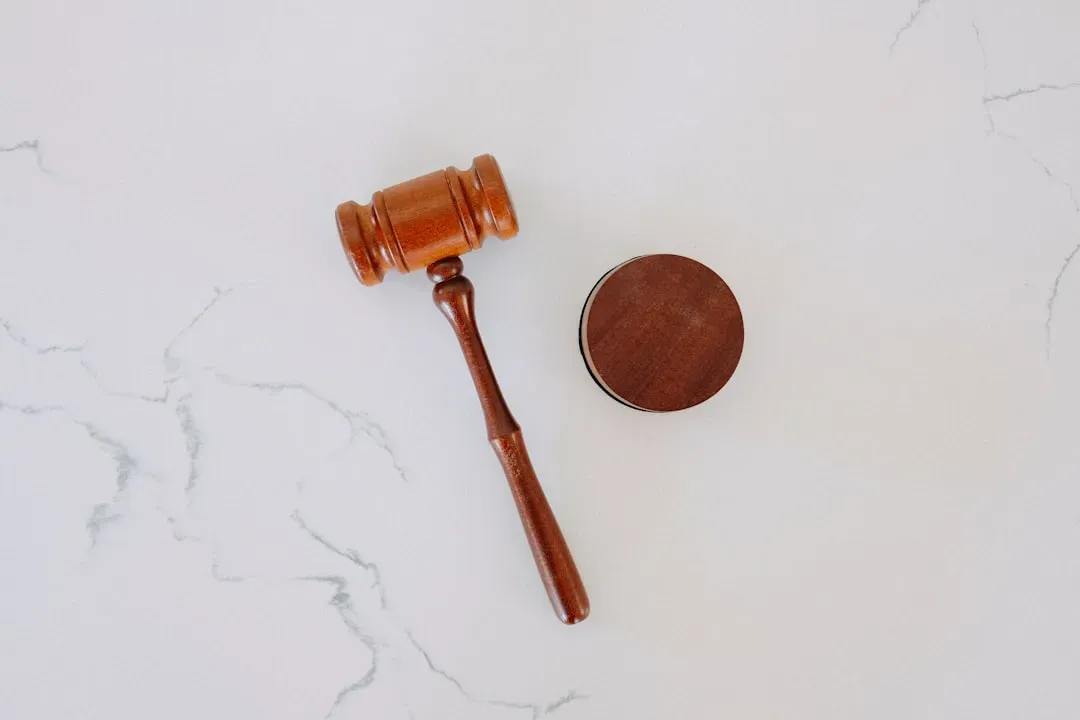
On June 7, 2024, the Nevada Supreme Court adopted comprehensive and wholesale changes to the Nevada Rules of Appellate Procedure that govern appeals before the Nevada Supreme Court and the Nevada Court of Appeals. These reforms arrived as courts nationwide were grappling with the growing volume of post-conviction challenges grounded in jury integrity and procedural fairness concerns, which the Murdaugh case has now amplified.
On July 25, 2024, the Nevada Supreme Court created the Commission to Study Judicial Branch Security to study and make recommendations regarding information gathering and sharing, training security officers and judicial officers, identifying and categorizing threats, responding to threats and violence, courthouse security, and interfacing with other branches of government. That commission’s mandate, while focused on physical security, overlaps with the kind of internal process integrity concerns the Murdaugh ruling put under national scrutiny.
Voir Dire as the First Line of Defense

The purpose of voir dire examination under Nevada’s criminal rules is to determine whether a prospective juror can and will render a fair and impartial verdict on the evidence presented and apply the facts to the law given. Questioning must be designed to elicit information relevant to possible challenges for cause or enabling the defendant’s attorney and the prosecuting attorney to intelligently exercise peremptory challenges.
The retrial in the Murdaugh case is likely to have less focus on financial evidence, a lack of surprise evidence or testimony, and may prove a challenge in finding impartial jurors, legal experts told CNN. The difficulty of seating an untainted jury in a case that has been the subject of documentaries, podcasts, and years of media coverage is something Nevada judges overseeing high-profile cases will increasingly need to manage through exhaustive voir dire processes.
How Nevada’s Own Precedent-Making Has Evolved in Parallel
Nevada’s Senate Bill 258, introduced in the 2025 legislative session, was a direct reaction to the Supreme Court of Nevada’s AmTrust North America, Inc. v. Vasquez decision in late 2024. Vasquez overruled 38 years of precedent concerning how workers’ compensation liens are resolved in personal injury claims. Vasquez invalidated the longstanding Breen formula and stated NRS 616C.215(5) governed instead. Vasquez created significant short-term uncertainty in personal injury litigation.
This pattern, where a single high-court ruling destabilizes years of settled practice and forces a legislative response, is precisely the mechanism through which the Murdaugh case may shape Nevada. When a ruling as visible and constitutionally grounded as this one comes down, legal practitioners across the country look inward and ask whether their own systems could produce the same breakdown.
The Broader Lesson for Nevada Courts and Legal Culture
When jury tampering does occur, it could, if left unchecked, compromise the very premise of a fair and impartial jury and the integrity of the court system. If the court learns that an incident of jury tampering may have occurred, the judge conducts a Remmer hearing. In this hearing, the judge will interview jurors, one at a time, to discover what happened and determine how many jurors have been impacted by the communication.
Following the high court’s blistering rebuke of Hill’s conduct, a new question is rapidly moving to the forefront of the public debate: why was Hill never charged with jury tampering? South Carolina first circuit solicitor David Pascoe argued the Supreme Court’s opinion made “a very compelling case” for prosecutors to pursue criminal charges against Hill related to her interactions with jurors. That accountability question is not unique to South Carolina. In Nevada, where court clerk roles carry significant responsibility during complex trials, the Murdaugh ruling is a direct reminder that internal process oversight must match the constitutional weight it carries.
Conclusion
The Murdaugh case did not invent the problems it exposed. Jury influence by court officers, prejudicial use of prior-act evidence, and the difficulty of managing fair trials in a media-saturated environment are issues every state court system has grappled with for decades. What the case did was bring those problems into sharp relief, in a trial so public that no legal professional in the country could look away.
Nevada courts operate under the same federal constitutional framework that drove the South Carolina Supreme Court’s unanimous reversal. The Remmer standard, the Sixth Amendment right to an impartial jury, and the court’s obligation to police its own officers apply with equal force in Las Vegas, Carson City, and Reno. The most durable takeaway from the Murdaugh effect is straightforward: procedural integrity is not a formality. It is the foundation on which every verdict rests, and when it cracks, even the most high-profile convictions can fall.
Partner offer
Planning a trip to Vegas?
Compare hotel rates and show tickets on VEGAS.com.