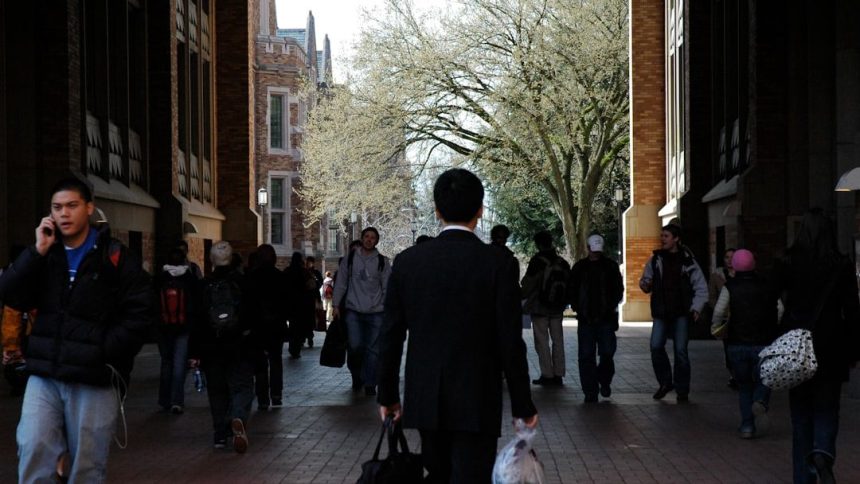
Bowie State among universities cutting staff as funding declines – Image for illustrative purposes only (Image credits: Unsplash)
Staff members at Bowie State University and the University of Maryland now confront the immediate reality of fewer positions and greater uncertainty about their roles. Both institutions have moved to reduce payroll as state and federal support shrinks and enrollment trends continue downward. The decisions reflect a wider pattern of belt-tightening that is reshaping operations at public colleges across the region.
Bowie State Acts on an $18 Million Shortfall
Bowie State University, Maryland’s oldest historically Black institution, announced last week that it will eliminate 79 positions. The cuts will occur through a combination of unfilled vacancies, internal reorganizations, and some layoffs. University President Aminta Breaux informed the campus community that the reductions are required to close an $18 million operating deficit.
The shortfall traces directly to lower state and federal appropriations, fewer students on campus, and steadily rising costs for utilities and maintenance. Tuition and auxiliary revenue have also declined in line with enrollment. Breaux emphasized that the moves are not a judgment on employee performance but a necessary step to preserve the university’s future stability.
University of Maryland Implements a Hiring Freeze
The University of Maryland system placed a hiring freeze in place in April and now plans to eliminate roughly 150 positions. State leaders approved a nearly $71 billion budget that allocates $871.9 million in operating funds to the university, yet that amount includes $104 million in base reductions, a drop of more than 10 percent between 2025 and 2027.
Partner offer
Campus leaders cited additional pressures from delayed federal research payments, higher utility bills, and ongoing infrastructure expenses. In a message to faculty and staff, they acknowledged the personal impact of the reductions while noting that further cost-saving measures and revenue strategies remain under review.
Similar Pressures Appear at Other Institutions
Financial strain is not limited to Maryland. Rutgers University has already begun laying off dozens of adjunct professors. Anna Maria College, a private Catholic institution in Massachusetts, announced it will close at the end of the Spring 2026 semester after years of accumulating deficits.
These examples illustrate how declining public support and enrollment shifts are forcing difficult choices nationwide. Public universities in particular face the added challenge of balancing state-mandated missions with reduced appropriations.
Stakeholders and Next Steps to Watch
The immediate effects fall on current employees, prospective students, and the surrounding communities that rely on these institutions for jobs and educational access. Several developments merit attention in the coming months:
- Final decisions on which specific positions will be eliminated at each campus.
- Any additional cost-cutting measures announced by university leadership.
- Changes in state funding levels during the next budget cycle.
- Enrollment figures for the upcoming academic year and their effect on revenue.
University officials have stated they will continue seeking ways to strengthen finances without further workforce reductions, yet the timeline for those efforts remains unclear.
Partner offer
Planning a trip to Vegas?
Compare hotel rates and show tickets on VEGAS.com.