Opening lines carry a strange kind of weight in literature. A single sentence can set the tone for hundreds of pages, and the best ones stick in readers’ minds long after the plot details fade. Some have become so famous that they’re quoted in classrooms, parodied in sitcoms, and printed on tote bags without anyone needing to explain where they came from.
This gallery pulls together ten of the most recognizable opening lines in fiction, spanning classic literature and modern bestsellers. If you can identify all ten just from their first sentence, you’ve earned the right to call yourself a well-read bookworm. Let’s see how many you remember.
“It was the best of times, it was the worst of times”
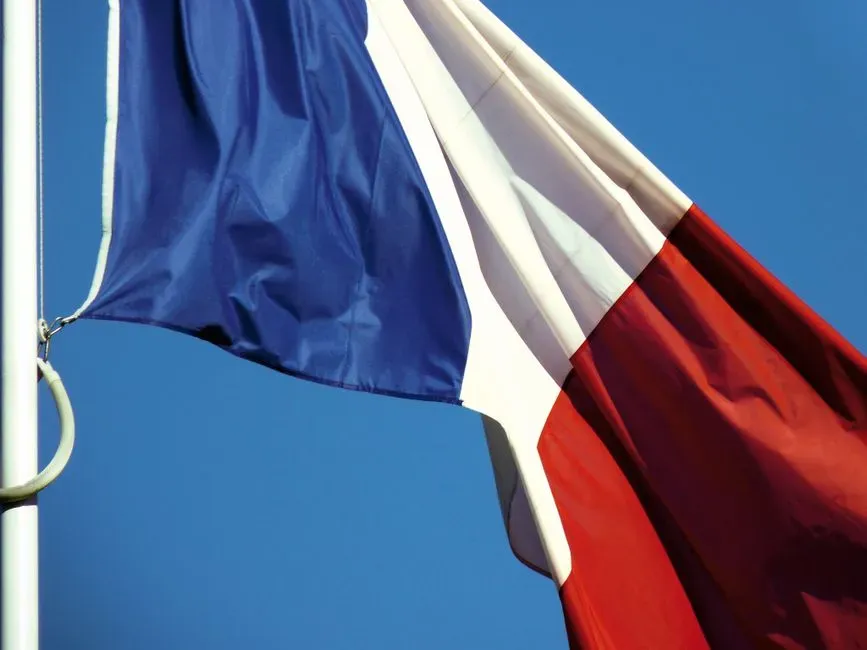
This is arguably one of the most quoted opening lines in the English language, and it comes from Charles Dickens’s “A Tale of Two Cities,” published in 1859. The novel is set against the backdrop of the French Revolution, and that opening sentence continues on for several more clauses, painting a picture of contradiction and upheaval that mirrors the era it describes.
Dickens uses this rhythmic, repetitive structure to establish the dual settings of London and Paris, two cities experiencing the same historical moment in very different ways. The line has been referenced so often in pop culture that many people can recite it without ever having read the book itself.
“Call me Ishmael”
Herman Melville’s “Moby-Dick,” first published in 1851, opens with this deceptively simple three-word command. It’s brief, direct, and immediately establishes an intimate, first-person narrator who invites the reader into his confidence before the story of Captain Ahab and the white whale even begins.
What makes this line so enduring is its economy. Melville doesn’t waste time on elaborate scene-setting; instead, he hands the reader a name, real or invented, and lets the mystery of the narrator’s identity linger throughout the novel’s sprawling, philosophical digressions on whaling and obsession.
“It is a truth universally acknowledged, that a single man in possession of a good fortune, must be in want of a wife”
Jane Austen’s “Pride and Prejudice,” published in 1813, opens with this wry, ironic observation about marriage and social expectation in Regency-era England. The sentence immediately signals the novel’s satirical tone, poking fun at the societal pressures surrounding matchmaking and inheritance.
Austen’s narrator speaks with confident authority, yet the statement is clearly tongue-in-cheek, setting up the entire plot involving the Bennet family and their five unmarried daughters. It remains one of the most parodied opening lines in literary history, often reworked to comment on modern dating and relationships.
“All happy families are alike; each unhappy family is unhappy in its own way”
Leo Tolstoy begins “Anna Karenina,” first published in 1878, with this sweeping generalization about domestic life. The line functions almost like a thesis statement for the entire novel, which explores several different families and their varying degrees of dysfunction and contentment.
Tolstoy’s observation has been debated by readers and scholars for well over a century, with many pointing out that the statement oversimplifies human relationships even as it draws readers into the specific unhappiness of Anna’s story. It’s a line that rewards rereading once you’ve finished the novel.
“It was a bright cold day in April, and the clocks were striking thirteen”

George Orwell’s “1984,” published in 1949, opens with this unsettling detail that immediately signals something is off in the world Orwell has created. Clocks striking thirteen isn’t just odd, it’s a quiet warning that the rules of this society don’t match the ones readers know.
Partner offer
Orwell’s dystopian novel has seen renewed attention in recent years, with sales spiking during periods of political uncertainty and public debate over surveillance and misinformation. The opening line’s subtle wrongness has become a shorthand for describing any situation that feels quietly dystopian.
“Happy families are all alike; every unhappy family is unhappy in its own way” versus modern reinterpretations
While Tolstoy’s line above remains the original, contemporary authors have continued to borrow, twist, and pay homage to classic opening structures. This kind of literary echo shows up frequently in book club selections and university syllabi, where instructors often ask students to compare how modern writers riff on canonical openers.
This trend has become especially visible in recent literary fiction released between 2024 and 2026, where authors increasingly reference or subvert classic first lines as a stylistic device. It’s a reminder that great opening sentences don’t just start stories, they start conversations that span generations of writers.
“There was no possibility of taking a walk that day”
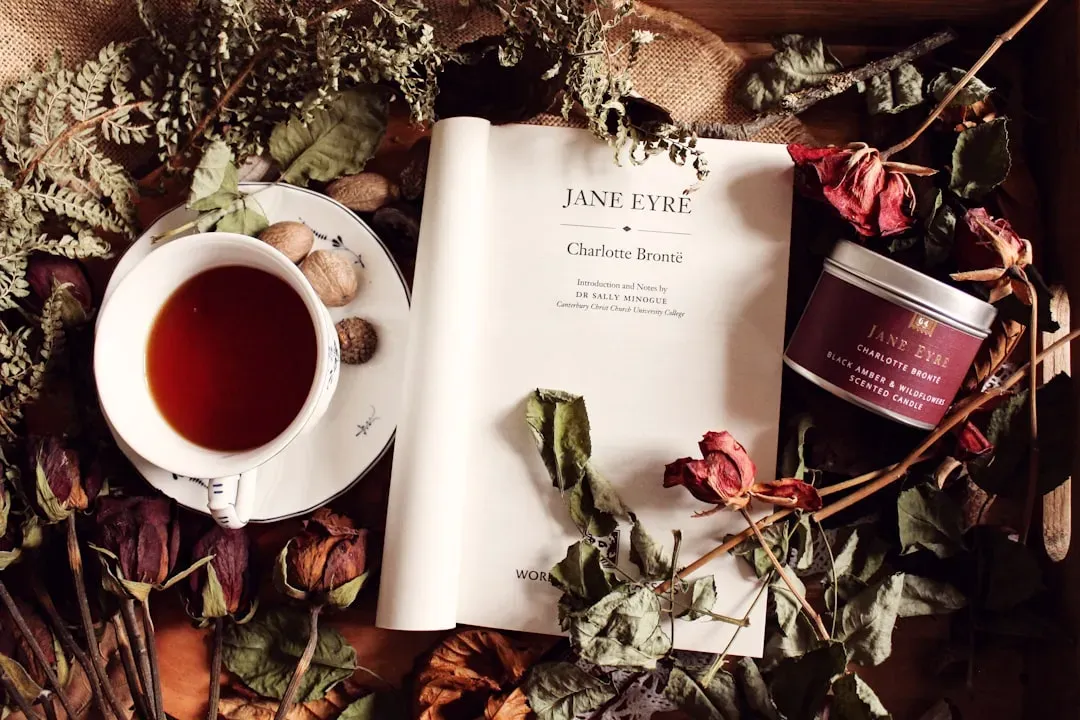
Charlotte Brontë opens “Jane Eyre,” published in 1847, with this understated line about weather keeping the young protagonist indoors. It seems modest compared to some of literature’s grander openings, yet it efficiently establishes Jane’s confined, restricted circumstances as an orphan in a household that doesn’t want her.
The quiet simplicity of the line contrasts sharply with the emotional intensity that follows throughout the novel, making it a favorite example in writing courses of how a small, grounded detail can foreshadow much larger themes of restriction and eventual freedom.
“124 was spiteful”
Toni Morrison begins “Beloved,” published in 1987, with this jarring two-word-plus-number sentence that immediately unsettles readers. The number refers to a haunted house address, and the adjective “spiteful” personifies it in a way that signals the ghostly, traumatic history the novel will unpack.
Morrison won the Nobel Prize in Literature in 1993, and “Beloved” remains one of her most studied and taught works, particularly for its unflinching examination of slavery’s psychological aftermath. This opening line is frequently cited as one of the boldest and most economical in twentieth-century American fiction.
“The sky above the port was the color of television, tuned to a dead channel”
William Gibson’s “Neuromancer,” published in 1984, opens with this now-iconic simile that helped define the cyberpunk genre. The comparison between sky and static television immediately establishes a world saturated with technology, decay, and a kind of dystopian melancholy that runs throughout the novel.
Gibson’s novel is credited with popularizing the term “cyberspace,” and its influence extends well beyond literature into film, video games, and internet culture broadly. The opening line’s blend of natural imagery and technological reference has been cited by countless science fiction writers as a benchmark for genre-defining prose.
How Many Did You Recognize?

Testing your memory against these ten opening lines is less about trivia and more about tracing how literature builds identity through language. Each of these sentences accomplishes an enormous amount of narrative work in just a few words, whether it’s establishing tone, foreshadowing conflict, or introducing a distinctive narrative voice.
If you recognized most or all of these lines, you’re clearly someone who reads widely and remembers what stays with you. And if a few slipped past you, that’s simply an invitation to add some enduring classics to your reading list this year.
Partner offer
Planning a trip to Vegas?
Compare hotel rates and show tickets on VEGAS.com.