Nineteen seventy six was a strange and fertile year for American cinema. Studios were still taking chances on difficult material, and filmmakers who’d come up through the late sixties were hitting their stride. Many of the movies from that year have stayed in circulation for half a century.
Ten of them have reached their fiftieth anniversary in 2026. Some were prestige dramas, others were horror hits or oddities, and a few changed how studios thought about audiences. Here’s a look at each one.
Rocky
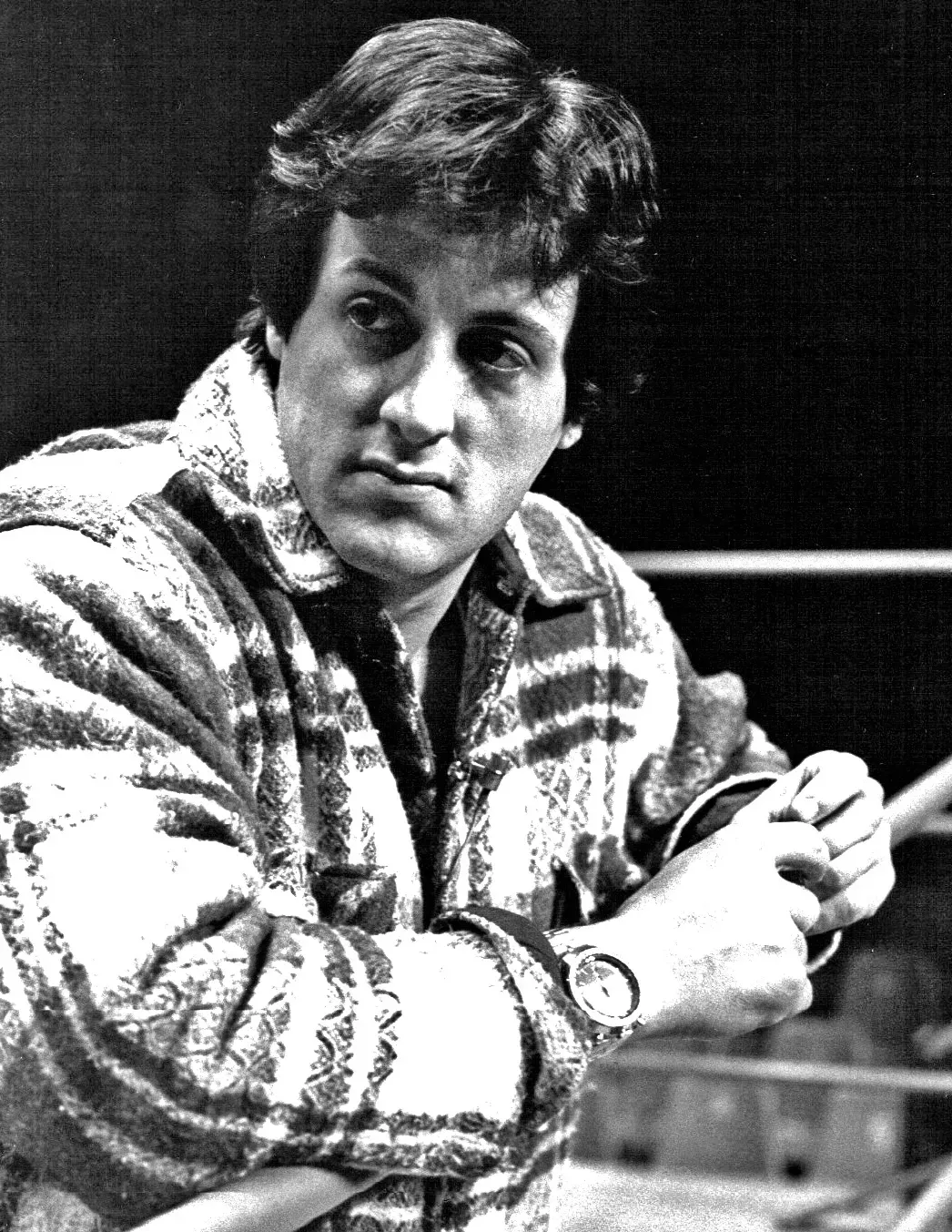
Rocky reached theaters in November 1976, directed by John G. Avildsen from a script written by its star, Sylvester Stallone. It was made on a modest budget of roughly one million dollars. Stallone had insisted on playing the lead himself rather than selling the script to someone else.
At the Academy Awards in early 1977, it won Best Picture, Best Director and Best Film Editing. Bill Conti’s score gave pop culture one of its most recognizable pieces of movie music. The film also launched a franchise that is still producing spinoffs today.
Taxi Driver

Martin Scorsese’s Taxi Driver opened in February 1976, with a script by Paul Schrader and Robert De Niro as the isolated Vietnam veteran Travis Bickle. Jodie Foster, who was twelve during production, played a young sex worker named Iris. The film’s grimy portrait of New York shaped how the city looked on screen for years.
It won the Palme d’Or at the Cannes Film Festival that May. It also earned four Academy Award nominations, including Best Picture and Best Actor. Bernard Herrmann’s score was among his last works, as he died shortly after finishing it in late 1975.
Network

Sidney Lumet directed Network from a screenplay by Paddy Chayefsky, a satire about a television news division chasing ratings at any cost. Released in November 1976, it starred Faye Dunaway, William Holden, Peter Finch and Robert Duvall. At the time, its view of TV news looked like exaggeration.
The film won four Oscars, for Best Actor, Best Actress, Best Supporting Actress and Best Original Screenplay. Finch received his award after his death, which made him the first performer to win an acting Oscar posthumously. Beatrice Straight took the supporting actress prize for a very brief appearance.
Carrie

Brian De Palma’s Carrie was the first major screen adaptation of a Stephen King story, based on his 1974 debut novel. Sissy Spacek played the bullied teenager with telekinetic powers, and Piper Laurie played her fanatically religious mother. The prom sequence remains one of the most imitated scenes in horror.
Both Spacek and Laurie received Academy Award nominations, which was unusual for a horror film at the time. The movie also helped establish King as a name Hollywood wanted to adapt. It has since inspired a sequel, a remake and a Broadway musical.
All the President’s Men

Alan J. Pakula’s film arrived in April 1976, just two years after Richard Nixon resigned. Robert Redford and Dustin Hoffman played Washington Post reporters Bob Woodward and Carl Bernstein, who uncovered the Watergate scandal. Redford had pushed to make the film while the story was still fresh in public memory.
Partner offer
It won four Academy Awards, including Best Supporting Actor for Jason Robards as editor Ben Bradlee. William Goldman won for Best Adapted Screenplay. The film is still often cited as a model for how to dramatize investigative journalism.
The Omen
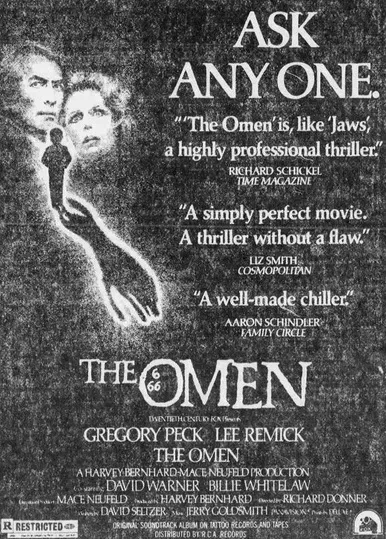
The Omen was released on June 6, 1976, a date chosen to echo 6/6/76 and the number of the beast. Richard Donner directed Gregory Peck and Lee Remick as parents who come to suspect their young son is the Antichrist. It was a commercial success and led to several sequels and a later remake.
Jerry Goldsmith’s choral score won the Academy Award for Best Original Score. It was the only Oscar he won in a long career. The music remains a big part of why the film still unsettles viewers.
The Outlaw Josey Wales
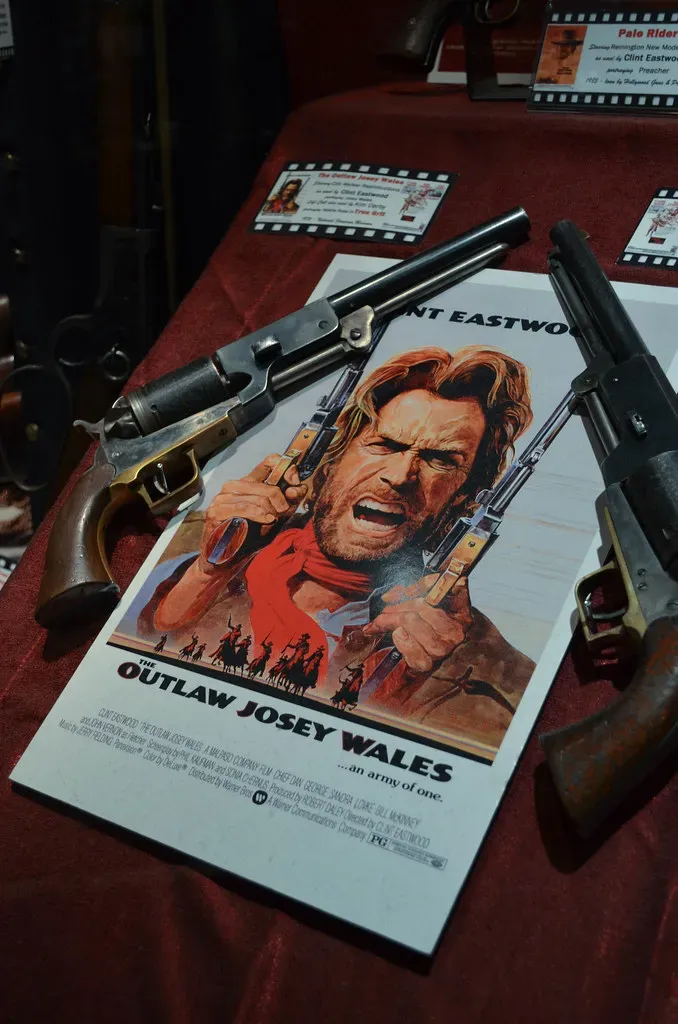
Clint Eastwood starred in The Outlaw Josey Wales and took over directing duties during production, after the original director left the project. The story follows a Missouri farmer who joins a Confederate guerrilla band after Union raiders kill his family. Afterward he becomes a fugitive and gradually gathers an unlikely group around him.
The Western was a solid hit and helped cement Eastwood’s reputation as a serious filmmaker. In 1996 the Library of Congress selected it for preservation in the National Film Registry. Critics often point to it as a step toward his later Western, Unforgiven.
Bugsy Malone
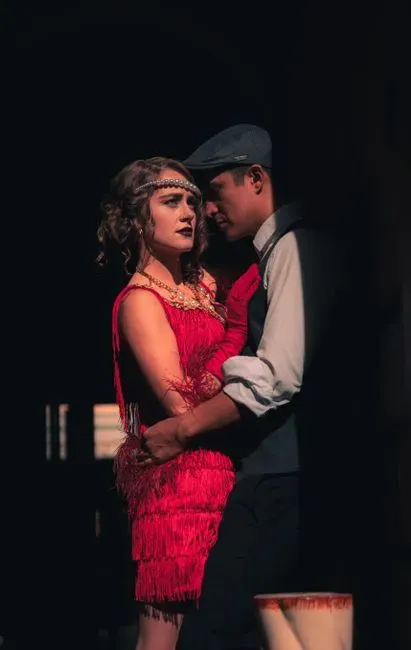
Bugsy Malone was Alan Parker’s first feature film, a gangster musical performed entirely by children. The cast included Scott Baio and Jodie Foster, who had a second major film in the same year as Taxi Driver. Paul Williams wrote the songs, and the actors’ singing voices were dubbed by adults.
Instead of bullets, the guns fire splurge, a gooey cream. Parker used the odd premise to make a film that felt both innocent and mischievous. It has remained a British favorite and frequently returns as a stage production.
Marathon Man
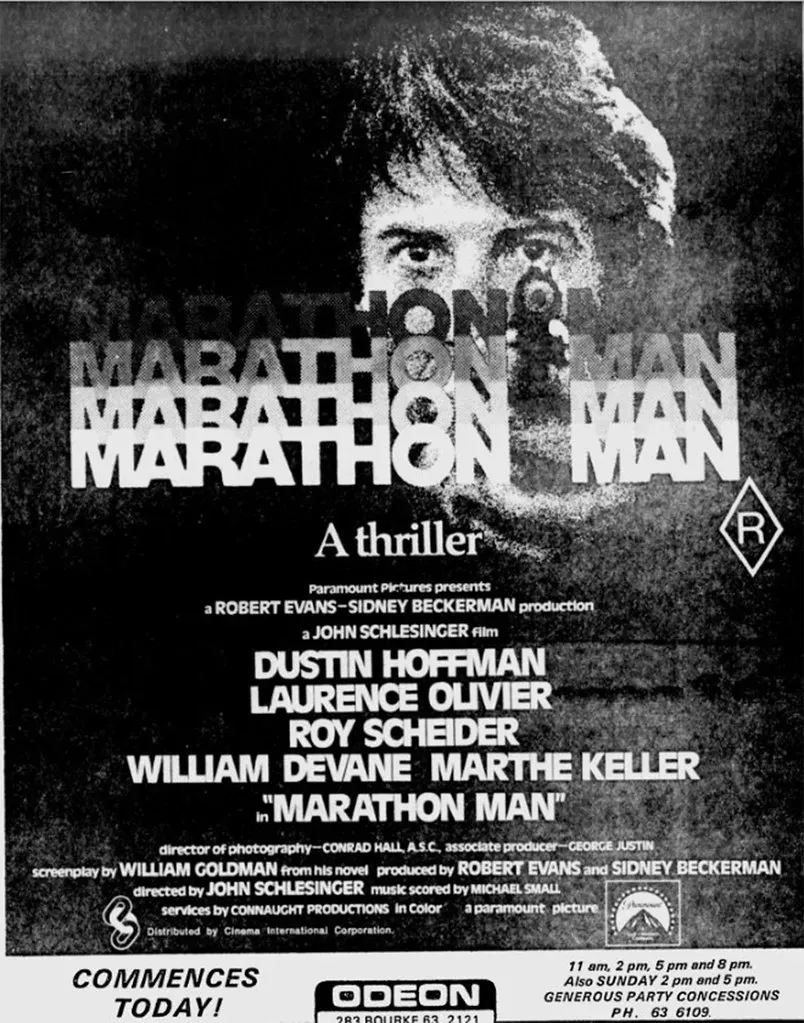
John Schlesinger directed Marathon Man, a thriller released in October 1976. Dustin Hoffman played a graduate student pulled into a plot involving a former Nazi dentist, played by Laurence Olivier. The dental torture scene is still among the most talked about moments in thrillers.
Olivier received an Academy Award nomination for Best Supporting Actor. William Goldman adapted the screenplay from his own novel. Taken together with All the President’s Men, it made 1976 a busy year for both Hoffman and Goldman.
Logan’s Run

Logan’s Run imagined a domed city where citizens are required to die at thirty. Michael Anderson directed, with Michael York as a enforcer who decides to run and Jenny Agutter as his companion. It was released in June 1976, a year before Star Wars changed the way studios viewed science fiction.
The film received a Special Achievement Academy Award for its visual effects. Its models and miniature work were widely noted at the time. A television series followed in 1977, and remake plans have come and gone over the years.
Partner offer
Planning a trip to Vegas?
Compare hotel rates and show tickets on VEGAS.com.