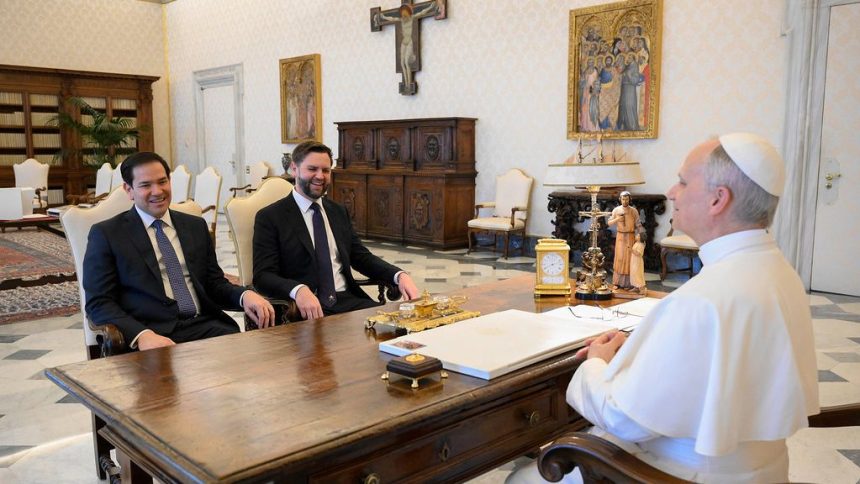
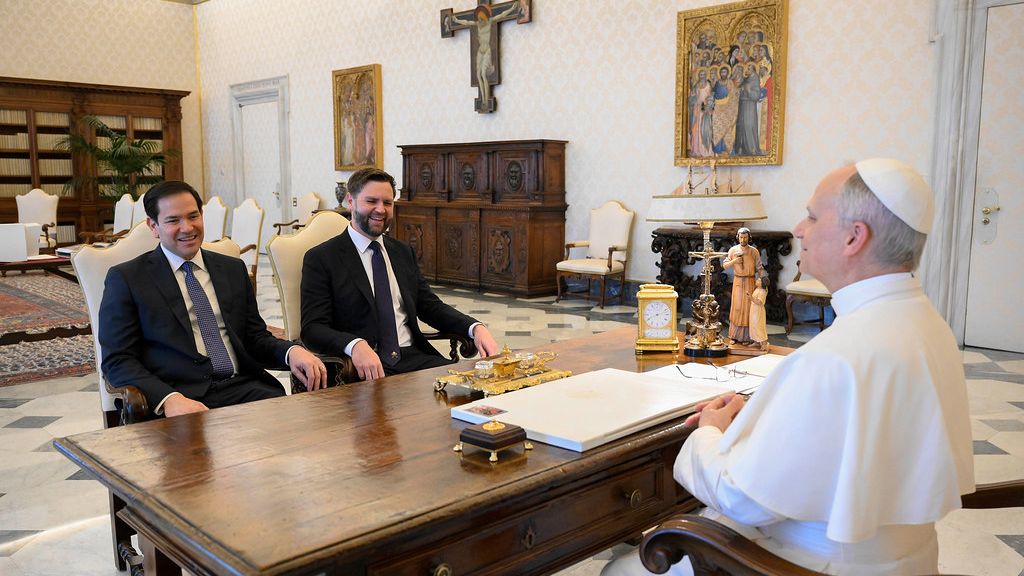
Rubio faces challenge in Pope Leo meeting after Trump’s criticism over Iran – Image for illustrative purposes only (Image credits: Flickr)
Vatican City – Secretary of State Marco Rubio arrived for a high-stakes visit aimed at repairing strained relations between the United States and the Holy See. The trip comes after weeks of sharp exchanges between President Donald Trump and Pope Leo XIV over the U.S.-backed military campaign in Iran and related immigration policies. Rubio, a practicing Catholic, faces the task of restoring dialogue at a moment when American actions have drawn criticism from both the Vatican and key European partners.
Background of the Dispute
Tensions escalated last month when Trump publicly criticized the pope for comments on immigration enforcement and the Iran conflict. The president accused Leo of being too lenient on security threats. Leo responded by clarifying that the church has long opposed nuclear weapons and urged dialogue over escalation, while affirming the right of nations to defend themselves under traditional just-war principles. Trump later posted an image that appeared to compare himself to Jesus, a move that drew widespread backlash and was quickly removed. He has not apologized. Rubio defended the president’s position by stressing opposition to any Iranian nuclear capability, noting that such a development could endanger millions of Christians in the region.
Partner offer
Key Meetings on the Agenda
Rubio is scheduled to meet Leo on Thursday for a private audience. The session was prepared in advance but gained urgency after Trump’s most recent remarks accusing the pope of supporting Iran’s nuclear ambitions. Leo has rejected those claims outright, emphasizing the church’s consistent call for peace and its openness to honest debate. On Friday, Rubio will hold talks with Italian Premier Giorgia Meloni and Foreign Minister Antonio Tajani. Both Italian leaders have defended the pope and questioned the legality of the Iran operation, positions that have drawn Trump’s displeasure. Italy remains a major trading partner with Iran under existing European sanctions, adding economic stakes to the diplomatic friction. Cuba will also feature in the discussions. The Vatican has expressed concern over possible U.S. military moves against the island following the ouster of Venezuela’s Nicolás Maduro. Rubio, whose parents emigrated from Cuba, noted that the United States has already channeled humanitarian aid through the church there and hopes to expand such efforts.
Analysts Assess Limited Expectations
Observers in Rome view the visit as an effort by Rubio to preserve his own standing as a prominent Catholic Republican ahead of future elections. Former ANSA news chief Giampiero Gramaglia told the Foreign Press Association that Rubio appears focused more on personal positioning than on fully reconciling Trump’s approach with Vatican priorities. Vatican officials have signaled willingness to keep channels open. Undersecretary Antonio Spadaro described the meeting as a necessary diplomatic correction rather than an attempt to change the pope’s stance. Journalist Massimo Franco noted in Corriere della Sera that the decision to proceed with the audience despite recent criticism shows the Holy See’s preference for continued engagement.
Human Stakes and Next Steps
The friction carries real consequences for families and communities caught between U.S. policy and church teaching. Millions of Catholics worldwide follow the pope’s calls for restraint, while American officials insist on preventing nuclear proliferation. Rubio’s role as intermediary highlights the personal and political pressures on one individual tasked with bridging those divides. Italy’s position as Europe’s second-largest trader with Iran under sanctions adds another layer. Professor Farian Sabahi of the University of Insubria suggested that stronger Italian criticism of the war could position the country favorably for future reconstruction work once tensions ease. Whether Rubio’s visit produces concrete movement on any front remains to be seen.
Partner offer
Planning a trip to Vegas?
Compare hotel rates and show tickets on VEGAS.com.