Most people who end up changing music didn’t start out planning to. They were running from something, filling time, surviving, or just making noise for themselves. The industry, with all its ambition and machinery, tends to obscure that origin story. We assume the greats always knew they were great. Rarely is that true.
What follows are eight artists whose paths to legend status were anything but planned. Some stumbled into fame through pure chance. Others actively resisted the spotlight their entire lives. All of them left a permanent mark on the music that came after them, often without ever fully accepting what they’d become.
Karen Dalton: The Voice That Didn’t Want to Be Heard

Karen Dalton was an American country blues singer, guitarist, and banjo player associated with the early 1960s Greenwich Village folk scene, particularly with Fred Neil, the Holy Modal Rounders, and Bob Dylan. She arrived in New York carrying a twelve-string guitar and the weight of two failed marriages by the time she was twenty-one, looking for something other than a recording contract.
While Dalton was a regular at famous folk venue Café Wha?, she was a reluctant performer who refused to sing her own songs and who used alcohol and heroin, which made recording and touring even more difficult. Although she did not enjoy much commercial success during her lifetime, her music has gained significant recognition since her death, with artists like Nick Cave, Devendra Banhart, and Joanna Newsom noting her as an influence. She might have remained largely an unknown if not for her music surfacing in TV shows such as Transparent and The Umbrella Academy, as well as a variety of algorithm-based streaming playlists.
Rod Stewart: The Gravedigger Who Picked Up a Harmonica

Sir Roderick David Stewart, born January 10, 1945, is a British singer and songwriter known for his distinctive raspy singing voice. He is among the best-selling music artists of all time, having sold more than 120 million records worldwide. His music career began in 1962 when he took up busking with a harmonica. Before that, Stewart worked jobs as a fence erector and a laborer at Highgate Cemetery before, in January 1964, he performed on his harmonica outside a railway station after seeing Long John Baldry.
Baldry invited Stewart to sit in with the group and soon discovered that Stewart could sing as well. In the early 1960s, before his stint in Faces and before his time in The Jeff Beck Group, Rod Stewart took up street performing with his harmonica in hand. It was how his music career began. Accompanying folk singer Wizz Jones, the two took their act from London’s hotspots to Europe. That sidewalk career grew into one of the most enduring voices in rock history, which is something Highgate Cemetery could never have predicted.
Tracy Chapman: The Busker Who Needed Egg Rolls

Tracy Chapman’s busking career began with a hankering for Chinese food during college. The story is almost too good, but it’s well documented. She walked past street performers one afternoon, a friend suggested she could probably do the same thing, and she tried it on a weekend. The following year she released her self-titled debut album, which became a commercial success, boosted by her appearance at the Nelson Mandela 70th Birthday Tribute concert, and was certified six times platinum by the Recording Industry Association of America.
Tracy Chapman started her music career performing in Harvard Square. Chapman’s college friend, Brian Koppelman, was so impressed with her that he introduced her to his father, who ran an independent music publishing company. It wasn’t long before Chapman was signed to Elektra Records. Chapman quickly rose to fame in the late 1980s as a result of the phenomenal overnight success of her eponymous debut album, which sold some one million copies within two weeks of its release in 1988, partly as a result of the broad appeal of its lead single, “Fast Car.” She wasn’t chasing a record deal. She was chasing a meal.
Sibylle Baier: The German Mother Who Recorded for Herself

In the early 1970s, a young German mother recorded haunting folk songs on a reel-to-reel tape recorder in her home. Sibylle Baier created these intimate musical snapshots for herself and close friends, never seeking a record deal or public recognition. Her delicate voice and poetic lyrics captured profound melancholy and quiet joy. There was no audience in mind. There was no industry contact, no manager, no plan.
The tapes gathered dust for decades until her son discovered them in 2004. He made CD copies for family members, one of which reached music producer J Mascis of Dinosaur Jr. By 2006, Baier’s album “Colour Green” was officially released, earning breathless praise from critics who called it a lost masterpiece. Baier, living a quiet life far removed from music, seemed surprised by the belated attention to her personal artistic expressions. Decades passed between the recording and the recognition. She didn’t wait for the world to catch up. She had simply moved on.
Nick Drake: The Reluctant Poet of Three Albums

The shy British songwriter released three albums of haunting folk music in the early 1970s that barely made a ripple in the music world. Drake battled depression throughout his short life, retreating from public performances and struggling to connect with audiences. His sensitive nature made the commercial failure of his music particularly devastating. He gave very few interviews and almost no live performances in the years before his death.
After his tragic death at 26 from an antidepressant overdose, Drake’s music slowly found new listeners. Today his three albums, Five Leaves Left, Bryter Layter, and Pink Moon, are considered essential recordings of the folk era and are cited as influences across indie, folk, and ambient music. He never saw a sold-out show, never experienced the impact of his work. The generation he defined came along too late to thank him.
Shaggy: The Marine Who Stumbled Into a Studio
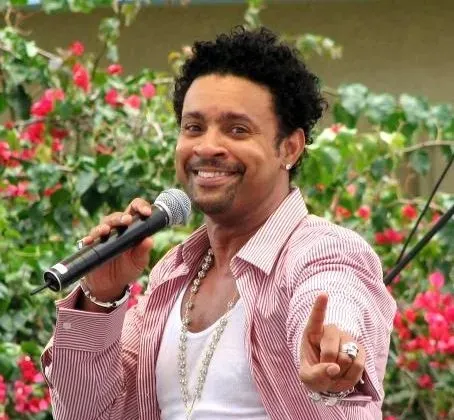
Grammy-winning reggae artist Orville Richard Burrell, better known as Shaggy, moved to the U.S. from Kingston, Jamaica, with his family when he was 18 years old. He went on to serve in the United States Marine Corps. Music was not the plan. Serving his country was. He completed two tours of duty, including active service during the Gulf War, before the music industry found him.
In 1987, he took singing lessons in Brooklyn and shortly after found success with two singles, “Mampie” and “Big Up.” Shaggy would later see success with his highest-charting song to date, 2000’s “It Wasn’t Me.” The pivot from military service to reggae superstar is not a career path any guidance counselor would have mapped out. Yet Shaggy became one of the most commercially successful reggae artists of his generation, with a career built on a set of circumstances that had very little to do with a deliberate plan.
The Shaggs: The Band That Accidentally Invented Avant-Garde

The band disbanded after their father’s death, returning to normal life and assuming their musical career was an embarrassing footnote. Little did they know that Frank Zappa would later call them “better than The Beatles.” By the 1980s, influential musicians like Kurt Cobain were praising The Shaggs’ accidental avant-garde genius. The Wiggin sisters from Fremont, New Hampshire, had been pulled out of school by their father, Austin Wiggin Jr., who believed a family fortune teller had prophesied that his daughters would form a successful band.
Their untrained, unfiltered expression had created something truly original: music free from convention because they literally didn’t understand musical conventions existed. Their 1969 album Philosophy of the World was initially pressed in just a few hundred copies. Decades later it became a cult landmark, studied as an unintentional deconstruction of pop music. The Shaggs never tried to be strange. They just were, and somehow that was enough to earn them a permanent place in music history.
Blaze Foley: The Duct Tape Messiah of Outlaw Country
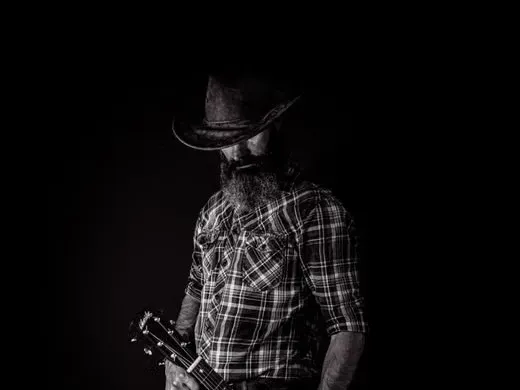
Sporting duct tape on his boots and sleeping on friends’ couches, Blaze Foley embodied the authentic outlaw country spirit that Nashville’s polished cowboys could only pretend to have. Friends called him the “Duct Tape Messiah” for his habit of taping his clothes and instruments together. His raw, honest songs about broken hearts and hard living came from genuine experience. He recorded very little during his lifetime, avoided the industry with stubborn consistency, and preferred the company of other musicians over the mechanics of building a career.
Foley was murdered in 1989 at the age of 39, and spent most of his adult life avoiding the very structures that might have made him famous. It was only after his death, through the advocacy of artists like Townes Van Zandt and later through a 2018 biographical film directed by Ethan Hawke, that the broader public discovered what those in his circle always knew. Music history is filled with artists who never realized their impact on the world. Some created masterpieces that fell flat during their lifetime, only to be discovered and celebrated years after they were gone. Others vanished mysteriously, leaving behind musical treasures that would eventually find devoted audiences. These forgotten legends may have died thinking they were failures, but time has revealed their true genius and lasting influence. Foley is perhaps the purest example of that reality.