Some records take their time. Jeff Buckley’s Grace didn’t crack the Top 100 in the United States when it landed in stores during the late summer of 1994, and most people who bought music that year never heard it at all. Three decades on, the same album regularly disappears from vinyl shelves within days of restocking, and secondhand copies trade for prices that would have baffled the label executives who watched it stall in 1994.
A debut that arrived at the wrong moment

Grace came out in the middle of a crowded alternative rock landscape, sandwiched between grunge’s commercial peak and the early stirrings of Britpop. Columbia Records had high hopes for the son of the late folk singer Tim Buckley, but the timing worked against him. Jeff started his career playing small venues as a soloist around New York City’s Greenwich Village where he built a following.
Radio programmers in 1994 weren’t quite sure where to place a record that mixed falsetto vocals, Middle Eastern-inflected guitar work, and a six-minute Leonard Cohen cover. It didn’t fit neatly into the grunge bins or the emerging Britpop shelves, and that awkward positioning likely cost it early momentum.
The sales numbers tell an unflattering story
While the album initially had poor sales, peaking at No. 149 in the U.S., and received mixed reviews, it gradually acquired critical and popular acclaim and has now sold over 2 million copies worldwide. That gap between the initial chart position and the eventual sales total is about as wide as it gets in modern music history.
Grace peaked at number 149 on the Billboard 200, sold roughly 175,000 copies in Jeff Buckley’s lifetime, and would not be certified platinum in the United States until 2016, twenty-two years after release. For a major label release with real promotional backing, that’s about as commercially disappointing as an album gets without being pulled from shelves entirely.
Critics heard something the charts missed

Reviewers at the time were divided, but the ones who liked it liked it a lot. Mixing heartfelt emotion with his angelic vocal style, the record quickly gained attention from rock critics and fans who were in the know but the album, sadly, performed poorly on sales charts.
That split between critical enthusiasm and commercial indifference is a familiar pattern in music history, but few examples are as stark as this one. The praise didn’t translate into sales in 1994, yet it planted the seeds for the reputation the album would eventually build.
The band and studio behind the sound

Grace was recorded primarily at Bearsville Studios in Woodstock, New York, with additional sessions at Quantum Sound in Hackensack and Soundtrack in New York City. It was produced by Buckley and Andy Wallace.
Wallace, who had already worked on Nirvana’s Nevermind, brought a polished but still intimate production sensibility to the sessions. The interplay between Buckley’s voice and the tight, restrained arrangements is a big part of why the record still sounds fresh rather than dated when played today.
Songs that grew larger than the album itself
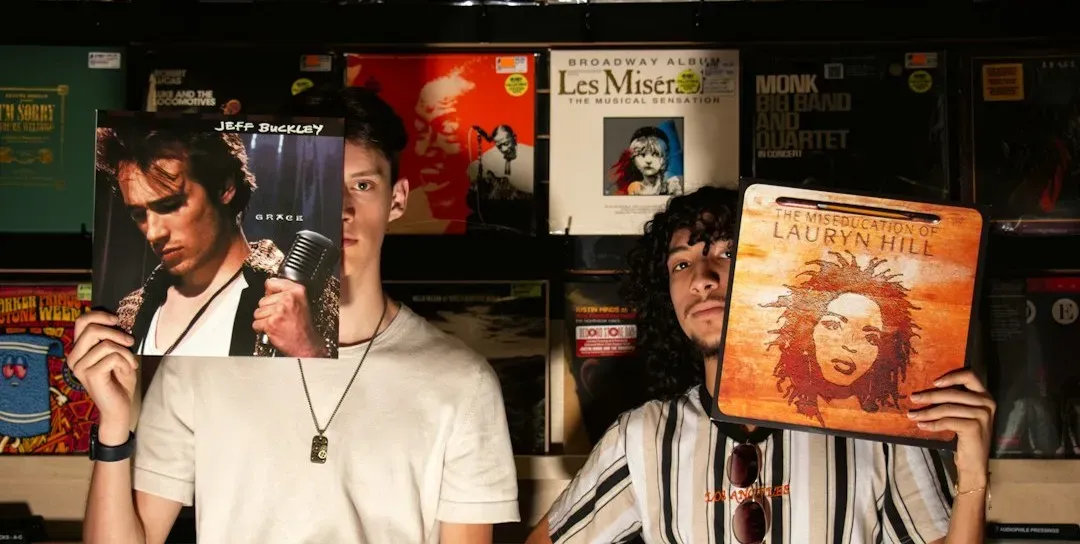
Several tracks eventually found audiences the parent album never did during Buckley’s lifetime. “Last Goodbye” was the second single released from the album, and it was Buckley’s most commercially successful song in the US during his lifetime, earning him a belated alternative hit in early 1995, peaking at No. 19 on the U.S. Alternative Airplay chart.
His cover of “Hallelujah” took even longer to catch fire. In 2008, “Hallelujah” became Buckley’s first number one on Billboard’s Hot Digital Songs and reached number two in the UK singles chart, more than a decade after the original recording session.
A tragedy that changed how the record was heard
Buckley never got to see any of this unfold. On the evening of May 29, 1997, Buckley went swimming in the Mississippi River and drowned.
He was in Memphis at the time, working on material for what would become his second album. Almost everything most people know about this record happened after the man who made it was dead, and that posthumous arc from quiet commercial disappointment to a fixture on every “greatest debut album” list is the central fact of Grace.
Certification and the slow climb to platinum

The RIAA didn’t certify Grace platinum in the United States until 2016, a gap of more than two decades that says a lot about how gradual this reappraisal really was. By 2011, it sold two million copies worldwide, and in 2016 it was certified platinum in the US.
Other territories moved even further. Grace re-entered the albums chart in Australia at number 44 for the week of January 29 to February 5, 2007, thirteen years after its original release date, and it is currently certified 6x Platinum in Australia. A tenth anniversary reissue helped keep the momentum going as well, with the extended Legacy Edition charting respectably in the UK.
Why collectors chase original pressings today
Original 1994 vinyl pressings of Grace are now genuinely scarce, since the record wasn’t pressed in large quantities the first time around given its poor initial sales. Jeff Buckley’s Grace vinyl comes in several pressing variations, including original pressings, reissues, and special editions, and original pressings are often sought after for their collectibility.
On resale marketplaces, sealed original copies and clean first pressings regularly draw multiple bids. Auction and sale archives tracking secondhand vinyl show a steady stream of copies changing hands, some drawing more than twenty bids at a time.
The vinyl reissue boom of the 2020s
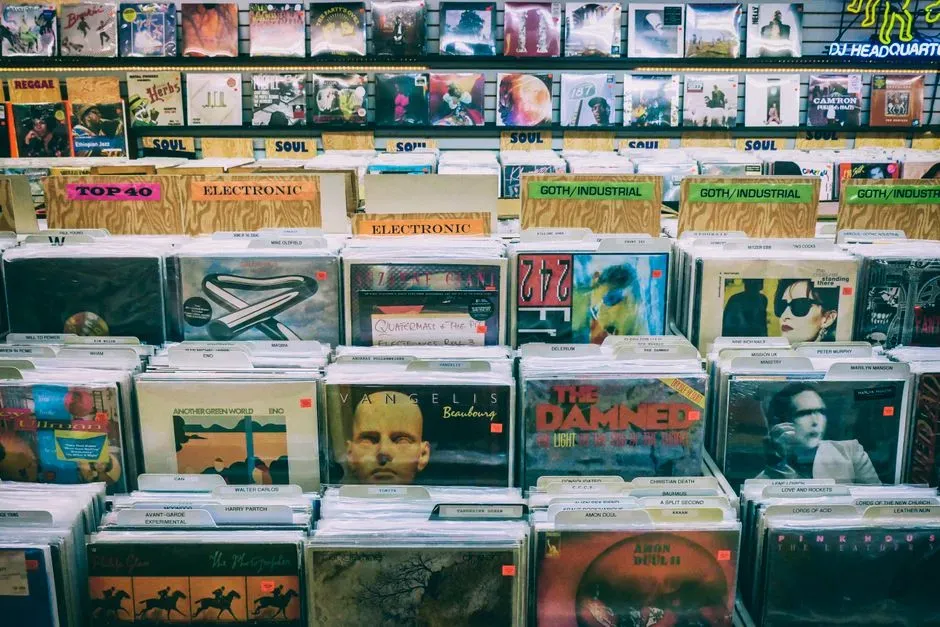
Columbia and its reissue arm have kept feeding demand with fresh pressings, and they keep selling. Reissue pressings on 180g vinyl have been produced housed in a heavy card sleeve inside a clear PVC wallet, with an insert sheet included.
Marketplace data reflects steady, ongoing interest rather than a one-time spike. Discogs listings for one reissue pressing show hundreds of collectors marking it as owned and hundreds more on their want lists, with recent sales tracked into 2025. That kind of sustained want-list activity, years after the reissue’s original release, is unusual for most catalog titles.
Grace’s place in music history now
The reappraisal hasn’t stopped at vinyl. A new high-resolution audio treatment has recently entered the picture. A Blu-ray audio edition featuring 2026 Dolby Atmos and 5.1 mixes has been part of the ongoing reissue campaign.
Critical consensus has also solidified in a way it never did on release. Rolling Stone included Grace in its lists of the 500 greatest albums and named “Grace” and Buckley’s version of “Hallelujah” in its lists of the 500 greatest songs. Musicians have echoed that regard for years, with figures across rock citing the record as a touchstone for vocal ambition and emotional directness.
The takeaway
Grace remains one of the clearest examples of an album that needed time rather than a marketing push to find its audience. The commercial failure in 1994 wasn’t a reflection of the music’s quality so much as a mismatch between the record and the moment it arrived in. What’s happened since, from platinum certifications decades late to vinyl pressings that vanish within days of hitting shelves, suggests that some albums simply operate on a different clock than the charts they’re judged by at release.