Every so often a book comes along that makes editors nervous, not because the writing is bad, but because it feels too close to something true. Publishers worry about lawsuits, boycotts, or simply about putting their name on something that might blow up in their faces. The books on this list all shared that problem. They were too explicit, too political, too personal, or too accurate about the ugliness of their era, and for a while it looked like none of them would ever reach a reader. What follows is a look at seven novels that nearly stayed in a drawer, or got dropped by the very publishers who bought them, before going on to become some of the most read books of the last century.
Lolita by Vladimir Nabokov

Vladimir Nabokov finished the manuscript in 1953 and spent the next few years being turned away by nearly every major American publisher he approached. The novel had been rejected by four prominent American publishers, Viking, Simon and Schuster, New Directions, and Farrar, Strauss, before the French firm Olympia Press issued the book with a first printing of 5,000 copies in 1955. One rejection letter from Viking put it bluntly, warning that “We would all go to jail if the thing were published.”
Nabokov himself sensed the risk long before any editor did. He was so anxious about the book’s reception that he originally insisted that Lolita be issued under a pseudonym, and only relented after friends told him his writing style was so distinctive everyone would recognize him as the work’s author regardless. When Putnam finally published it in the United States in 1958, the gamble paid off almost immediately, since the controversy caused the book to gain notoriety and consequently popularity, and it immediately became a bestseller, with over 100,000 copies purchased in the first three weeks.
American Psycho by Bret Easton Ellis

By 1990, Bret Easton Ellis already had a reputation as a provocateur, but nothing prepared Simon & Schuster for what landed on their desks. American Psycho was controversial from the start. It was originally purchased by Simon & Schuster, which cancelled the contract in 1990, reportedly because of objections to the book on the part of its chairman, who publicly declared it to be in bad taste. The company walked away from a substantial advance rather than risk being tied to the material.
The company’s CEO at the time did not hold back when explaining the decision, saying “It was an error of judgement to put our name on a book of such questionable taste,” according to Richard E. Snyder, CEO of Simon & Schuster. Vintage Books, a division of Random House, stepped in shortly after, and the novel was then acquired by Vintage Books and published after Ellis made what the editorial director called “innumerable adjustments,” none of them specified. The book that almost never found a home became one of the defining satirical novels of the 1990s.
The Diary of a Young Girl by Anne Frank
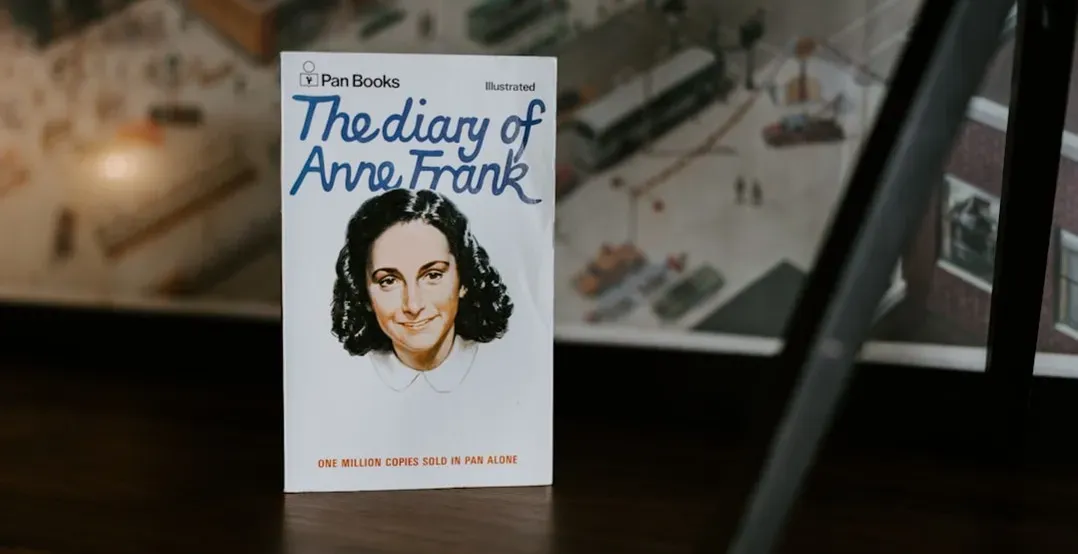
It seems almost unthinkable now, but Otto Frank struggled for years to convince American publishers that his daughter’s wartime diary deserved a place on their lists. Otto had a hard time finding a publisher in the United States, and after the manuscript had been turned down by 10 publishers, Doubleday decided to acquire the rights. One rejection letter dismissed the manuscript in a single cutting line, claiming the young writer did not “have a special perception or feeling which would lift that book above the ‘curiosity’ level.”
The book only found its footing thanks to one editor’s persistence inside Doubleday. This was mainly due to editor Judith Jones, who discovered the French edition of the diary in a pile of rejected manuscripts and succeeded in convincing her bosses at Doubleday that the diary deserved to be published in the US. Once it reached American shelves, the diary became one of the most widely read personal accounts of the Holocaust ever published, a fate that seemed genuinely uncertain for years.
Catch-22 by Joseph Heller

Joseph Heller’s absurdist war novel confused nearly every reader who first encountered it, including the editors deciding whether to publish it. Early readers, including publishers, struggled to grasp its circular logic and black humor, leading to repeated rejections; one reviewer concluded the book was “not funny on any intellectual level.” Ironically, Heller had never intended the story as pure comedy at all; it was a serious meditation on the absurdity of military bureaucracy dressed in satire.
Inside Simon & Schuster, opinions were sharply divided even after the book was under contract. One editor conceded that the book would not be a big seller, although he felt it was “bound to find real admirers in certain literary sets,” while another found Yossarian’s escapades repetitive and at times offensive, and recommended against publication. Heller’s willingness to revise, paired with an editor who believed in the project, eventually carried the book to print in 1961, where it slowly built into one of the defining anti-war novels of the century.
Partner offer
Native Son by Richard Wright

Richard Wright’s unflinching portrait of racism and poverty in 1930s Chicago made it to print in 1940, but not without significant compromises. Harper’s was somewhat concerned about the graphic nature of some of the book, and just before publication, the Book-of-the-Month Club expressed interest in including Native Son as one of its selections if several sexually explicit scenes were removed and if the protagonist did not show such obvious sexual interest in a white character; Wright agreed to these changes. The version most readers encountered for decades was noticeably softened from what Wright originally wrote.
Scholars only rediscovered how deep those cuts ran decades later. In 1990, while preparing a two-volume edition of Wright’s works, editors at Library of America discovered that significant portions of the novel Native Son and the memoir Black Boy had been censored at the request of Book-of-the-Month Club. Even in its edited form, the novel arrived with force, becoming, according to booksellers, an immediate success, selling hundreds of thousands of copies and becoming a Book-of-the-Month Club selection, the first by an African American author.
The Bell Jar by Sylvia Plath
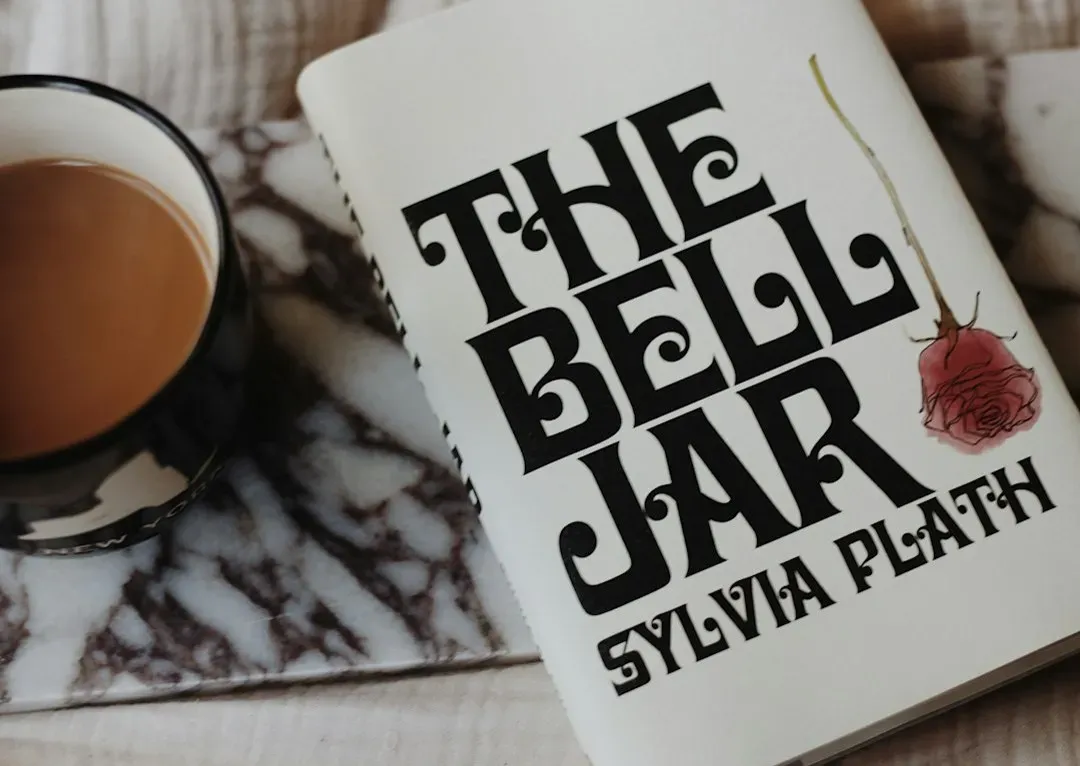
Sylvia Plath’s semi-autobiographical novel about a young woman’s mental breakdown drew so directly from her own life that she chose to hide behind a pen name when it first appeared in Britain in 1963. The people who populated the novel, thinly disguised classmates, doctors, and family members, were recognizable enough that publishing it under her own name felt like an invitation to real-world consequences rather than just literary ones.
American publication was delayed for years afterward, largely because Plath’s own mother objected to how the novel portrayed the family and pushed to keep it out of print in the United States. The book did not appear under Plath’s real name in America until 1971, nearly a decade after her death, by which point it had already built a quiet reputation as an unusually honest account of depression and institutionalization.
Ulysses by James Joyce
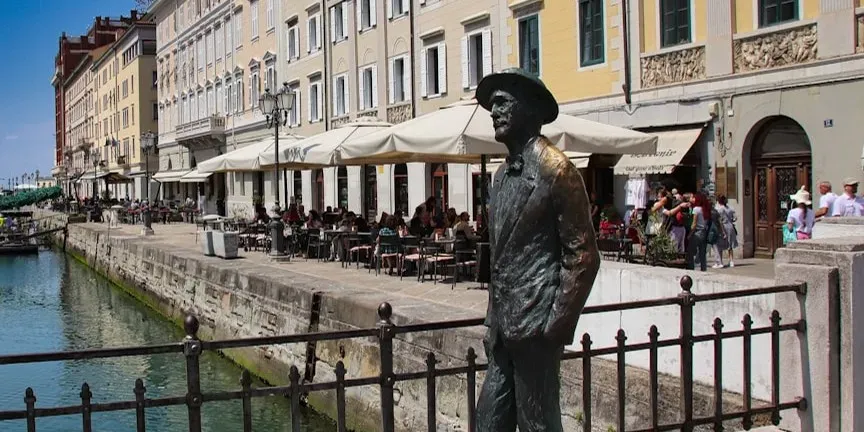
Long before any of the other books on this list ran into trouble, James Joyce’s sprawling, experimental novel was already being prosecuted in installments. Serialized chapters published in the American magazine The Little Review led to an obscenity trial in 1921, after a passage depicting a character masturbating on a beach drew the attention of anti-vice authorities, and the magazine’s editors were fined.
No American publisher would touch the complete novel after that, so Joyce turned to Sylvia Beach’s Shakespeare and Company in Paris, which published Ulysses in full in 1922. The book remained officially banned as obscene in the United States for over a decade, until a landmark 1933 court ruling by Judge John M. Woolsey found the novel had genuine literary merit and lifted the ban, clearing the way for an American edition the following year.
A Common Thread Worth Remembering

None of these seven books were rejected because they were badly written. If anything, the opposite was often true; editors recognized the talent on the page and still hesitated, worried about lawsuits, boycotts, family objections, or simply what readers might do with material that felt too close to real life.
What connects Lolita’s obscenity fears to Anne Frank’s dismissed “curiosity” value is a kind of institutional nervousness that has never fully gone away. Publishing has always been a business built on calculated risk, and these seven novels are proof that sometimes the riskiest books are also the ones worth taking a chance on.
Partner offer
Planning a trip to Vegas?
Compare hotel rates and show tickets on VEGAS.com.