There’s a specific kind of pop songcraft that skips the slow build entirely. Instead of easing listeners in with two verses before paying off the melody, certain songs sprint to the chorus almost immediately, sometimes inside the first thirty seconds. It’s a structural choice, not an accident, and it tends to separate songs that become inescapable from songs that merely do well. Streaming behavior has made this approach more valuable than ever. When listeners can skip a track within seconds, a songwriter who delays the hook is gambling with attention spans that shrink a little more every year. The seven songs below all made the same bet: front-load the chorus, and let the rest of the song live in its shadow.
1. Blinding Lights – The Weeknd


Released in November 2019 as the second single from After Hours, “Blinding Lights” wastes almost no time getting to its emotional core. The structure runs first verse, first pre chorus, first chorus, an instrumental breakdown, second verse, second chorus, bridge, and a final chorus before the outro. That means the chorus lands well before the halfway mark, and it repeats with almost no variation, which is exactly the point.
The song’s commercial afterlife backs up the theory that early hooks age well. It was the best-selling global single of 2020 according to the IFPI, and on Spotify it became the most streamed song of all time, the first to surpass both four and five billion streams. A song built to hit hard early apparently keeps hitting hard on the hundredth listen too.
2. Somebody That I Used to Know – Gotye featuring Kimbra


This one plays a slightly different trick. The chorus itself is understated, almost conversational, but it arrives quickly and burrows in through repetition rather than volume. Originally released in July 2011, the song did not take hold in the United States until six months later, when it topped the Billboard Hot 100 in April 2012 and also hit number one in twenty five other countries, selling more than ten million copies worldwide along the way.
Its staying power is unusual for a song this understated. The track, certified eight times platinum, topped charts in twenty six countries and spent fifty nine weeks on the Hot 100. Even a decade later, it kept finding new audiences. It landed at number eight on Billboard’s Hot 100 decade end charts and received another revival on TikTok in 2021.
3. Call Me Maybe – Carly Rae Jepsen


Few pop songs commit to the early hook as aggressively as this one. The song is one of the simplest pop song forms you’ll see, consisting of essentially just a verse and a chorus, with a bridge that unusually repeats at the end. There’s no slow ramp here. A short verse, a quick pre chorus, and then the “Hey, I just met you” hook arrives almost before listeners have settled in.
The chorus dominance is baked into the arrangement itself. The structure smartly utilizes this by giving choruses almost half the song, with the bridge and breakdown sections even folding the chorus melody back in. It’s a song that essentially refuses to let you forget the hook once you’ve heard it a single time.
4. As It Was – Harry Styles


Released in April 2022 as the lead single from Harry’s House, “As It Was” gets to its chorus with unusual efficiency for a song built around melancholy rather than pure hooks. The song runs just two minutes and forty seven seconds total, which forces an early chorus almost by necessity. The verse melody stays compact and descending, setting up a chorus that feels like release rather than escalation.
Partner offer

What makes the early chorus land is the contrast in phrasing. Once the chorus happens, the downward melodic shapes continue but become longer, with the verse using short three or four note figures while the chorus stretches into a long, almost complete descending scale. That shift from clipped to flowing gives the early hook a sense of arrival even though it shows up so quickly.
5. Uptown Funk – Mark Ronson featuring Bruno Mars

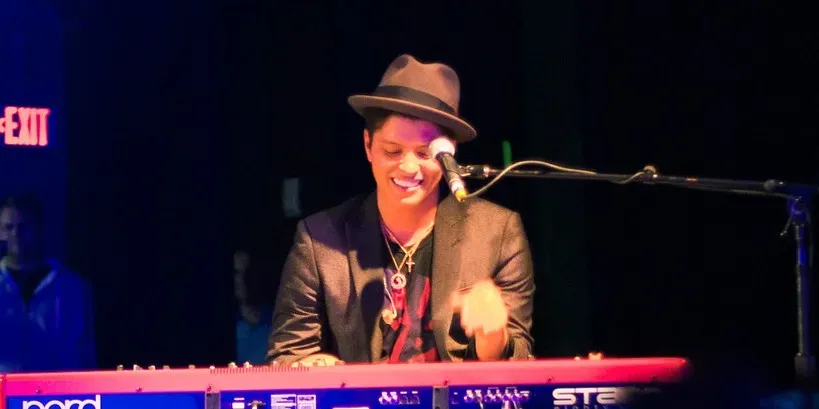
Built on a foundation of funk and soul influences from the seventies and eighties, “Uptown Funk” treats its chorus less as a payoff and more as a groove that the whole song orbits around. The vocal hook and the horn-driven instrumental hook arrive early and repeatedly, functioning almost as a second chorus layered on top of the sung one. This is a song designed for radio and dance floors alike, where any delay in getting to the hook would have cost it momentum on both fronts.
Its commercial run reflected that immediacy. The track spent an extended stretch atop the Billboard Hot 100 in 2015, becoming one of the defining pop and funk revival singles of that decade. The early, insistent chorus placement is part of why it became as ubiquitous as it did, turning up in commercials, sporting events, and wedding playlists with equal ease.
6. Rolling in the Deep – Adele


Adele’s breakout hit from 21 takes a slightly more patient route than some of the others on this list, but it still gets to its chorus well ahead of a typical pop structure. The verses are short and rhythmically insistent, almost more spoken than sung, which pushes the listener toward the chorus faster than the actual runtime might suggest. Once the hook lands, it arrives with a vocal power that made the delay, brief as it was, feel earned rather than frustrating.
The song became a defining single of the early 2010s, cementing Adele’s crossover into mainstream pop while still carrying the soul and blues influences that shaped her sound. Its chorus structure, tight and repetitive without becoming grating, is often cited by songwriters and producers as a model for how to balance emotional weight with commercial hookiness. That balance depends heavily on not making listeners wait too long for the payoff.
7. Shake It Off – Taylor Swift


Taylor Swift’s first fully pop single from 1989 leans into the early chorus rule almost defiantly. The verses are brief and almost dismissive in tone, setting up a chorus that arrives fast and then repeats with slight variations throughout the track. This structural choice mirrors the song’s lyrical theme, since a song about brushing off criticism benefits from getting straight to its central, shrug-it-off refrain rather than building slowly toward it.
The song’s commercial success validated that instinct. It became one of the signature singles of Swift’s transition from country-pop to full pop, topping charts and staying in heavy rotation well beyond its initial release window. Its influence can still be heard in how contemporary pop songwriters structure choruses meant for maximum repeatability on playlists and radio alike.
The pattern across these seven songs is not that a fast chorus guarantees success. Plenty of hit songs still take their time, building tension across two full verses before releasing it. What these tracks share is a bet that immediacy pays off, that listeners rewarded with a hook early are more likely to stay through the rest of the song, and more likely to hit repeat once it ends. That bet has aged well for most of them, based on chart longevity, streaming totals, and how often they still surface years after release. Whether that reflects a lasting shift in how pop songs get written, or just a handful of songwriters who happened to get the timing right, is probably a question each new chart-topper will keep answering on its own.Partner offer
Planning a trip to Vegas?
Compare hotel rates and show tickets on VEGAS.com.