Nevada’s juvenile justice system sits at an uncomfortable crossroads. For years, advocates, lawmakers, and federal monitors have pointed to persistent gaps between how the state treats young offenders and what modern research, constitutional precedent, and federal law actually require. The pressure to close that gap is no longer background noise. What’s unfolding right now is a convergence of state-level reform commissions, pending federal compliance obligations, and a 50-year-old federal law that is overdue for reauthorization. The result is a system under close watch, from Carson City to Washington, D.C.
The Federal Framework Nevada Must Answer To

The Federal Juvenile Justice and Delinquency Prevention Act, known as the JJDPA, was passed by Congress in 1974 as reform legislation for the juvenile justice system across the United States, with a specific focus on removing status offenders such as runaways and truant children from juvenile correctional facilities and on removing juveniles from adult jails and lockups. That mandate has shaped every state’s approach to youth justice for five decades.
The JJDPA was last reauthorized in 2018 for five years, which means the clock has run out and it is now time for Congress to reauthorize it again. The delay creates real uncertainty for states like Nevada that depend on the federal formula grant dollars tied to compliance.
To be eligible to receive a formula grant under the JJDPA’s Title II program, a state must satisfy 33 statutory state plan requirements, designate a state agency to administer a comprehensive three-year juvenile justice plan, establish a State Advisory Group, and commit to achieving and maintaining compliance with the four core requirements of the JJDPA.
Nevada’s Oversight Structure and Where It Falls Short

The Nevada Juvenile Justice Oversight Commission, known as the JJOC, is responsible for statewide oversight of Nevada’s juvenile justice system, monitoring compliance with the federal JJDPA, reviewing policies, programs, and data, advising on system improvements, and submitting required state and federal reports.
The Nevada Juvenile Justice Commission serves as the state’s advisory group required under federal law, but notably, the federally required three-year state juvenile justice federal formula grant plan is not publicly available on the advisory group’s website. That transparency gap matters. Federal compliance depends on documentation being accessible and verifiable.
A key problem identified in Nevada’s own compliance reporting is that there is nothing in Nevada Revised Statutes to support certain data monitoring obligations. Rather, this work is vaguely authorized through a Governor’s executive order, which does not require any facility, especially adult facilities, to report data or provide required sampling.
The Problem with How Nevada Handles Status Offenders
A wide range of non-criminal behaviors by youth are grouped as status offenses. Actions such as truancy, running away, or acting stubborn can thrust an adolescent into formal juvenile court proceedings where their liberty may be at risk. These are behaviors that would carry no legal consequence if committed by an adult.
Status offenses are offenses that only apply to minors whose actions would not be considered offenses if committed by adults, and the most common include skipping school, running away, breaking curfew, or being deemed incorrigible or unmanageable.
The vast majority of youth held for technical violations and status offenses are held in locked facilities, at rates of roughly 94 and 84 percent respectively. Just over one-third of youth held for status offenses are held for more than 90 days, and a similar proportion are held in prison or jail-style youth facilities. These figures reflect a national pattern that Nevada has not fully escaped.
Youth Being Tried as Adults: A Persistent Fault Line
For repeat offenders, Nevada law mandates what is called presumptive certification. If a minor 14 years of age or older has been previously adjudicated for a felony and is now facing another felony charge, the burden shifts to the defense to prove why the case should remain in juvenile court, and if the court approves the transfer, the minor faces adult penalties including lengthy prison sentences.
Until 2018, the JJDPA permitted minors who were charged in adult court to be held in adult facilities. That changed with the Juvenile Justice Reform Act, which required youth awaiting trial in adult court to only be placed in juvenile facilities, with an exception applied if a judge found it was in the interest of justice to hold the young person in an adult facility.
Nevada legislators have sought to study the need for and cost of housing young offenders awaiting certification for criminal proceedings as an adult, with the study being deemed necessary because the infrastructure and resources required to completely eliminate direct adult-court filing are not currently available in the state.
Racial Disparities: The Unresolved Core Problem
Youth of color are overrepresented in many aspects of the juvenile justice system in Nevada, from arrest to court referral and confinement, and a core requirement of federal juvenile justice policy requires each state to identify where these disparities may exist.
Disproportionate minority contact, meaning the overrepresentation of adolescents of color in the juvenile justice system relative to their percentage in the general population, is well documented. In 2020, roughly two thirds of all adolescents who were detained or confined in the United States were identified as adolescents of color or Latino adolescents, with Black adolescents generally being the most overrepresented group.
Work in Washoe County, Nevada, has specifically been identified as a site for developing more accurate data collection methods for Hispanic youth and reducing racial disparities at key decision points in the juvenile justice system. It is an acknowledgment that the problem exists locally, not just nationally.
The Brain Science That Demands a Different Approach
Youth offenders are different from adults due to developmental differences, primarily in the brain, which is less developed in areas responsible for impulse control and decision-making. This leads to a different legal approach, as the youth justice system focuses on rehabilitation and the child’s potential for change, with youth having the opportunity to receive services and become involved in alternative community programs rather than being confined under purely punitive approaches.
When the JJDPA was last reauthorized in 2018, changes were made to reflect new adolescent brain science research and the cost-effectiveness of trauma-informed, community-based approaches along with evidence-based interventions. Nevada’s statutes and practices have been slow to keep pace with those updates.
In legal precedent that directly shapes this landscape, the U.S. Supreme Court ruled in Roper v. Simmons that the death penalty is unconstitutional for minors, and in Graham v. Florida held that life-without-parole sentences for non-homicide crimes are an unconstitutional punishment for juveniles. The science and the courts are aligned; the gap is in day-to-day practice.
Facility Conditions and Federal Investigations
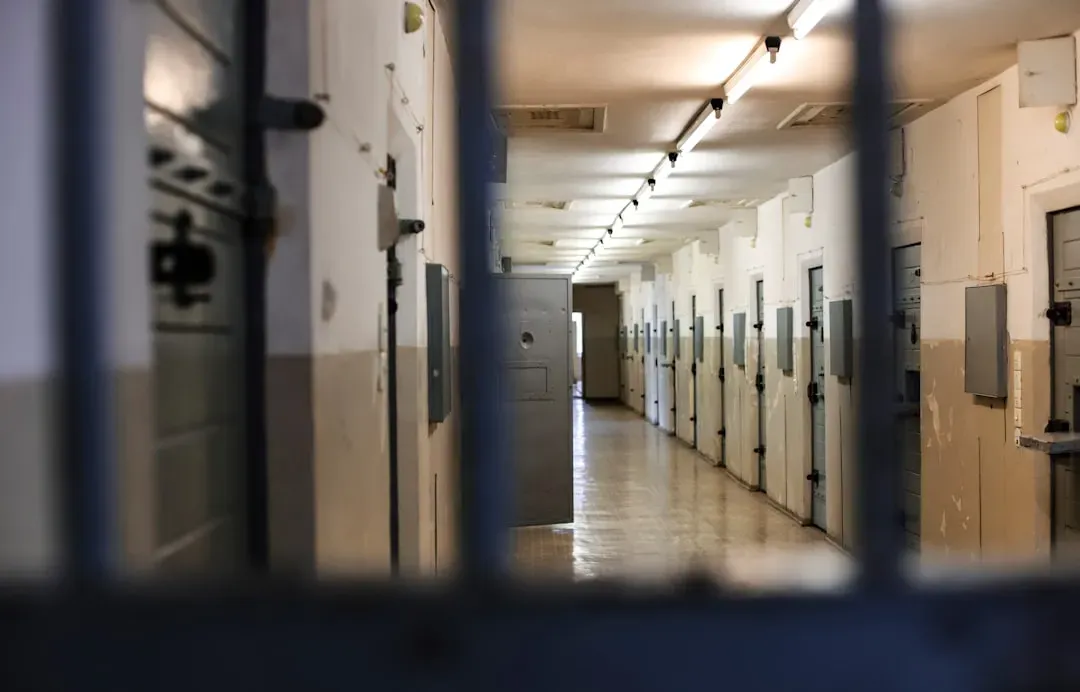
One federal investigation has examined whether staff at two Nevada state correctional facilities, Summit View Youth Center and Nevada Youth Training Center, use pepper spray in a manner that violates youth’s constitutional rights. A separate investigation has examined whether the state unnecessarily institutionalized children with behavioral health conditions in violation of the Americans with Disabilities Act.
For serious offenses, Nevada courts may order placement in a state-operated juvenile correctional facility, such as the Nevada Youth Training Center or the Caliente Youth Center. These are precisely the facilities now under scrutiny.
As part of ongoing reform work, Nevada’s Commission on Statewide Juvenile Justice Reform has examined the possible reorganization of correctional commitment facilities to determine whether smaller, regional facilities are most effective and whether limiting state commitments to the most seriously offending youth should be considered.
The Push Toward Community-Based Alternatives

Nevada’s Juvenile Justice Programs Office administers and monitors the Community Corrections Partnership Block Grant, which includes state general funds divided among all 17 of Nevada’s counties for the purpose of supporting evidence-based programs and services for youth at the front end of the juvenile justice system.
Juvenile legal system experts have pushed for what they call “no reject policies,” recognizing that home and community-based interventions are more effective than incarceration for youth charged with all kinds of offenses. The field has developed evidence-based programs that reduce violence and delinquent behavior among youth with elevated risk levels without confinement.
Earlier Nevada reform commissions have already moved in this direction, redirecting state commitment funds to community-based services and commitment alternatives, implementing judicial protocols for least restrictive placements, and identifying long-term funding stabilization plans for juvenile justice in the state.
The Funding Stakes and What Noncompliance Costs

Compliance with federal mandates under the JJDPA includes identifying, monitoring, assessing, intervening, evaluating, and reporting on disproportionate minority contact, and without meeting this mandate, states risk losing roughly one fifth of their federal funding. For Nevada, that is not a negligible number.
Federal JJDPA funding recovered somewhat in recent years and reached $140 million nationally in fiscal year 2023, but if reauthorization continues to lag, funding is likely to diminish once again. States that are not in compliance when reauthorization finally moves forward stand to lose the most.
Without the JJDPA, reformers would lack consistent data, a go-to federal agency, funds for community-based options and system changes, and state-level oversight bodies to monitor basic care for youth in the system. Nevada’s reform infrastructure depends on this federal architecture remaining intact.
What Nevada’s Strategic Plan Signals for the Road Ahead

Nevada’s JJOC has been working under a 2024 to 2029 Strategic Plan that frames the commission’s responsibilities around statewide oversight, federal compliance monitoring, policy review, and the submission of both state and federal reports. The plan provides a formal roadmap, but roadmaps only work when the political will to follow them exists.
Nevada lawmakers have been seeking to further separate the juvenile justice system from the adult criminal justice system at nearly every level, with legislation aimed at reducing referrals into the system, promoting rehabilitation programs, and housing young offenders separately from adults.
Though sweeping legislation in 2017 established the Juvenile Justice Oversight Commission and enacted a Juvenile Justice Bill of Rights, advocates have noted that juvenile justice issues are often overlooked as adult criminal justice reform topics dominate legislative attention. That visibility problem remains one of the most stubborn obstacles to meaningful change.
Conclusion: The Gap Is Real, and So Is the Pressure to Close It
Nevada’s juvenile justice system is not uniquely broken. What makes it notable is the combination of documented compliance gaps, ongoing federal investigations, persistent racial disparities, and a federal law that is itself in limbo pending reauthorization. That convergence creates a moment of unusual pressure.
The fact that nearly 32,000 youth are confined nationally today, often for low-level offenses or before they have had a hearing, signals that reforms are still badly needed in the juvenile legal system. Nevada is part of that national picture, not separate from it.
The science on adolescent development is settled. The legal precedents from the Supreme Court are clear. The question is whether Nevada’s legislative and executive branches will treat this moment as a genuine inflection point or as another round of committee reports and deferred action. Young people cycling through a system not designed for their development tend not to get a second window.