There’s a particular kind of song that doesn’t announce itself. No stadium-filling chorus, no wall of guitars, no dramatic crescendo. Just a voice, a chord, and something irresistible in the space between the notes. These songs tend to arrive quietly – and then refuse to leave.
What they share is an unlikely power: the ability to carry enormous weight without raising the volume. Across generations and genres, some of the most culturally significant music ever made has been among the softest. Here’s a look at eight songs that prove restraint can be its own kind of force.
Billie Holiday – “Strange Fruit” (1939): A Haunting Portrait That Couldn’t Be Ignored

The arrangement is sparse – just Holiday’s trembling voice and a muted piano – but the effect is devastating. The song confronted America with imagery of racial terror at a time when public silence on the subject was almost total. Released in 1939, it was considered so incendiary that some venues refused to let Holiday perform it, and according to the Equal Justice Initiative, more than 4,400 African Americans were lynched in the United States between 1877 and 1950, making the song’s imagery tragically real.
The song itself has endured and become a symbol of the racism, cruelty, pain, and suffering endured by so many in the U.S., and this version went on to become Time magazine’s Song of the Century in 1999. That’s a remarkable arc for a song that opened not with a battle cry, but with Holiday barely whispering over quiet piano. It became a rallying cry for the early civil rights movement, despite its understated delivery, and its impact lingers, frequently referenced in documentaries and history lessons today.
Bob Dylan – “Blowin’ in the Wind” (1962): Questions That Outlasted the Decade
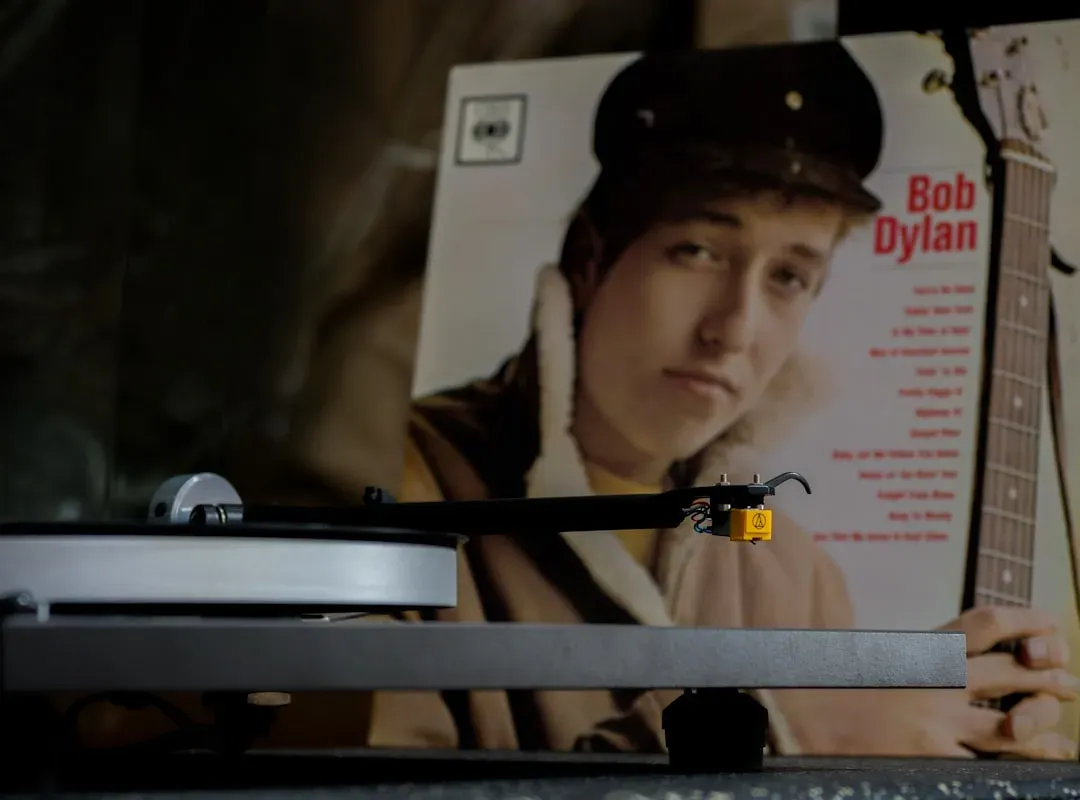
Bob Dylan’s “Blowin’ in the Wind” asks questions that have echoed through decades of protest and change. Its melody is gentle and almost lullaby-like, but the lyrics confront listeners with issues of war, peace, and freedom. Dylan had a way of making the political feel personal without softening it. The music often included relatively simple instrumental accompaniment, including acoustic guitar and harmonica.
Released in 1962, the song quickly became associated with the civil rights movement, sung at rallies and marches across the United States, and the Library of Congress recognized it as a significant cultural artifact in 2022, a testament to its lasting influence. Peter, Paul, and Mary’s cover of the song in 1963 brought it to an even wider audience, turning a folk singer’s quiet question into something close to a national reckoning. One of the key figures of the 1960s protest movement, Dylan produced a number of landmark protest songs, with “Blowin’ in the Wind” near the top of that list.
Sam Cooke – “A Change Is Gonna Come” (1964): A Ballad That Became a Hymn
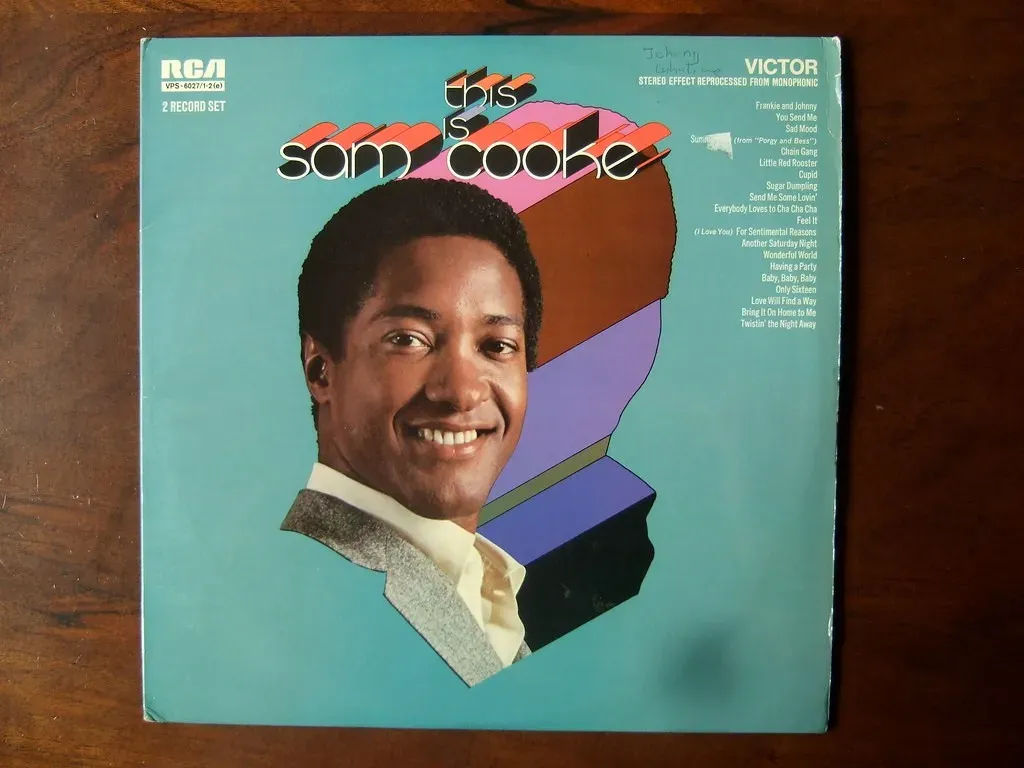
In 1963, an especially consequential and violent year during the civil rights era, Sam Cooke composed his stirring civil rights anthem, “A Change Is Gonna Come.” A former gospel music star, the African American singer had been a pop and rhythm-and-blues star since his 1957 crossover hit, “You Send Me,” but with this song he veered from poignant ballads and happy dance hits, creating instead a majestic lament for freedom. The song was inspired by various events in Cooke’s life, most prominently when he and his entourage were turned away from a whites-only motel in Louisiana. Cooke felt compelled to write a song that spoke to his struggle and of those around him, and that pertained to the Civil Rights Movement and African Americans.
The song was voted number 3 on Rolling Stone’s 2021 edition of the 500 Greatest Songs of All Time, and in 2025, the magazine placed it at number one on its list of “The 100 Best Protest Songs of All Time.” Barack Obama frequently played it at rallies during his first U.S. presidential campaign in 2008, and he quoted some of its lyrics to an audience of supporters in Chicago after he won. That a softly orchestrated soul ballad – one Cooke himself was almost afraid to release – could carry that much cultural weight across six decades is nothing short of extraordinary. Cooke elected not to perform the song live again in his lifetime, both because of the complexity of the arrangement and because of the ominous nature of the song.
Simon and Garfunkel – “The Sound of Silence” (1964): Alienation in Perfect Harmony
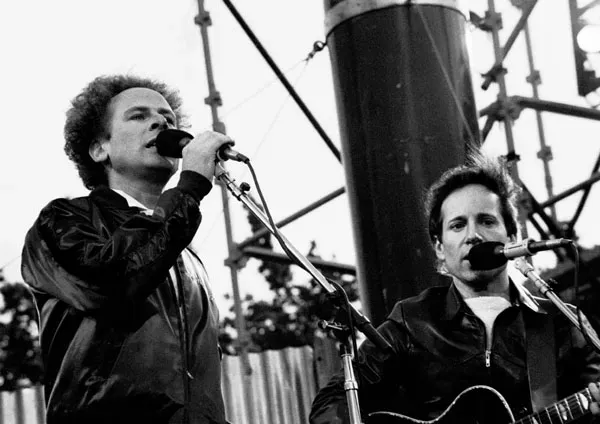
Few songs have captured the zeitgeist as quietly – and as powerfully – as Simon and Garfunkel’s “The Sound of Silence.” Paul Simon’s lyrics, delivered in hushed tones, touch on themes of alienation and miscommunication, echoing the unrest of the 1960s, and the song’s haunting harmonies and gentle acoustic guitar carry a message that feels just as relevant today. There’s an irony embedded in the title itself: the sound of silence is precisely what the song refuses to be. When it was released in 1964, radio DJs were so captivated by its somber beauty that it quickly climbed the charts, eventually reaching number one.
In 2020, it was named one of Rolling Stone’s 500 Greatest Songs of All Time, a reminder of its lasting cultural impact. The song went on to define a generation’s unease – the quiet suspicion that modern life, for all its noise, was producing something close to spiritual emptiness. Music and song can maintain a movement even when it no longer has a visible presence in the form of organizations, leaders, and demonstrations, and can be a vital force in preparing the emergence of a new movement. That idea fits “The Sound of Silence” precisely.
Partner offer
Nick Drake – “Pink Moon” (1972): A Whisper That Echoed for Decades
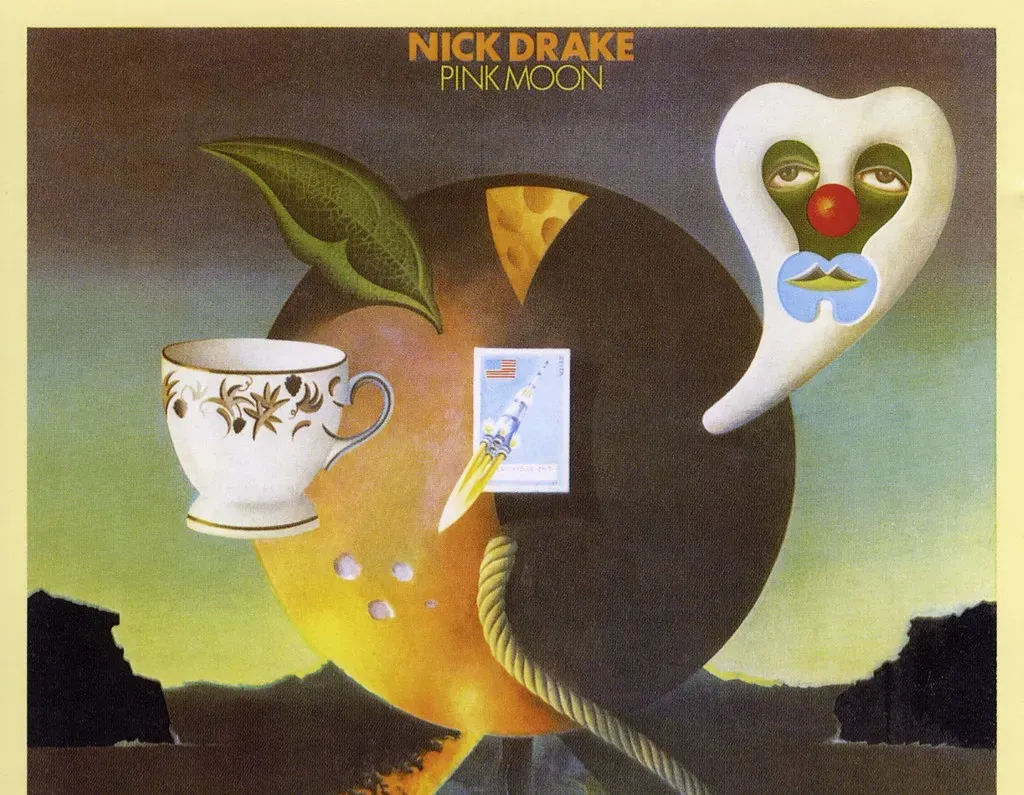
Pink Moon differs from Drake’s previous albums in that it was recorded without a backing band, featuring just Drake on vocals and acoustic guitar, the only other instrumentation being a single piano melody overdubbed onto the title track. Drake snuck away with producer John Wood to lay down a new album, which was recorded over just two late-night sessions at Sound Techniques in London’s Chelsea, in October 1971. The resulting record is one of music’s most intimate documents – a man alone in a room, making something that felt like the last thing he had to say.
In 1999, something unexpected happened: a Volkswagen commercial aired, and the Pink Moon title track played behind scenes of a quiet night drive. Suddenly, something clicked – album sales soared, reissues followed, and the world was finally ready for Drake’s artistry, a quarter of a century after his passing. The album has since garnered significant critical acclaim, retrospectively being named one of the greatest albums of the 1970s. Few artists have achieved so much from so far beyond the spotlight – or so far beyond their own lifetime.
Bon Iver – “Skinny Love” (2007): Heartbreak Recorded in a Cabin

Bon Iver’s “Skinny Love” is the sound of heartbreak distilled into its purest form. Recorded in a remote Wisconsin cabin, the song captures the isolation and rawness of a soul laid bare. Justin Vernon’s falsetto, almost fragile, floats above simple acoustic strums, drawing listeners into an intimate confessional. It’s the kind of recording that feels accidentally overheard, which is exactly why it works. The lyrics feel unfinished, as if Vernon is still searching for the right words – a quality that makes the song feel deeply honest.
The song’s rise to fame was organic, fueled by word-of-mouth and grassroots support, proving that sometimes, the quietest songs have the most thunderous impact. It reshaped what indie folk could be, opening doors for an entire generation of artists willing to trade polish for rawness. Critics praised “Skinny Love” for its emotional clarity, with The Guardian noting its “beautiful ache” and ability to move listeners to tears. The song’s continued relevance across streaming playlists shows that the cabin recordings from 2007 haven’t aged – they’ve only grown quieter and more necessary.
Billie Eilish – “When the Party’s Over” (2018): The Pop Whisper That Redrew the Map

Billie Eilish’s “When the Party’s Over” is a study in vulnerability, stripped down to little more than her whisper-soft vocals and minimal piano. The song’s stark arrangement leaves nowhere to hide, making every word and sigh feel excruciatingly real. In a pop landscape built on maximalism, that restraint felt radical. Eilish has spoken openly about channeling her darkest feelings into her music, and according to Spotify, it ranks among her most-streamed songs, with over a billion plays since its release in 2018.
Critics praised Eilish for redefining what pop music can sound like, embracing silence and subtlety instead of bombast. The song arrived at a moment when younger listeners were actively seeking music that matched rather than masked their anxiety, and “When the Party’s Over” met them there completely. The impact is undeniable: listeners often report feeling both comforted and devastated by the song’s delicate honesty. That’s a rare emotional combination, and it’s one only silence – used this precisely – can produce.
Why Quiet Songs Carry the Heaviest Weight

A great three-minute protest song can be more effective than a 400-page textbook: immediate and replicable, portable and efficient, wrapped in music, and easy to understand by ordinary people. The quietest examples take that idea further. By removing distraction – the drums, the overdubs, the production armor – they force the listener into direct contact with what the song is actually saying. The 1960s was a fertile era for the genre, and the protest songs of the period differed from those of earlier leftist movements by adopting a broader definition of political activism that incorporated notions of equal rights and the concept of peace.
A protest song is a song associated with a movement for protest and social change and hence part of the broader category of topical songs. It may be folk, classical, or commercial in genre. Among social movements that have an associated body of songs are the abolition movement, women’s suffrage, the labour movement, civil rights, the anti-war movement, the feminist movement, and environmentalism. What unites the quietest entries in that long tradition is a shared understanding: that a voice stripped bare carries more authority than one buried beneath production. Protest music is supposed to shake individuals to the core and invite people to participate in change. It is a risk to be so honest in critiquing powerful elites and controversial events, but more importantly, it is crucial for inspiring future generations to feel heard and to spread awareness.
The songs above weren’t loud enough to rattle windows. They were quiet enough to slip past every defense and reach something essential. That, in the end, is the oldest trick in music – and still the most effective one.
Partner offer
Planning a trip to Vegas?
Compare hotel rates and show tickets on VEGAS.com.