Every banned book has a story, and it’s rarely the one people assume. Sometimes a novel gets pulled from shelves because of a stray word or a candid scene. Other times, the real trouble runs much deeper, touching on politics, class, or a government’s fear of its own citizens thinking too freely. The seven books below all became classics eventually, but each one first had to survive a fight over whether it should exist in public at all.
Lady Chatterley’s Lover and the trial that changed obscenity law
D.H. Lawrence’s novel about an affair between an aristocratic woman and her husband’s gamekeeper was first published privately in 1928, and for decades afterward it existed mostly as a smuggled curiosity. The book wasn’t published in an uncensored form in the U.S. until 1959, and an uncensored version didn’t appear in the United Kingdom until 1960. The official objection was sexual content, but the deeper discomfort ran toward class and gender.
Its frank portrayal of an affair between an aristocratic woman and her working-class gamekeeper challenged the rigid class structures of early 20th-century Britain. When Penguin Books finally published the unexpurgated edition, prosecutors put the publisher on trial under Britain’s new obscenity law. Penguin won the case and quickly sold three million copies, and the ruling became a turning point for what publishers could print. The book had also been banned for obscenity in the United States, Canada, Australia, India and Japan.
Ulysses and the fight over what counts as literature

James Joyce’s stream of consciousness epic ran into censors almost immediately. Ulysses had been effectively banned in the United States since 1921, when the editors of The Little Review were convicted under New York’s obscenity statute for publishing serialized excerpts of the novel. The book itself wasn’t published in full until 1922, and even then it had to come out of Paris rather than London or New York.
The case that finally broke the ban is still studied in law schools. In 1933, federal judge John M. Woolsey ruled that Ulysses was not obscene under federal law and could therefore be legally imported and sold in the United States. What made the ruling significant wasn’t just the outcome but the reasoning behind it. His ruling fundamentally shifted how American courts evaluated literature, emphasizing artistic merit and intent rather than isolated passages. The book’s coarse language and sexual candor had scandalized censors, but Woolsey’s decision effectively argued that context and purpose mattered more than shock value.
The Grapes of Wrath and the politics of an uncomfortable truth
John Steinbeck’s novel about displaced farm families fleeing the Dust Bowl for California wasn’t banned by any national government, but it was pulled from libraries and burned in more than one American county. The most infamous case happened in Kern County, California, the very place Steinbeck had written about. The resolution claimed that Steinbeck had presented the officials, farmers and citizens of the county as inhumane vigilantes, breathing class hatred and divested of sympathy or human decency, while ignoring the services and support the county provided to migrants.
Officials also leaned on complaints about language to justify the ban, but the real motivation was clearly about reputation and power. Board member Stanley Abel, a former Ku Klux Klan member, introduced the resolution at the behest of Associated Farmers, a group that had organized against unionizing farm laborers. The ban did not last. For several years there were many attempts to repeal the ban with little success, until January 24, 1941, when such a vote did succeed, and the books were returned to library shelves. Ironically, the controversy only made more people curious to read it.
Animal Farm and the discomfort of political satire
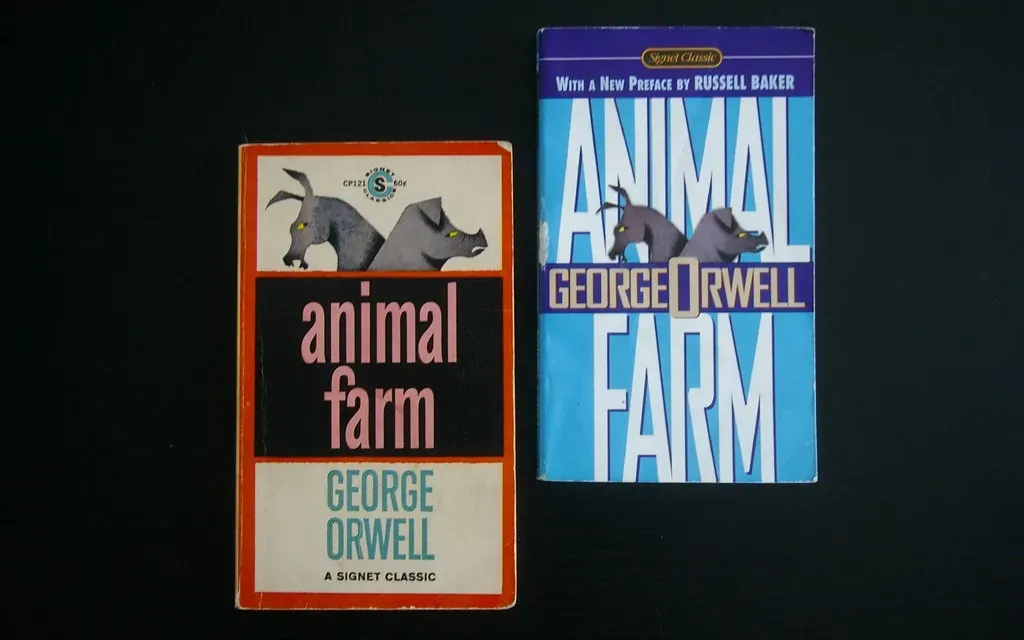
George Orwell wrote his allegory about a farm revolution gone wrong as a direct commentary on the Soviet Union, and the countries that recognized themselves in it responded predictably. The book was immediately banned in the USSR and other communist countries. Even getting it published in Britain was a struggle, since the country was still allied with Stalin’s government during the war it was written in.
The ban outlived the Soviet Union itself in some places. It remains banned in North Korea and Cuba, two of the few remaining one party communist states where a story about a pig dictator hits uncomfortably close to home. China has also banned discussions of Animal Farm and even certain letters from online posts as censors work to protect the ruling party’s grip on power, though physical copies reportedly remain available in some bookstores. The pattern is consistent across decades: governments modeled on the very system Orwell satirized have been the ones most eager to keep readers away from it.
1984 and the danger of naming totalitarian control
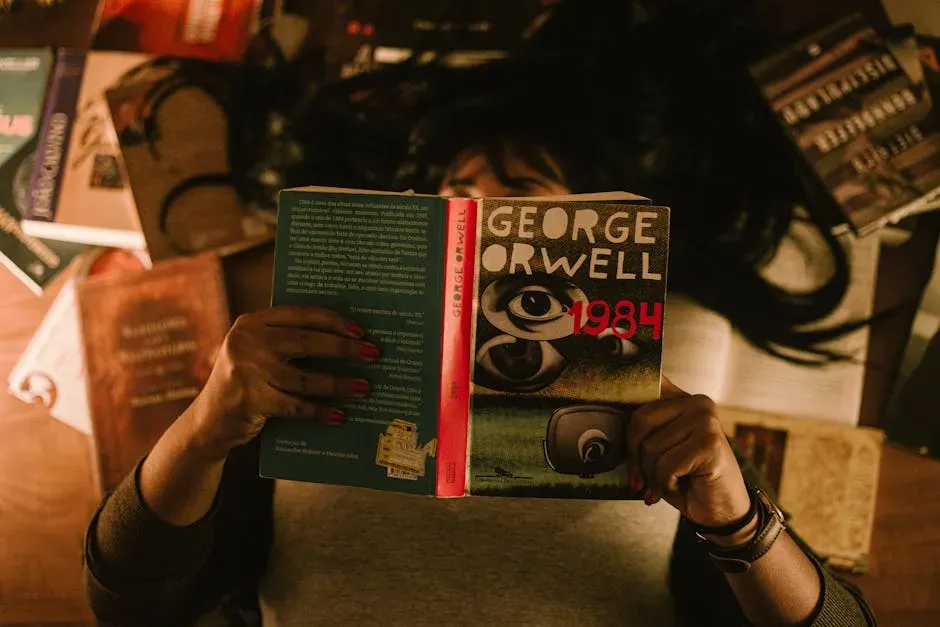
Orwell’s second and even more famous novel faced a similar fate for similar reasons. Its vision of a surveillance state that rewrites history and monitors private thought struck too close to home for governments built on exactly those tools. Soviet authorities and other Eastern Bloc regimes kept the book out of official circulation for decades, treating it as a direct critique of their own systems even though Orwell insisted his warning applied to any authoritarian power, left or right.
What makes the novel’s censorship history interesting is how it has resurfaced periodically outside authoritarian states as well. School districts in parts of the United States have challenged it over sexual content and what some parents considered pro-communist messaging, missing the irony that the book is fundamentally anti-authoritarian. The persistence of these challenges says less about the text itself and more about how uncomfortable people remain with fiction that examines power too closely.
Brave New World and the fear of what pleasure might do to society
Aldous Huxley’s 1932 novel imagined a future where control comes not through fear but through comfort, drugs, and engineered contentment. That premise made it a target in places wary of its frank treatment of sexuality, reproductive engineering, and recreational drug use, themes that felt genuinely provocative for the era in which it was published. Ireland banned the book for years over its handling of sex and drug use, viewing it as morally corrosive material rather than serious social commentary.
Australia also restricted the novel’s import for a period, part of a broader pattern of censorship that targeted literature dealing openly with reproduction and sexuality in the early to mid twentieth century. The irony, of course, is that Huxley’s central warning was about a society that numbs itself into submission through indulgence rather than violence, a theme that later generations came to see as prophetic rather than scandalous. Time eventually turned the book into a staple of school curricula in the very countries that once tried to keep it away from readers.
The Adventures of Huckleberry Finn and the argument over language and race
Mark Twain’s novel has faced censorship almost since the moment it was published in 1884, though the reasons have shifted dramatically over time. The Concord, Massachusetts public library banned it within a year of release, calling it coarse and unsuitable, objecting mainly to its unpolished vernacular voice and Huck’s disrespect for conventional manners. That early ban had almost nothing to do with the concerns that drive challenges to the book today.
Modern objections center on the novel’s frequent use of a racial slur and its portrayal of Jim, concerns that have led some American school districts to remove it from required reading lists or replace it with edited editions. Supporters argue the language reflects the historical reality Twain was depicting and that the novel’s underlying message is anti-racist, while critics argue the repeated slur causes real harm regardless of authorial intent. The debate remains unresolved and, unlike most of the other bans on this list, continues to play out in American classrooms rather than in courtrooms or foreign governments.
Final thoughts on what these bans reveal
Looking across all seven cases, a pattern becomes hard to ignore. Bans rarely stem from confusion about the text itself. They tend to reflect a government, a school board, or a community’s fear of what readers might do with an idea once they’ve encountered it clearly stated on a page.
Nearly every book here eventually outlived the censorship aimed at it, sometimes by decades, sometimes just barely. That outcome doesn’t mean censorship failed harmlessly. It means these particular stories mattered enough to fight over, and the fight itself became part of their history.