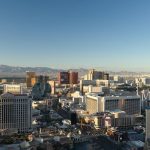
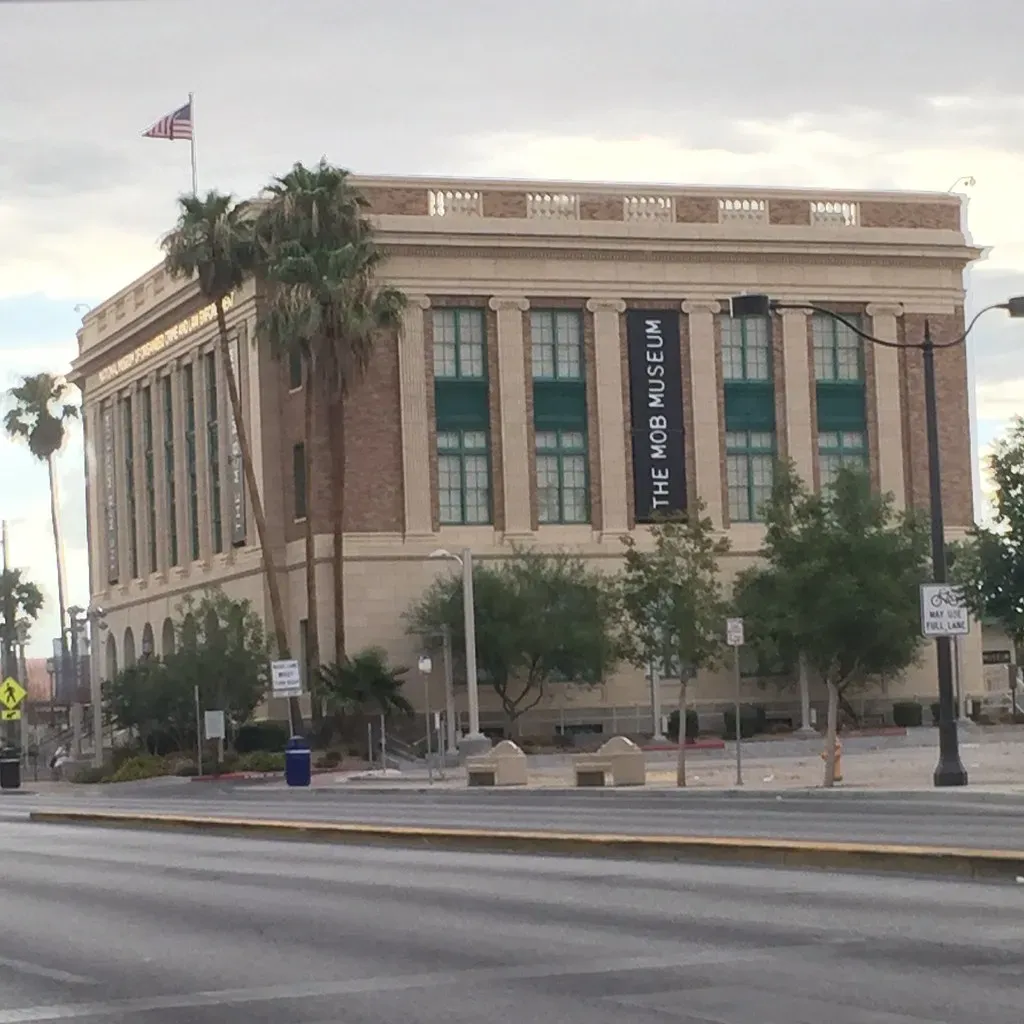
There’s a building in downtown Las Vegas that has outlasted every casino empire, every mob boss, and every federal crackdown the city has ever seen. It isn’t flashy. It doesn’t have a neon sign. It’s a 1933 neoclassical courthouse on Stewart Avenue, and today it holds the most unsettling, fascinating museum in the American West. The Mob Museum, officially the National Museum of Organized Crime and Law Enforcement, opened on February 14, 2012, and is dedicated to the history of organized crime in the United States. It is housed in the former Las Vegas Post Office and Courthouse, built in 1933 and listed on the National Register of Historic Places. What makes it genuinely remarkable is not just the artifacts inside. It’s that the building itself was a crime scene.
A Courthouse Born in the Desert, Built for a Reason
The building that houses the Mob Museum was the first federal structure in Las Vegas, built in 1933. The former U.S. Post Office and Courthouse is one of the city’s oldest buildings and a strong representation of neoclassical architecture, the popular style of its era for federal buildings.
Urbanization took off in 1931 when work started on the Boulder Dam, bringing a huge influx of young male workers, for whom theaters and casinos were built, largely by the Mafia. The federal government needed a visible footprint in a town that was growing fast and staying lawless. The courthouse was that footprint.
The historic courthouse was later acquired from the federal government for just one dollar in 2000, with the stipulation that it be restored for public cultural use. That single dollar purchase set the stage for one of the more ironic cultural institutions in American history.
Bugsy Siegel and the Vision Nobody Else Had
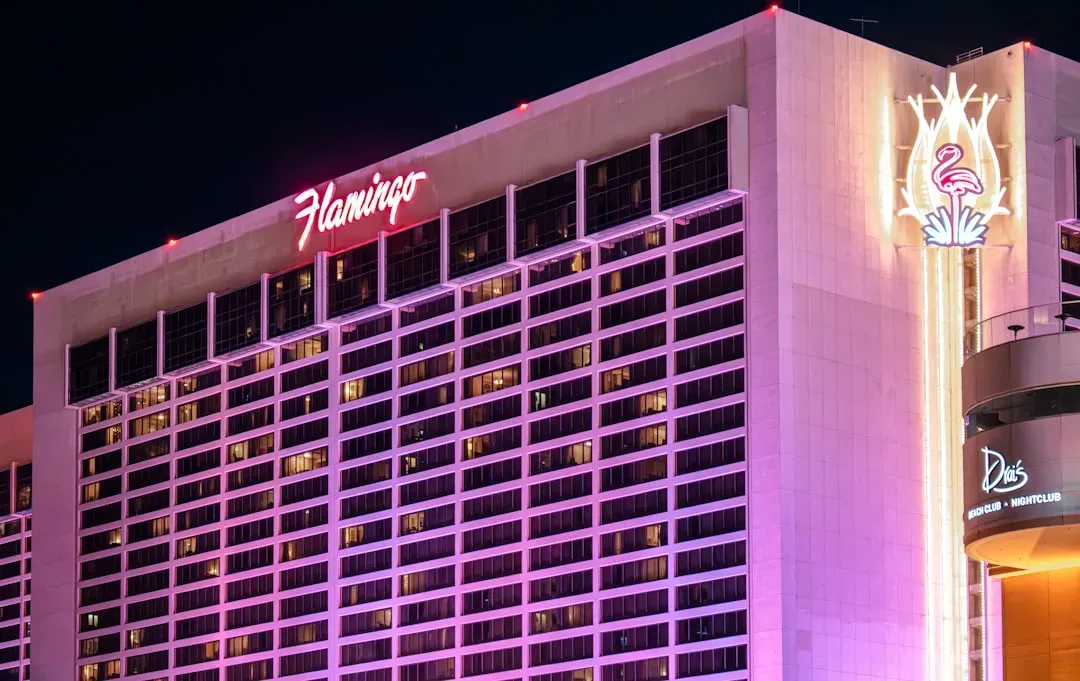
The Flamingo opened in 1946 and was owned and operated by infamous mobster Benjamin “Bugsy” Siegel. Siegel had seen something that legitimate investors had not yet figured out: a luxury resort in the middle of the Nevada desert could make more money than anyone imagined. It was audacious, and it was mob money that made it real.
Siegel poured millions into the Flamingo, much of it Mafia money, and quickly ran over budget. When profits didn’t materialize fast enough and rumors of skimming circulated, Siegel was shot dead in his girlfriend’s Beverly Hills home in 1947.
On the same night Siegel was killed, Lansky’s associates of mob-connected businessmen took control of the Flamingo. From then on, the Flamingo became the model of profitable mob-backed establishments in the city, like the Thunderbird and Desert Inn. Siegel’s death didn’t slow anything down. It just clarified who was in charge.
The Mob’s Financial Grip on the Strip
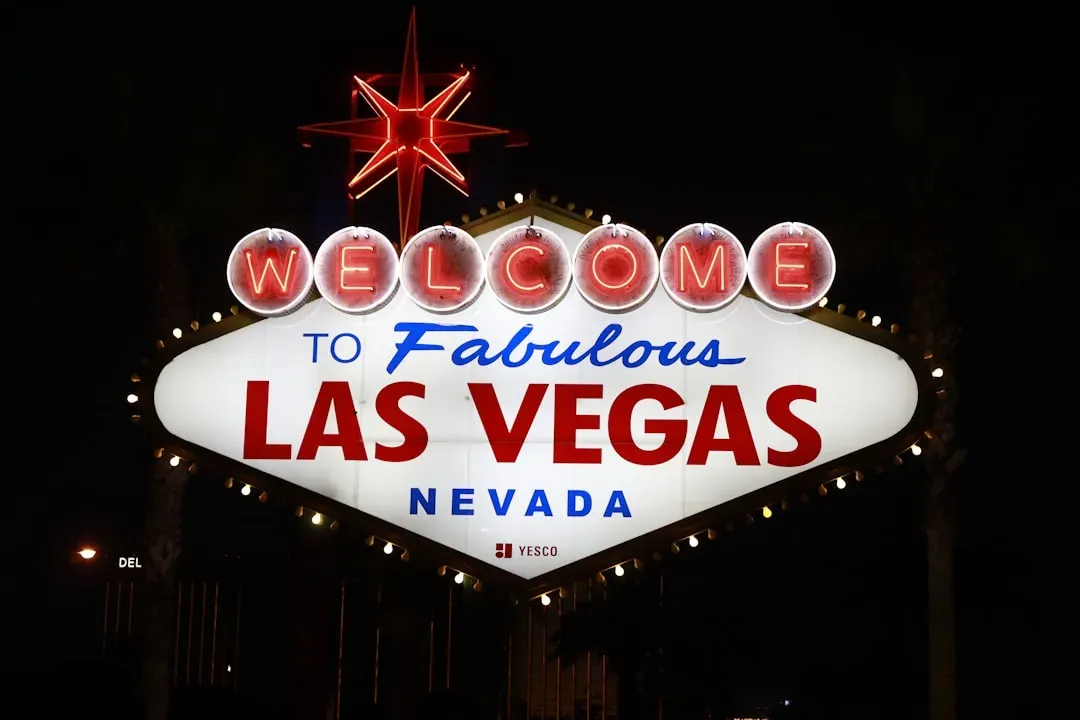
In its heyday from 1950 to the early 1980s, the mob controlled every Las Vegas Strip resort that was worth controlling, stealing untold millions of dollars in tax revenues. The scale of this operation was staggering, and it involved not just one family but an entire network of American crime syndicates.
Starting in the early 1940s and continuing all the way to the mid-1980s, gangsters owned parts of or entire casinos, with legitimate profits and skimmed cash in brown-paper bags making their way to mob bosses in Chicago, Kansas City, Milwaukee, Detroit, Buffalo, Cleveland, New York, Miami, New Orleans, and elsewhere. In those days, an organized-crime family could put together $15 million and open a Strip casino like the Tropicana in 1957, or borrow $50 million from the Teamsters Pension Fund to build a megaresort like Caesars Palace in 1966.
Meyer Lansky was known as “the mob’s financial wizard” for his investments in some of the most famous casinos on the Vegas Strip. His mathematical prowess helped legitimize gambling in Vegas, while he allegedly skimmed profits, secreted funds in Swiss banks, laundered money, and evaded taxes.
The Kefauver Hearings: When Congress Walked Into the Room
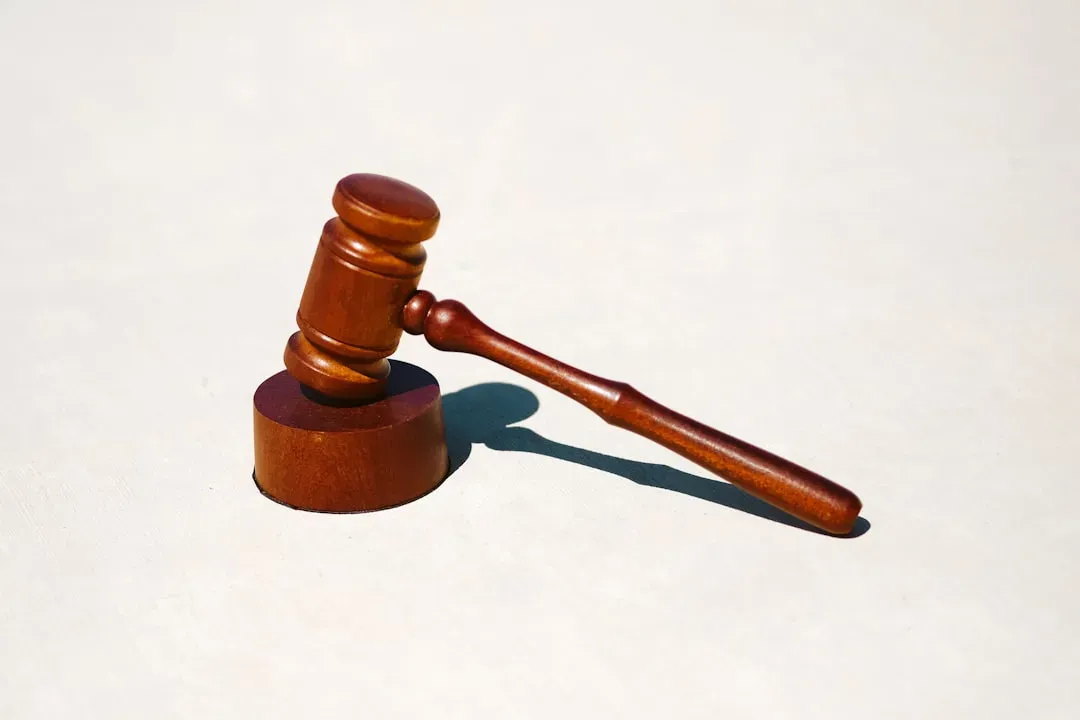
In November 1950, the U.S. Senate’s Special Committee to Investigate Organized Crime in Interstate Commerce held a hearing in the very courtroom that is now the centerpiece of the Mob Museum. It was an extraordinary confrontation between federal authority and the desert city’s most powerful men.
Well-known Las Vegas residents who testified included Moe Sedway, manager of the Flamingo Hotel; Wilbur Clark, front man for the Desert Inn; and Clifford Jones, Nevada’s then lieutenant governor. The presence of the lieutenant governor in that room tells you something about how far organized crime’s influence actually reached.
Named after committee chairman Senator Estes Kefauver of Tennessee, the Kefauver hearings were televised nationwide and brought organized crime into the living rooms of roughly 30 million Americans for the first time. Held in 14 U.S. cities from 1950 to 1951, the hearings were pivotal in the national fight against organized crime, as well as events that directly influenced the development of Las Vegas.
The “Black Book” and the State’s Slow Reckoning
By 1960, with the mob’s rise on the Strip, state gaming regulators created the notorious List of Excluded Persons, more commonly known as the Black Book of “undesirables” banned from casinos, to keep a closer eye on the mob. Getting placed in this book was the government’s most visible act of defiance against organized crime in Las Vegas.
In the first wave of inductees, regulators placed the names of eleven underworld figures, including then-Chicago Mafia boss Sam Giancana and Kansas City crime lords Nick and Carl Civella, into the book. The list was more symbolic than effective at first, but it established a legal and regulatory precedent that would matter enormously later.
Chicago mobster “Johnny Marshall,” whose real name was Marshall Caifano, challenged his Black Book ban in 1963, claiming it violated his constitutional rights, but he lost the case. The trial was held in the very same federal courthouse that today houses the Mob Museum. The building keeps collecting history without even trying.
Operation Strawman: The Casino Skim in Detail
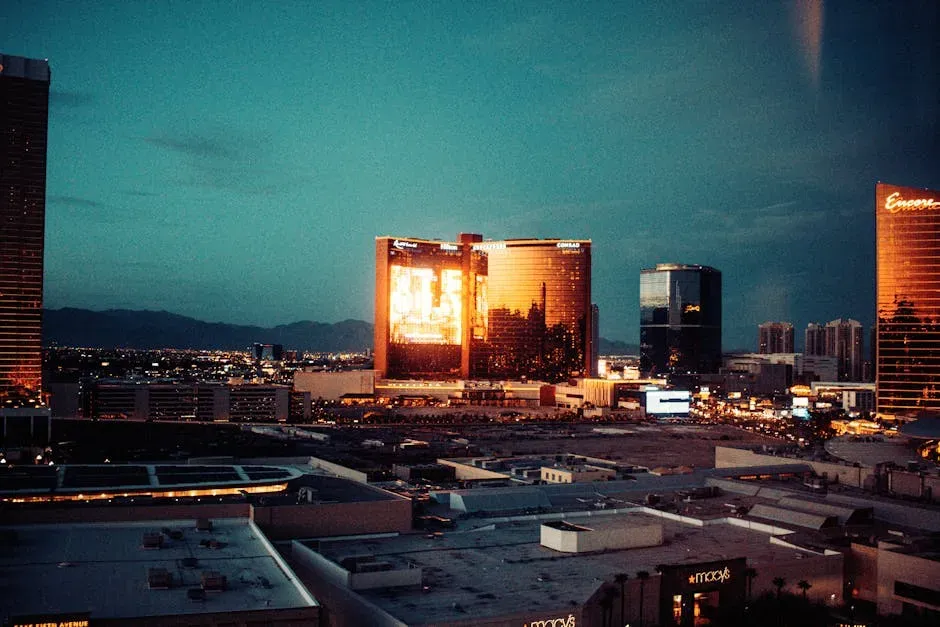
Four Midwest organized-crime families were involved in the hidden ownership and skimming of the Argent-controlled casinos and the Tropicana: Chicago, Kansas City, Milwaukee, and Cleveland. The operation was coordinated, quiet, and staggeringly profitable for years before federal investigators caught up with it.
One of the most notorious examples of the skim was the Stardust Casino, which was run by Frank “Lefty” Rosenthal on behalf of the Chicago Outfit. Rosenthal, a gambling mastermind, never held a gaming license. Instead, he was named “entertainment director” while effectively controlling all operations.
The two Strawman trials effectively ended the mob’s involvement in Las Vegas casinos. The FBI and Justice Department investigation of skimming in Las Vegas was known as Operation Strawman, led by Strike Force prosecutor David Helfrey, resulting in two separate trials known as Strawman I and Strawman II. The saga ended in 1986 with convictions and federal prison terms for more than a dozen top U.S. mobsters, including Milwaukee boss Frank Balistrieri, Chicago Outfit leaders Joseph Aiuppa and Jackie Cerone, Carl DeLuna of Kansas City, and Milton Rockman of Cleveland.
Howard Hughes, Corporate America, and the Handoff
Toward the late 1960s, billionaire Howard Hughes went on a buying spree of several mob-connected hotels and casinos on the Strip, amounting to over $300 million. This ushered in the era of corporate conglomerates and limited mob interests.
In 1967, Nevada passed the Corporate Gaming Act, which gave rise to corporate ownership of casinos by removing financial background checks previously required of all shareholders in gaming license applications. The new law attracted corporate investors to Las Vegas, with profound effect. The city became a commercialized, family-oriented place, with large corporations acquiring hotels, casinos, and nightclubs in place of Mafia bosses.
By the late 1980s, the traditional mob had been rooted out of the Las Vegas casino industry. Entrepreneurs and corporations took center stage as the megaresort era began with the openings of The Mirage in 1989, the Excalibur in 1990, and the MGM Grand in 1993. The skyline changed. The ownership changed. The stories, however, stayed.
The Museum’s Origins: A Mayor Who Defended Mobsters
Then-Mayor Oscar Goodman, himself a former mob defense attorney, had the idea for a mob museum in 2002. The idea faced early opposition from Italian-American groups, while being supported by the FBI, including former head agent in Las Vegas Ellen Knowlton, who joined as president of the museum’s board. The fact that the museum’s founding father had personally defended the very criminals it now displays adds a layer of Las Vegas logic that is hard to invent.
The project budget was estimated at $50 million, including $26 million for restoring the building. Funding included federal, state, and local grants.
In 2017, the Mob Museum received accreditation from the American Alliance of Museums, the highest national recognition afforded U.S. museums. Of the nation’s estimated 33,000 museums, only about 1,000 are currently accredited. That puts the Mob Museum in very select company.
Four Million Visitors and a Growing Collection
The Mob Museum welcomed its four millionth visitor on April 17, 2024, marking a significant milestone in its history. For a museum that once struggled to win public approval, that number is a statement in itself.
A Colt .45-caliber pistol that once belonged to mob boss Al Capone was put on public display for the first time at the Mob Museum in Las Vegas starting January 15, 2025. Recent additions also include exhibits spotlighting Prohibition’s St. Valentine’s Day Massacre with the addition of the Thompson submachine gun used in the crime, as well as a special collection of thematic works by late artist LeRoy Neiman.
In August 2025, the Mob Museum was named one of the “26 Best Museums in the U.S.” by U.S. News and World Report, and was also recognized as a Tripadvisor 2025 “Travelers’ Choice” Award recipient. It is the only museum in Nevada on the U.S. News list, joining the ranks of institutions like the Rock and Roll Hall of Fame, the Metropolitan Museum of Art, and the National September 11 Memorial and Museum.
Las Vegas Today: The Mob’s Shadow Is Long
A half-dozen major U.S. corporations now own most of the casinos in Las Vegas, with endless local, state, and federal administrative and legal hoops to jump through to do so. The old model of brown paper bags and back rooms is gone.
While the Italian mob has mostly moved on, other loosely organized criminal elements have filled the void on the streets and are now active in southern Nevada, including groups involved in street crimes, extortion, and financial fraud. The specific names and ethnic affiliations have changed, but the underlying conditions that once made Las Vegas a haven for organized crime have never fully disappeared.
In November 2025, the Mob Museum commemorated the 75th anniversary of the Kefauver Committee hearing, held in the very same courtroom where senators once grilled casino owners and crime figures in 1950. Seventy-five years later, Las Vegas still marks the occasion like a holiday. Some cities remember their past. Las Vegas built a museum around it and charges admission.
Conclusion: A City That Wears Its History on Its Sleeve
The Mob Museum’s exhibits examine the mob’s origins and persistence in modern times, its influence on the city and economy of Las Vegas, and the overall portrayal of organized crime in pop culture. That combination of history, culture, and commerce is very Las Vegas.
The museum doesn’t sanitize anything. Exhibits highlight important law enforcement victories while exploring the violence, corruption, conspiracy, and murder that make up the mob’s embattled timeline. It holds both sides of the story without flinching.
What the Mob Museum really tells you is that Las Vegas didn’t happen in spite of organized crime. It happened because of it. The neon, the ambition, the audacity of building a billion-dollar entertainment empire in the Mojave Desert all trace back to men who operated outside the law. That story doesn’t disappear just because the corporate logos changed. It gets a museum, a courtroom, and four million visitors who keep coming back to understand it.