Some scenes stick with us long after the credits roll, not just because of what happens on screen but because of what almost didn’t happen behind the camera. A jammed prop, a broken machine, an actor who refused to follow the script exactly as written. These are the moments that turned near disasters into cinema history, and most audiences never knew how close things came to falling apart.
Jaws and the shark that refused to work

Steven Spielberg built his 1975 thriller around a mechanical predator the crew nicknamed Bruce, after his own attorney. The problem was that the animatronic sharks were duds when submerged off Martha’s Vineyard, sinking straight to the bottom because saltwater corroded the mechanisms that had only been tested in fresh water. Spielberg grew so frustrated that he started calling the malfunctioning prop “the great white turd,” a nickname that stuck with the crew for the rest of the shoot.
The breakdowns forced a complete rethink of the film’s visual language. The frustrated crew nicknamed the sharks “Flaws,” and the script was rewritten so Bruce’s screen time was cut down, pushing Spielberg to focus more on the terrified reactions of the potential victims than on the shark itself. That workaround, born entirely out of mechanical failure, is now credited as the reason the film feels so unbearably tense; the shark does not even appear clearly until well over an hour into the movie.
Psycho’s shower scene and the editing trick nobody noticed
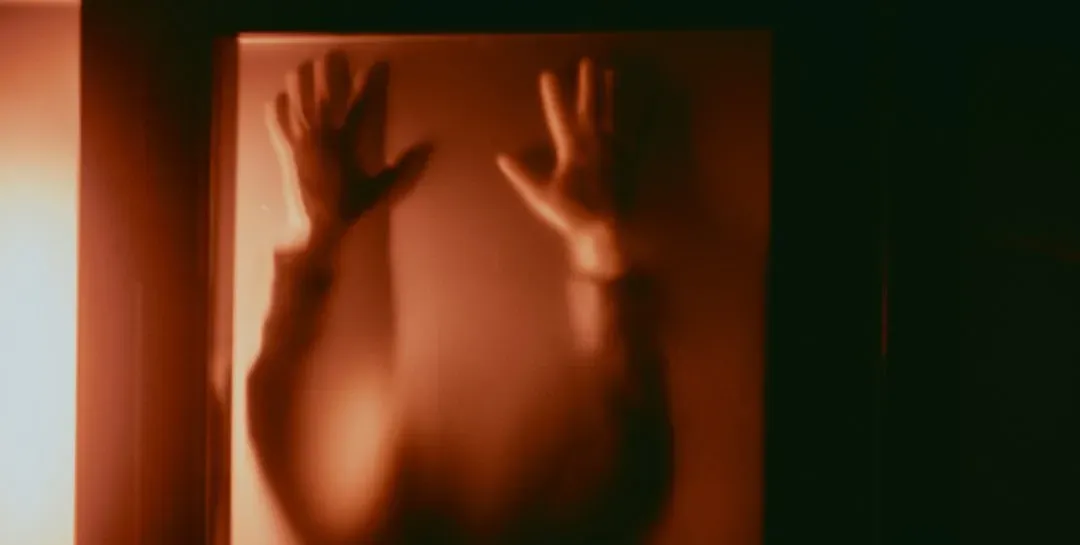
Alfred Hitchcock spent an enormous amount of care on a sequence that lasts less than a minute on screen. The shower scene lasts only 45 seconds in the final cut, yet it reportedly took seven days of shooting, with Hitchcock and his team filming 70 different camera angles before he felt satisfied. Every shot was planned with surgical precision, based on storyboards drawn by the designer Saul Bass.
One especially strange detail involves the film’s editor rather than its director. One of the editors, John Venzon, described the moment when George Tomasini removed several frames to create the impression Marion was being slammed against the wall. Hitchcock also avoided using real blood, relying instead on chocolate syrup because it read more convincingly on black and white film, a choice he made partly to soften the shock of what was, for 1960 audiences, unprecedented violence.
The Shining’s door and an actor who worked too fast

Stanley Kubrick wanted the axe attack on the bathroom door to feel completely real, so the prop department initially built a thin breakaway door meant to shatter easily. It did not survive contact with Jack Nicholson. Nicholson’s technique with the axe was so good, thanks to his earlier training as a volunteer fire marshal, that the door shattered into pieces almost instantly, forcing the crew to build a much stronger door that could withstand his swing.
The scene that resulted took far longer than anyone expected, and the most famous line in it was never written down. Jack breaking through the bathroom door with an axe required numerous takes over three days, and during that process Nicholson occasionally varied his approach, resulting in the improvised “Here’s Johnny!” line. Kubrick, who had been living in England and had never watched American late night television, apparently kept the line without fully understanding the joke behind it.
Titanic’s door raft and a debate that outlived the film

James Cameron’s ending, with Rose surviving on a floating piece of wreckage while Jack slips beneath the freezing water, has generated one of the longest running arguments in film fandom. Decades after release, fans had debated for over two decades whether Jack could have survived by floating on the makeshift door raft alongside Rose, prompting Cameron to eventually settle the matter with an actual experiment.
The object itself is not even the door most people assume it is. The panel Rose clings to is not, in fact, a door, but is instead modeled after an actual artifact recovered from the wreck, most likely a piece of wooden paneling from one of the ship’s first class lounges. Cameron later staged a filmed test with stunt performers and a hypothermia expert, concluding that the scene’s outcome was an artistic decision rather than a scientific inevitability, and that under the real physics of 1912, Jack’s death was essentially unavoidable.
Jurassic Park’s T-Rex breakout and the blend nobody could see
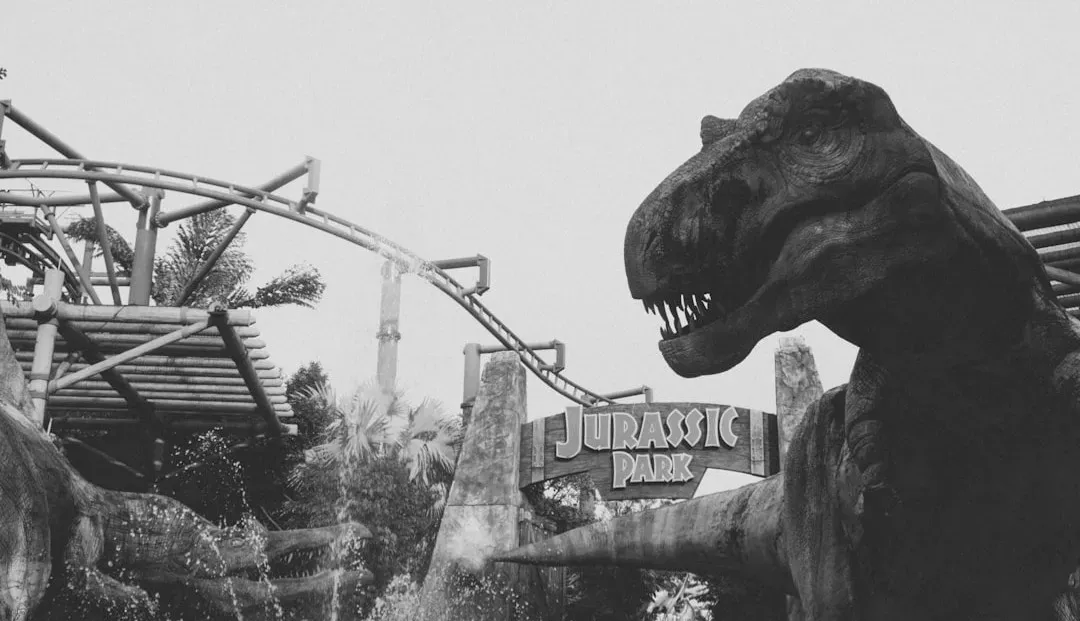
When the Tyrannosaurus rex first breaks through the fence during the nighttime downpour, Spielberg mixed practical animatronics built by Stan Winston’s team with early computer generated imagery from Industrial Light and Magic. The transitions between the full size hydraulic dinosaur head and the digital creature were planned so carefully that most viewers still cannot tell where one ends and the other begins. That blend became a turning point for the entire industry, proving that computer animation could share a frame with physical effects without breaking the illusion.
Weather played an unplanned role too, since much of the sequence relies on rain and darkness that partly conceal the mechanical seams in the puppet’s movement. The approach was less about hiding limitations and more about using atmosphere to heighten dread, a lesson that echoes the same instinct Spielberg had used years earlier when Jaws forced him to obscure the shark. The scene remains a textbook example of practical and digital effects working together rather than competing.
Alien’s chestburster and reactions nobody had to fake

Ridley Scott famously kept most of the cast in the dark about exactly how graphic the chestburster effect would be during the dinner table scene. The blood, the mechanical creature bursting through a prosthetic chest piece, and the sudden spray caught several actors visibly off guard, and their shocked reactions made it into the final cut. That authenticity is often cited as one of the reasons the scene has retained its power for nearly five decades, since genuine surprise is nearly impossible to script convincingly.
The production also relied on practical prosthetics rather than any kind of animation, which was standard for the era but still demanded painstaking coordination between effects technicians hidden beneath the table. Every pump of fake blood had to be timed precisely with the puppet’s emergence. The result is a scene built almost entirely from mechanical ingenuity rather than digital trickery, which is part of why it still unsettles new viewers today.
The Exorcist’s possession scenes and the toll they took
William Friedkin pushed for extreme realism on the set of his 1973 horror film, including a rig that allowed Linda Blair’s character to appear to levitate and contort in ways that required a harness hidden beneath the bedding. The physical demands on Blair, who was a teenager at the time, were significant enough that some of the more intense stunt work was handled by a body double for safety reasons. Friedkin was known for using unconventional methods on set, including sudden loud noises, to provoke authentic startled reactions from his cast.
Partner offer
The film’s frigid bedroom scenes required refrigerated sets cold enough that the actors’ visible breath appears on camera, adding to the unsettling atmosphere without any digital assistance. Cast and crew reportedly worked in near freezing temperatures for extended stretches to capture those shots. The commitment to physical realism over shortcuts is part of why the film is still regarded as one of the most effective horror productions ever made.
Rocky’s training montage and a city that became a character
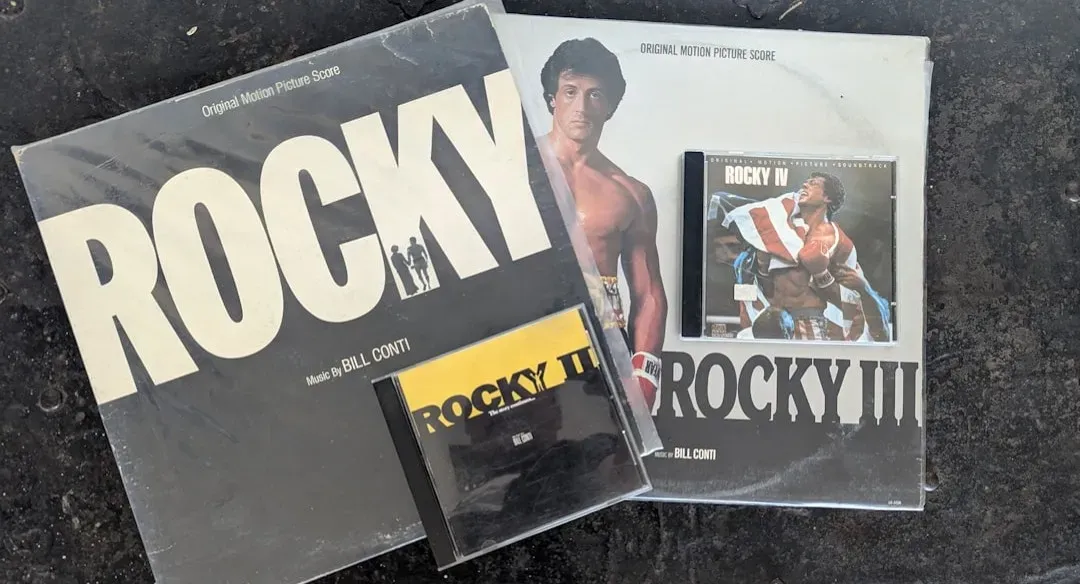
Sylvester Stallone wrote the original screenplay and insisted on shooting much of the training sequence on location in Philadelphia rather than on a studio backlot. The run up the steps of the Philadelphia Museum of Art was filmed on a modest budget, with Stallone performing the physical work himself rather than relying on a stunt double for the sequence. The scene’s simplicity, built around a jogging figure and a rising orchestral score, became one of the most imitated sequences in sports film history.
The steps themselves later became an unofficial tourist landmark, with a bronze statue of the character eventually installed nearby to mark the film’s cultural impact. What began as a low budget solution for showing a character’s transformation without dialogue turned into a template that countless sports films have borrowed from since. The scene’s power comes less from spectacle and more from restraint, letting motion and music carry the emotional weight.
The Dark Knight’s truck flip and a stunt done for real
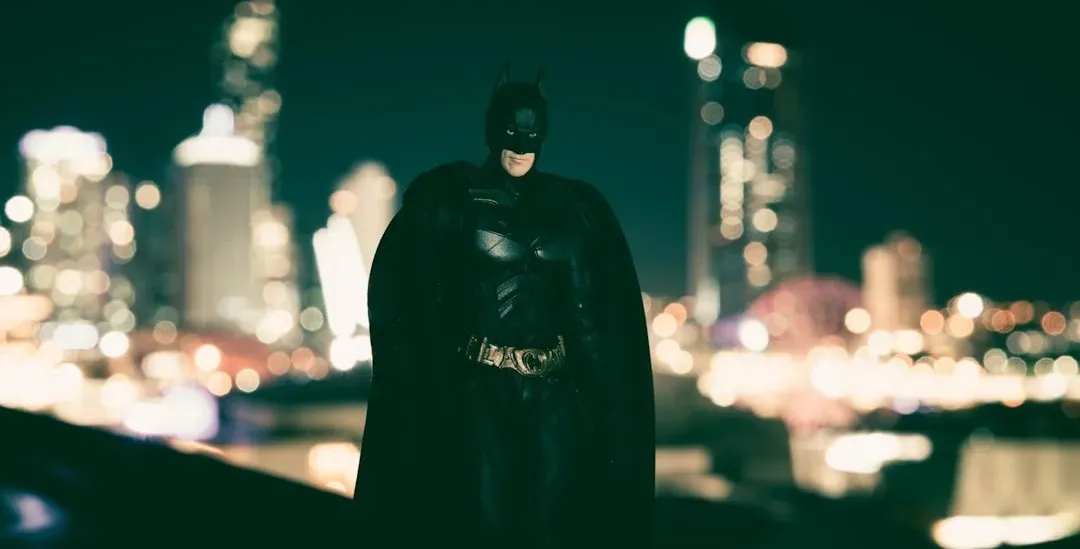
Christopher Nolan has long favored practical effects over digital ones whenever physically possible, and the semi truck flip in downtown Chicago is one of the clearest examples. The production built a mechanism that could physically flip the eighteen wheeler in a single controlled motion on a closed city street, rather than relying on computer generated destruction. Stunt coordinators rehearsed the flip extensively before filming it for real cameras positioned at multiple angles.
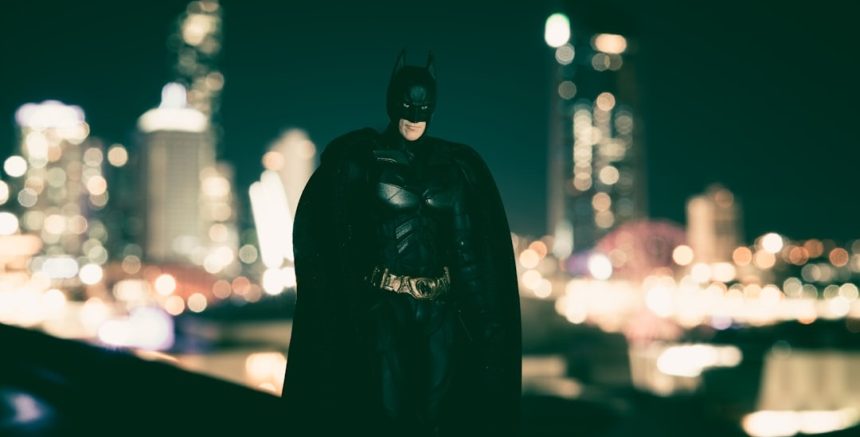
The decision to avoid digital effects for such a dangerous stunt reflected Nolan’s broader approach to the Batman trilogy, which leaned heavily on tangible sets, real locations, and mechanical rigs. That commitment to physical filmmaking is part of why the sequence still holds up visually today, even against modern films saturated with computer generated action. Audiences watching the scene are, in a very literal sense, watching something that actually happened on a real street.
The Godfather’s horse head and a prop that was not a prop

Francis Ford Coppola’s 1972 crime drama contains a scene where a movie producer wakes up next to a severed horse head in his bed, and the unsettling realism of the moment comes from an uncomfortable production choice. The head used on set reportedly came from an animal that had already been slated for slaughter at a rendering facility, rather than being manufactured as a prosthetic effect. That decision has been discussed and debated by film historians for decades as an example of how far some productions of that era were willing to go for authenticity.
The actor’s shocked reaction in the scene has often been described as genuine, heightened by the fact that he was not fully prepared for how real the prop would look and feel once cameras started rolling. The scene’s blunt, visceral shock value helped establish the film’s tone early on, signaling to audiences that violence in this world would be treated with unflinching directness. It remains one of the most referenced and parodied images in American film.
Closing thought
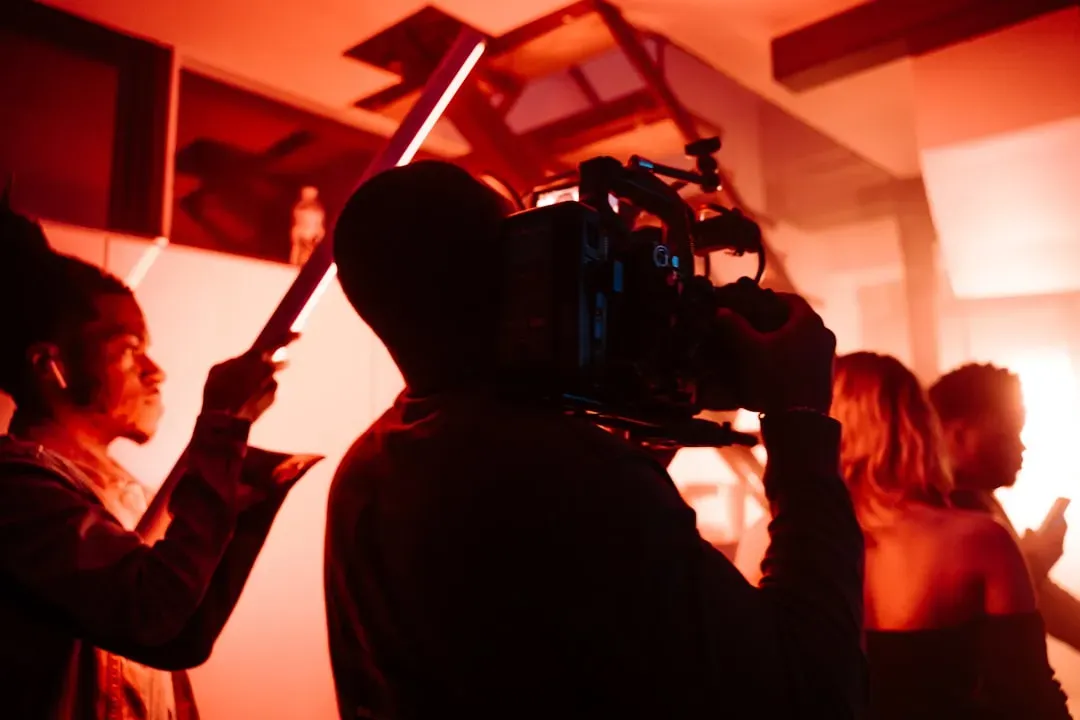
What connects these ten scenes is not perfect planning but resourcefulness under pressure. A broken shark, a shattered door, a chest rig timed to the second, a truck flipped for real on a closed street. Each one shows that some of the most enduring images in film history were shaped as much by problems on set as by the vision behind the camera, and that limitation, more often than not, is where memorable filmmaking actually begins.
Partner offer
Planning a trip to Vegas?
Compare hotel rates and show tickets on VEGAS.com.