Proverbs feel timeless. We repeat them casually, drop them into arguments, and paste them on motivational posters without much thought about where they came from or what they once demanded of the people who first said them. Most of us assume they’ve always carried the gentle, encouraging meanings we assign them today.
The truth is considerably more uncomfortable. These expressions reflect the cultural and historical contexts of the societies that produced them, and while proverbs may seem timeless, they frequently originate from ancient traditions rooted in survival, law, and violence. Strip away the centuries of retelling, and what’s left is often something far more raw than the polished wisdom we think we know.
1. “Spare the Rod, Spoil the Child” Was Never About Gentle Parenting

Few sayings have been softened quite so dramatically. Today the phrase is sometimes used as a loose metaphor for consistent parenting or healthy boundaries. The saying actually originates from Samuel Butler’s 1662 poem “Hudibras,” not from Scripture. What makes it stranger still is the context: it refers to a love affair wherein the person speaking is not discussing disciplining a child at all, but rather asking for his lover to spank him as part of their amorous escapades.
It originally referred to corporal punishment, and is still quoted, often in shortened form, though today it does not necessarily mean physical discipline. The biblical verse it loosely echoes, Proverbs 13:24, actually reads quite differently. The idea of the “rod” originates from shepherding practices in ancient times, where shepherds used rods not to harm their sheep but to guide them and protect them from danger, with the rod symbolizing guidance, correction, and care, not punishment for its own sake.
2. “An Eye for an Eye” Was a Restraint, Not a Call for Revenge

Modern readers often hear this proverb as a justification for retaliation, something close to vengeance. Its original function was almost the opposite. Once, this was the backbone of ancient legal systems where justice meant exact retribution. Hammurabi’s Code and biblical law both used versions of this principle to keep order and prevent endless cycles of revenge. The key word there is “prevent.” The principle was designed to cap punishment, not unleash it.
Before such laws existed, a minor offense could legally justify a devastating response with no upper limit. The “eye for an eye” formula was a ceiling, not a floor. Today it is more likely to be used symbolically, as a call for fairness or proportional consequences rather than literal vengeance, with modern justice systems, especially in the West, now favoring rehabilitation and restitution over strict retribution.
3. “Blood Is Thicker Than Water” Originally Said the Opposite

This one might be the single most reversed proverb in the English language. People invoke it constantly to justify prioritizing family over friends, loyalty to kin above all else. Many people might not know that “blood is thicker than water” isn’t the full phrase. It is a shortened version of the original saying, “Blood of the covenant is thicker than water of the womb,” and over time, the words “covenant” and “womb” were dropped, which gave rise to an alternative meaning.
Together, the original phrase means that the bonds you have chosen are more significant than those formed by familial or blood relations, and the original saying was also used to refer to soldiers who shed blood together in battle and so formed a blood covenant. After the phrase was eventually shortened to “blood is thicker than water,” the meaning changed with it, almost reversing completely, to imply that nothing is more important than those you share blood with. It’s a rare case where truncation didn’t just simplify a proverb. It flipped its meaning entirely.
4. “Pride Goes Before a Fall” Was a Warning About Destruction, Not Humility

We use this saying today as a gentle nudge toward modesty, something to tell an overconfident friend before a job interview. The original text it comes from had far grimmer stakes in mind. This old saying comes from the Bible, from Proverbs 16:18: “Pride goes before destruction and a haughty spirit before a fall.” Notice that the word “destruction” was quietly swapped out for the softer word “fall” somewhere along the way.
The famous saying “Pride goes before a fall” has biblical roots in Proverbs 16:18, teaching humility long before motivational quotes filled social media. In its original context, destruction wasn’t a metaphor for disappointment or professional setback. It referred to collapse, ruin, the kind of ending that cannot be undone. The modern version carries a warning; the ancient version carried a death sentence.
5. “A Rolling Stone Gathers No Moss” Condemned Wanderers, Not Celebrated Them

Today this proverb reads as something almost admirable, a celebration of restlessness, independence, and freedom from the weight of accumulation. Bands have named themselves after it. Entire philosophies of travel have borrowed its spirit. We commonly use it as an expression for “changing things up is good” or “people who keep things moving are independent, free-spirited, ambitious, and creative.”
The original verdict on the rolling stone was far less flattering. As the OED defines it, the proverb, found in its current form as early as 1542 and with earlier versions reaching back into the 14th century, originally conveyed that “a person who does not settle in one place will not accumulate wealth, status, friends.” Here, a rolling stone connotes an aimless, perhaps even irresponsible wanderer; moss, the fruits of one’s labor. The wanderer wasn’t a romantic figure. He was a cautionary tale.
6. “The Proof Is in the Pudding” Once Required You to Actually Taste the Thing

People use this phrase today to mean something like “evidence will eventually emerge” or “results speak for themselves,” and they say it without any thought about what pudding has to do with anything. The pudding in the original expression was more like a sausage, historically the entrails of a pig or a sheep stuffed with some oats, a sense that lives on in black pudding, also known as blood sausage. Suddenly the proverb becomes much more visceral.
The full original phrase was “the proof of the pudding is in the eating,” meaning you cannot know whether something has been done correctly until you actually test it yourself. As eminent etymologist Michael Quinion put it, the proverb literally says that you won’t know whether food has been cooked properly until you try it, meaning don’t assume that something is in order, but judge the matter by testing it. Over the centuries, “in the eating” fell from the original phrase as speakers grew lazy. What’s left is a fragment that gestures vaguely at the original without delivering its actual point.
7. “The Devil Finds Work for Idle Hands” Was a Genuine Theological Threat

Today this proverb functions mostly as a lighthearted prod toward productivity. Parents say it to teenagers sleeping past noon. Managers quote it ironically in Monday morning emails. Its original context carried far sharper teeth. Ancient societies feared idleness as a breeding ground for mischief, sin, or even crime, and this proverb was often quoted by religious leaders to justify constant labor and vigilance.
Idleness in the medieval Christian world wasn’t simply laziness. It was considered a portal through which genuine spiritual corruption could enter a person’s soul. The devil referenced here wasn’t a metaphor used to encourage a morning jog. In today’s world, it’s more likely to be a gentle nudge toward productivity, while modern research from mental health experts now emphasizes the need for rest and the dangers of burnout, suggesting that constant busyness isn’t always best. The warning has softened so much it now runs counter to what science actually recommends.
8. “He Who Hesitates Is Lost” Was Once a Sentence, Not Advice
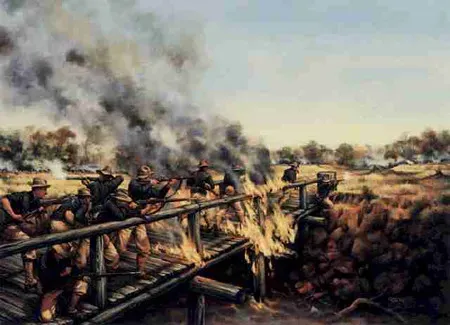
In 2026 we often read this saying as a call to be more decisive, to push past analysis paralysis and act. It’s printed on corporate motivational materials and quoted in business books about leadership. Its older meaning was considerably more brutal. This saying was once a sharp warning: act now, or suffer the consequences. In ancient times, hesitation could mean missing out on survival, victory, or opportunity, especially in war or politics.
There was no nuance in the original framing, no suggestion to weigh options carefully before deciding. Hesitation meant death, capture, or defeat, and the proverb simply described what happened to those who paused. The phrase still encourages decisiveness, but now there’s a caveat of “think before you act,” with modern decision science highlighting the value of pausing to weigh risks. The proverb’s softened edge fits a world where rash actions can backfire as often as hesitation.
9. “The Love of Money Is the Root of All Evil” Was Deliberately Clipped

This one has become so embedded in culture that most people don’t even realize they’re quoting a truncated version. “Money is the root of all evil” is how many people say it, removing a single word that changes the entire moral argument. Popular usage sometimes creates new proverbs from old ones; the biblical proverb “The love of money is the root of all evil” has become “Money is the root of all evil.” That dropped word, love, is not a minor detail.
The original text, from 1 Timothy 6:10, makes a specific psychological argument: it’s the attachment to money, the craving for it, that corrupts, not money itself. Removing “the love of” transforms a careful observation about human desire into a blunt condemnation of wealth and commerce as inherently sinful. Proverbs come from many sources, most of them anonymous and all of them difficult to trace, and their first appearance in literary form is often an adaptation of an oral saying. Each retelling, each small edit, moves the meaning one step further from its origin, until what remains is an echo of something that once said something much more precise.