Walk the corridor of any mid-tier Las Vegas shopping center today, and something feels different. Storefronts that once housed familiar brands now sit dark or hollow. The neon still blazes on the Strip, but behind the glitter, a quieter story is playing out – one about which kinds of retail still make sense in a city built entirely around spectacle, and which ones simply don’t. This isn’t a crisis unique to Las Vegas. It’s a national shift. The difference here is that Las Vegas, more than almost any other American city, amplifies every retail trend to the extreme – and the city’s retail landscape is reshaping itself faster, and more dramatically, than most people realize.
A Wave of Big-Name Departures
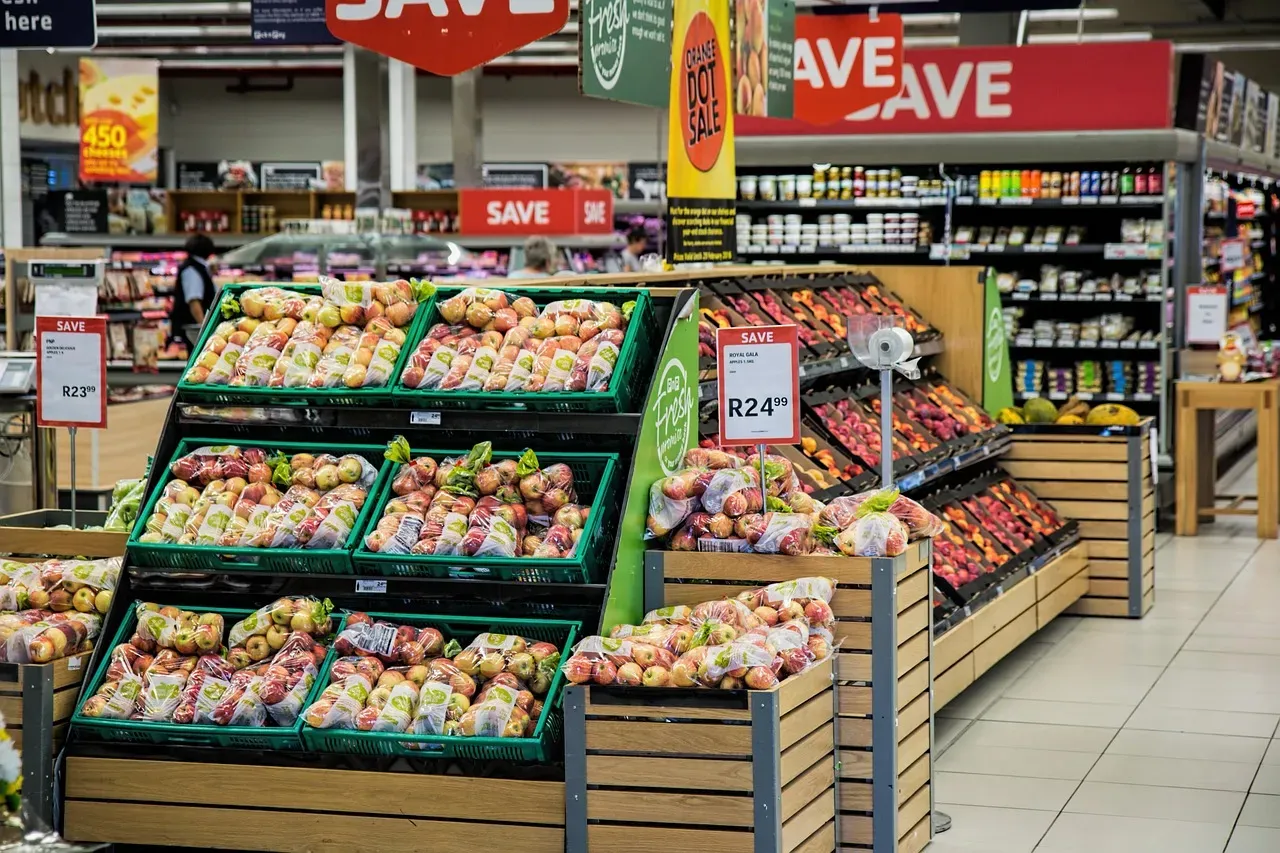
The closures have been stacking up in ways that are difficult to ignore. After filing for bankruptcy, Big Lots closed 344 stores nationally and seven in the Las Vegas Valley, entering into a sale agreement with private equity firm Nexus Capital Management through a voluntary Chapter 11 filing. That was just one chain in one season.
Three Conn’s HomePlus stores across the Las Vegas Valley also shuttered after the 134-year-old home goods and electronics retailer filed for Chapter 11 bankruptcy protection due to declining sales. Joann Fabric & Craft filed for bankruptcy initially in March 2024, claiming over one billion dollars in total debt, and then filed again in January 2025, which ultimately led to the closure of all storefronts after no buyer could be found.
Saks Fifth Avenue also announced it would be closing its Las Vegas location at the Fashion Show Mall, as part of a wave of 12 additional closures. The store had originally opened there in 1981, the same year the mall debuted. These names represent decades of retail history in the city, and they left within roughly the same two-year window.
The National Retail Apocalypse Hits Home
Consumers likely noticed more empty storefronts in malls and shopping centers in 2025, as retail chains shuttered thousands of locations in restructuring efforts. According to Coresight Research data, roughly 8,100 chain store closings happened in 2025, a twelve percent increase compared to 2024. Las Vegas, as a major metro market, absorbed a proportionate share of that pain.
Retail chains consistently cite the same causes: fierce competition, evolving consumer spending habits away from brick-and-mortar shopping, and rising labor and product costs driven by inflation and increased tariffs. For a city already stretched thin by pandemic recovery and shifting tourism patterns, these headwinds hit harder than elsewhere.
Big Lots specifically stated that high inflation and climbing interest rates negatively impacted both the company and the shoppers who relied on the discount store to manage rising costs. That dynamic repeated across nearly every closure announcement during this period – a customer base under financial pressure, and a retailer unable to absorb its own cost increases.
Tourism Decline Is Compounding the Problem
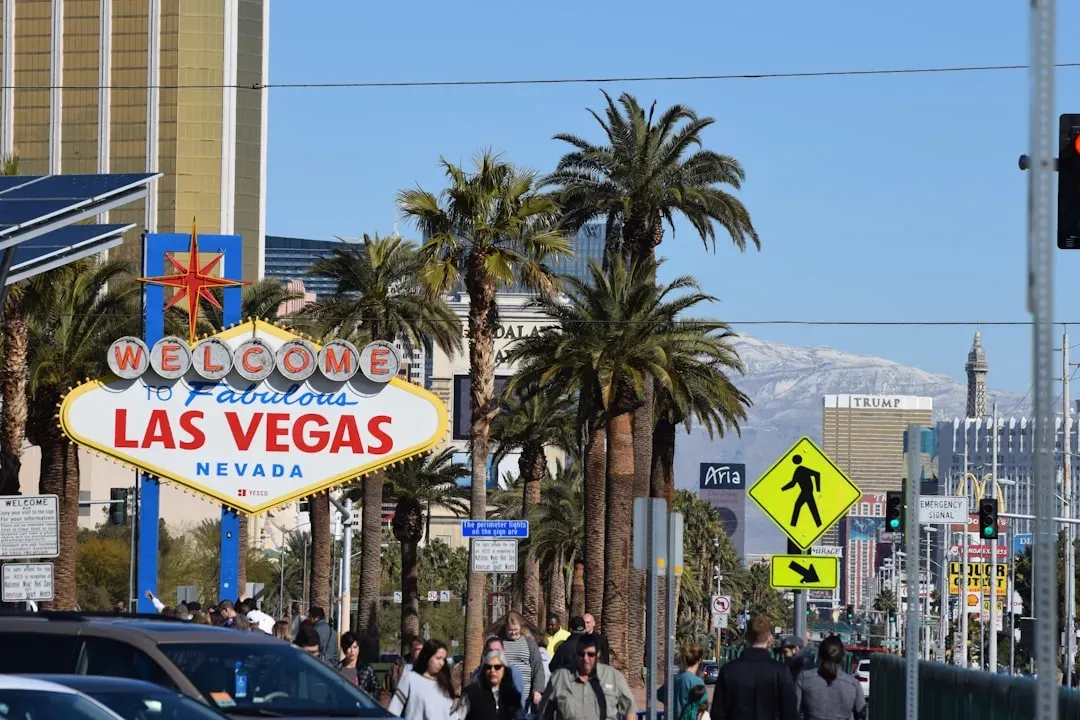
Las Vegas business owners have been hit by rising prices and falling tourism. According to data from the Las Vegas Convention and Visitors Authority, Las Vegas welcomed 38.5 million visitors in 2025, a 7.5 percent decrease compared to 2024, reflecting a year shaped by shifting travel dynamics, economic uncertainty, and evolving policy conditions. Fewer visitors means fewer foot-traffic customers for Strip-adjacent retail.
In many cases, tourists are simply staying away because Las Vegas has become expensive. A significant contributor to the recent tourism decline appears to be the rising cost of visiting the destination, with travelers voicing frustration over steep price increases for even modest purchases. A city where a bottle of water costs eighteen dollars and a hamburger costs thirty-five is a city where casual retail browsing becomes even less appealing.
Tourism reports show gaming wins holding up, but analysts have noted that lower-end customers either aren’t coming to Las Vegas at all or aren’t spending as much when they do. Traditional retailers – the ones that depend on broad, mid-market foot traffic – have felt that contraction directly.
7-Eleven: Even Convenience Wasn’t Convenient Enough
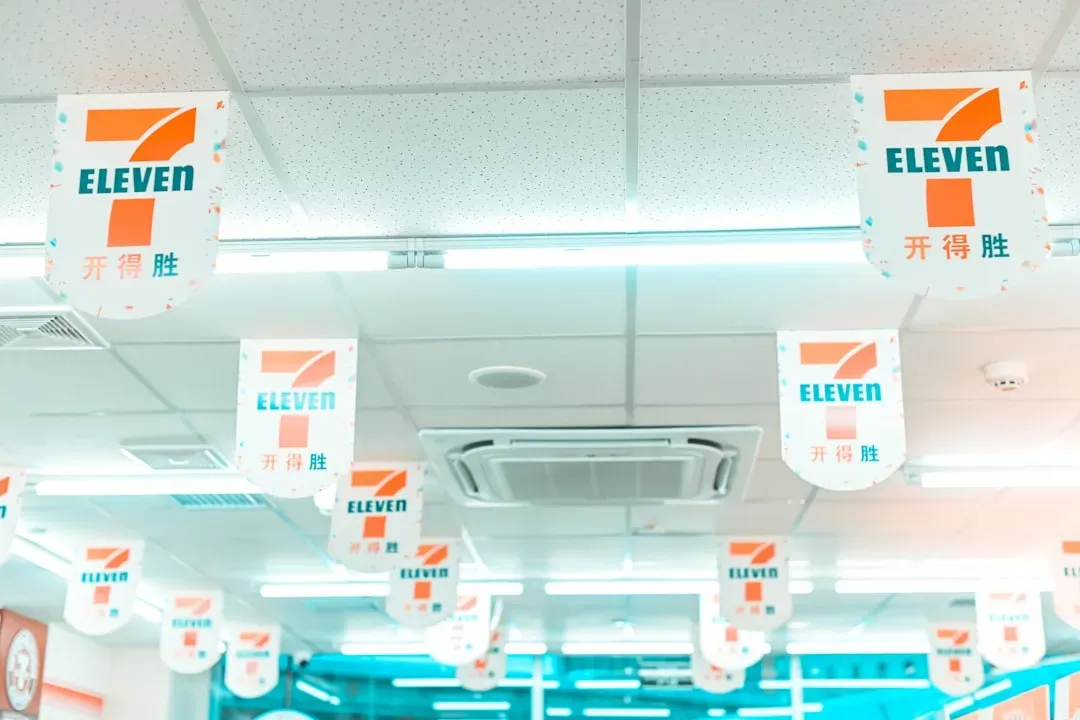
Convenience store chain 7-Eleven announced plans to close 444 underperforming stores across the country, and Las Vegas, which holds the distinction of being the city with the most 7-Eleven locations in the nation, had already seen a couple of those closures happen. It’s a striking detail. The city that never sleeps, supposedly always hungry for convenience, couldn’t keep its convenience stores afloat.
In their second-quarter 2024 fiscal presentation, 7-Eleven’s Japanese parent company, 7 & i Holdings, cited issues including inflation keeping customers from spending, fewer people going to stores, and plummeting cigarette sales. These weren’t Las Vegas-specific problems, but they landed with particular force in a city where the foot-traffic math depends on tourist volume.
The Vacancy Rate Reality: More Complicated Than It Looks
Here’s where the story gets more nuanced. Despite the headline closures, Las Vegas retail isn’t simply emptying out. Vacancy rates in Southern Nevada dropped to their lowest point in fifteen years in 2024, and remained near their next-to-lowest level in 2025, at around five percent – partly because retail development has remained very low compared to two decades ago.
According to Colliers International research, the overall retail vacancy rate in Southern Nevada was 4.3 percent through most of 2025, with the weighted average asking rental rate climbing to $1.90 per square foot on a triple-net basis, twenty cents higher than one year earlier. Rents are actually going up, not down. That matters.
Retail demand in Las Vegas is currently bifurcated. Tenants are increasingly migrating toward modern, highly amenitized Class A environments, even at significant rent premiums. This flight-to-quality has kept vacancy in the most desirable submarkets, such as the Southwest at 2.2 percent and the Northwest at 2.4 percent, at effectively zero for modern contiguous space. It’s not that nobody wants retail in Las Vegas – it’s that they want very specific retail in very specific places.
The E-Commerce Pressure Nobody Disputes

Underlying all of this is a structural shift that has been building for years. E-commerce sales in 2025 accounted for 16.4 percent of total U.S. retail sales, up from 16.1 percent in 2024, according to U.S. Census Bureau data. That share keeps growing, and every percentage point gained online represents physical floor space that becomes harder to justify.
Retail chains closed about 8,100 locations in 2025, a twelve percent increase compared to 2024, with increased online shopping and overbuilt malls cited as leading drivers of retail closures. For a city like Las Vegas, which has some of the most expensive commercial real estate in the country, that equation turns negative faster than in most markets.
Partner offer
E-commerce trends in 2025 reflect a hybrid shopping reality, where customers expect to move fluidly between digital and physical purchases – and the brand must know them well enough to serve up personalized suggestions and outstanding service, or lose them. Traditional retailers that haven’t invested in that kind of integration are at a compounding disadvantage.
Malls Are Reinventing Themselves – or Fading
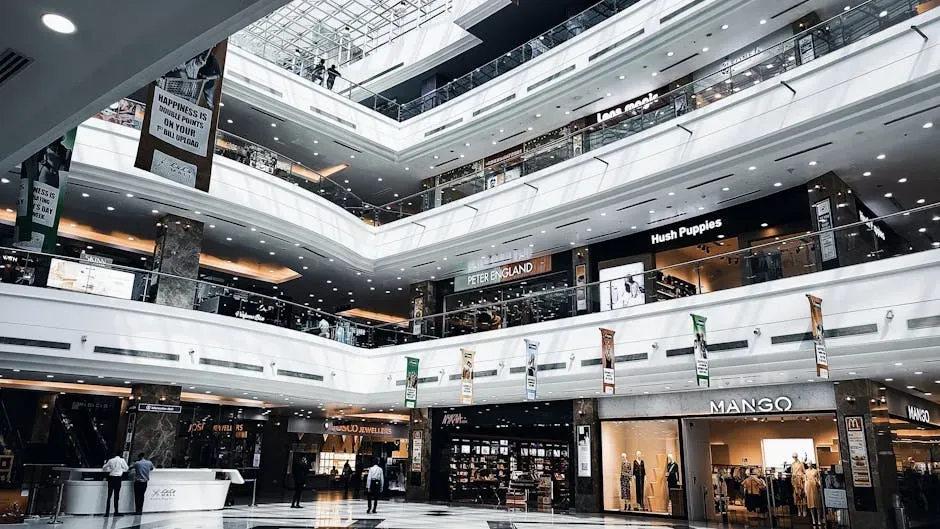
The Retail Association of Nevada expressed cautious optimism about the mall format’s future, noting that malls have been on a downturn in recent years but some are finding ways to adapt. Excellent mall opportunities and new event-based openings are constantly emerging, with malls reinventing themselves into experiential places that blend shopping and entertainment.
Older commodity retail inventory faces increasing pressure, particularly older strip centers. While unanchored strip centers can command high occupancy in high-traffic corridors, those in secondary or tertiary locations are seeing rising vacancy as tenants migrate toward upgraded environments with better visibility and modern buildouts. The middle ground – not luxury, not experience-driven – is where closures are concentrating.
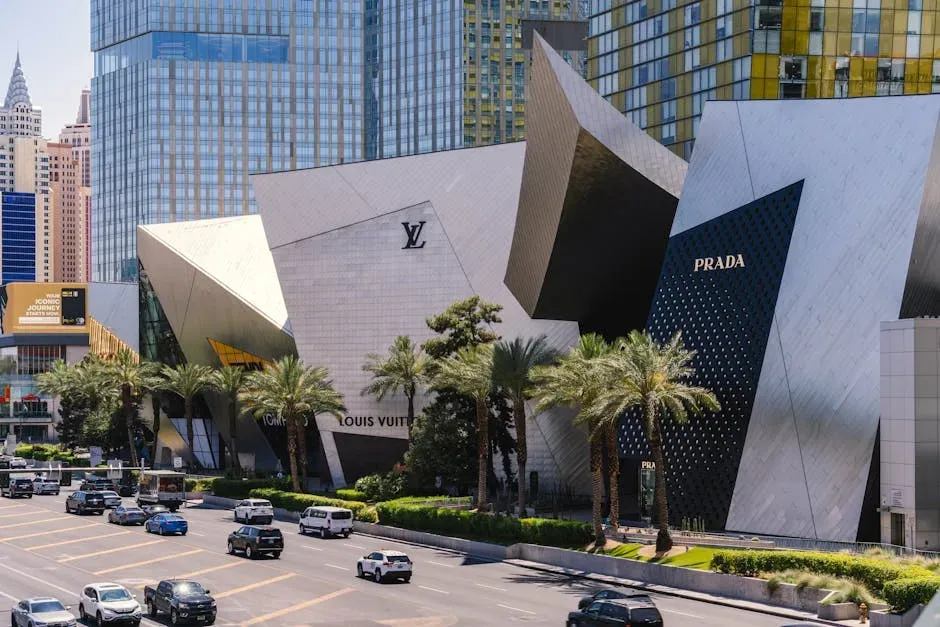
The Fashion Show Mall on the Strip illustrates this bifurcation: it still draws both locals and tourists, offering fast-fashion options alongside high-end brands like Gucci, Chanel, and Louis Vuitton. The stores doing well in that mall are at the extremes of the price range, not in the middle.
Experiential Retail Is Moving In
AREA15, the first immersive entertainment district in Las Vegas, spans 35 acres just off the Strip, featuring over forty immersive attractions ranging from Meow Wolf’s Omega Mart to the John Wick Experience, AR and VR adventures, rides, and cinematic worlds. It’s a fundamentally different model from anything a traditional retailer offers.
The City of Las Vegas officially announced that AREA15, along with surrounding facilities, would be rebranded as the Vegas Immersive District, a new entertainment district including housing, businesses, and new immersive experiences. Officials expect the district to welcome 3.5 million annual visitors with an estimated annual on-site spending of $796 million and around 4,086 jobs created throughout the property.
New retail supply remains constrained by high construction costs and limited land availability, and nearly 985,000 square feet of retail space currently under development in Las Vegas is dominated by mixed-use and experiential projects like The Bend, UnCommons, and the AREA15 Zone 2 expansion. The developers writing the checks are clearly betting on experience, not merchandise.
New Concepts Are Taking the Empty Spaces

When consumers do get offline and head to brick-and-mortar stores, they’re often looking for an experience. Retail centers are responding by offering escape rooms, Topgolf and PopStroke venues, and top-of-the-line restaurant experiences alongside fast food. The shopping center of 2025 looks nothing like it did in 2005.
Three Japanese concepts are coming to the BLVD complex on the Las Vegas Strip, including Tenshou restaurant and a second Vegas location for Silverlake Ramen. They will be joined by Chinese retailer Miniso, Boot Barn, and Sunglass Hut. Coming beyond that will be Netflix House, which will offer story-driven experiences based on the streaming giant’s portfolio. These aren’t your standard mall tenants.
Retail centers are building in escape rooms, Topgolf, and PopStroke venues alongside top-of-the-line restaurant experiences. The flagship Museum of Ice Cream Las Vegas, announced in 2025, is set to open nearly 30,000 square feet of immersive entertainment including an ice cream buffet, a wedding chapel, and hotel suites. It’s an entirely different definition of what a “store” is supposed to be.
What the Numbers Actually Suggest About the Future
Looking ahead through 2026, analysts expect net absorption in the Las Vegas retail market to stabilize, as expansion by grocery, value-oriented, and service retailers offsets restraint among discretionary brands. The market won’t collapse. It will continue sorting itself into winners and losers along familiar lines.
The retail sector is supported by a robust regional economy. The median household income in Las Vegas reached $81,300 in the fourth quarter of 2025, marking a 3.3 percent climb year-over-year. There is consumer spending power here. The question is simply what it will be spent on.
Predictions of doom for brick-and-mortar retail have been issued before, and shoppers have consistently shown they still like to shop. People are drawn to the tangible experience, and today they’re attracted by the experiential element built into retail centers – from escape rooms to golf courses to immersive art installations. The stores that disappear from Las Vegas aren’t proof that retail is dying. They’re proof that the wrong kind of retail, in the wrong location, at the wrong price point, was always going to struggle in a city that competes fiercely for every single dollar of discretionary spending.
Conclusion: A City That Always Bets on the Next Thing
Las Vegas has never been sentimental about what it replaces. Casinos get imploded to make way for bigger ones. Shows close mid-run when the audience moves on. The city’s entire identity is built around the premise that something newer and more captivating is always right around the corner.
Traditional retail – the kind that sells household goods, craft supplies, and discount furniture – was always a slightly awkward fit for a city of spectacle. It served the locals well, and now the locals are being served differently. Grocery anchors, service businesses, and immersive entertainment are filling the spaces that mid-tier chains are leaving behind.
The empty storefronts aren’t a eulogy for Las Vegas retail. They’re more like a renovation in progress – messy in the middle, but pointed in a clear direction. In a city that has reinvented itself more times than most countries, it would be surprising if the retail landscape were any different.
Partner offer
Planning a trip to Vegas?
Compare hotel rates and show tickets on VEGAS.com.