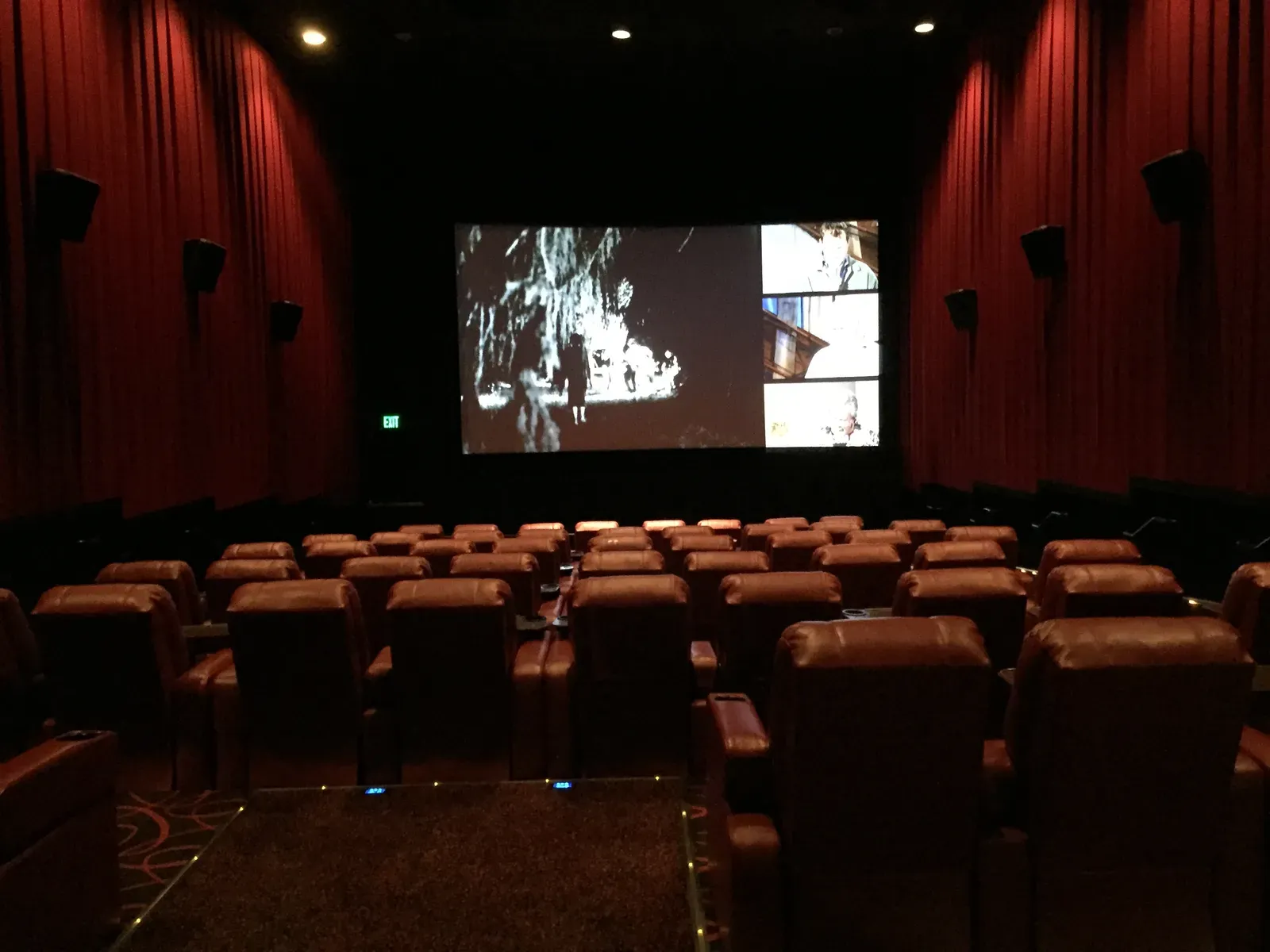
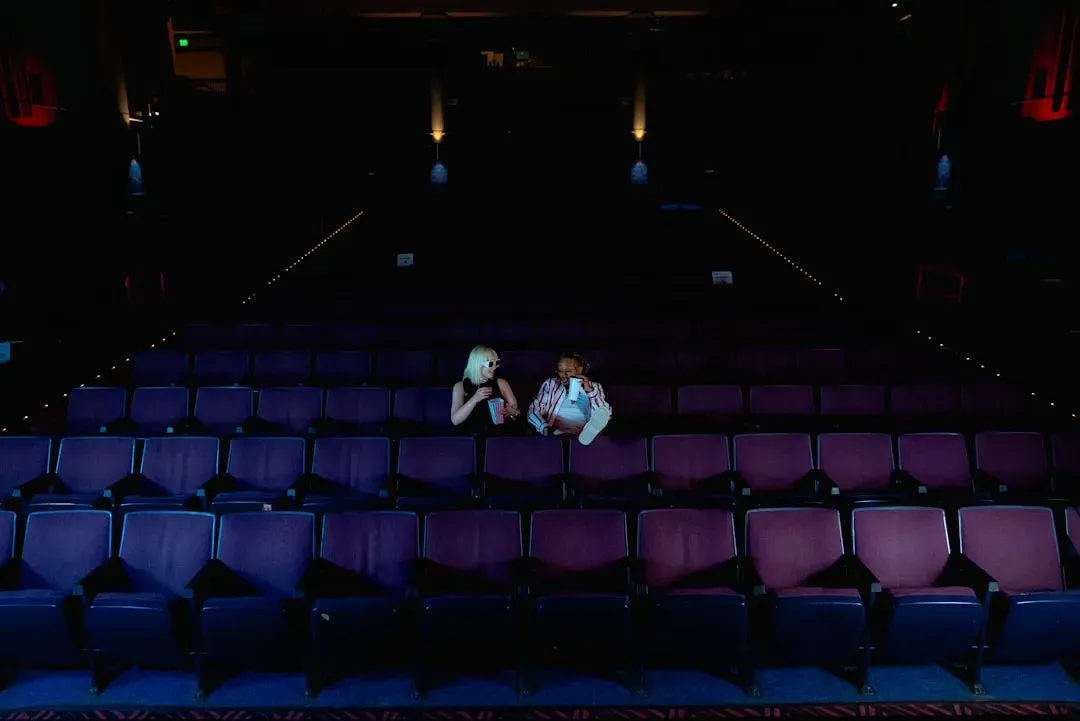
Walk into most American multiplexes on a Tuesday afternoon and you’ll notice something unsettling: the parking lot is half empty, the lobby feels cavernous, and the concession stand employee is restocking popcorn for nobody in particular. The lights are still on, the projectors still hum, and the massive lease payments are still due on the first of every month – regardless of whether anyone showed up to watch. That quiet desperation is becoming the defining mood of the U.S. exhibition industry.
The numbers behind that feeling are stark. Domestic ticket sales wound up at $8.7 billion in 2024, down 3.3% from 2023 and a full 23.5% below 2019, the last normal year at the box office, according to Comscore. Then 2025 arrived, was supposed to be the year that fixed everything, and largely failed to do so. Instead of heralding a dramatic return to moviegoing, 2025 ran neck-and-neck with the middling 2024 box office and fell far short of the $9 billion in domestic ticket sales that most analysts expected the theatrical movie business to easily eclipse. What follows is an honest accounting of why this industry – once a cornerstone of American leisure – is quietly bleeding out.
The Revenue Gap Nobody Wants to Talk About
The theatrical industry’s recovery has a hollow quality to it. Revenue figures look plausible on paper until you compare them to what the business once generated without breaking a sweat. Prior to the pandemic, North American revenues would regularly hit between $10 billion and $11 billion. Today, with two consecutive years of stalled results, that ceiling feels almost unreachable. The 2025 North American box office totaled an estimated $8.87 billion, up just 1.5% on 2024’s $8.74 billion – and that figure is still 22% down on the 2019 pre-pandemic number of $11.4 billion.
What makes the gap even more troubling is that raw dollar figures mask a worse reality underneath. Looking at actual ticket sales, which strips out the effect of rising ticket prices, the results are more dire than box office earnings suggest. Compared to 2019, ticket sales are down almost 40%. Theaters have essentially been papering over collapsing attendance with higher prices – a strategy with a very obvious ceiling. Total U.S. exhibition industry revenue, including concessions, advertising, and ancillary income, reached an estimated $22 billion in 2025 compared to roughly $28 billion in 2019. The industry has recovered perhaps 78% of its pre-pandemic economic output, and the rate of improvement has clearly decelerated.
Thousands of Screens Have Simply Vanished

The physical footprint of American cinema is considerably smaller than it was six years ago, and the contraction is not slowing down. North America has 5,691 fewer screens compared with pre-COVID times, according to research by media consultancy Omdia. Those aren’t screens that temporarily closed for renovation. Many of them are gone permanently, their buildings converted to warehouses, pickleball courts, and church meeting halls. The U.S. now operates approximately 38,500 to 39,500 indoor screens across roughly 5,100 to 5,400 locations – a net loss of some 3,000 screens and 500 to 700 locations since 2019.
The chains that operated those screens didn’t simply shrug and walk away. Many of them fought through expensive, disruptive bankruptcy proceedings that left creditors and employees holding the bag. With fewer people stopping by the box office, Regal Cinemas, Pacific Theatres, Alamo Drafthouse, and others filed for Chapter 11. Some of these companies have reemerged after bankruptcy; others have dimmed their marquees forever. More recently, CMX Cinemas filed for Chapter 11 in April 2020 and filed again in mid-2025. LOOK Dine-In Cinemas filed for Chapter 11 in late 2024 and shuttered its California locations in February 2026. Metropolitan Theatres followed with its own Chapter 11 filing in February 2024.
AMC’s Debt Mountain and the Fragile Big Three

AMC Entertainment, the world’s largest movie theater chain, represents the industry’s financial predicament in its most concentrated form. The company carries a $4 billion debt load, and the constant threat of dilution remains a significant red flag for investors. In its most recent difficult quarter, AMC reported overall revenues of $1.3 billion, down from a year-earlier $1.34 billion. The mega-exhibitor’s net loss for that quarter came in at $298.2 million, against a year-earlier loss of $20.7 million. This is a company that has spent years refinancing its way to survival rather than actually healing its balance sheet.
The contrast with Cinemark, the industry’s third-largest chain, is instructive. Unlike its competitors, Cinemark posted net income of $313 million in 2024, adjusted EBITDA of $590 million, and free cash flow of $315 million. The company sat on $1.1 billion in cash at year-end and reinstated its dividend in early 2025. The difference, analysts note, is that Cinemark avoided the overleveraged acquisition spree that hobbled both AMC and Cineworld, and it is now reaping the structural advantages of that conservatism. Most chains, however, are far closer to the AMC end of the spectrum than the Cinemark end.
The Ticket Price Trap

Theaters have tried to compensate for falling attendance by charging more per visit, and it has worked – until it hasn’t. Current movie ticket prices sit at around $16.86 for an average premium-screen seat and $11.98 for a standard seat, roughly the same price as a monthly streaming service that provides consumers with a vast library of films. Between 2021 and 2024, the average movie ticket price grew 9%, outpacing the general rate of inflation. At some point, the value equation simply breaks down in the consumer’s mind.
Attendance data shows that it already has for large portions of the audience. In a 2024 NRG industry study, moviegoers are going less often – just 25% attend the cinema at least every other month, compared with 40% pre-pandemic. Even more revealing is the shift in habitual behavior. Monthly habitual moviegoing dropped from 39% of U.S. adults in 2019 to approximately 17% in 2025. The casual, spontaneous trip to the movies that once drove midweek and off-peak revenue has essentially evaporated. Now, going to the movies has become an event-based experience. Only the biggest releases create a kind of urgency that puts people in seats.
Partner offer
The Blockbuster Dependency Problem

With casual attendance gone, theaters have become dangerously dependent on a shrinking number of massive releases to keep the lights on. The math here is unforgiving. In 2024, Disney’s top three films – Inside Out 2, Deadpool & Wolverine, and Moana 2 – together accounted for roughly 20% of the entire domestic box office. When three titles from a single studio represent a fifth of an entire industry’s annual revenue, that industry has a concentration problem. This concentration effect has made the industry acutely dependent on a shrinking number of massive releases.
Sequels and franchises were supposed to be the reliable backbone of this model, but even that is cracking. Marvel continued to struggle with some of its properties; Captain America: Brave New World and Thunderbolts lost tens of millions during their theatrical runs. And even though Avatar: Fire and Ash, Wicked: For Good, and Jurassic World Rebirth ranked among the year’s top-grossing releases in 2025, they each failed to match the revenues of previous films in their respective series. Meanwhile, box office revenue has become increasingly concentrated in franchise tentpoles – in 2024, franchise films represented 42% of wide releases but captured 82.5% of Hollywood’s worldwide gross. That leaves almost nothing for the mid-budget films that once kept theaters running profitably between event movies.
The Fixed Cost Nightmare That Never Sleeps
Unlike a restaurant that can seat fewer people or a retailer that can close during slow hours, a movie theater carries an enormous fixed cost base that runs regardless of attendance. Rent, utilities, equipment maintenance, staffing, and film licensing fees do not pause because a given weekend’s slate underperformed. Given that much of what is being written about cinemas focuses on the box office downturn or the bankruptcies of major chains, lenders are skittish about providing financing for theaters looking to make improvements. “The cost of running theaters keeps going up and the access to capital has become more difficult, so it’s a challenge,” admits Cinema United CEO Michael O’Leary.
The profit structure of a theater makes this even more painful. Most people assume ticket sales are the real moneymaker, but the actual economics tell a different story. Ticket sales often generate less profit for theaters due to revenue sharing with film distributors, especially in opening weeks. Film rental fees can take 50% or more for new releases. It is concessions – popcorn, soda, candy – that keep most theaters solvent, with profit margins that can exceed 85%. When attendance drops, so does concession revenue, and the entire economic model starts to unravel simultaneously from multiple directions.
Streaming Windows Are Shrinking and the Stakes Are Existential

Before the pandemic, a movie would play exclusively in theaters for 70 to 90 days before becoming available at home. That window was the theater’s competitive advantage – if you wanted to see it, you had to show up. Following COVID-19 shutdowns, studios and cinemas renegotiated those terms, and the average window fell to just 30 to 45 days. That compressed timeline has trained audiences to wait rather than rush out, fundamentally undermining opening-week urgency. During COVID, studios abbreviated the gap between a film’s theatrical release and its home entertainment debut, only to discover that customers got accustomed to waiting to watch movies until they hit streaming or on-demand platforms.
The situation took a genuinely alarming turn in late 2025. Netflix and Warner Bros. Discovery announced a deal for the streaming giant to acquire WBD’s film studio and streaming service. With Netflix as the victor in the bidding process, exhibitors are in a panic. Unlike traditional movie studios, the streamer has not adhered to conventional theatrical distribution, and there are fears that big changes could be coming to an industry that is still struggling post-pandemic. The industry lobbying group Cinema United warned that the deal “would risk removing 25% of the annual domestic box office,” putting smaller theater chains and independent cinemas in particular at risk.
The Audience Has Changed – Possibly Permanently

Perhaps the most uncomfortable truth for theater owners is that this may not be a temporary cyclical dip. The habits formed during the pandemic years appear to have calcified into something more durable. Consumer surveys show only 32% of Americans prefer watching movies in theaters versus 45% who prefer streaming, with 68% citing cost as the biggest barrier to theater attendance. Those preference numbers represent a fundamental cultural shift, not a blip. The box office is still struggling to fully recover from the pandemic’s impact, which introduced audiences to more economical home entertainment options. This shift in consumer behavior presents a significant challenge to cinema attendance.
There are genuine bright spots if you look carefully. Movie theaters have relied heavily on premium large formats like IMAX and Dolby, and the popularity of those screens has helped offset the decline in attendance. For visual spectacles like Avatar: Fire and Ash or F1: The Movie, premium large formats accounted for 50% to 60% of overall sales. Younger audiences are also showing up more selectively but with genuine enthusiasm. Cinema loyalty programs in North America saw a 15% jump in new subscriptions between 2024 and 2025, and Gen Z moviegoers averaged 6.1 visits per year, up from 4.9. The problem is that premium screens and enthusiastic Gen Z fans cannot carry an entire industry built on the assumption that most Americans go to the movies regularly – because most of them no longer do.
What Comes Next for an Industry Running Out of Easy Answers

The conversation about movie theaters’ future is often framed as a question of whether they will survive. The more honest framing might be: how many will survive, in what form, and at what size? Theater owners are spending more than $1.5 billion on next-generation tech upgrades including 4DX and laser IMAX to compete with larger chains, while independent chains such as LOOK – already navigating bankruptcy reorganization in 2024 – often lack the capital to reinvest in such upgrades, suggesting a widening struggle to compete. The richest chains are pulling away from the rest, and the rest are running out of runway.
The deeper structural problem is that no amount of reclining seats or gourmet popcorn can fix a release calendar that isn’t generating consistent audience demand. The Barbenheimer phenomenon of summer 2023 demonstrated that cultural event films could still generate extraordinary demand. The uncomfortable corollary, however, is that a weak slate year, or a writers’ strike that delays production, and the entire industry contracts. An industry whose fortunes hinge on whether a handful of movies resonate with the public in any given year is not a stable business – it is an ongoing high-wire act. The theater chains that survive the next decade will likely be smaller, more selective, and more honest with themselves about what the moviegoing experience actually needs to be. The ones that don’t adapt quietly are the ones that will just go quiet.
Partner offer
Planning a trip to Vegas?
Compare hotel rates and show tickets on VEGAS.com.