Some falsehoods outlive the people who first told them. They travel through generations, surviving wars, scientific revolutions, and the rise of the internet without losing a single step. What makes a myth truly immortal isn’t just ignorance – it’s the fact that so many of them feel more satisfying than the truth. From Napoleon’s height to what you can see from the moon, the world’s most durable myths share a common thread: they flatter us, scare us, or simply tell a better story than the facts ever could.
The “We Only Use 10% of Our Brain” Myth

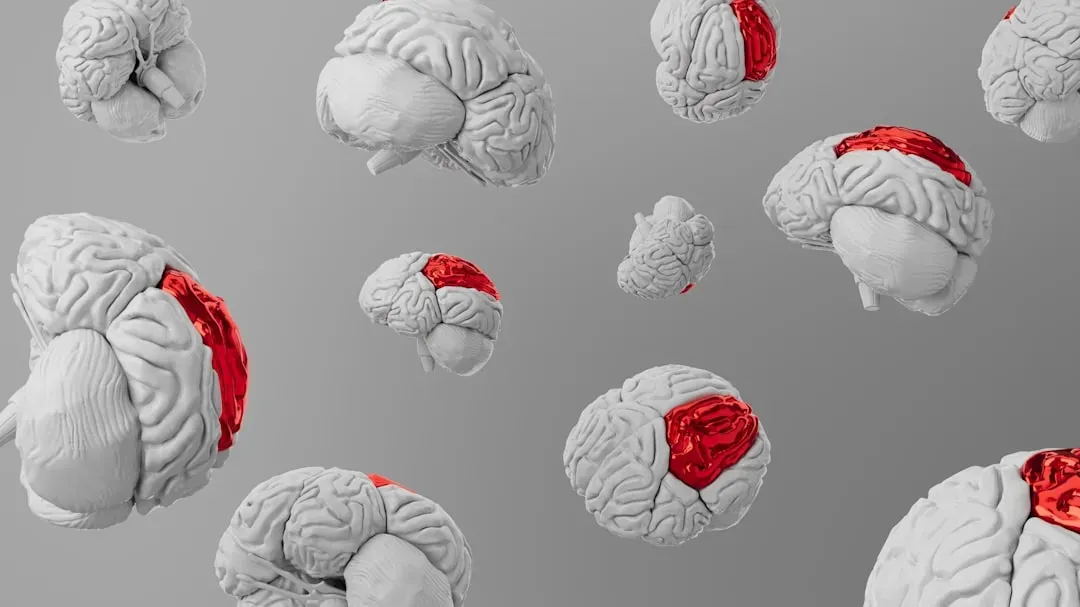
The idea that we only use 10 percent of our brain has no basis in neuroscience. This misconception likely stems from misinterpretations of neurological studies from the early 20th century or possibly from misquotes by early psychologists like William James. As MIT researcher Mila Halgren explains, “All of our brain is constantly in use and consumes a tremendous amount of energy.” Despite making up only two percent of body weight, the brain devours roughly 20 percent of our calories. That kind of metabolic expense makes the idea of a mostly dormant brain biologically absurd.
This notion remains firmly rooted in popular culture despite many efforts to debunk it. It was the basis of the 2014 movie Lucy, which depicted what supposedly would happen if a person actually used all 100 percent of her brainpower. It has also been used to justify belief in pseudoscientific psychic powers and is a tacit assumption in many self-help programs designed to “unleash” untapped human potential. More concerning is the finding that about half of primary and secondary school teachers across different cultures also endorse the 10 percent myth. That figure reveals how deeply embedded a debunked idea can become when popular culture and classroom environments reinforce each other.
Napoleon Was Short – Or Was He?


Napoleon Bonaparte was approximately 5 feet 6 inches tall. This height has often been misunderstood due to historical differences in measurement systems and the impact of British propaganda that exaggerated his stature. The French “pouce,” or “inch,” equaled 1.06 English inches, which meant that in France at the time, Napoleon was said to be five feet two inches tall. That difference in measuring units – not a difference in bone – gave birth to one of history’s most persistent caricatures.
During the Napoleonic Wars, Britain and France were locked in a bitter military and political rivalry. British cartoonists used art and satire as powerful propaganda tools to mock Napoleon. James Gillray, a British caricaturist, frequently portrayed Napoleon as a tiny figure with a massive hat and outsized ambition. Cartoons depicted him as an irritable, power-hungry midget facing the much larger and more “sensible” British leaders. These images had lasting cultural impact and contributed to the idea that Napoleon was physically small and emotionally insecure. In fact, a 2007 study by the University of Central Lancashire concluded that the Napoleon complex is itself a myth. The study discovered that short men were actually less likely to lose their temper than men of average height.
The Great Wall of China Is Visible from Space


The claim that China’s Great Wall is the only man-made object that can be seen from the moon with the naked eye is one of our more tenaciously incorrect “facts,” a bit of erroneous speculation which was spawned decades before we had the means to demonstrate it true, and which continues to have currency despite having long since been proved false. The wall may stretch for hundreds of kilometres but it is only about 9 meters in width at its widest. That’s roughly the width of a highway – invisible at orbital distances to the naked human eye.
Despite myths to the contrary, the wall isn’t visible from the moon, and is difficult or impossible to see from Earth orbit without the high-powered lenses used for photographs taken from the International Space Station. China’s first astronaut, Yang Liwei, confirmed that he was unable to see the Great Wall from space. Astronauts have taken photos of the region in which the Great Wall is visible, but this is not the same as being able to see it with their own eyes. Yet the myth persists so stubbornly that China’s Ministry of Education was actually moved to revise its elementary school textbooks, which had long claimed the ancient barricade was visible from space.
Lightning Never Strikes the Same Place Twice


One of the most enduring science myths is the belief that lightning never strikes the same place twice. It’s a phrase many of us have heard since childhood, often used as a metaphor for unlikely events. But while it sounds poetic and reassuring, it’s simply not true – scientifically or statistically. In fact, lightning can and often does strike the same location multiple times, especially if that place is tall, isolated, or conductive. A prime example is the Empire State Building in New York City, which is struck by lightning around 20 to 25 times per year.
Lightning follows the path of least resistance, which means it will strike any object that offers an easier route to the ground. Tall, pointy, or metallic objects often become prime targets. If those conditions remain unchanged, lightning has no reason to avoid a previous strike point. Like many science myths, the “one strike” belief likely emerged from metaphor, not science. It’s often used to suggest that misfortune won’t repeat itself, or that rare events are unlikely to happen again. Over time, this metaphor became mistaken for scientific fact, especially because the average person doesn’t witness lightning hitting the same place repeatedly.
Mental Illness Makes People Violent


When people with mental health problems commit violent crimes, the media takes a disproportionate interest. No wonder surveys show that most of the public believe that people with mental illness are inherently violent. In fact, the evidence suggests that at least 90 percent of people with mental illness do not commit violent acts, and the overwhelming majority of violent offenders are not mentally ill. Research shows that only 4 percent of overall violent crimes in the United States can be attributed to individuals with psychological disorders. That is a remarkably small proportion, yet the public perception remains dramatically distorted.
Research actually indicates that individuals with mental illnesses are more likely to be victims rather than perpetrators of violence. It’s important to challenge these myths, not just to set the record straight, but also because their existence can contribute to stigma, stereotypes, and misinformed public policies in areas like education and policing. A 2024 study found that more than 50 percent of the most-viewed mental health content on TikTok contained inaccurate or misleading claims. A study on the top 1,000 TikTok videos with a #mentalhealth tag found that one-third of videos offering medical advice were misleading – yet these videos outperformed accurate ones in engagement.
Why Myths Survive: The Role of Media, Culture, and Human Psychology


Some psychological myths aren’t entirely false. Instead, they’re exaggerations of claims that contain a kernel of truth. For example, it’s almost certainly true that many of us don’t realize our full intellectual potential. Yet this fact doesn’t mean that most of us use only 10 percent of our brain power, as many people incorrectly believe. That gap between a half-truth and the actual evidence is exactly where myths take root and thrive – and it’s a remarkably difficult gap to close once a story has taken hold.
For hundreds of thousands of years, human survival depended on quickly identifying potential threats, sharing compelling stories, and aligning with social groups. Our brains are wired to prioritize information that is novel, emotionally charged, and socially relevant. Today, social media hijacks this ancient system, favouring viral content that triggers fear, anger, and surprise over nuanced, complex, and slow-moving scientific consensus. Research has previously reported that a sample of adults was only able to recognize 37 percent of myths based on those presented in Lilienfeld et al.’s Great Myths of Popular Psychology. Those most likely to believe in psychological myths are students with limited psychology coursework, and those lower in intellectual curiosity and crystallized ability. The myths, it turns out, are not surviving by accident – they are thriving in the exact conditions the modern information environment creates for them.