Most people visiting Las Vegas are watching the light shows, not the buildings swaying in the desert wind. Yet those towers are quietly doing something remarkable every time a storm rolls through the valley.
Las Vegas sits in the Mojave Desert, and that setting creates weather patterns that catch first-time visitors completely off guard. The region is no stranger to violent gusts, and the city’s skyline has been built with that reality baked into every beam and bolt.
When the Desert Wind Gets Serious

Southwest winds have brought gusts up to 60 mph across Las Vegas, causing damage to trees, power lines, light poles, and buildings. That March 2024 storm was a vivid reminder that the desert southwest is capable of producing genuinely destructive wind events, not just breezy afternoons.
Record wind speeds saw some gusts hitting nearly 70 mph. In their wake, tens of thousands were left without power, planes were delayed, and for homeowners, the wind stole memories. While trees fell and fences collapsed, the high-rises on and near the Strip stood without structural incident.
The Code That Sets the Bar

Las Vegas and Henderson building codes permit specific attachment methods for buildings with a mean roof height of 45 feet or less where wind speeds do not exceed 140 mph. That ceiling of 140 mph is not a guess. It’s a carefully calculated design threshold based on local meteorological data and national structural engineering standards.
The basic design wind speed corresponds to a three-second gust speed at 33 feet above ground in Exposure Category C and is associated with an annual probability of being equalled or exceeded on a 50-year mean recurrence interval. In practical terms, every building constructed under these codes is designed to handle far more than any 60 mph gust Las Vegas has actually recorded.
How Wind Actually Attacks a Tall Building
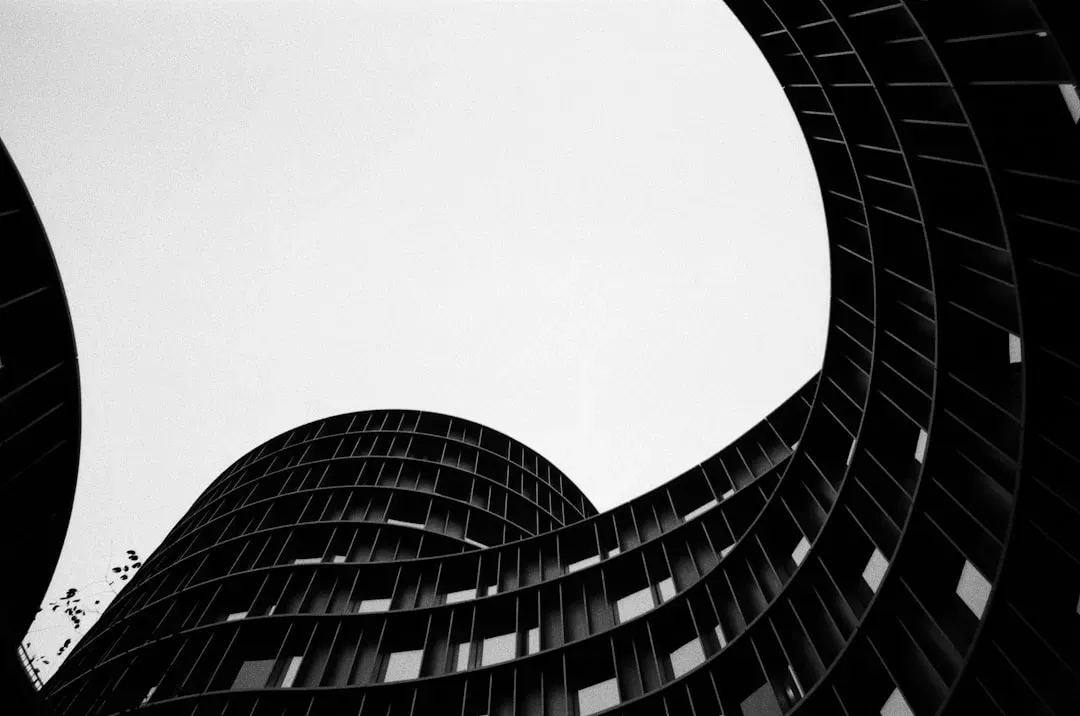
The higher a building rises, the more it is exposed to the higher-velocity winds found at higher altitudes. These winds exert pressure on the windward side of the building and create suction on the leeward side. It’s that suction effect, pulling material outward on the sheltered face of the structure, that catches many people off guard.
The most dangerous phenomenon is vortex shedding. When wind hits a square or rectangular building, it detaches from the corners and creates swirling eddies or vortices. If these vortices alternate from side to side at a frequency that matches the building’s natural frequency of vibration, a condition called resonance can occur, leading to dramatic oscillations that are not only structurally damaging but also extremely uncomfortable for occupants.
The STRAT Tower: A Case Study in Desert Wind Engineering
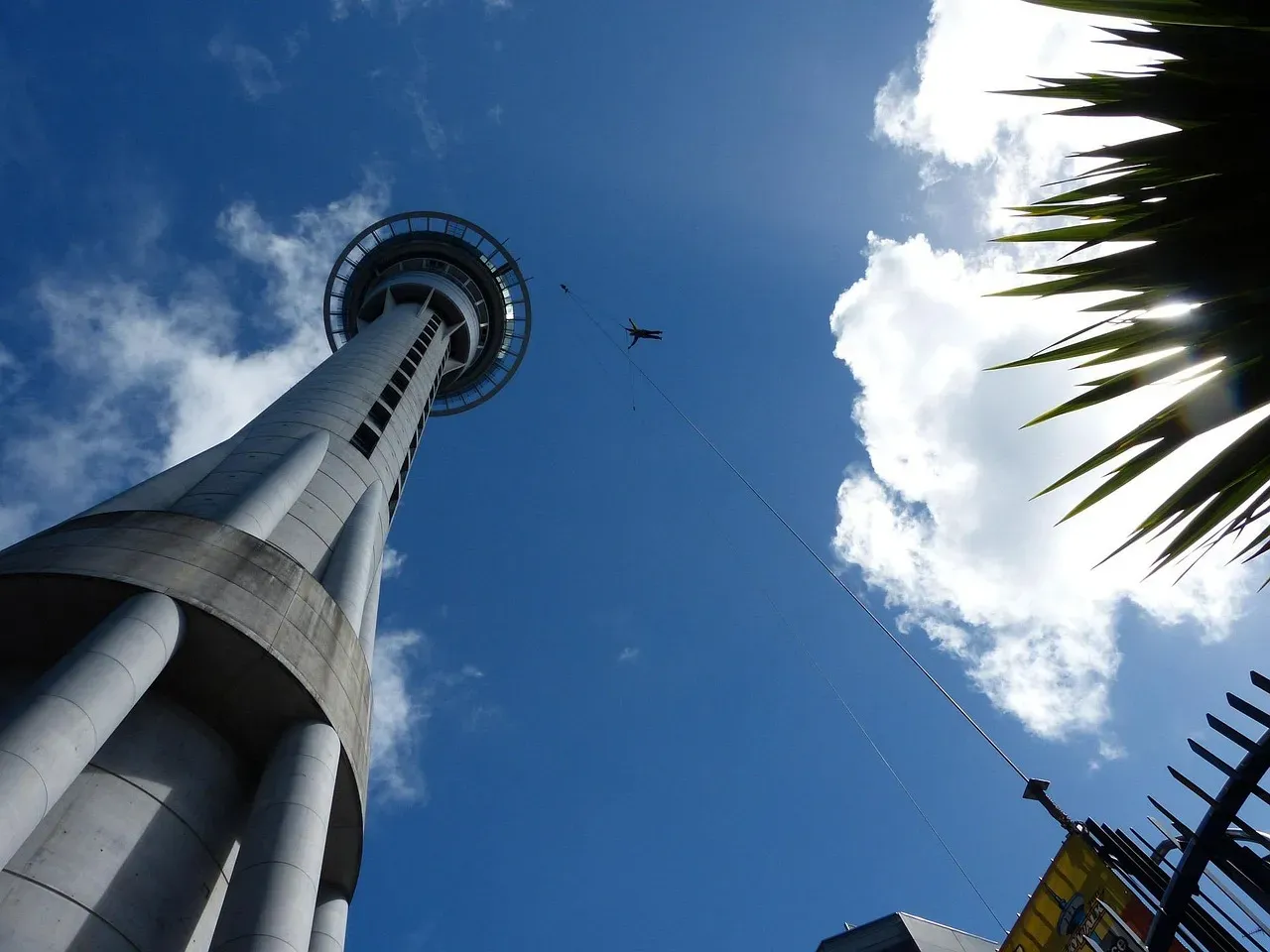
The Stratosphere Tower in Las Vegas dominates the skyline, rising to 866 feet at the observation level and 1,149 feet at the peak of its spire. Getting something that tall to survive decades of desert windstorms required an extraordinary engineering effort that began well before the first concrete was poured.
A wind tunnel model of the Las Vegas Stratosphere Tower was first tested as part of its design in 1991, but this proved to be only the beginning of a long series of modifications and additions that warranted additional wind-engineering investigations lasting through 2004. That’s over a decade of continuous wind analysis for a single structure. The base of the tower starts with three legs made of concrete, each weighing approximately four million pounds and rising 264 feet, before meeting to form a center.
Wind Tunnel Testing and Computational Fluid Dynamics

Wind tunnel testing remains the gold standard for determining wind loads on tall buildings, while the emerging use of computational fluid dynamics (CFD) is noted as being particularly useful for concept design stages. For major Las Vegas high-rises, both tools are typically deployed before construction begins.
Extensive wind tunnel testing and computational fluid dynamics are essential precursors to construction, providing the empirical data needed to optimize structural resilience and ensure street-level pedestrian comfort. The pedestrian element matters here. The street-level wind environment around large towers can be severely disrupted, and engineers must model it too.
Partner offer
Shaping a Building to Confuse the Wind
One of the most effective strategies in wind resistance engineering is to “confuse” the wind. Architects and engineers work together to design building shapes that disrupt the formation of organized vortices. This can include tapering the building as it rises, rounding the corners, or adding setbacks and cutouts.
In some designs, engineers incorporate actual holes or wind slots through the building. These slots allow air to pass through the structure, equalizing the pressure between the windward and leeward sides. This technique is particularly effective for very slender buildings where traditional stiffening methods might be too heavy or expensive. Several towers now appearing along the Las Vegas skyline incorporate variations of these approaches.
The Tuned Mass Damper: A Giant Counterweight
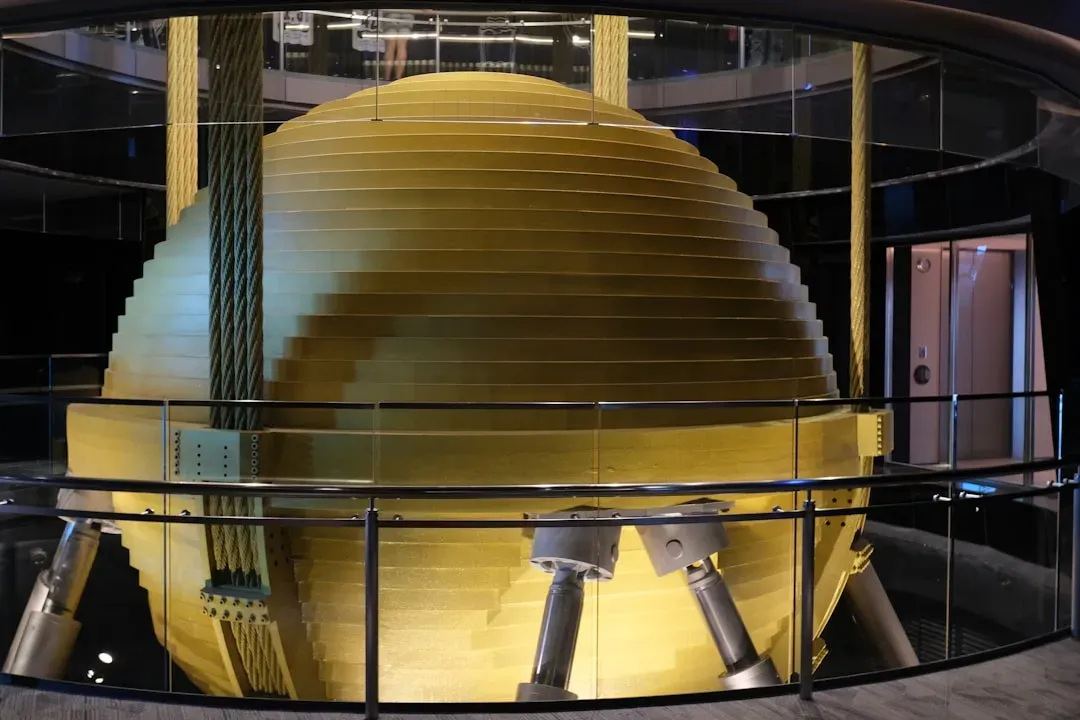
The most common solution for managing movement is the Tuned Mass Damper (TMD). A TMD is a massive weight, often hundreds of tons, suspended near the top of the building. When the wind causes the building to sway in one direction, the weight’s inertia causes it to move in the opposite direction, acting as a counterweight that pulls the building back toward center. This effectively dampens the oscillations, much like the shock absorbers in a car.
The force of wind against tall buildings can cause the top of skyscrapers to move more than a meter. This motion can be in the form of swaying or twisting, and can cause the upper floors of such buildings to move. Certain angles of wind and aerodynamic properties of a building can accentuate the movement and cause motion sickness in people. Keeping occupants comfortable is treated as a structural engineering requirement, not just a hospitality concern.
The Role of Reinforced Concrete Cores
IMEG provided the structural engineering design for the STRAT Tower, which included sophisticated computer modeling of dynamic behavior and nonlinear analysis of the reinforced concrete shaft. That reinforced concrete shaft is the spine of the entire structure, carrying the building’s lateral wind loads down into its foundation.
Tall buildings are susceptible to dynamic excitation under wind effects, which typically govern the structural design for strength, stability, and serviceability. In a city where the buildings are also hotel towers hosting thousands of guests simultaneously, serviceability is not an abstract concept. It means no cracked plaster, no swinging chandeliers, no guests calling the front desk to report a swaying room.
Building Height, Wind Speed, and the Physics of It All

As building height increases, structural stiffness typically decreases, resulting in lower natural frequencies that can align with the energy-rich, low-frequency components of turbulent wind spectra. Simultaneously, the wind speed and hence aerodynamic load increases with height due to the wind shear effect, amplifying the dynamic excitation of upper floors.
Wind load calculations involve complex engineering that considers multiple factors including wind speed, building height, roof shape, and geographic exposure. Engineers don’t simply design for straight-line winds. They account for uplift forces that try to lift the roof, lateral forces that push against walls, and the combined effects that create the most challenging loading scenarios. A 60 mph gust measured at street level behaves quite differently at the 40th floor.
Conservative Design: The Margin That Matters
For the Stratosphere Tower, the local building code at the time required a basic 50-year recurrence speed of 70 mph. CPP recommended a 100-year speed of 79 mph, and the structural team elected to increase this further to 85 mph, a decision that ultimately paid significant benefits. Designing above the minimum code is a deliberate choice, not an oversight.
Consideration and execution of the additions were made possible because of somewhat conservative assumptions made in the original design, the accurate wind loads and climate evaluation made possible by wind engineering, and the responsiveness of the owner and design engineer. That built-in conservatism is why Las Vegas high-rises can absorb extreme gusts and keep functioning. It’s also why engineers in 2026 can still confidently add new features to decades-old towers without starting from scratch.
When a 60 mph gust cuts across the Las Vegas Valley and the neon lights barely flicker, that steadiness is the product of thousands of engineering hours, wind tunnel runs, and structural calculations most guests will never think about. The skyline looks effortless precisely because so much effort went into making it that way.Partner offer
Planning a trip to Vegas?
Compare hotel rates and show tickets on VEGAS.com.