
Words carry weight in every profession, but in Hollywood, where perception shapes opportunity, they carry something extra. The entertainment industry has long scrutinized women differently from their male counterparts, and that scrutiny extends to the language they use in interviews, on set, and in negotiations. Some phrases that feel politely humble or appropriately deferential in the moment can quietly signal something far less flattering to the people holding the power to cast, promote, and pay.
This isn’t about blaming women for systemic problems they didn’t create. The entertainment industry has a long history of mischaracterizing its most talented female performers by reducing them to stereotypes or unfairly labeling them as difficult, and many actresses have found their careers stifled by a system that refused to see past their physical appearance or punished them for advocating for themselves. Still, language is one of the few tools entirely within a performer’s control, and some common phrases, however innocently intended, have a way of narrowing what people believe a woman is capable of doing.
1. “I’m Sorry, But…”

Over-apologizing can undermine authority and negatively impact a career. It’s not just a hypothesis: studies show that women do apologize more than men, and a University of Waterloo study found that women tend to apologize more often because they have a lower threshold than men for what they consider offensive. On a film set or in a network meeting, reflexively opening with “I’m sorry” before stating a concern or offering a creative idea softens the message in a way that invites dismissal.
Research across industries documents a direct correlation between unnecessary apologizing and career stagnation. People who habitually apologize for their presence advance more slowly, earn less, and are given fewer leadership opportunities, regardless of their competence or contributions. For a female actor trying to be taken seriously as a creative collaborator, leading with a pre-emptive apology is rarely the opener that earns respect.
2. “I May Be Wrong, But…”

Certain qualifiers cause women to undermine themselves and miss out on opportunities. Phrases like “I may be wrong but…” get used even when someone is completely certain about something, or “I’m not an expert” gets said despite the fact that the speaker is, in fact, an expert. In a room full of directors, producers, and studio executives, hedging a clearly held opinion this way does real damage to how ideas are received.
Studies have found that the majority of women use softer, self-deprecating language in the workplace. Author Tara Mohr notes that women adapt their language to appear less intimidating, presenting themselves as uncertain and apologetic, which leads to their opinions being undervalued and, in extreme cases, completely diminishes their power. In the entertainment world specifically, where confidence reads on camera and in the room, this kind of verbal retreat sends precisely the wrong signal.
3. “I Just Wanted to Say…”
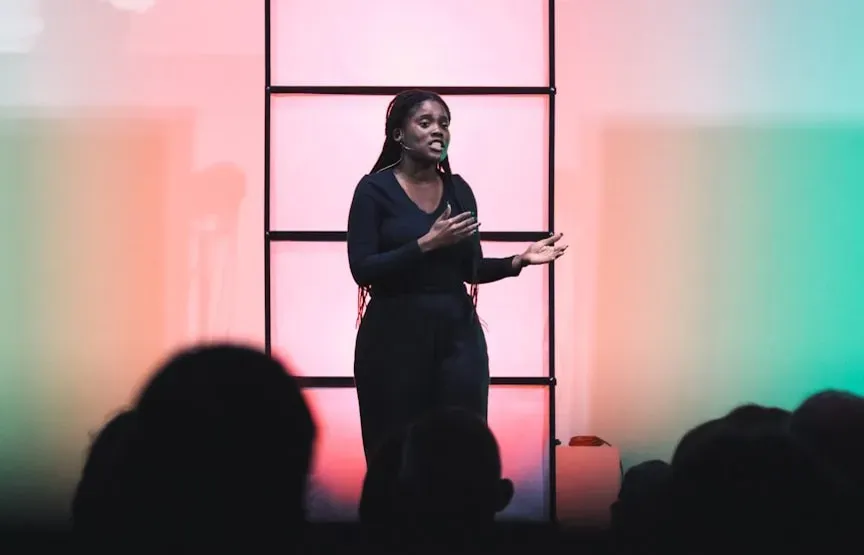
The word “just” seems small enough to ignore. Using the word “just” is not the only writing or speaking habit women are more likely to commit, but it remains one of the most persistently noted. Phrases like “I just wanted to mention” or “I just had a small thought” place whatever follows into a minor bracket before a single real idea has been shared. In casting rooms and on-set discussions, the habit signals that the speaker doesn’t fully believe her own contribution deserves space.
Many women report that people responded to them differently once they stopped using undermining phrases in their speech and writing. More junior women in particular share that when they removed all the qualifiers from their communication, they started getting much quicker and more substantive responses to their requests. The word “just” is a small edit with a surprisingly large return when it’s finally dropped.
4. “I Don’t Want to Cause Any Problems, But…”

This phrase frames a legitimate concern as a potential nuisance before the concern has even been heard. Hollywood careers are often built over decades through hard work and talent, but they can be reshaped in a single moment of perceived poor judgment. One controversial or unprofessional-seeming interaction can change the trajectory of a star, and the industry can be unforgiving when someone comes across as lacking conviction. A performer who prefaces feedback or a boundary-setting statement with this kind of disclaimer signals to those around her that her comfort with conflict is limited.
The fear of speaking up is real and conditioned. Women in Hollywood have noted that they worry their livelihoods will be threatened if they speak out, that standing their ground will lead to their demise, and that they don’t want to be kicked out of the sandbox for being difficult. So they compromise their integrity for the sake of maintaining the status quo. The irony is that pre-apologizing for having a view rarely protects against that outcome.
5. “I Didn’t Want to Make a Big Deal of It”

When a female actor says this in reference to a contract dispute, an on-set concern, or a case of unequal treatment, it effectively retroactively shrinks the issue. Jennifer Lawrence herself acknowledged the dynamic clearly, noting that an element of wanting to be liked influenced her decision to close a deal without a real fight. Wanting to be liked is understandable, but framing past inaction as a virtue in public sends a message to collaborators that the pattern will continue.
Negotiation of contracts is difficult in Hollywood because of the lack of transparency and back-end deals by corporate executives. Many factors are considered while negotiating in the film industry, and in some cases, actresses don’t even know they are being underpaid. Saying “I didn’t want to make a big deal of it” when pay inequity or mistreatment finally surfaces can also signal to future employers that the same treatment will go unchallenged again.
Partner offer
6. “I’m Not Really the Best Person to Comment On This”

False modesty is a well-documented linguistic habit among women in professional settings. Many women have reported feeling they needed to use speech habits that soften their authority in order to not be seen as arrogant or abrasive, and research points to the double-bind: women are often seen as unlikable if they are perceived as highly competent. Deflecting expertise with this kind of self-dismissal doesn’t read as charming humility in a high-stakes professional context. It reads as uncertainty.
Research has shown that more than two-thirds of women in senior roles say it is important to be liked, which is why they have a tendency to soften their language in order to help them progress in their careers. The tension, of course, is that softening expertise too dramatically can have the opposite effect, making a performer seem less bankable, less authoritative, and less ready for roles that require a commanding screen presence off-screen as well as on it.
7. “The Writing Just Wasn’t Good Enough for Me to Be Nominated”

This specific kind of public criticism toward project material has a documented track record of consequences. Katherine Heigl experienced a career decline after publicly criticizing the writing of projects she appeared in. Her decision to withdraw her name from Emmy consideration because she felt the material was not good enough alienated a powerful showrunner, and she gained a reputation for being difficult to work with, which many industry insiders cited as the reason for her transition away from major film roles. Despite starring in subsequent television projects, she never regained her status as a primary box office draw.
Being branded as difficult to work with is a serious professional liability, as Heigl learned. She had an acclaimed role on a major series but started criticizing the writing, which triggered a difficult outcome. A bad reputation follows you around in this industry, and she was quickly branded as not worth working with, with major trade publications printing scathing accounts of her difficulties on set. The lesson isn’t to stay silent about poor material, but to consider very carefully how, where, and to whom that frustration gets expressed.
8. “I Don’t Really See Myself as a Businesswoman”

In an era when female actors who thrive long-term are consistently those who take creative and financial control of their careers, disavowing a business identity is a strategic own-goal. Reese Witherspoon’s desire to tell women’s stories led her to produce her own work and create Hello Sunshine, a production company focused on bringing women’s creative work to life. Those who built lasting careers did so precisely because they started thinking of themselves as businesspeople early and said so publicly.
The gender pay gap affects most industries, with women generally earning less than their male counterparts, and Hollywood is no different. Female stars earn around one million dollars less than male actors with similar experience, and the gap remains statistically significant even among actors with more than a decade of experience. Publicly distancing oneself from financial ambition doesn’t protect a career from this reality. It tends to make it easier for others to take advantage of it.
9. “I Don’t Want to Be Difficult”

The fear of the “difficult” label is real and specifically gendered in Hollywood. The entertainment industry has a long history of unfairly labeling talented female performers as difficult, and many actresses have found their careers stifled by a system that punished them for advocating for themselves. The phrase “I don’t want to be difficult” signals that a performer has already absorbed that fear and is willing to compromise legitimate needs before they’ve even articulated them.
Mo’Nique experienced a major career shift after a public fallout with powerful industry figures. The dispute began over her refusal to participate in unpaid international promotion for a film, and she claimed that she was blackballed from the industry for standing up for her worth as an actress. The line between advocating for fair treatment and being tagged as trouble is drawn partly by how a woman says what she needs, and partly by the structural biases of those doing the labeling. Preemptively apologizing for having needs blurs that line in the wrong direction.
10. “Whatever You Think Is Best”

Deferring entirely to directors, producers, or studio heads might feel like gracious collaboration in the moment, but it tends to communicate something closer to disengagement. Women often find themselves in situations where they undermine themselves in professional settings, using self-effacing language that makes them sound less important. Women often sabotage their career prospects by using language that shrinks their power and does not reflect their passion toward their work. “Whatever you think is best” is essentially the verbal equivalent of stepping out of the creative room altogether.
Instead of self-deprecating speech to come across as likable, a more effective approach is conveying likability in positive, non-self-undermining ways, such as humor, making personal connections, expressing appreciation for others, and showing a strong interest in their points of view. Engagement, curiosity, and genuine collaboration read far better than quiet deference. A female actor who consistently says “whatever you think is best” may soon find that the industry stops thinking to ask her opinion at all.
None of these phrases are moral failures. Most of them come from a conditioned instinct to manage perception in an industry that has punished women for decades for being too assertive, too vocal, and too visibly ambitious. The structural problem is real. Hollywood actresses may occupy a position of some privilege, but their experiences nonetheless reflect broader stereotypes that hold women back at every level. What’s worth paying attention to is the gap between what these phrases are intended to do, smooth things over, stay likable, avoid conflict, and what they actually do, which is quietly compress the space a woman occupies in the room.
The actors who tend to build sustained, respected careers are consistently those who learned, sometimes the hard way, to speak with precision and conviction. Language isn’t everything, but in an industry built on performance, the way someone speaks about themselves outside the role matters more than most people are willing to admit.
Partner offer
Planning a trip to Vegas?
Compare hotel rates and show tickets on VEGAS.com.