Plenty of shows end because a network pulled the plug. A smaller group ends because the people making them knew the destination early and steered toward it. That doesn’t guarantee a perfect finale, but it often gives the final episodes a sense of purpose.
The ten series below are commonly cited examples of shows built around a planned ending, an agreed end date, or a deliberately finite story. I’ve kept the claims to what creators and networks have said publicly, and I’ve noted where fans disagree about how well the landing worked.
Babylon 5


Creator J. Michael Straczynski pitched Babylon 5 as a novel for television, with a defined beginning, middle and end across five seasons. The show ran from 1993 to 1998 and leaned hard on long-term plotting, with early details paying off years later.
The finale, “Sleeping in Light,” is a well-known case of planning for the worst. Because the show’s future was uncertain during season four, the episode was filmed early as insurance. When the fifth season was secured, it was held back and aired as the true series ending.
Lost


Lost is the classic example of a network and creators agreeing on an end date. Damon Lindelof and Carlton Cuse negotiated a fixed finish with ABC in 2007, which gave the writers a set number of remaining seasons. The series ended in 2010 after six seasons.
That arrangement let the writers map out the final stretch instead of stalling indefinitely. The finale, “The End,” still divided viewers, and debate over it continues. Still, the planned runway is a big reason Lost is often discussed as a model for finite network drama.
Avatar: The Last Airbender


Michael Dante DiMartino and Bryan Konietzko designed Avatar as a three-book story, called Water, Earth and Fire. It aired on Nickelodeon from 2005 to 2008. Aang’s goal of facing the Fire Lord was set from the start.
The finale, “Sozin’s Comet,” wrapped the main conflict on the schedule the creators had laid out. Because the structure was clear from the first episode, the series feels unusually tight for a children’s show of its era. Many fans still cite it as one of animation’s most satisfying endings.
Breaking Bad


Breaking Bad’s ending wasn’t a surprise. AMC ordered a final run of episodes, split into two halves, so creator Vince Gilligan knew the last stretch in advance. The series ran from 2008 to 2013.
That certainty let the final episodes close out Walter White’s story with intention. The finale, “Felina,” tied up the major threads and is widely regarded as one of television’s more satisfying conclusions. It shows how much a confirmed endpoint can sharpen a story.
Mr. Robot

Creator Sam Esmail built Mr. Robot as a four-season story, and it ran on USA Network from 2015 to 2019. The show’s central twist and its themes of identity and control were designed to pay off in the closing season.
Esmail has described the series as a story with a clear shape, and he directed much of the final run himself. The last episodes recontextualize earlier events rather than simply escalate the plot. Whether you loved the reveal or not, it was clearly intended from the outset.
Partner offer

Dark

Dark, the German Netflix series from Baran bo Odar and Jantje Friese, was conceived as a three-season story. It ran from 2017 to 2020. The creators had the time-loop structure mapped before the final season arrived.
That planning matters because the show is a puzzle of overlapping timelines. The third season resolves the loop rather than extending it, and the series ended exactly on schedule. It’s often held up as proof that complex serialized drama works best with an endpoint.
The Good Place


Michael Schur’s comedy ran for four seasons on NBC, from 2016 to 2020. Schur chose to end the series rather than stretch it out, and the final season was built around a deliberate conclusion. The show had already reinvented itself several times, so a finite run suited it.
The finale, “Whenever You’re Ready,” focused on the characters’ emotional arcs and the show’s central question of how people improve. It closed the story on the creative team’s terms. For a network sitcom, that’s a rare luxury.
Gravity Falls


Alex Hirsch designed Gravity Falls as a limited story. The Disney series aired two seasons between 2012 and 2016. Hirsch has said he wanted to finish it on his own terms instead of letting it run indefinitely.
The final episodes, including “Weirdmageddon 3: Take Back the Falls,” paid off the mysteries seeded since the pilot. Because the ending was planned, those clues felt earned instead of improvised. It remains a go-to example of a kids’ series with a genuine endgame.
Succession


Succession ran on HBO from 2018 to 2023. Creator Jesse Armstrong has said he approached the fourth season as the last one, so the writers knew they were heading toward a conclusion. The show ended after four seasons, when it was still highly acclaimed.
The finale, “With Open Eyes,” resolved the question of who would control Waystar Royco. Ending while the show was still at its peak was a deliberate choice, not a cancellation. It gave the Roy family saga a clear final shape.
Game of Thrones

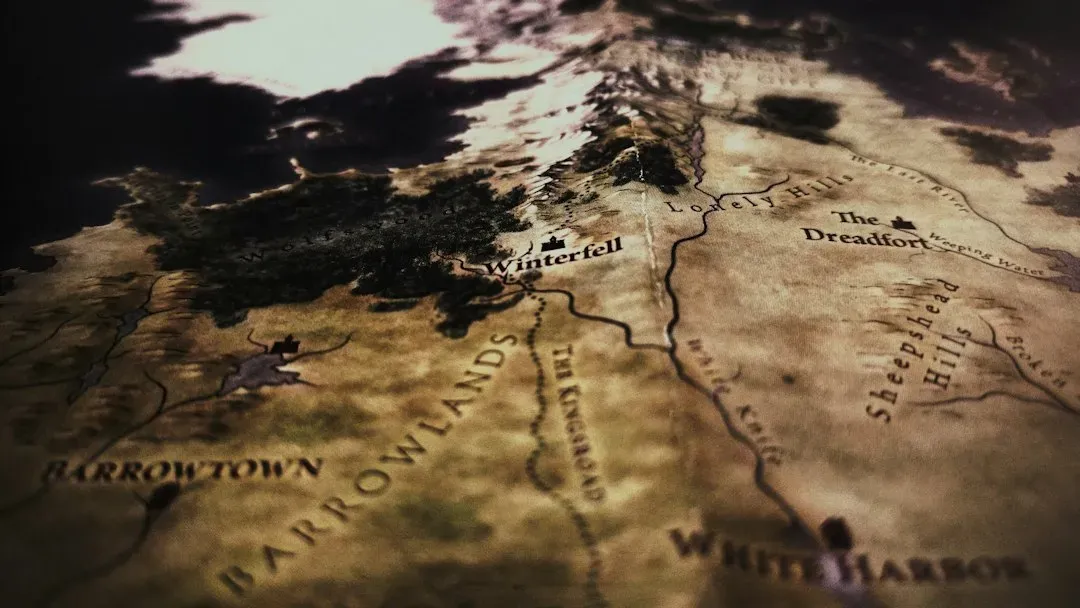
Game of Thrones is a more complicated entry. Showrunners David Benioff and D.B. Weiss have said that George R.R. Martin shared the broad endpoints of his story with them, so the destination was known before the series finished in 2019. The show ran for eight seasons on HBO.
The planned ending didn’t spare it from criticism, and the final season remains controversial. Still, it counts here because the broad finish was intentional and agreed on well ahead of time. It’s a reminder that planning helps, yet execution still decides how a finale is received.
Knowing the ending early doesn’t make a finale automatically great, but it tends to give a series direction. The best examples above used that clarity to seed clues, shape character arcs and avoid dragging their stories out. Even the divisive ones felt like they were going somewhere on purpose.
If you want to watch shows that respect your time, start with the finite ones. A story that knows where it’s headed usually gives you a better reason to come along.
Partner offer
Planning a trip to Vegas?
Compare hotel rates and show tickets on VEGAS.com.