Hollywood is full of near misses that never made the headlines until decades later, when the actor finally admitted the truth in an interview or a memoir. A part that looks inevitable in hindsight often started out as a hard no, a scheduling conflict, or a script nobody could quite make sense of. The gap between what almost happened and what actually happened is sometimes just a matter of days, or a single phone call from someone who refused to take the first answer.
Chris Evans nearly said no to playing Captain America

Before he became the face of Marvel’s biggest franchise, Chris Evans reportedly wasn’t sold on signing a multi-picture deal that would define the next decade of his career. An Esquire interview to promote Chris Evans’s show Defending Jacob includes comments from his mom, Lisa Evans, who revealed that her son almost turned down the offer to play Captain America in 2011’s The First Avenger. The hesitation reportedly came down to the sheer size of the commitment rather than any doubt about the character itself.
It’s worth remembering that Marvel Studios in 2010 was a much smaller operation than it is today, and locking into a superhero contract meant giving up creative freedom for years. Evans eventually said yes, and Steve Rogers became one of the defining performances of the entire Marvel Cinematic Universe. Looking back at the finished product, it’s genuinely hard to picture anyone else carrying that shield for a decade.
Leonardo DiCaprio almost passed on Titanic

Long before Titanic became a cultural phenomenon and the highest grossing film of its era, Leonardo DiCaprio wasn’t eager to play a straightforward romantic lead. According to James Cameron, the director of Titanic, Leonardo DiCaprio almost turned down the role of the doomed Jack because the actor had no interest in playing a traditional leading man. DiCaprio had built his early reputation on darker, more troubled characters, and Jack Dawson initially struck him as too simple.
Cameron had to make a direct case for the role’s hidden difficulty. Cameron told People that Jack doesn’t go through torment the way DiCaprio’s other roles had, and the director claimed he was able to convince DiCaprio that it was more of a challenge to play a strong character who could hold the audience’s attention without seeming to do all that much. The film went on to earn DiCaprio global stardom and remains the role most people associate with him decades later.
Ralph Fiennes hesitated before becoming Voldemort

Ralph Fiennes seems like an obvious fit for the Harry Potter franchise’s central villain now, but the actor almost walked away before filming even started. The star of The English Patient admitted he was ignorant about the Harry Potter films and books when he was first approached by the production, which made him understandably hesitant about such a crucial role. Stepping into a franchise he barely understood felt like a risk rather than an obvious career move.
Timing made things more complicated, since Fiennes was reportedly dealing with anxiety tied to an earlier blockbuster experience. The actor was dealing with some extreme anxiety that had begun around his debut as the Human Torch in Fantastic Four: Rise of the Silver Surfer, but his friend and future colleague Robert Downey Jr. persuaded him to join the Marvel family. That mention of Marvel points to a separate role, but the pattern of a trusted friend talking him into a big genre part matches how Fiennes ultimately came around to playing Voldemort, a performance now inseparable from the franchise’s identity.
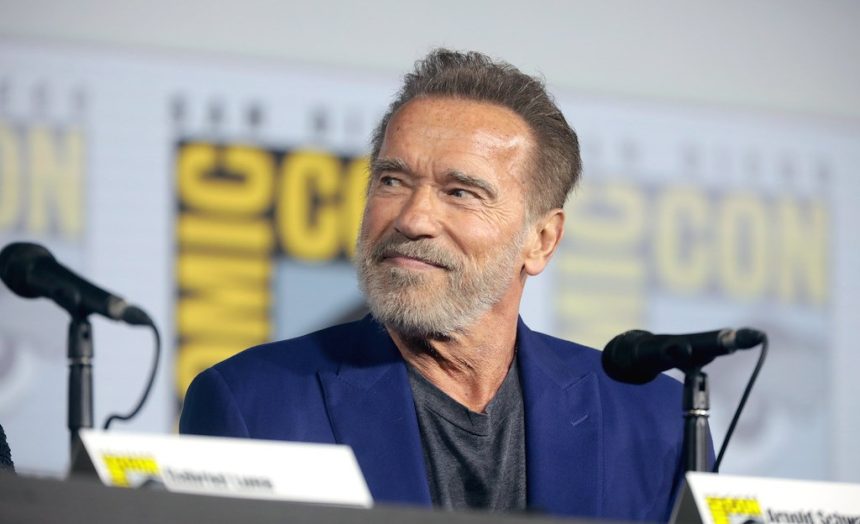
Arnold Schwarzenegger doubted the Terminator would work

It seems almost impossible now, but Arnold Schwarzenegger had real reservations about playing the T-800 in James Cameron’s original Terminator. Arnold Schwarzenegger also almost passed on the role of the T-800 in James Cameron’s The Terminator, a decision that could have reshaped his career, and at the time he had more than one doubt about portraying the film’s ruthless killing machine. A role built almost entirely around silence and menace wasn’t the obvious path for an actor still trying to prove his range.
Schwarzenegger has spoken about those early concerns more than once over the years. Schwarzenegger revealed the foundations of his concern in the book Total Recall and later expanded on it in his interview with Men’s Health. The film ended up launching one of the most successful action franchises in movie history, and the T-800 became the role that defined his entire screen persona.
Partner offer
Daniel Radcliffe’s parents almost turned down Harry Potter for him

The most famous wizard in modern film history nearly never got cast, not because of his own doubts, but because of his parents. Radcliffe stated that Chris Columbus, who directed the first two Harry Potter films, had seen him acting in another project and wanted to audition him, but Radcliffe’s parents initially turned this offer down, fearing its terms would interrupt the normalcy of his childhood. The original deal required years of filming in Los Angeles, which felt like too much disruption for an eleven year old.
The production eventually restructured its plans in a way that changed the calculation entirely. His parents feared he would spend too much time in Hollywood filming and it would affect his schooling, but they relented once filming moved to England. That single production decision opened the door for Radcliffe to play Harry Potter across eight films and grow up alongside a global audience watching every year.
Jennifer Lawrence spent days deciding against The Hunger Games

Before Katniss Everdeen turned her into one of the biggest stars in Hollywood, Jennifer Lawrence genuinely considered walking away from the franchise. Lawrence says she spent about three days figuring she would say no to playing Katniss Everdeen, the hero of the action franchise set in a post-apocalyptic North America where teens are forced to fight in televised death matches. The scale of fame the role could bring worried her more than the material itself.
She later admitted the comparison to another franchise weighed on her decision. Lawrence also revealed on the podcast that after she got turned down for the role in Twilight, she almost didn’t audition to play Katniss, saying she almost didn’t do Hunger Games because Twilight had come out and that fandom had happened. Her worry about the intensity of franchise fandom turned out to be well founded, though it worked out for her career rather than against it.
Julie Andrews nearly lost Mary Poppins to a scheduling conflict

Julie Andrews’ film debut almost never happened for a reason that had nothing to do with hesitation about the part itself. Andrews almost had to turn down the role because she was pregnant when it was first offered. A pregnancy during pre-production would ordinarily be enough to end a casting conversation before it started.
Walt Disney’s response is part of what makes the story memorable decades later. Studio chief Walt Disney was wowed by her Broadway performance in Camelot and was willing to wait until after she gave birth to start production. That patience paid off handsomely, since Andrews won an Academy Award for the role and Mary Poppins remains the film most closely tied to her name.
Sigourney Weaver came close to rejecting Alien

Long before Ellen Ripley became one of the most respected action heroines in film history, Sigourney Weaver was reportedly uncertain about signing on to a low budget science fiction project. Sigourney Weaver, a rising starlet at the time, found herself on the brink of rejecting the role that would forever etch her name in cinematic history. Science fiction horror wasn’t considered a prestige genre in the late 1970s, and a young actress betting her early career on it carried real risk.
Ridley Scott’s 1979 film ended up rewriting expectations for what a science fiction lead could look like, largely because of Weaver’s performance. She went on to reprise Ripley across four films spanning nearly two decades, earning an Oscar nomination for Aliens along the way. Few roles better illustrate how a moment of doubt can turn into a defining career choice than Ripley did for Weaver.
Looking at these eight stories together, a pattern emerges that has little to do with talent and everything to do with timing, trust, and a willingness to be talked into something uncertain. Some of these actors doubted the material, some doubted themselves, and in Radcliffe’s case, it wasn’t even his call to make. What connects all eight is that someone else, a director, a parent, a studio head, saw something the actor initially missed, and pushed just hard enough to change the outcome.Partner offer
Planning a trip to Vegas?
Compare hotel rates and show tickets on VEGAS.com.