
Most players assume that what they see is what they get. Health bars represent equal values, enemies play fair, and the game treats everyone the same way. That assumption is almost always wrong. Behind every polished game is a layer of invisible design choices, quietly running in the background, nudging your experience in directions the developers intended without ever announcing themselves.
These hidden mechanics aren’t cheats or bugs. They’re deliberate choices made to keep you engaged, to make you feel competent, to protect the flow of play. Some of them are genuinely clever. A few are a little sneaky. Here are twelve that most players never find out about.
1. Dynamic Difficulty Adjustment

Dynamic difficulty adjustment, or DDA, is a process in which video games adjust the difficulty of the game over time based on the player’s performance. If the player is doing well, the game becomes more challenging; if the player is struggling, the game may reduce difficulty to keep them from getting stuck. The whole point is that you’re never supposed to notice it happening.
In 2005, Resident Evil 4 employed a system called the “Difficulty Scale,” unknown to most players, as the only mention of it was in the Official Strategy Guide. The system grades the player’s performance on a number scale from 1 to 10 and adjusts enemy behavior and damage based on performance. On Normal difficulty, a player starts at Grade 4, can move down to Grade 2 if doing poorly, or up to Grade 7 if doing well.
2. The Enemy Warning Shot

In BioShock, the developers made it so that the odds of getting caught off guard and taking damage is lower thanks to a hidden feature regarding enemy AI. To put it simply, the first shot a Splicer sends your way will always miss. This warning shot is meant to provide the player with a few seconds to react, whether that be taking cover, firing back, or using a plasmid.
Similarly, games such as Assassin’s Creed and Luftrausers have systems where in certain situations the enemy AI will purposely miss their first shot, to give players a better opportunity to react. It’s a small concession, but it’s the difference between feeling cheated and feeling challenged. Players rarely question why they always seem to have just enough time to respond.
3. Weighted Health Bars

A great example of hidden health weighting can be found in games such as Assassin’s Creed and Doom, where the last few points of health are treated differently than the rest. Naturally, when a player sees a health bar they assume that every point of health is equal, but this isn’t the case. Instead, the last few points of health have a higher value than the rest, which can cause the player to spend more time in a low-health state and create a feeling of just barely escaping death.
System Shock takes a similar approach but flips it: in that game, your last bullet does extra damage, which can increase the chances of a player just barely being able to defeat an enemy. Whether it’s health or ammunition, developers regularly adjust the math at critical moments so that the game feels dramatically closer than it really is.
4. Rubber Band AI in Racing Games

A common and much criticized usage of DDA is what is known as “rubber banding.” This technique, commonly associated with racing games and especially the Mario Kart series, creates the feeling that the player and their computer opponents are connected with a rubber band. When the player is ahead, the opponents speed up; when the player is behind, they slow down, and the further ahead or behind the player is, the more the computer opponents react.
Mario Kart games use what is called a Rubber Band AI that can change throughout the race. Rubber Band AI will cause computer-controlled racers to slow down and hit more obstacles if the player is struggling. On the opposite end, if the player is doing extremely well, the AI gives CPU racers a speed boost, making them always at least threatening to get back in the race. The best implementations stay invisible. The worst ones feel like the game is actively working against you.
5. Bullet Magnetism and Aim Assist
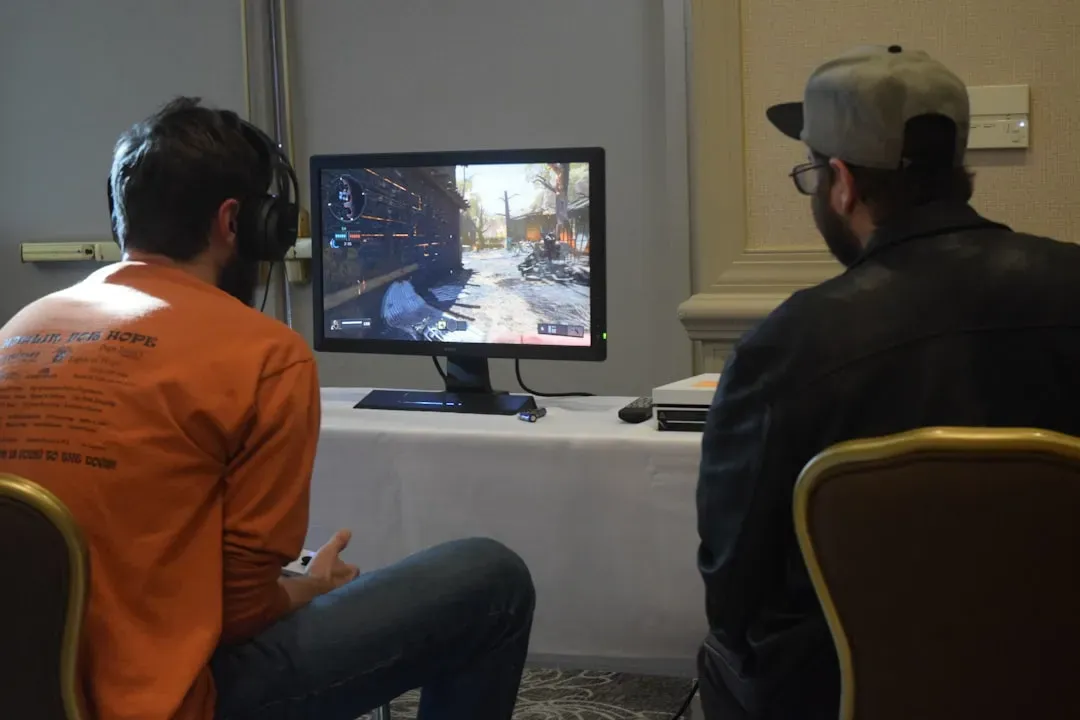
Aim assist provides subtle adjustments to help controller players maintain accuracy. Bullet magnetism slightly adjusts bullet trajectory to increase the chances of hitting targets. Most players on consoles have no idea their shots are being quietly guided for them. The mechanic operates entirely out of view, which is exactly how developers intend it.
In some games, aim assist has two components: stickiness, where the crosshair slows down when passing over an enemy, and bullet magnetism, where missing just a little still results in the bullet hitting its target. The lack of bullet magnetism can actually make a game feel buggy. For example, a player might aim and fire at the edge of an enemy’s head and the shot won’t register, even though to that player it looked perfectly accurate.
6. Coyote Time

Coyote time refers to a grace period after leaving a platform, typically a 100 to 200 millisecond window, during which a player can still perform a jump even though they’ve already walked off the edge. The name comes from old cartoon physics, where characters would run off a cliff and hang in the air for a moment before falling. Most players just assume they got their timing right.
Without this mechanic, even precision platformers would feel frustrating and imprecise. The brief invisible window is small enough that players never consciously notice it, but large enough that missing a jump at the edge of a platform almost always still works. It’s one of the most universally used invisible quality-of-life mechanics in game design.
Partner offer
7. Adaptive AI That Learns Your Habits

Sometimes the AI actually changes as the game goes on. In Alien: Isolation, the alien can apparently learn the player’s habits, such as where they like to hide, and adjust its behavior accordingly. Another example is Enter the Gungeon, where the AI takes time to warm up and gets better the longer the player plays.
This kind of adaptive design adds a creeping sense of tension without ever needing to announce itself. Players in Alien: Isolation often describe the Xenomorph as feeling unnaturally intelligent, which is exactly the intended effect. The beast had two “brains”: one that always knew where the player was, and another that controlled the body based on the first one’s clues. The result feels organic, not mechanical.
8. World Level Scaling

One common form of long-term DDA is to have the world level up as the player does. This technique, found in games such as the Fallout and Elder Scrolls series, uses the player’s level as a representation of how powerful they are and adjusts the strength of enemies accordingly. This prevents the game from getting too easy once the player has reached a certain level and can easily defeat all enemies.
In Skyrim, the world dynamically scales enemy levels to match the player’s progress, ensuring that challenges remain balanced as players level up and acquire stronger gear. The problem, which players have long complained about, is that if everything scales with you, progress can feel meaningless. You get stronger on paper but never actually feel it.
9. The Fake Permadeath Threat in Hellblade

In Hellblade, the starting warning message was carefully crafted to make players believe there is a permadeath system in the game if the player is dying too many times, while in fact this system doesn’t exist. The threat is entirely fabricated, designed to manufacture tension from the very beginning. Players reported playing far more cautiously because of it.
This turned out not to be true, leading some to call it a lie or hoax. The point, however, was that every game tries to play with people’s expectations and instincts in order to shape a more interesting and fulfilling game experience. Knowing it’s fake almost certainly changes how you’d play, which is precisely why the developers kept it hidden.
10. Hidden Physics Manipulation

Some games adjust the physics to make the game more exciting in small ways. In F.E.A.R., bullets would be slightly attracted towards explosive objects to cause more explosions. Similarly, in games such as Doom and Half-Life 2, ragdoll enemies are attracted towards ledges, making them more likely to fall over.
These are tiny nudges that players almost never consciously notice. The explosion goes off, the body tumbles dramatically off the ledge, and the player feels like an action hero. None of it was strictly real. The physics were quietly tilted in the direction of spectacle, and the result feels satisfying in a way that purely accurate physics often wouldn’t.
11. The Left 4 Dead AI Director

Valve’s AI Director in Left 4 Dead monitors stress indicators such as time under attack, accuracy, and team spacing, and adjusts pacing accordingly. If players are struggling, the game reduces enemy waves; when they recover, intensity rises. This creates rhythm and suspense, shaping the emotional architecture of gameplay.
Left 4 Dead stands as one of the most frequently cited cases of this approach, where the game’s AI Director adjusts enemy waves in real time based on team performance. The pacing feels handcrafted even though it’s entirely algorithmic. That illusion of a curated cinematic experience is the whole point of the Director, and it works so well that most players assume the level was simply designed to feel intense.
12. Hidden Empathy and Morality Tracking

Prey determines the player’s empathy levels through several different factors that it secretly keeps track of without ever letting the player know. Morality is judged not only by the number of people rescued or spared, but also by less obvious things like which Psionic upgrades the player has unlocked and used. The game never informs the player that these upgrades can have an impact on their empathy test, ensuring that whatever the player was doing prior to the test was entirely their own genuine choice.
In the true ending of Prey, the main character is revealed to be a Typhon whose memories were replaced to test if the aliens are capable of compassion and peaceful coexistence with humans. Depending on the results of that test, the Typhon is either sent to Earth as an ambassador or killed as a failed experiment. The entire moral arc of the game rests on a tracking system the player never knew existed. It’s one of the more ambitious hidden mechanics in recent memory, and also one of the most conceptually elegant.
The strange truth about all of these systems is that they only work precisely because they stay invisible. Revealing them doesn’t make the game worse, exactly, but it does change the relationship between the player and the experience. You stop feeling clever and start feeling managed. Developers know this, which is why the curtain stays closed for as long as possible.
Partner offer
Planning a trip to Vegas?
Compare hotel rates and show tickets on VEGAS.com.