Most letters get read once and forgotten. Some sit in attics, archives, or family Bibles for decades before anyone realizes what they actually say. The twelve letters below were written by monarchs, soldiers, scientists, and ordinary passengers who had no idea their private words would later rewrite chapters of history, or in a few cases, correct the record entirely.
Marie Antoinette’s Secret Letters to Axel von Fersen
For nearly a century and a half, historians knew that Queen Marie Antoinette exchanged letters with the Swedish count Axel von Fersen during the French Revolution, but large sections had been blacked out by an unknown censor. In 2021, a team using X-ray fluorescence scanning finally read through the ink, and the results surprised even seasoned scholars. The redacted portion of one letter reads that she loved him madly and that there was never a moment in which she did not adore him.
The bigger twist came from figuring out who did the redacting. Researchers discovered the censor’s identity was von Fersen himself, using x-ray technology to reveal the words beneath 45 of the alterations. A professor of French literature who reviewed the findings called the idea that von Fersen censored his own letters “a revelation.” It reframed the whole affair, suggesting the count was protecting the queen’s reputation long after she had lost her head to the guillotine.
Alexander Hamilton’s Redacted Love Letter to Betsey
Alexander Hamilton wrote plenty of letters, but one to his fiancée Elizabeth Schuyler, known to him as Betsey, had sections physically cut or blacked out for generations. At the 2024 National Book Festival, the Library of Congress’s preservation scientists unveiled what modern imaging had recovered from the damaged page. The event explored discovering historical secrets through the Preservation Research and Testing division as they unveiled the original text of a heavily redacted letter by Hamilton to his fiancée.
What made the story unexpected was not the romance itself but who likely did the editing. The redactions were thought to have been made by their son, who wanted to preserve his father’s war correspondence but felt certain personal details were too much for history. It turned a simple love letter into a small case study in how families quietly shape the historical record, one crossed-out line at a time.
Lincoln’s Bixby Letter and the Secretary Who May Have Written It
The letter Abraham Lincoln supposedly sent to a Boston widow named Lydia Bixby in 1864 has been called one of the most moving pieces of American prose ever written. It praised her for losing five sons in the Civil War, offering the comfort that they died for a costly and noble cause. There was just one problem: Bixby had not lost five sons. It turned out to be untrue that Bixby had lost five sons, and despite her Boston address, her family said she was a Confederate sympathizer.
The authorship question turned out to be just as tangled. Using a forensic linguistics technique called n-gram tracing, researchers compared hundreds of texts by Lincoln and his secretary John Hay. They arrived at the conclusion that the Bixby letter was almost certainly written by Hay, not Lincoln. A Lincoln biographer noted that the finding does not diminish Lincoln’s reputation but should elevate how history remembers Hay as a writer in his own right.
Archibald Gracie’s Eerily Calm Letter From the Titanic
Colonel Archibald Gracie boarded the Titanic in Southampton on April 10, 1912, and dashed off a letter to a friend before the ship even cleared the English coast. “It is a fine ship,” he wrote, “but I shall await my journey’s end before I pass judgment on her.” He had no way of knowing how prophetic those cautious words would become just five days later.
Gracie survived the sinking, one of only a small number of first class men who did, and his letter eventually became one of the most sought after artifacts connected to the disaster. The letter sold at auction to an anonymous bidder for a record breaking $399,000, nearly five times its expected price, in a sale held in Devizes, England. A note meant for a friend’s eyes only had become a strange, understated warning that history would not let anyone forget.
Esther Hart’s Letter Written Hours Before the Titanic Sank
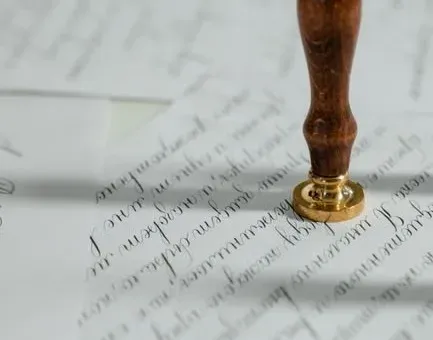
Not every Titanic letter came from a famous survivor. Esther Hart, a second class passenger traveling with her husband Benjamin and young daughter Eva, wrote home on the ship’s own stationery just hours before disaster struck. She noted that the sailors said they had had a wonderful passage up to that point. Little Eva even scribbled a postscript sending love to family back home.
The letter’s survival is its own small story. It had been tucked inside the pocket of a sheepskin coat that Benjamin Hart gave to his wife as he placed her and their daughter into a lifeboat. Benjamin did not survive, but the coat, and the letter inside it, made it to shore with Esther and Eva, later selling at auction for two hundred thousand dollars as one of the last surviving messages written aboard the ship.
The Letters Hidden Under the Floorboards of Knole House
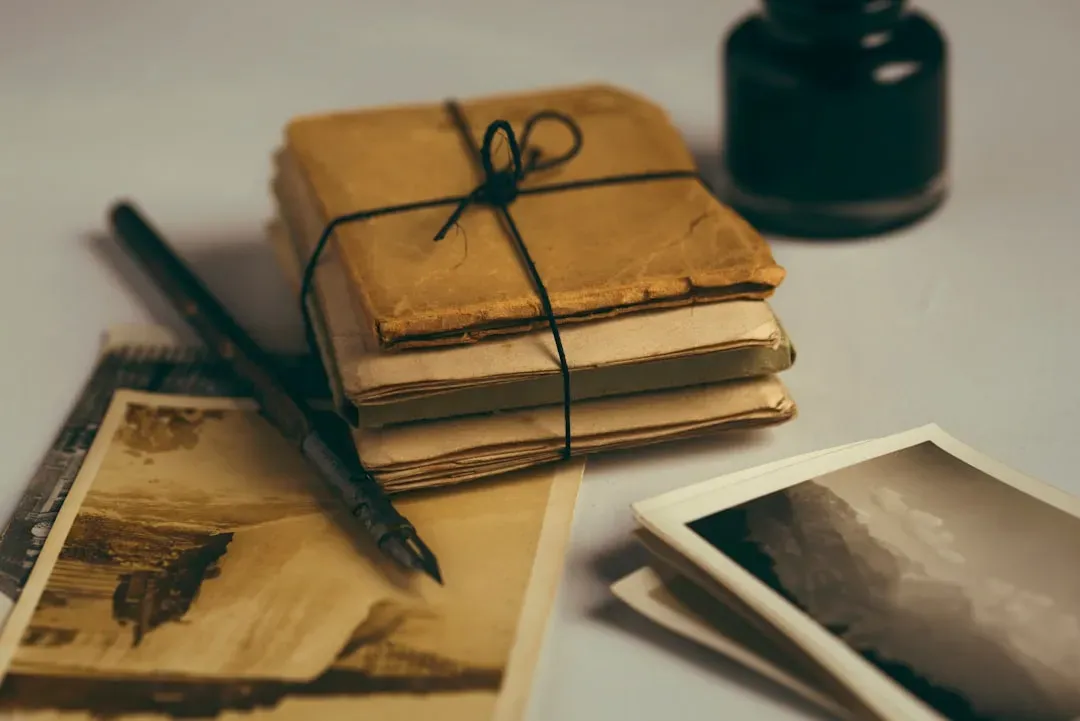
During restoration work at Knole House, a Tudor mansion in Kent managed by England’s National Trust, workers found something nobody expected sealed away in the attic and ceiling voids. Three letters dating back to the 1600s were discovered hidden under floorboards during the historic house restoration. One of them turned out to be nothing more dramatic than a shopping list, yet its age made it a genuine treasure.
Conservators had to work carefully once the fragile paper was recovered. After 400 years in their quiet resting place, the letters were caked in dirt and needed careful cleaning, work carried out by a UCL intern on placement at Knole as part of a conservation masters program. The find offered a rare, unfiltered glimpse into how a grand English household actually ran day to day, centuries before anyone thought to write a formal history of it.
A World War Two Letter That Took 72 Years to Arrive

Most stories about long-lost letters involve archives or auction houses. This one involved the regular postal service, decades after the fact. A woman in North Dakota found an unexpected letter in her mailbox the week of Christmas in late 2025, sent more than seventy years earlier. Nobody, including the postal service itself, could fully explain where it had been sitting all that time.
The letter’s reappearance in early 2026 became a small local sensation, a reminder that mail systems occasionally swallow correspondence for generations before spitting it back out. For the recipient, opening an envelope written more than seven decades earlier felt less like receiving mail and more like time travel. It is a quiet example of how ordinary letters, not just famous ones, can carry decades of unfinished business.
Einstein’s Letter That Helped Launch the Atomic Age

In August 1939, physicist Albert Einstein signed a letter addressed to President Franklin D. Roosevelt, largely drafted with input from fellow scientist Leo Szilard. The letter warned that recent research into nuclear chain reactions could lead to extremely powerful bombs, and that Nazi Germany might already be pursuing the same science. It was a modest, carefully worded document, not a demand, but a warning from scientists who felt someone in government needed to know.
What made the letter’s impact so unexpected was the gap between its calm tone and its enormous consequences. Roosevelt’s response eventually helped set in motion the research that became the Manhattan Project, the secret wartime effort that produced the first atomic weapons. Einstein, a lifelong pacifist, later said he regretted signing it once he saw how the technology was ultimately used, a regret that turned a single piece of correspondence into one of the more uncomfortable footnotes of twentieth century science.
Napoleon’s Love Letters to Josephine
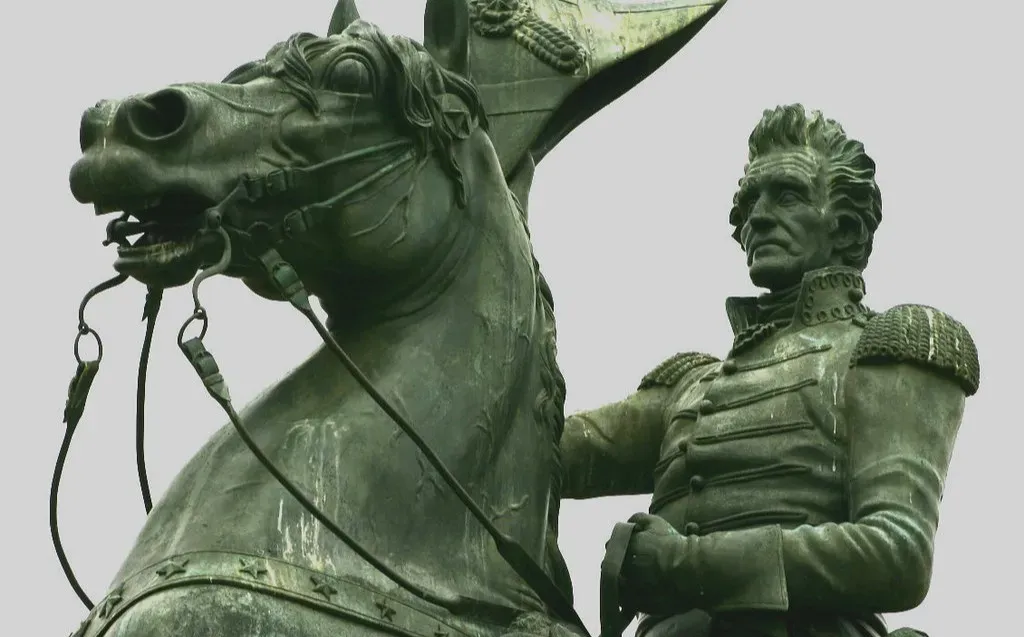
Long before he became emperor of France, a young general named Napoleon Bonaparte wrote passionate, almost breathless letters to his wife Josephine while campaigning in Italy in the 1790s. The letters read nothing like the disciplined military strategist history remembers. They are full of longing, jealousy, and impatience, the voice of a man clearly more anxious about his marriage than about any battlefield.
The surprise for later readers was less about the content and more about the contrast it created. The same hand that later issued the Napoleonic Code and reorganized much of Europe also filled pages with desperate affection for a wife who, historians generally agree, did not return the intensity of his devotion. It is a small but telling reminder that even the men who reshape continents can sound entirely ordinary in private.
The Zimmermann Telegram That Pulled America Into War
In January 1917, German Foreign Secretary Arthur Zimmermann sent a coded telegram to Germany’s ambassador in Mexico, proposing a secret alliance. If the United States entered World War One on the side of the Allies, Germany offered to help Mexico reclaim territory in Texas, New Mexico, and Arizona. British codebreakers intercepted and decrypted the message, then passed it along to Washington.
The unexpected part was how quickly a single decoded telegram shifted American public opinion. President Woodrow Wilson had campaigned on staying out of the European war, and much of the country agreed with him right up until the telegram’s contents became public in March 1917. Within weeks, the mood in Congress and among ordinary citizens had shifted decisively, and the United States declared war on Germany the following month. A piece of diplomatic correspondence never meant to leave German hands ended up changing the course of the entire war.
The “Dear Boss” Letter That Named Jack the Ripper
In late September 1888, London’s Central News Agency received a taunting letter signed “Jack the Ripper,” written in red ink and boasting about the string of murders terrorizing the Whitechapel district. It was the first known use of that now infamous name, and newspapers seized on it immediately. Police at the time were divided on whether the letter had come from the actual killer or from someone else entirely.
Many historians and criminologists now believe the letter was a hoax, quite possibly written by a journalist eager to sell newspapers rather than by the murderer himself. The unexpected story here is less about the crimes and more about how a single piece of mail can shape public memory for well over a century. The name stuck permanently, turning an unsolved series of murders into one of history’s most enduring mysteries, largely because of a letter that may never have come from the killer at all.
Vincent van Gogh’s Letters to His Brother Theo
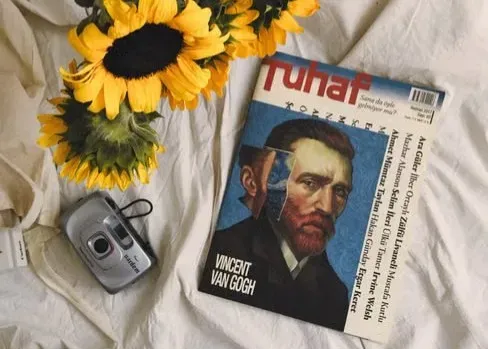
Vincent van Gogh wrote hundreds of letters to his younger brother Theo over the course of his short, difficult life, and together they form one of the most detailed personal records left by any major artist. The letters describe his struggles with money, his evolving painting techniques, and his deteriorating mental health in language far more direct than anything found in his art. They also reveal a warmer, more self aware man than the tortured genius stereotype that later grew up around him.
What surprised later scholars most was how clearly Van Gogh understood his own artistic ambitions, even while broke and often unwell. The letters show a painter who was methodical about color theory and composition, not simply an impulsive talent working on instinct. Theo kept nearly every letter his brother sent him, and that quiet act of preservation is largely why the world today has such an intimate portrait of an artist who sold almost nothing during his lifetime.
Twelve letters, twelve very different centuries, and yet the same basic truth runs through all of them. People rarely write with history in mind. They write to reassure a mother, warn a president, confess to a lover, or simply pass the time on a long sea voyage. It is only later, sometimes decades or centuries later, that those private words get pulled into the light and made to answer questions the writers never thought to ask.