Most people treat studying as a willpower problem. They tell themselves they just need to sit down longer, push harder, stay up later. What top students have figured out – often through trial, error, and a fair amount of frustration – is that the method matters far more than the hours. Studying smarter isn’t a cliché. It’s a conclusion backed by decades of cognitive science research that most students never encounter.
The habits below aren’t tricks or shortcuts. They’re patterns that consistently separate students who retain and apply knowledge from those who feel like they’re studying constantly but still struggling. Some of these will feel counterintuitive. That’s partly the point.
1. Active Recall Over Passive Rereading

Active recall is a learning technique where you test yourself on information rather than passively rereading it. It sounds simple, but the difference in outcomes is significant. The landmark Roediger and Karpicke study found that students who practised recall retained roughly four-fifths of material after a week, compared to about a third for those who reread.
Active recall works because retrieval strengthens memory traces, diagnoses gaps, encourages elaboration, and reduces the “fluency illusion” that makes rereading feel productive while producing little durable knowledge. Closing the book and asking yourself what you just learned is one of the highest-value things you can do in a study session. Most students never do it.
2. Spaced Repetition Instead of Cramming

Spaced repetition is a learning technique where the learner reviews material at increasing intervals to enhance long-term retention of memory. Spacing out reviews at increasing intervals rather than cramming the entire material in a single sitting reinforces memory and recall of information. The forgetting curve is real, and spaced practice is how you fight it.
A Journal of Experimental Psychology study showed participants using spaced repetition achieved significantly higher recall accuracy than those who crammed. Similarly, a study in the Journal of Medical Education demonstrated that students who used spaced repetition for anatomy achieved an average test score noticeably higher than those who didn’t use the method. Dunlosky et al.’s 2013 review of ten learning techniques rated practice testing as one of only two “high utility” strategies, alongside spaced repetition.
3. The Pomodoro Technique for Structured Focus
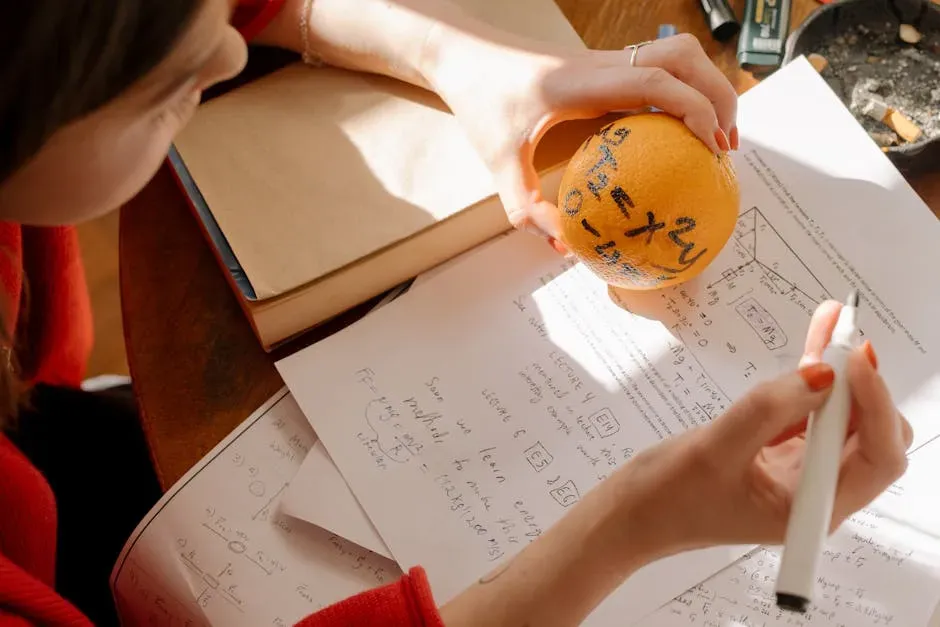
The Pomodoro Technique asks you to alternate focused work sessions with frequent short breaks to promote sustained concentration and stave off mental fatigue. The classic structure involves 25-minute focused blocks followed by 5-minute breaks, and after four rounds, a longer 15 to 30-minute break. It sounds almost too simple, but the psychological mechanics behind it are well-documented.
Studies show that it takes an average of 23 minutes to regain full focus after being interrupted. By committing to a single task per session, you eliminate distractions and allow your brain to enter a state of deep focus faster. Sleep researchers have also discovered that humans cycle through 90-minute “ultradian rhythms” of higher and lower alertness throughout the day, and some productivity experts suggest aligning work sessions with these natural rhythms.
4. Prioritizing Sleep as a Non-Negotiable

During sleep, the body completes the elimination of fatigue, the response and integration of the immune system, and the consolidation of memory. Top students understand that pulling an all-nighter before an exam is almost self-defeating. The hours spent sleeping after studying are part of the learning process, not time wasted.
Academic performance is influenced by sleep, though the relationship between academic outcomes and subjective sleep measures remains an active area of research. What the evidence does consistently show is that sleep regularity matters as much as sleep duration. Students who keep consistent sleep schedules tend to perform better than those with erratic patterns, even when total sleep time is similar.
5. Teaching the Material to Someone Else
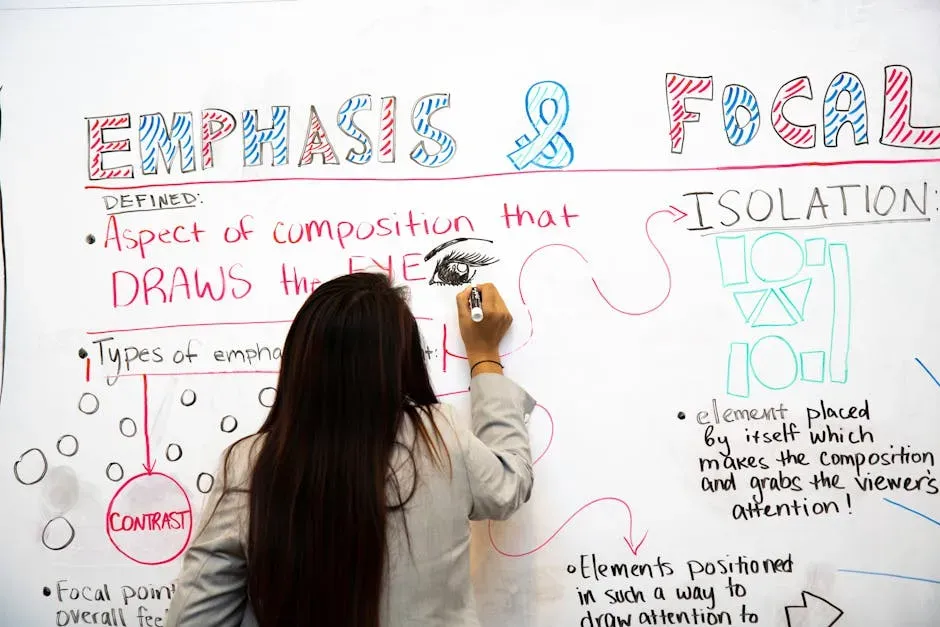
In a 2024 study, students who were asked to explain a concept to a classmate saw “greater and more complex brain activity” and performed nearly 50 percent better on a test of the material than students who simply restudied. This is sometimes called the Protégé Effect: the act of preparing to teach something forces you to organize and genuinely understand it.
Asking students to teach a topic to a peer can reveal gaps or contradictions in their own understanding of the material. In the absence of peers, research suggests that explaining a concept out loud to yourself, an animated character on a screen, or even a rubber duck can have similar effects. It feels a little odd at first, but it works reliably.
6. Using Deep Work Blocks for Complex Subjects

Quality beats quantity – four focused hours outperform eight distracted ones. Our brains operate on ultradian rhythms, and research suggests that the human brain can only maintain intense focus for a limited time, typically around 90 minutes, before needing a rest. Top students work with these rhythms rather than ignoring them.
Deep work, a concept popularized by productivity expert Cal Newport, refers to a state of focused, uninterrupted concentration on a cognitively demanding task. In a world of constant distractions, developing this skill can greatly improve productivity, creativity, and the quality of your output. Building even one daily deep work block into a study routine can change academic results over time.
7. Interleaving Different Subjects During Sessions

Most students study one subject at a time until it feels solid, then move to the next. Interleaving, which means mixing different topics or problem types during practice, is one of the most effective techniques identified by cognitive science. It feels harder and messier, which is precisely why so few students do it.
The gap between what feels effective and what actually works persists because effective learning creates friction. Retrieval produces errors. Spacing requires patience. Interleaving disrupts fluency. Our intuitions reward ease rather than effectiveness. Accepting that productive studying should feel somewhat difficult is itself a major mindset shift.
8. Eliminating Phone Distractions Completely During Study

Students often underestimate just how distracting their devices can be. Research suggests that cell phones promote a habitual “checking behavior” and that once students turn their attention to their phones due to a notification, they often engage in a chain of subsequent task-unrelated acts on their device.
Even a minuscule three-second distraction can lead to twice as many errors when performing a sequence of tasks that require focus, while another study reveals that simply having a phone on your desk can decrease performance, regardless of whether you’re looking at it. Moving the phone to another room entirely is one of the easiest and most consistently effective study habits research supports.
9. Setting Micro-Goals Before Each Session

Top students plan their study sessions ahead of time, breaking down large tasks into smaller, more manageable ones. Vague intentions like “I’ll study biology tonight” produce far less than specific plans like “I’ll complete practice questions on chapters 4 and 5.” The specificity changes how your brain engages with the task.
Students are prone to setting objectives and priorities but lack the time management skills to achieve them efficiently. Micro-goals solve this by making progress visible and decisions fewer. High-achieving students consistently employ structured routines, including goal-setting, time management, and regular review, alongside study aids like flashcards and visual organizers.
10. Tracking Study Time Honestly

Research shows that students overestimate their actual study time by somewhere between 30 and 50 percent. This means students who believe they’re putting in four hours may genuinely only be concentrating for two. Tracking sessions with a timer or app removes this self-deception.
Students can monitor effectiveness by tracking progress through practice assessments, maintaining detailed study logs, and correlating scheduled study sessions with improvements in test performance. It sounds administrative, but the data you collect about your own patterns becomes genuinely useful. You start seeing which conditions, times, and session lengths actually produce results for you personally.
11. Building a Consistent Daily Study Habit

Research shows it takes about 66 days to form a habit. Top students don’t rely on motivation spikes or exam pressure to trigger studying. They build systems with fixed cues, consistent timing, and small starting commitments that reduce the friction of beginning each session.
Most students who try to study more end up failing not because they lack motivation, but because they’re relying on willpower instead of systems. Research shows that roughly four-fifths of ambitious resolutions fail within weeks, but habit-based approaches have a much higher success rate because they focus on systems rather than willpower. Showing up daily at the same desk, at the same time, regardless of motivation, is the actual foundation.
12. Focusing on Mastery, Not Just Grades

A recently published study from the University of Georgia found that students who want to master course content are more likely to utilize deep and effective study skills. The distinction matters more than it first appears. Students chasing grades tend to cram and skim. Students chasing understanding go deeper, and the grades usually follow.
Students who want to improve themselves and master the material tend to be more motivated to dig deeper. They take the time to understand concepts, challenge themselves, and reflect on what they’ve learned. That effort often pays off. Students focused mainly on outperforming their peers may engage with the material, but their efforts don’t necessarily lead to better grades.
13. Using Self-Quizzing as the Core Practice Tool

Practice testing is supported by evidence of the “testing effect,” for which retrieving information itself actually promotes learning. The memory benefits can be achieved with any strategy in which students complete problems or practice retrieval without relying on external materials, including quizzing, practice testing, and flashcards.
Self-quizzing is especially effective at improving performance on delayed tests, even as long as nine to eleven months after initial learning. Additionally, self-quizzing has been shown to be effective on a range of tasks from recall to inference. Most students treat practice tests as something you do only the night before an exam. Top students use them throughout the entire learning process.
14. Embracing a Growth Mindset About Difficulty
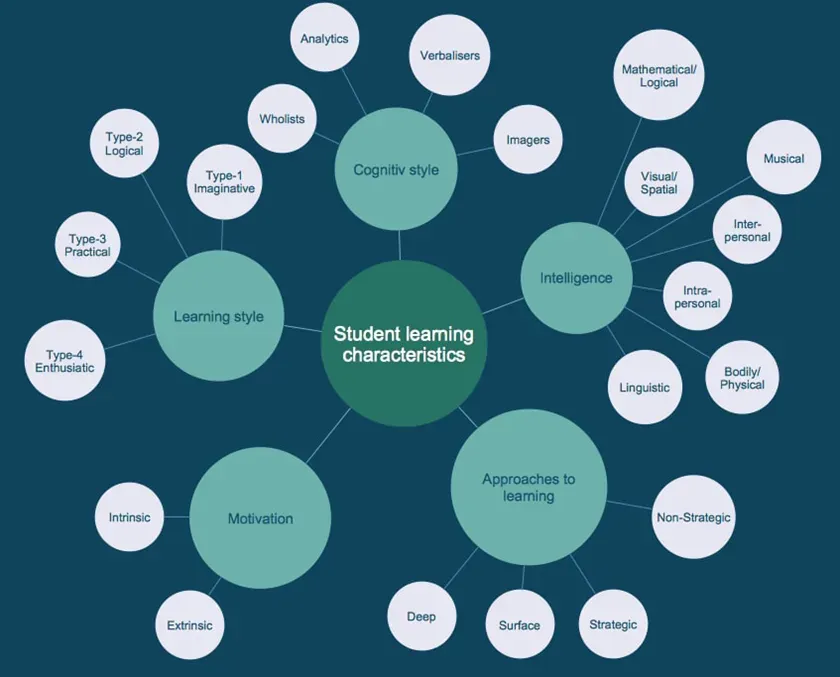
A well-known study on growth mindset was conducted by psychologist Carol Dweck. Her research has shown that students who believe their intelligence and abilities can be developed through effort and learning tend to achieve higher academic success compared to those with a fixed mindset.
In one specific study, Dweck and her team conducted an experiment with middle school students, showing that teaching students about the growth mindset led to significant improvements in their grades. The practical implication is straightforward. When you hit a concept that’s confusing, top students treat it as a signal to slow down and engage more deeply rather than a sign they’re not cut out for the subject.
15. Reviewing Material at Strategic Intervals

Space your reviews out over time. Don’t cram everything into one session. Review after a day, then after a few days, then after a week. The gaps between reviews are where the real strengthening happens. This is a practical application of the forgetting curve, and it’s one of the most consistently under-used strategies available to students.
Combining evidence-based techniques into a workable routine looks like this: actively engage with new material during first exposure, create flashcards or practice questions the same day, attempt your first recall within 24 hours, do brief reviews with active recall every few days for the first week, then expand intervals based on performance thereafter. It takes discipline to build, but it replaces marathon cramming with something far more effective and far less stressful.
16. Applying Self-Explanation to Connect New Knowledge
Overall, research suggests that active, more effortful strategies – such as self-quizzing, summarization, and self-explanation – are more effective for learning than passive strategies such as rereading and rewriting notes. Self-explanation is the habit of pausing while studying and asking yourself why something is true, not just what it is. It forces elaboration and genuine understanding.
Elaboration, which means connecting new knowledge to existing understanding, is one of the most effective techniques identified by cognitive science for durable learning. Looking for ways to not just superficially learn the material, but to make connections between what you already know, what the material has to say, and how it applies to something relevant is exactly what separates students who understand from those who merely recognize.
None of these habits require exceptional intelligence or unlimited time. They require the willingness to study in ways that feel slightly harder in the moment but produce results that passive study never can. The science on this has been clear for years. The gap is simply between knowing and actually doing.