There’s a strange kind of magic trick that happens in the movies, one that has nothing to do with money. Some of the most talked about, most rewatched moments in film history came together not through massive budgets or sprawling crews, but through a clever lens, a can of syrup, or a well timed camera trick. What looks like it cost a fortune on screen sometimes started as a scrappy solution to a problem nobody had solved before. That gap between perceived cost and actual cost is where this story lives. Three scenes, spread across seventy years of filmmaking, show how craft and imagination can outperform a big check every time.
1. The beach dolly zoom in Jaws (1975)
The shot of Chief Brody watching a shark attack unfold on a crowded beach is one of the most studied moments in cinema history, yet it did not require a single dollar of special effects budget. The camera performs a dolly zoom, a technique invented by Hitchcock and cameraman Irmin Roberts for the 1958 film Vertigo, where the camera moves backward on a dolly while the lens zooms forward. The result is unsettling in a way that feels expensive, even though it’s really just a mechanical push and pull.
The result is a sickening distortion of space where Brody’s face stays the same size, but the background stretches into an infinite tunnel of horror. It’s a stark contrast to the film’s other big ticket item, the mechanical shark, which famously broke down constantly and drained the production’s resources. Spielberg’s team built three full-scale mechanical sharks, each 25 feet long and each costing about 500,000 dollars in 1975, roughly 3 million dollars per shark today. The beach shot, by comparison, needed nothing more than a rented lens and a dolly track, proof that the film’s most psychologically effective moment cost almost nothing next to its most expensive prop.
2. The Trinity test explosion in Oppenheimer (2023)
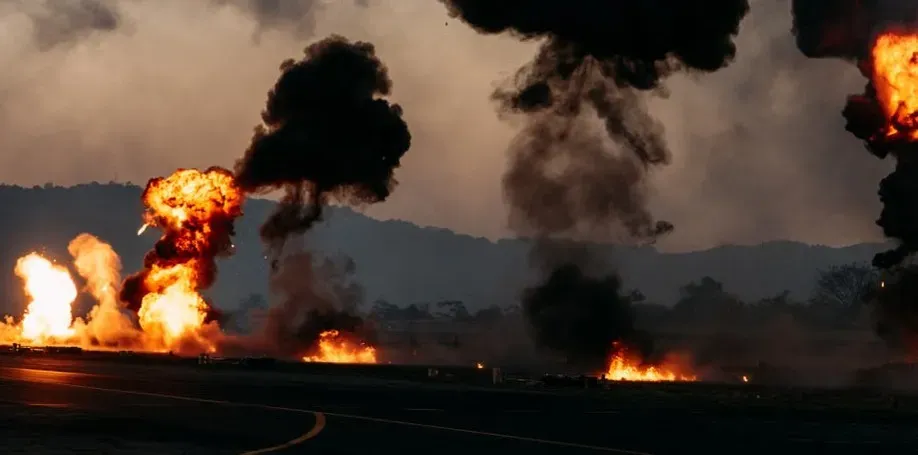
Christopher Nolan built his reputation on skepticism toward computer generated imagery, and the Trinity test sequence in Oppenheimer became the ultimate test of that philosophy. In a series of interviews, Nolan stated that the Trinity test in the movie is based on practical effects, saying there are zero CGI shots. Rather than rendering a nuclear explosion digitally, which would typically require an enormous visual effects budget and months of rendering time, the crew built the moment out of small, controllable materials.
Cinematographer Hoyte van Hoytema described the approach directly. “Obviously, we couldn’t make an explosion the size of the actual explosion so we used trickery… We created science experiments. We built aquariums with power in them. We dropped silver particles in them. We had molded metallic balloons which were lit up from the inside. We had things slamming and smashing into one another such as ping-pong balls, or just had objects spinning. We had long shutter speeds, short shutter speeds, wide negative color, negative overexposure, underexposure. It was like a giant playground for all of us.” The full scale detonation itself was assembled from smaller combustions rather than one giant blast. The team decided on an explosion that comprised multiple smaller combustions, with the largest primarily gasoline based, which when ignited burst into a mushroom cloud much like a nuclear blast, only smaller. None of it required the digital effects houses that usually charge millions for a comparable sequence, which is exactly why the scene has become such a talking point among filmmakers.
3. The shower murder in Psycho (1960)
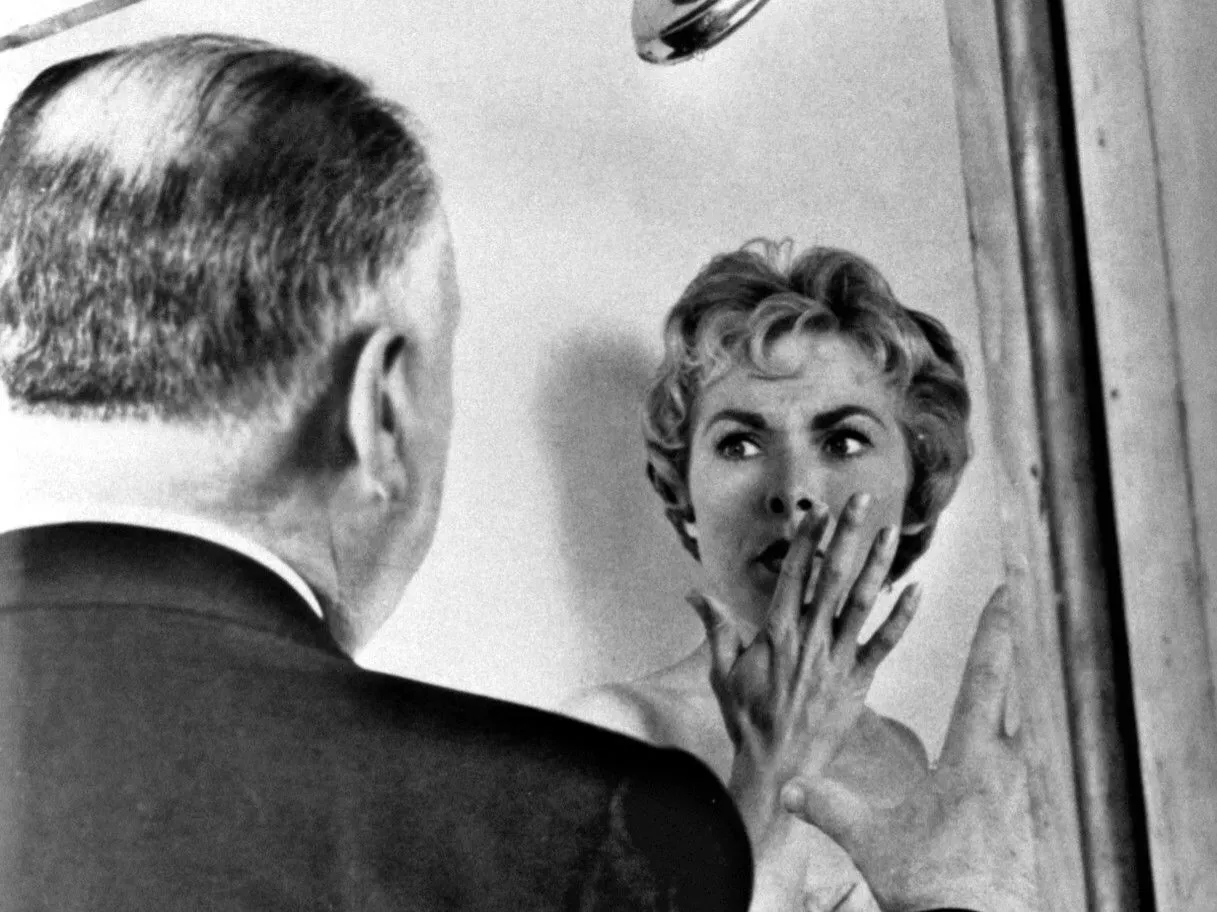
Alfred Hitchcock’s Psycho remains one of the most analyzed sequences ever filmed, and much of its terror comes from suggestion rather than spectacle. The blood that swirls down the drain is not blood at all. “They had a can of Hershey’s syrup, which was watered down, and that’s what they used for blood,” Janet Leigh’s body double Marli Renfro later confirmed. Chocolate syrup, chosen simply because it photographed better in black and white than real stage blood, became the substance behind one of the most famous images in film history.
The scene’s power came from editing and sound rather than any costly visual trick. The documentary 78/52 refers to the total number of camera setups, 78, and cuts, 52, in the scene, which itself lasts a mere 45 seconds. Hitchcock was also working under real financial constraints at the time. Paramount gave Psycho the green light but refused to offer Hitchcock his usual budget, so with a lack of funds and resources, he decided to shoot the film entirely in black and white to cut costs. The entire film, syrup, screams, and screeching violins included, was made for a fraction of what a modern horror release would cost, and it still tops critics’ lists of the scariest moments ever filmed. Each of these scenes proves the same quiet point. A limited budget doesn’t limit imagination, it sharpens it. The shark that kept breaking down forced Spielberg toward suggestion instead of spectacle. Nolan’s refusal to lean on CGI pushed his crew toward inventive, tabletop scale physics. Hitchcock’s thin budget led him to a can of chocolate syrup that still reads as blood on screen today. None of these solutions were the expensive option, yet all three became the version audiences remember decades later.