Some albums don’t just mark a career high point. They become the whole conversation. When a record is so complete, so finely tuned to a single moment in a person’s life, it can end up defining everything that comes before and after it, sometimes unfairly. The artist moves on. The world doesn’t quite.
This isn’t about failure. Most of the artists here kept making music, kept touring, kept evolving. It’s more that certain albums arrive with a specific kind of gravity that’s nearly impossible to reproduce. Here are five of those records, and the complicated space each artist found themselves in once the dust settled.
Lauryn Hill – The Miseducation of Lauryn Hill (1998)

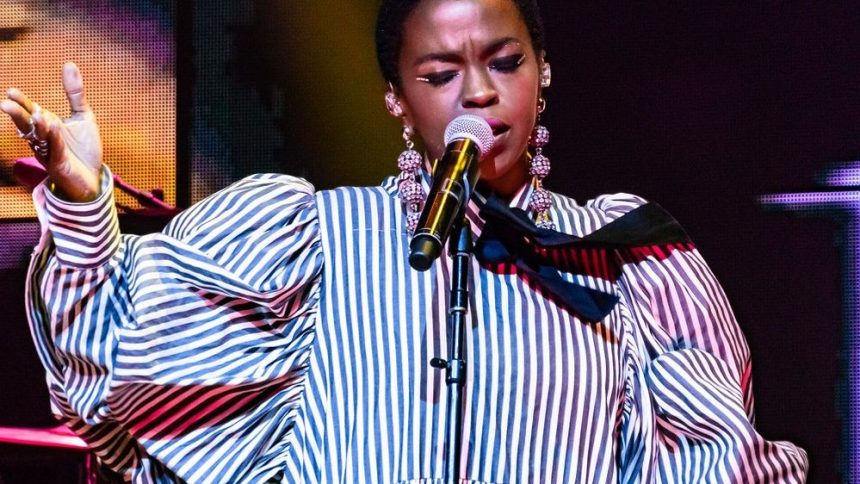
Released on August 19, 1998, by Ruffhouse Records and Columbia Records, “The Miseducation of Lauryn Hill” was Hill’s debut solo studio album, recorded after her band the Fugees went on hiatus. A substantial commercial success, the album debuted atop the US Billboard 200 with first-week sales of 422,000 copies, the most for a woman at the time. At the 41st Annual Grammy Awards, it won Album of the Year and Best R&B Album, and Hill broke records for most nominations and wins at a single ceremony for a woman. It became the first hip-hop record to win the Grammy for Album of the Year. That refusal to conform is what made the record revolutionary. It showed hip-hop could embrace vulnerability, melody, and personal storytelling without losing authenticity.
Hill’s critically acclaimed debut and only solo record to date has sold more than 20 million copies worldwide, making it the bestselling album by a female rapper, the bestselling neo-soul album of all time, and one of the bestselling albums in history. The Miseducation remains Hill’s only studio album. It’s a testament to the titanic legacy of that album that it still holds so much intrigue with the general public, but it’s also indicative of how scattershot Lauryn’s career has been post-Miseducation that so much of her legacy is solely defined by one release.
Nas – Illmatic (1994)

Illmatic is the debut studio album by the American rapper Nas, released on April 19, 1994, through Columbia Records. After signing with the label with the help of MC Serch, Nas recorded the album in 1992 and 1993. The album’s production was handled by DJ Premier, Large Professor, Pete Rock, Q-Tip, L.E.S., and Nas himself. Styled as a hardcore hip-hop album, Illmatic features multi-syllabic internal rhymes and inner-city narratives based on Nas’s experiences growing up in the Queensbridge Houses in Queens, New York. The album is widely regarded as one of the greatest and most influential hip-hop albums of all time, appearing on numerous best album lists by critics and publications. Billboard wrote in 2015 that “Illmatic is widely seen as the best hip-hop album ever.”
While Nas has had a long and often excellent career, Illmatic remains his most complete and cohesive statement – concise, impactful, and revolutionary. In 2020, the album was ranked by Rolling Stone at number 44 on its list of the 500 Greatest Albums of All Time, and in the following year, it was selected by the Library of Congress for preservation in the National Recording Registry for being “culturally, historically, or aesthetically significant.” Nas himself once reflected that celebrating one album over more than a decade of further work felt strange to him, saying he didn’t want to celebrate another Illmatic anything. That tension between creator and creation is precisely what makes this case so fascinating.
Guns N’ Roses – Appetite for Destruction (1987)

Their debut album, Appetite for Destruction, perfectly captured the chaos and debauchery on its way to becoming the best-selling debut album in U.S. history with over 18 million copies sold. Released July 21, 1987, the album arrived at the peak of glam metal’s heyday, and while they drafted off the popular genre’s aesthetic, there was something much more unpredictable and volatile about GN’R, and that intangible magnetism comes through on their debut. Appetite for Destruction’s raw, unified power was fuelled by genuine chaos: the band was living through intense internal friction and substance abuse.
The album peaked at number one on the US Billboard 200 and became the seventh best-selling album of all time in the United States, as well as the best-selling debut album. With over 30 million copies sold worldwide, it is also one of the best-selling albums of all time. The result was a legendarily potent sound that was never again captured with such consistent intensity. Later albums, burdened by sprawling ambition, internal friction, and orchestral attempts, diluted this initial, potent formula. The band kept releasing music and drawing enormous crowds, but the original chemistry that produced that debut was effectively gone by the time the band splintered in the mid-1990s.
Alanis Morissette – Jagged Little Pill (1995)

Released on June 13, 1995, Jagged Little Pill was the album that turned Canadian singer-songwriter Alanis Morissette into a worldwide star. Morissette stated that during the process of making the album, she was in a bad mental condition after being robbed at gunpoint, suffering from angst and daily panic attacks, and tried to overcome her troubled feelings by expressing her emotions in the lyrics. Jagged Little Pill was a worldwide commercial success, topping the charts in thirteen countries. With sales of over 33 million copies worldwide, it is one of the best-selling albums of all time and made Morissette the first Canadian to achieve double diamond sales. Jagged Little Pill was nominated for nine Grammy Awards, winning five, including Album of the Year, making the then 21-year-old Morissette the youngest artist to win the top honor up to that point.
Morissette’s success with Jagged Little Pill was credited with opening doors for female singers such as Fiona Apple, Meredith Brooks, Tracy Bonham, Patti Rothberg, Shakira, Natalie Imbruglia and later Pink and Avril Lavigne. She continued with her next album Supposed Former Infatuation Junkie in 1998, which saw her adapt an experimental sound and was highly anticipated. Yet none of her subsequent records approached the cultural impact of Jagged Little Pill, which still drew enough weight three decades later that its themes inspired a musical stage production premiering in 2018, and Morissette eventually resumed touring after 2021, making regular concert and festival appearances in honor of the record’s 30th anniversary in 2025.
The Stone Roses – The Stone Roses (1989)
The Stone Roses’ eponymous debut is one of the most confident, cohesive, and influential first albums in British music history. Blending jangly guitar pop with psychedelic flourishes, acid house rhythms, and a distinctly northern swagger, it set the blueprint for the Madchester scene and the Britpop wave that followed. Ian Brown’s laid-back vocal style, John Squire’s shimmering, chiming guitar work, and the propulsive rhythm section of Mani and Reni combined into a sound both nostalgic and forward-looking. Tracks like “I Wanna Be Adored,” “She Bangs the Drums,” and the transcendent “I Am the Resurrection” remain timeless, capturing the feeling of youth, rebellion, and euphoria.
Although the band later released a second album, Second Coming, it never matched the cultural or musical impact of their debut. The Stone Roses arrived fully formed – a lightning-in-a-bottle record that still feels like a defining statement, and one they simply couldn’t top. Even with the momentum that came with their debut record, it’s hard to look at the rest of the band’s career trajectory without thinking it’s more than a little hollow in comparison. They were still capable of making great music together, but there’s a danger that comes with setting the bar up far too high. The band eventually split after Second Coming failed to land with anything close to the force of the first record, and their later reunion tours felt like celebrations of that original, unrepeatable moment.
What links all five of these cases isn’t failure. It’s something closer to the rarity of perfect alignment: the right person, the right collaborators, the right emotional moment, all arriving at once. That kind of convergence doesn’t follow a schedule, and it can’t be engineered twice. The albums they left behind are proof that sometimes a single record is more than enough.