Hollywood blockbusters are easy to find. They dominate every multiplex, saturate every streaming homepage, and absorb the lion’s share of awards discourse. Meanwhile, some of the most arresting, emotionally precise filmmaking of the past several years has been quietly happening in Germany, France, Brazil, and elsewhere, picked up by a handful of sharp distributors, celebrated at Cannes or Venice, and then largely ignored by mainstream audiences who never made it past the subtitles.
Parasite, the first international film to take home the prize for Best Picture at the Academy Awards, opened many people’s eyes to just how many incredible films were out there if people were willing to look beyond the borders of their home country. That door has been open for years now. What follows are seven films that walked straight through it and earned every bit of the attention they rarely received.
1. All Quiet on the Western Front (Germany, 2022)

Set during World War I, Edward Berger’s film follows the life of an idealistic young German soldier named Paul Bäumer. After enlisting in the German Army with his friends, Bäumer finds himself exposed to the realities of war, shattering his early hopes of becoming a hero as he does his best to survive. It’s a perspective rarely given screen time in English-language cinema, and that inversion of the expected viewpoint gives the film a disorienting moral weight that most war movies never attempt.
The film received a leading 14 nominations at the 76th British Academy Film Awards, winning seven including Best Film, and nine nominations at the 95th Academy Awards, winning four: Best International Feature, Best Cinematography, Best Original Score, and Best Production Design. Those four wins tied it with Fanny and Alexander, Crouching Tiger Hidden Dragon, and Parasite as the most-awarded non-English language film in Oscar history. From its release on Netflix to early 2023, the film logged over 150 million hours viewed worldwide, and viewership tripled after its Oscar and BAFTA nominations. It was clearly seen. Whether it was truly absorbed is another matter.
2. Anatomy of a Fall (France, 2023)

The film premiered at the 76th Cannes Film Festival on 21 May 2023, where it won the Palme d’Or and the Palm Dog Award. The Hitchcockian mystery thriller is about a woman, played by Sandra Hüller, accused of murder when her husband dies of suspicious causes. What separates it from standard legal thrillers is its refusal to offer clean answers. It is, at its core, a dissection of a marriage rather than a conventional crime story.
The film received five nominations at the 96th Academy Awards, including Best Picture, Best Director for Justine Triet, and Best Actress for Hüller, and won Best Original Screenplay. Winning the Palme d’Or made it the third movie directed by a woman to receive the honor, following Julia Ducournau for Titane in 2021 and Jane Campion for The Piano in 1993. Despite all that recognition, the film still sits outside the cultural conversation that most Americans have about great cinema of this decade. It deserves a central place in it.
3. I’m Still Here (Brazil, 2024)
I’m Still Here is a 2024 political biographical drama directed by Walter Salles, based on Marcelo Rubens Paiva’s memoir of the same name. It stars Fernanda Torres and Fernanda Montenegro as Eunice Paiva, a mother and activist coping with the forced disappearance of her husband, the dissident politician Rubens Paiva, during the military dictatorship in Brazil. Salles shoots the early domestic scenes with an almost luminous warmth, which makes the film’s later atmosphere of surveillance and dread land that much harder.
At the 97th Academy Awards, the film was nominated for Best Actress for Torres and Best Picture, and won Best International Feature Film, becoming the first-ever Brazilian-produced film to win an Academy Award. Grossing roughly four times its production budget, it became the highest-grossing Brazilian film since the COVID-19 pandemic. Brazilians widely embraced the film, whose release coincided with the celebrations marking 40 years since the restoration of democracy in Brazil. For international audiences, it’s a film about loss, resilience, and memory that speaks well beyond its borders.
4. The Zone of Interest (UK / Poland / Germany, 2023)
Jonathan Glazer’s The Zone of Interest was destined to be a polarizing film simply based on its subject material. The story follows Auschwitz commandant Rudolf Hoss and his wife Hedwig as they try to build a normal life next to a concentration camp. Glazer sought to prove that the Holocaust was executed by real people rather than by mystical beacons of evil, and put faces to the kind of destruction wrought by those complacent in the Nazi regime. It is one of the most unsettling films of the decade precisely because of what it refuses to show you.
Partner offer
Cannes’ Grand Prix, its second prize, went to Glazer’s The Zone of Interest, a chilling Martin Amis adaptation about a German family living next door to Auschwitz. It is Glazer’s first film in a decade and based on the novel of the same name by Martin Amis, who died just shortly after the film’s Cannes premiere. The film uses ambient sound with extraordinary precision: the sounds of what’s happening on the other side of the garden wall are never narrated, but they never leave. It stays with you in ways that more explicit depictions of horror simply cannot.
5. The Seed of the Sacred Fig (Iran / Germany, 2024)
Mohammad Rasoulof’s The Seed of the Sacred Fig is not just a remarkable Golden Globes foreign-language film nominee; it is a testament to the resilience of art in the face of censorship. Filmed clandestinely in Iran under the constant threat of surveillance, this deeply personal work examines the intersection of authoritarianism, patriarchy, and family dynamics. The story centers on a newly appointed government investigator whose gun goes missing, and the paranoia this unleashes within his own household. It’s thriller mechanics in service of something much more serious.
The film’s use of the Persian language enhances its cultural specificity, grounding the narrative in the lived realities of its characters while emphasizing the oppressive structures they navigate. Rasoulof’s attention to linguistic detail is evident in the fiery exchanges between father and daughters, which expose generational divides and highlight the tension between tradition and modernity. Equally compelling is Rasoulof’s journey to bring the story to life. Facing an eight-year prison sentence for his activism, the director employed covert methods to complete the film. That context isn’t incidental. It’s inseparable from the film itself.
6. Monster (Japan, 2023)
Hirokazu Kore-eda’s Monster arrived at Cannes 2023 with a deceptively simple setup: a single incident at an elementary school, told from three different perspectives. The film follows a working-class character in the world of a Tokyo school, examining the people around a central situation through shifting points of view. Each section reframes what you thought you understood from the last, and by the third act, the film has quietly dismantled nearly every assumption it allowed you to build.
The best screenplay award at Cannes went to Yuji Sakamoto for Monster. Sakamoto penned Japanese director Hirokazu Kore-eda’s nuanced drama, with shifting perspectives, about two boys struggling for acceptance at school and at home. Monster also won the Queer Palm, an honor bestowed by journalists for the festival’s strongest LGBTQ-themed film. For a filmmaker already known internationally for Shoplifters and Still Walking, Monster represents Kore-eda at his most structurally ambitious, delivering a story about children with a moral complexity rarely afforded to stories about adults.
7. Fallen Leaves (Finland, 2023)
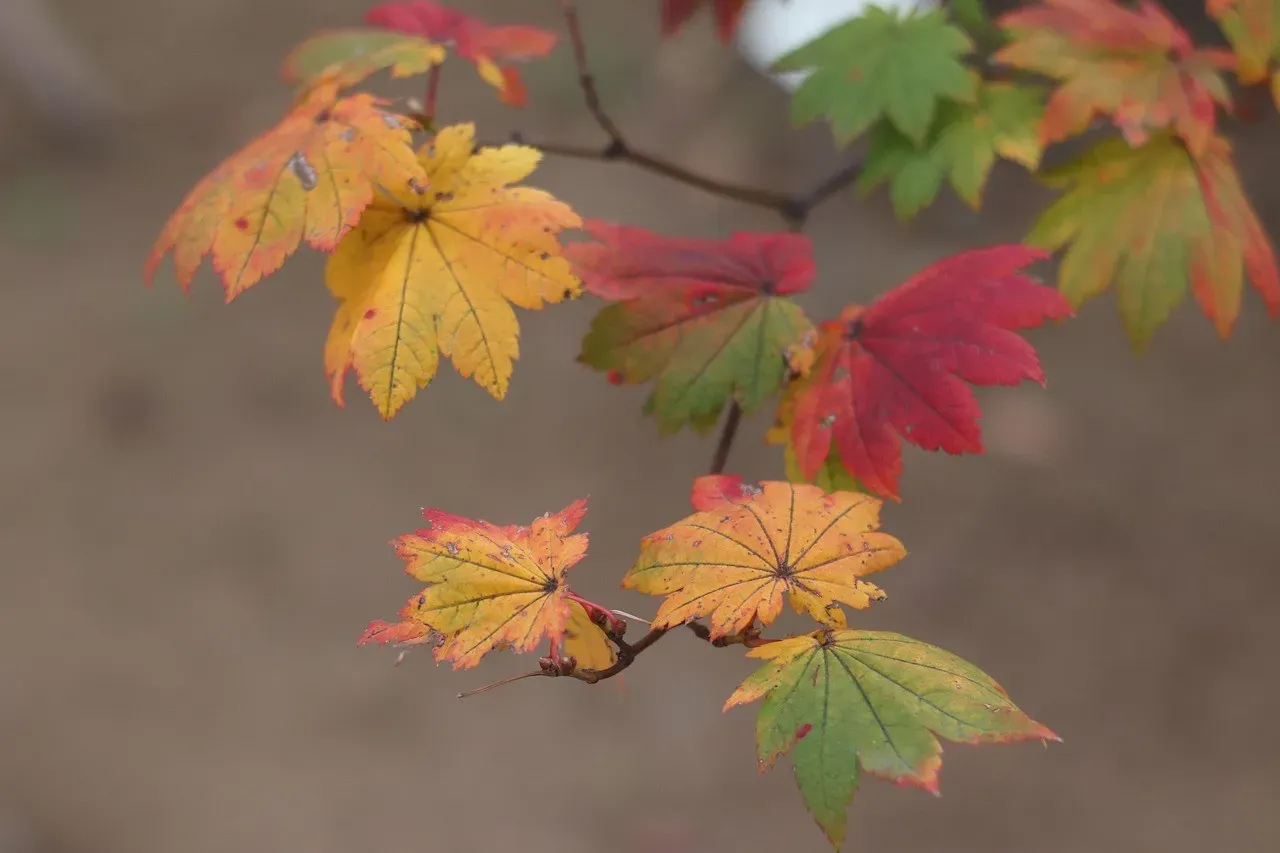
The jury prize at Cannes 2023 went to Finnish director Aki Kaurismäki’s Fallen Leaves, a deadpan love story about a romance that blooms in a loveless workaday Helsinki. The film follows two lonely, middle-aged workers who briefly cross paths and try, awkwardly and sweetly, to find their way back to each other. Kaurismäki’s signature style, minimal dialogue, flat staging, and a pervasive melancholy lit with pops of color, makes the simplest gestures feel like revelations.
Hollywood dominates global attention, but the most exciting filmmaking often happens elsewhere. 2025 was a particularly strong year for international cinema, with several countries producing work that pushes the boundaries of what film can accomplish. Fallen Leaves is a reminder that this has been true throughout the decade. It’s a film that runs under 80 minutes, costs almost nothing to make by any modern standard, and contains more genuine human feeling than most franchise films triple its runtime. Kaurismäki has been doing this for decades, and the Cannes jury recognition was long overdue.
What connects all seven films is a shared willingness to trust the audience. They don’t over-explain, over-score, or over-edit their way to emotional effect. They earn it through specificity of place, restraint of performance, and a genuine belief that the stories they’re telling matter. That’s not a uniquely foreign quality, but right now, it seems far easier to find abroad than at home.
Partner offer
Planning a trip to Vegas?
Compare hotel rates and show tickets on VEGAS.com.