Most predictions age badly. Someone claims the world will end, the stock market will double, or flying cars will replace the highway by some conveniently round year, and then time does what it always does: proves them wrong. History, though, holds a small and genuinely strange collection of exceptions. These are forecasts so accurate, so specific, and so improbably timed that they still provoke real unease when you look closely at the details.
What makes these cases unusual isn’t just that the predictions came true. It’s the manner in which they did. Some arrived through fiction, some through scientific intuition, and at least one appeared to ride the gravitational pull of a comet. None of them followed the path anyone expected.
1. Morgan Robertson’s Novel Described the Titanic Disaster 14 Years Early

In 1898, American author Morgan Robertson published a novella called “Futility,” featuring a fictional ocean liner named Titan that sinks in the North Atlantic after striking an iceberg. The real Titanic did not even exist as a concept yet. Robertson’s imagined ship was nearly a mirror image of the Titanic: both vessels were engineering marvels built for luxury travel, each had a passenger capacity of around 3,000, and both were considered the world’s largest ships at their time.
Both ships were hit on their starboard bow, both around midnight, and both sank in the North Atlantic precisely 400 nautical miles from Newfoundland. Both had a severe lack of lifeboats, with the Titan carrying 24 and the Titanic carrying just 20. After the Titanic’s sinking, some credited Robertson with precognition and clairvoyance, which he denied. Scholars instead attribute the similarities to his extensive knowledge of shipbuilding and maritime trends. Whether the explanation is craft, coincidence, or something harder to name, the overlap remains one of the most documented predictive oddities in literary history.
2. Jules Verne Wrote the Apollo 11 Mission a Century Before It Happened
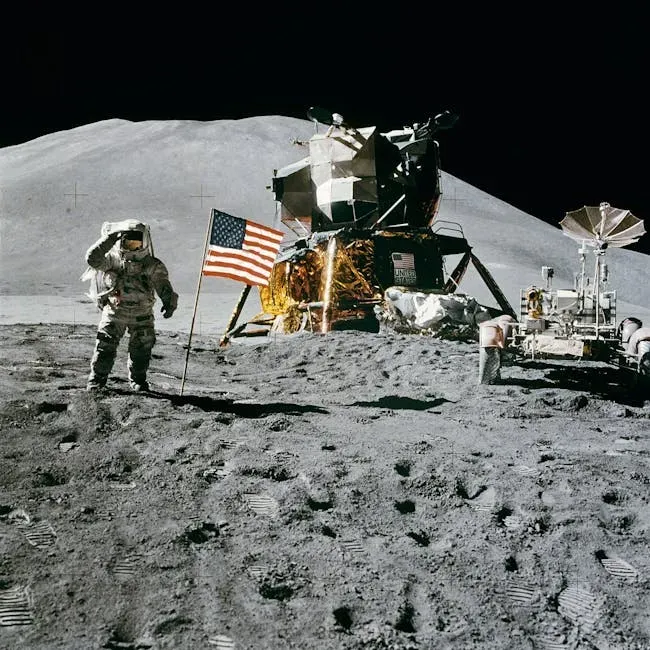
In “From the Earth to the Moon,” Verne described a crewed lunar voyage launched from Florida, carrying three astronauts who experienced weightlessness and returned via ocean splashdown. When Apollo 11 launched from Florida’s Kennedy Space Center in 1969 with three astronauts and splashed down in the Pacific, the overlap was jaw-dropping, matching Verne’s vision with roughly 80 to 90 percent accuracy on the major logistics. Both crews consisted of three people, and his projectile also launched from Florida, where all Apollo missions were launched. Even the name of his cannon, the Columbiad, echoed the Apollo command module, called Columbia.
Verne’s “lost novel,” set in the year 1960, wasn’t published at the time of its completion because it was considered too unbelievable and too pessimistic, so it was set aside until its eventual publication in 1994. His work didn’t just predict space travel. It helped make it feel possible, directly inspiring generations of aerospace engineers. There’s something quietly remarkable about a 19th-century French writer helping to set the psychological groundwork for one of humanity’s greatest achievements.
3. Mark Twain Predicted His Own Death to Within a Single Day
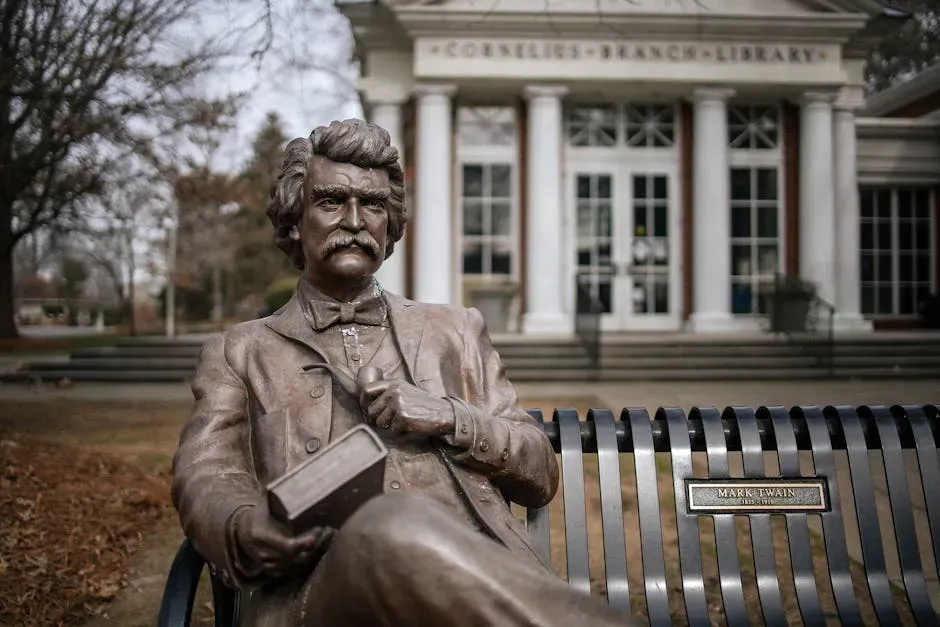
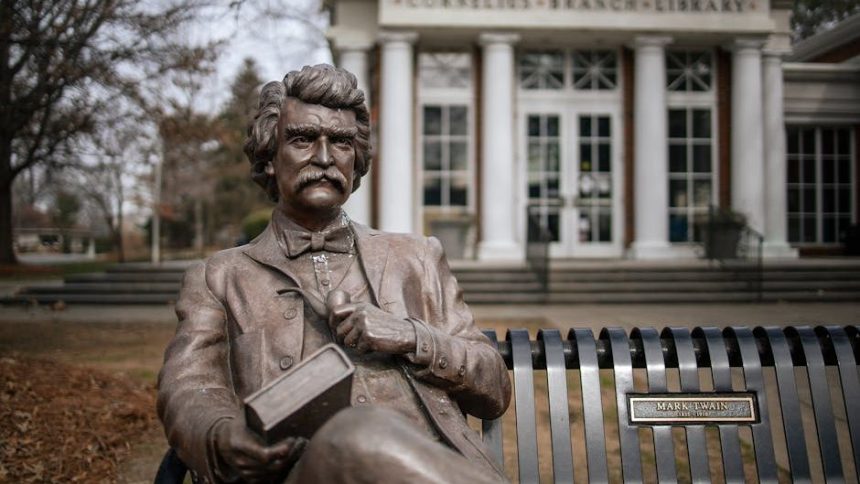
Mark Twain, the beloved American author, had a unique relationship with Halley’s Comet. He was born in 1835, the same year the comet swept across the sky. In 1909, Twain was quoted by his biographer Albert Bigelow Paine as saying he came in with Halley’s Comet and expected to go out with it, calling it the greatest disappointment of his life if he didn’t. Sure enough, on April 21, 1910, just one day after the famous comet reappeared, Twain passed away from a heart attack.
Though he was aware of a heart condition that would be the cause of death at the time of his declaration, he knew not when it would take him. The ability to predict not only to within one day the date of his own death a full year in advance, but also its coincidence with one of Earth’s most famous astronomical events, is a truly eerie forecast. It’s the kind of story that sits in an uncomfortable space between self-awareness and something far stranger.
4. Ferdinand Foch Called World War II Before the Ink on the Peace Treaty Dried
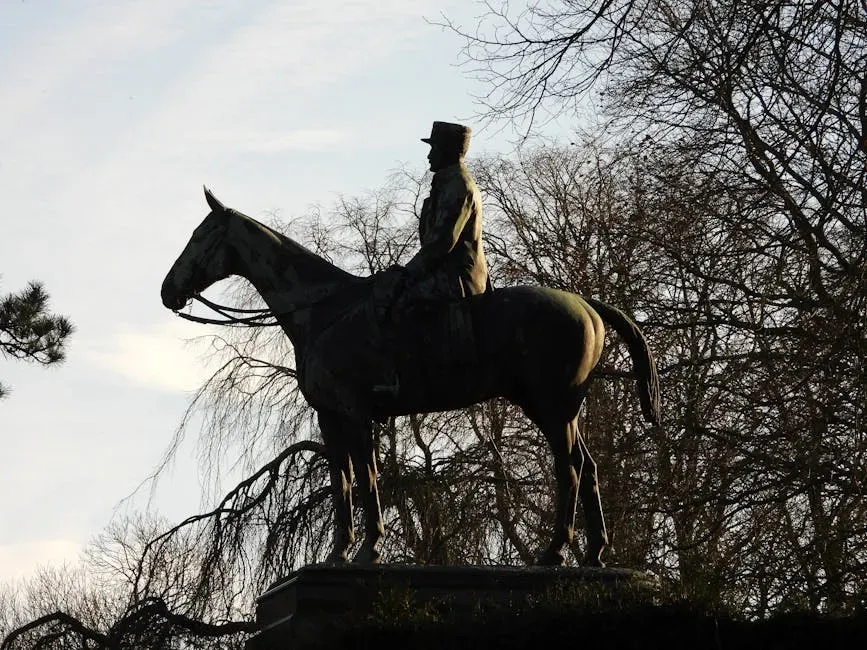
Ferdinand Foch was a French general who served as Supreme Allied Commander during World War I. Many historians regard his contribution to the war effort as integral in ensuring victory. A skilled military thinker, Foch was a key negotiator at Versailles after the German surrender. He believed that only a complete occupation of the Rhineland would protect France from future German aggression, but his demands were ignored. After the signing of the Treaty of Versailles, Foch stated plainly: “This is not a peace. It is an armistice for twenty years.” He would unfortunately be proven right not long after with the outbreak of World War II.
This prediction came more than 100 years before the Cold War, at a time when the geopolitical situation was still in flux. Tocqueville went one step further, accurately describing the rival ideological systems in both nations, but Foch’s precision was something else entirely. The Treaty of Versailles was signed in June 1919, and Germany invaded Poland in September 1939. That’s roughly 20 years and three months. Foch wasn’t predicting broadly. He was reading the situation with the clarity of someone who had no illusions about what the terms of surrender actually left unresolved.
5. Alexis de Tocqueville Foresaw the U.S.-Russia Cold War in the 1830s
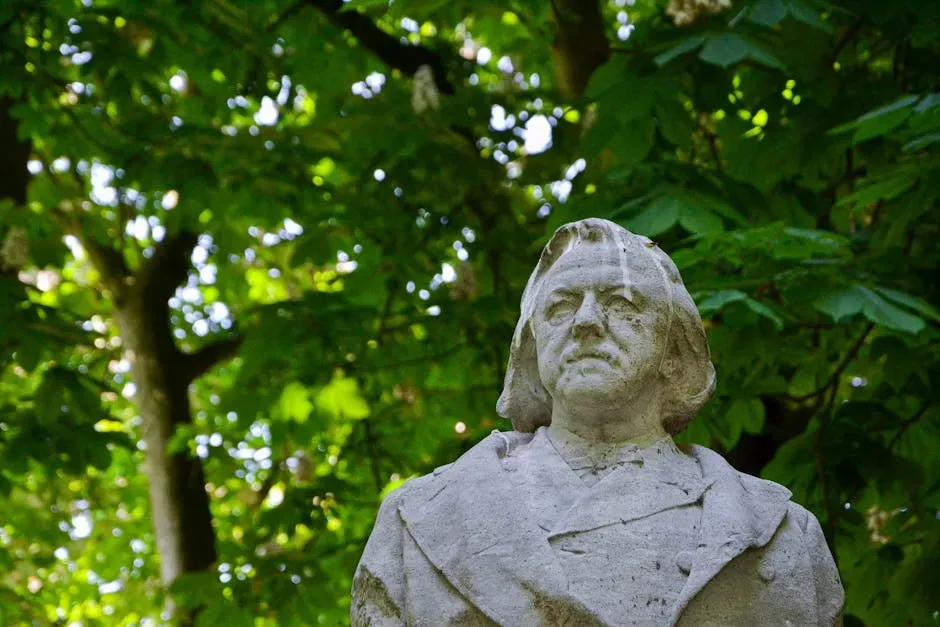
French aristocrat and political philosopher Alexis de Tocqueville toured the United States in the early part of the 19th century. After his travels, he wrote the acclaimed “Democracy in America.” His astute observations led to several predictions about the country’s future, including the rivalry between America and Russia, stating that the two countries would hold the destinies of half the world in their hands one day. It was an unusual opinion for the time, as both Russia and America then saw Great Britain as the primary rival power.
He foresaw two great powers rising: the U.S., growing through individual freedom and farming, and Russia, expanding by centralized military force. Though different in character, he predicted both would shape global destiny. This prediction came more than 100 years before the Cold War, at a time when Russia was still under tsarist rule and America had barely conquered half of its current size. The sheer scope of the foresight is what makes it land differently from most political commentary of the era.
6. John Elfreth Watkins Predicted Mobile Phones, Air Conditioning, and Television in 1900

Watkins became famous as a futurist not through grand theories or academic frameworks, but through a single, remarkable article titled “What May Happen in the Next Hundred Years,” published in the December 1900 issue of The Ladies’ Home Journal. When railroad engineer John Elfreth Watkins Jr. wrote this piece, his readers were likely amazed. At the turn of the 20th century, only the wealthiest homes had electricity and most families still used wood or coal for heating. Watkins claimed to have consulted experts from the nation’s top scientific institutions, and the results were startling.
He predicted mobile phones: “Wireless telephone and telegraph circuits will span the world. A husband in the middle of the Atlantic will be able to converse with his wife sitting in her boudoir in Chicago. We will be able to telephone to China quite as readily as we now talk from New York to Brooklyn.” He also predicted air conditioning: “Hot or cold air will be turned on from spigots to regulate the temperature of a house.” He correctly predicted a slew of future technologies, from battlefield tanks and mobile phones to air conditioning and digital cameras. The stranger part is that he published all of this in a women’s lifestyle magazine, not a scientific journal.
7. H.G. Wells Named “Atomic Bombs” in 1914, and a Physicist Read It and Then Built One
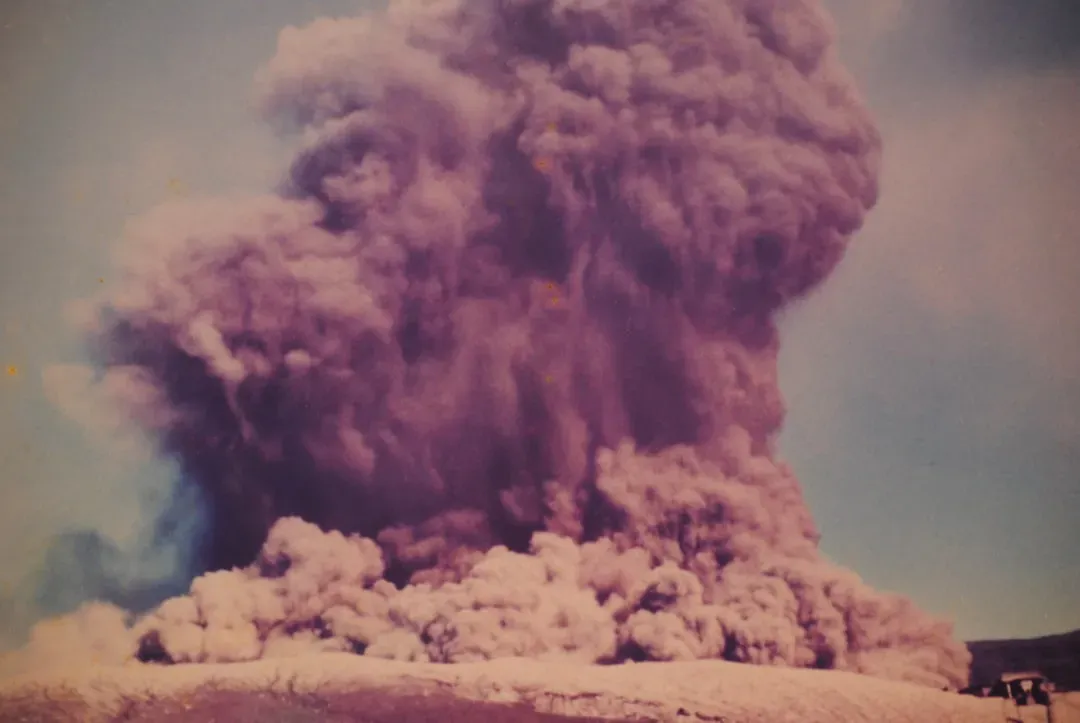
At the time Wells wrote about atomic energy, it was just a theoretical curiosity. Nuclear fission wouldn’t be discovered until 1938. Yet Wells described bombs that exploded continuously, spreading destruction and fear. Decades later, physicist Leo Szilard read the book and was so struck by the idea that he began to ponder how it might actually work. Szilard went on to conceive of the nuclear chain reaction, leading directly to the Manhattan Project and the first real atomic bombs in 1945.
Wells’s prediction didn’t just foreshadow history. It helped inspire the very scientists who made it come true. The power of fiction to influence reality is sometimes nothing short of explosive. That last word feels almost too appropriate here. What separates Wells from other prophets of doom is the causal chain: his novel didn’t merely resemble history from a distance. It actively fed into the thinking of the man who unlocked the science behind it. The prediction, in a strange and uncomfortable sense, helped bring itself to life.
What ties these seven cases together isn’t mysticism or magic. It’s a more grounded and perhaps more unsettling idea: that careful observation, deep expertise, and the willingness to follow logic past polite limits can produce visions of the future that feel, in retrospect, almost inevitable. The strangeness isn’t in the predictions themselves. It’s in how precisely, and how quietly, the future kept showing up right on schedule.