Most musicians dream of gold records and packed arenas, but for a handful of artists the real payday came from somewhere quieter: a thirty-second commercial spot, a TV drama’s closing scene, a movie trailer. These placements often paid more, and paid faster, than the record store ever did. The following eight albums became case studies in how sync licensing can outweigh traditional sales, sometimes rescuing a career that streaming and radio had already written off.
1. Moby – Play (1999)

Moby’s fifth album arrived to almost total indifference. It failed to chart at all in America, and in Britain it debuted at No.33, with little radio or MTV support to speak of. Rather than let the record die quietly, Moby and his team took an unusual route for the era and licensed every single track on Play for commercial usage, well before sync agencies made that a routine strategy.
The gamble paid off in a way nobody expected. The album introduced Moby to a worldwide mainstream audience, not only through a large number of hit singles that helped the album dominate worldwide charts for two years, but also through unprecedented licensing of its songs in films, television shows, and commercials. Play went on to become the biggest selling electronic music album of all time with over 12 million copies sold, and also the record whose songs have been the most licensed for commercial use in history, but industry accounts consistently note that it was the commercial income and exposure, not the initial sales, that turned the record’s fortunes around.
2. Sting – Brand New Day (1999)

By the late nineties, Sting faced a familiar problem for an older pop artist: he had had difficulty getting his music played on the youth-dominated contemporary radio stations. His manager at the time, Miles Copeland, pushed a different strategy entirely.
Instead of chasing radio, the team took a deliberate strategy to find a new audience for his music by playing songs from Brand New Day in commercials. The approach worked well enough that it became a widely cited example in entertainment law circles of an artist deliberately building an album’s commercial value through advertising rather than conventional promotion, with placements reportedly bringing in far more than typical single-song sync deals of the period.
3. José González – Veneer (2003)

José González’s debut was a modest, largely acoustic release that found only a niche audience upon release. Its trajectory changed dramatically when Sony picked the album’s cover of “Heartbeats” for its now-famous “Balls” advertisement, a spot built around thousands of colored balls bouncing down a San Francisco street.
The exposure was transformative. Industry observers point to it as a folk track that clocked up huge sales around the world after featuring on Fallon’s Sony Bravia “balls” work, and the commercial’s popularity is widely credited with driving far more attention to Veneer than the album’s initial, quiet release ever managed. The song’s association with the ad remains so strong that it is still one of the most cited examples of a single sync placement transforming an artist’s commercial standing.
4. Jet – Get Born (2003)
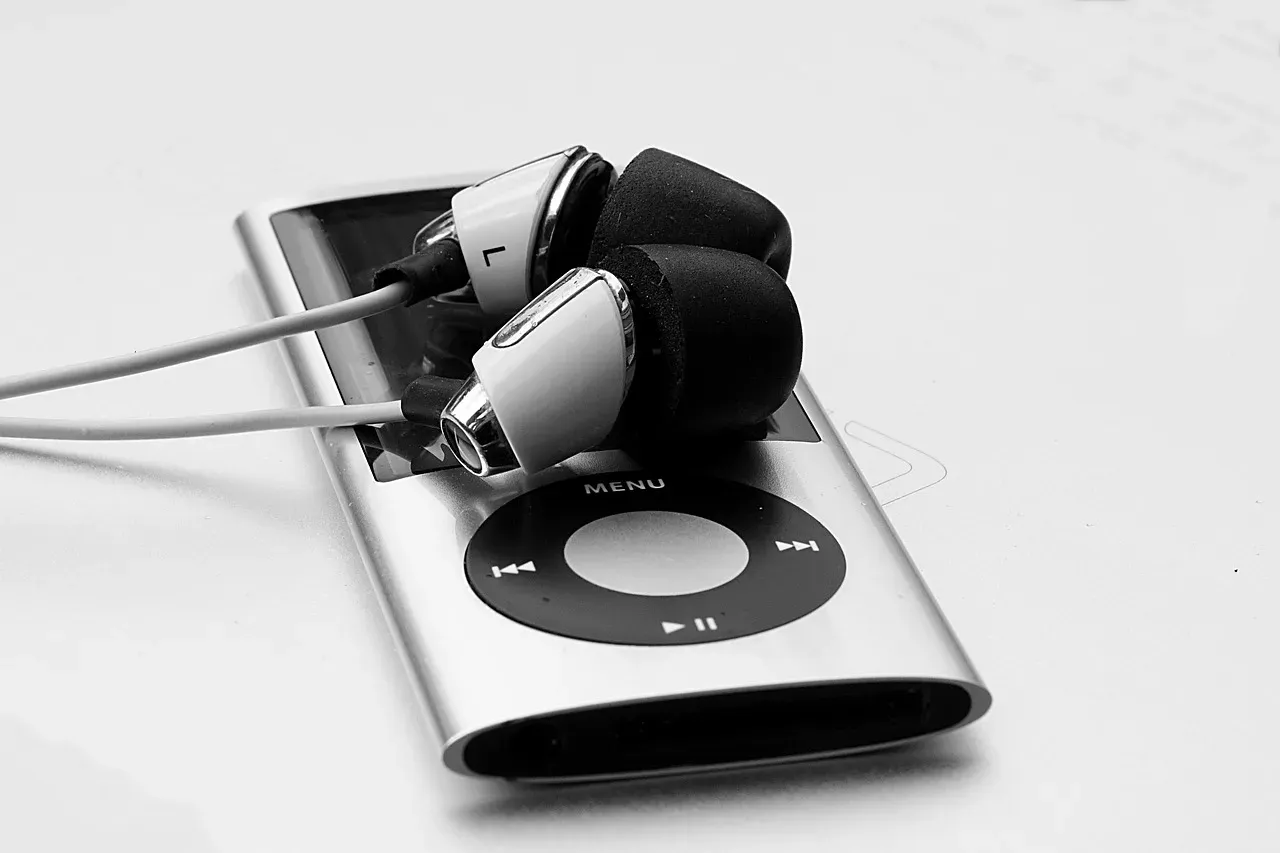
Jet’s debut single “Are You Gonna Be My Girl” had a decent run on rock radio, but it became a genuine cultural fixture only after Apple picked it for an iPod commercial. The pairing of the song’s driving riff with the silhouette dancers of the ad campaign turned it into one of the most recognizable tracks of the mid-2000s.
That single placement is remembered today as one of the defining iPod ads: iPod + iTunes (Jet – “Are You Gonna Be My Girl”) moments in advertising history. The commercial exposure reached an audience far broader than the band’s rock radio base, and for years afterward the song was more closely associated with Apple’s marketing than with the album itself.
5. Feist – The Reminder (2007)

Feist’s “1234” was a modest highlight on The Reminder until Apple selected it for a colorful iPod Nano campaign, complete with the singer performing the song on a soundstage full of dancers. The ad ran heavily across television, turning a quirky album cut into an inescapable earworm.
The placement is still discussed as a template case, alongside Jet’s, of Apple’s ad campaigns introducing indie artists to a massive audience through their iconic iPod ads. For an artist who had built a career mostly through critical acclaim and modest sales, the commercial exposure did more to put her name in front of casual listeners than any single radio play or chart position could.
6. Sia – Colour the Small One (2004)

Sia’s album barely registered commercially when it was first released. That changed after “Breathe Me” closed out the series finale of Six Feet Under, a moment widely regarded as one of the most emotionally effective needle drops in television history.
The placement is credited as featured in the series finale of the HBO TV series Six Feet Under in 2005, this being the first time Sia got significant exposure to an American audience. The single eventually sold well over a million copies in the United States, but that success traces directly back to the licensing deal rather than to the album’s initial retail run, which had passed with little notice.
7. Nick Drake – Pink Moon (1972)
Few stories illustrate the gap between sales and licensing quite like Nick Drake’s. Pink Moon sold poorly on release, and Drake died in 1974 having never seen commercial success in his lifetime.
Decades later, a Volkswagen commercial used the title track, and the effect was almost immediate: the Nick Drake song “Pink Moon” sells more than it did when he was alive after its use in a Volkswagen ad. It remains one of the starkest examples in music history of a single sync placement generating more commercial impact, posthumously, than an artist’s entire original release run.
8. The Black Keys – Brothers (2010)

The Black Keys built their commercial reputation not on one big placement but on volume, a strategy that started years before Brothers became their commercial breakthrough. Frustrated by limited radio airplay and a financially rough early touring period, the band leaned hard into licensing as an alternative income stream.
Over the course of their career they have licensed over 300 of their songs to TV shows, commercials, movies and video games, an approach that began in earnest after the release of their EP “The Moan,” when the band was struggling to get radio airplay and had recently lost 3,000 dollars from their European tour, leading them to explore new revenue streams and license “Set You Free” to a Nissan commercial. By the time Brothers arrived, the band’s catalog was already a go-to source for music supervisors, and licensing income from that back catalog is widely understood to have outpaced what any single album’s sales alone generated.
These eight cases span five decades and several completely different eras of the music business, from vinyl-era folk to the iPod boom to the streaming age. What connects them is not fame or talent alone, but timing: each artist or their team recognized, often out of necessity rather than strategy, that a thirty-second placement could reach more ears and generate more revenue than months of retail sales. As streaming payouts remain thin and sync fees continue climbing, that lesson from Moby, Sting, and the rest has only become more relevant to musicians building a career today.