Hollywood has a long history of borrowing stories from other countries, and sometimes the turnaround is remarkably fast. Rather than waiting decades to test whether a foreign hit could work for American audiences, studios have occasionally moved within just a few years, capitalizing on buzz from film festivals and glowing reviews.
What follows is a look at eight foreign-language films that made the jump to an English-language American version in five years or less, along with what changed and what stayed the same along the way.
1. Let the Right One In (2008) to Let Me In (2010)
Let the Right One In is a 2008 Swedish romantic horror film directed by Tomas Alfredson and written by John Ajvide Lindqvist, who adapted his 2004 novel. The story follows a bullied boy who forms a bond with a mysterious young vampire in a snowy Stockholm suburb. It quickly earned festival acclaim and a devoted following among horror fans looking for something quieter and more melancholic than the genre norm.
An American remake, titled Let Me In, was released in 2010. It is a romantic horror film written and directed by Matt Reeves, and stars Kodi Smit-McPhee, Chloë Grace Moretz, Elias Koteas, and Richard Jenkins. Notably, the Swedish producers of the original film, John Nordling and Carl Molinder, were both involved as producers for the adaptation, giving the remake a rare degree of continuity with its source.
2. The Girl with the Dragon Tattoo (2009) to the American Version (2011)
Stieg Larsson’s Millennium trilogy became a publishing phenomenon in the late 2000s, and Sweden moved fast to bring it to the screen. The 2009 Swedish adaptation, starring Noomi Rapace as hacker Lisbeth Salander, was a box office success across Europe and introduced international audiences to one of modern fiction’s most striking characters.
Sony Pictures released its own version just two years later, in December 2011, directed by David Fincher and starring Rooney Mara and Daniel Craig. The American film leaned into a slicker, more polished visual style while keeping the core mystery plot intact. Despite strong reviews and an Oscar nomination for Mara, the planned sequels never materialized, leaving the Swedish trilogy as the more complete cinematic record of Larsson’s books.
3. Insomnia (1997) to Insomnia (2002)
The 1997 Norwegian film follows a police detective investigating a murder in a town above the Arctic Circle, where the investigation goes wrong when he mistakenly shoots his partner and tries to cover it up. Directed by Erik Skjoldbjærg and led by Stellan Skarsgård, it was praised for its stark, unsettling use of constant daylight to mirror the protagonist’s guilt.
The 2002 American remake, directed by Christopher Nolan, stars Al Pacino, Robin Williams, and Hilary Swank. Interestingly, it remains the only film Nolan has directed without receiving at least a share of the writing credit, even though he wrote the final draft of the script. The original director had a notably gracious take on the redo, saying he “felt lucky that it’s such a well crafted, smart film” when he first saw it.
4. The Vanishing / Spoorloos (1988) to The Vanishing (1993)

The Dutch-French thriller Spoorloos, directed by George Sluizer, told the story of a man obsessively searching for his girlfriend who vanished at a highway rest stop. Its ending was so bleak and unsettling that it became a benchmark for psychological horror without relying on violence or gore, earning a cult reputation among genre fans in the late 1980s.
Just five years later, in 1993, 20th Century Fox released an American remake, again directed by Sluizer himself, this time with Jeff Bridges and Kiefer Sutherland. The American version dramatically altered the story’s conclusion to a more conventional, less nihilistic finish, a change that disappointed many admirers of the original and is often cited as an example of Hollywood softening a foreign film’s darkest edges for wider audiences.
5. Pulse / Kairo (2001) to Pulse (2006)
Kiyoshi Kurosawa’s Japanese horror film Kairo used the then-emerging internet as a conduit for existential dread, following ghosts that spread through computer networks and slowly erase human connection. It was part of the wave of Japanese horror that reshaped the genre internationally in the early 2000s, prized for its slow-building atmosphere over jump scares.
An American remake titled Pulse arrived in 2006, five years after the original, directed by Jim Sonnenfeld and produced by Wes Craven. It reworked the internet-horror concept for a more mainstream teen audience, trading Kurosawa’s meditative dread for faster pacing and more overt scares. Critics largely preferred the Japanese original, though the American version still found an audience thanks to the broader J-horror remake boom happening at the same time.
6. Ringu (1998) to The Ring (2002)
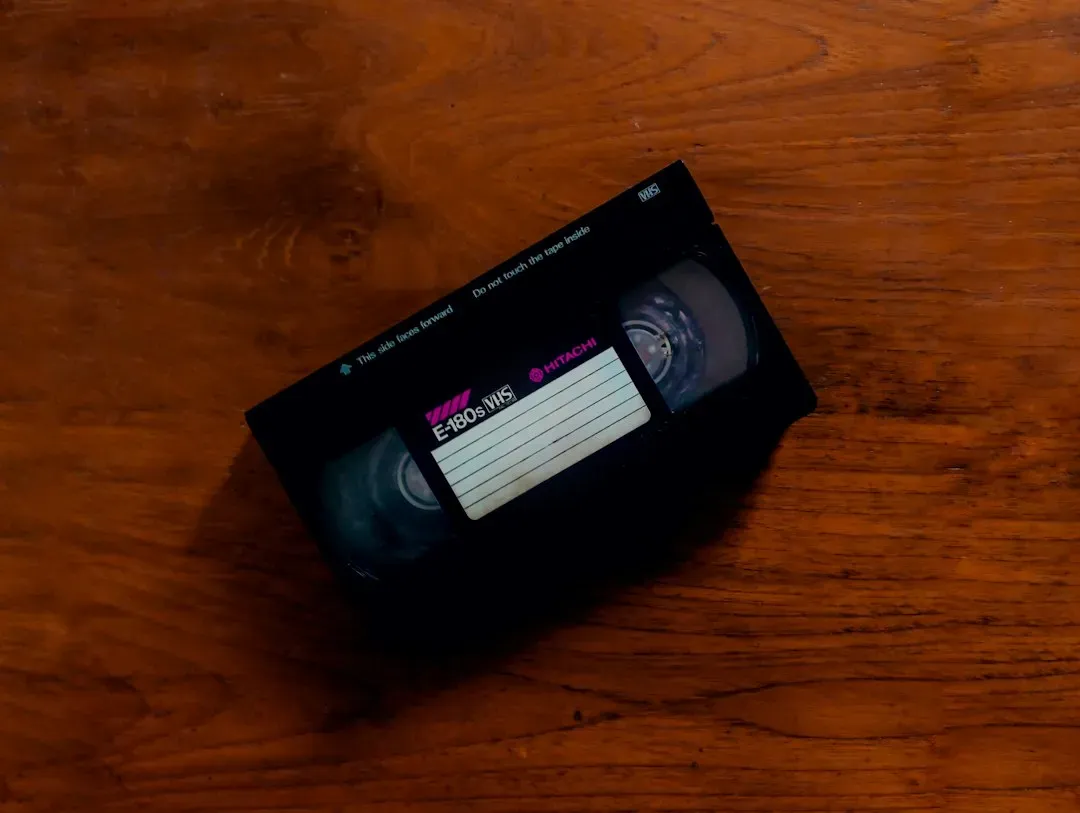
Hideo Nakata’s Ringu, based on Koji Suzuki’s novel, centers on a cursed videotape that kills anyone who watches it within a week. It became a massive hit in Japan and helped ignite worldwide interest in Japanese horror cinema, spawning sequels and a distinct visual language built around long dark hair, static, and dread tied to media itself.
DreamWorks released The Ring in 2002, only four years after Ringu, directed by Gore Verbinski and starring Naomi Watts. The American version kept the core premise but added a more polished, moody visual style suited to Western multiplex audiences. It performed strongly at the box office and is often credited with launching the broader trend of American studios remaking Japanese horror titles throughout the mid-2000s.
7. REC (2007) to Quarantine (2008)
The Spanish found-footage horror film REC, directed by Jaume Balaguero and Paco Plaza, follows a television reporter trapped inside a quarantined apartment building during a viral outbreak. Its tight, claustrophobic camerawork and relentless pacing made it one of the most acclaimed horror films of its era in Spain and beyond.
Sony’s American remake, Quarantine, arrived just one year later in 2008, starring Jennifer Carpenter in the reporter role. The turnaround was unusually quick even by Hollywood remake standards, and the film followed the original’s structure and found-footage style closely, right down to many individual shots. It performed well enough commercially to spawn its own sequel, though most critics still pointed back to the Spanish original as the sharper, more unsettling version.
8. Infernal Affairs (2002) to The Departed (2006)
The Hong Kong crime thriller Infernal Affairs, directed by Andrew Lau and Alan Mak, follows parallel undercover operatives, one a cop embedded in a triad gang, the other a gangster planted inside the police force. Its tense, twisting plot and morally gray characters made it a landmark of Hong Kong cinema and a commercial success across Asia.
Warner Bros. released Martin Scorsese’s The Departed in 2006, four years after the original, relocating the story to Boston with Leonardo DiCaprio, Matt Damon, and Jack Nicholson. The remake expanded on the source material’s themes while adding Scorsese’s own stylistic stamp, and it went on to win the Academy Award for Best Picture along with Scorsese’s first Best Director win. It remains one of the rare cases where an American remake achieved greater mainstream recognition than the acclaimed original it was based on.
Taken together, these eight examples show how quickly a well-received foreign film could once travel from festival buzz to a full American production, particularly in the horror and thriller genres during the late 1990s and 2000s. Some of these remakes, like The Departed, carved out their own identity and critical standing. Others leaned more heavily on their source material, occasionally softening the very qualities that made the originals distinctive in the first place.